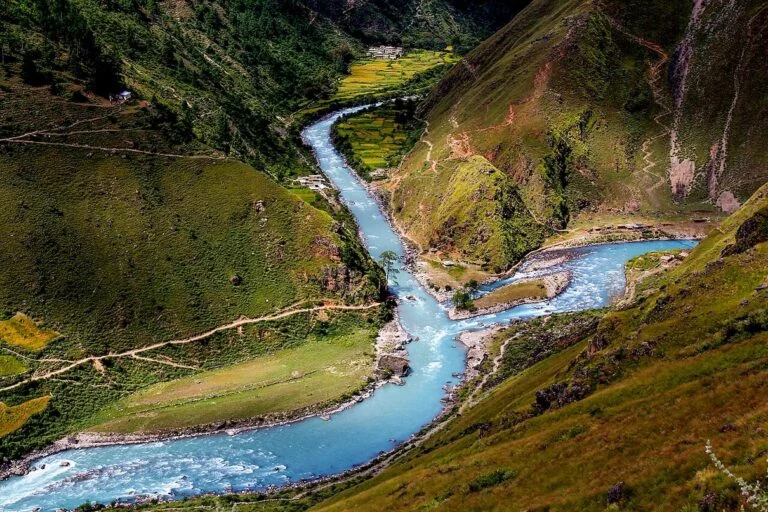
The recent catastrophic glacial collapse on the Tibetan Plateau has sent a devastating wall of water, sediment, and rocky debris surging across the Nepal-China border, resulting in a humanitarian crisis of historic proportions. As emergency responders and disaster management agencies continue to navigate the treacherous, silt-choked remains of the Trishuli River basin, the confirmed death toll has climbed past 1,000, with more than 4,000 individuals still listed as missing. This tragedy, which has turned the region’s hydropower infrastructure into death traps, is being described by experts not as an isolated natural disaster, but as a dire harbinger of the risks posed by climate change to the fragile Himalayan ecosystem.
The scale of the devastation is exacerbated by the presence of large-scale industrial projects. Rescue teams are currently working to clear tunnels designed for hydroelectric power generation—structures vast enough to accommodate heavy trucks, now entirely blocked by debris flows. The incident has effectively paralyzed a significant portion of Nepal’s national energy grid, forcing a country that prides itself on being an electricity exporter to pivot toward purchasing power from India to meet domestic demand.

A Chronology of the Disaster and Immediate Aftermath
The disaster began with a massive glacial lake outburst flood (GLOF) originating from the high-altitude glaciers of the Hindu Kush Himalaya. For years, the International Centre for Integrated Mountain Development (ICIMOD) has warned of the rapid acceleration of glacial thinning and the increasing instability of permafrost in this region.
In the immediate wake of the event, the following sequence of impacts has been documented:
- Initial Impact: The surge of water and debris overwhelmed regional districts, most notably Rasuwa and Nuwakot, where critical infrastructure was located.
- Infrastructure Failure: A total of 11 operational hydropower plants sustained catastrophic damage. Preliminary reports indicate that approximately 10% of Nepal’s total national electricity generating capacity was knocked offline within hours.
- Ongoing Search and Rescue: As of the latest update, 15 additional hydropower plants currently under construction have been severely damaged, with many workers still unaccounted for within subterranean galleries.
- Energy Shift: The loss of generation capacity has forced an immediate cessation of electricity exports to India, triggering a reversal in the regional energy trade balance.
The Intersection of Climate Risk and Infrastructure Development
The disaster has ignited a fierce debate regarding the sustainability of Nepal’s current development strategy. In its quest to become a "powerhouse of Asia," the Nepali government has aggressively pursued a policy of damming nearly every available river corridor. These projects are primarily of the "run-of-river" variety, which rely on diverting water through tunnels to turbines. However, these corridors are precisely the areas most vulnerable to landslides, debris flows, and sudden surges in water volume—phenomena that are increasing in frequency due to a warming climate.

Environmental scientists and hydrologists have long argued that these concrete structures act as "force multipliers" during natural disasters. Rather than simply enduring a flood, massive concrete dams and tunnels can redirect, intensify, or obstruct the flow of water and sediment, often leading to secondary failures that exacerbate the scale of the destruction downstream. The current crisis highlights the failure to integrate climate-resilience data into the initial feasibility studies for these multi-billion-dollar investments.
The Case for the Karnali: A Critical Threshold
As the nation grapples with the fallout, focus has shifted to the Karnali River—the last major river in Nepal that remains undammed. Rising near the sacred Mount Kailash on the Tibetan border, the Karnali winds through the canyons of western Nepal, providing a vital, free-flowing ecosystem before it eventually merges with the Ganges.
The Karnali serves as a critical habitat for several endangered species, including the giant migratory mahseer (Tor putitora) and the giant catfish (Bagarius yarrelli). Furthermore, the lower stretches of the river within Bardiya National Park are home to the critically endangered gharial (Gavialis gangeticus), a crocodile species that is currently the subject of intensive conservation efforts, including those funded by the Phoenix Species Project.

The river is also a repository of profound cultural significance, connecting three distinct civilizational landscapes: the Kailash civilization of Tibet, the Khas civilization of western Nepal, and the Ganga civilization of India. Protecting the Karnali has become a rallying point for conservationists, Indigenous leaders, and local communities who view the river as an essential piece of cultural and ecological heritage.
Official Responses and Economic Realities
While the government of Nepal has faced intense pressure to maximize hydropower revenue to reduce national debt and spur industrial growth, the recent disaster has created a new political reality. Skepticism is growing regarding the long-term economic viability of dam projects that may be destroyed or rendered inoperable by climate-driven disasters within a few years of construction.
International financiers who have historically underwritten these projects are now facing calls for a rigorous reassessment of their environmental, social, and governance (ESG) criteria. Experts suggest that the focus must shift toward more resilient energy alternatives. Nepal possesses significant untapped potential in solar energy—boasting roughly 300 sunny days per year—as well as wind energy potential within its high-altitude mountain passes and deep gorges.

Broader Implications and Future Trajectory
The tragedy in the Rasuwa and Nuwakot districts serves as a final warning for regional policymakers. If the Karnali River is dammed, it will not only result in the loss of one of the world’s last remaining wild river ecosystems but will also introduce a significant new point of failure in a landscape that is becoming increasingly volatile.
Conservation advocates are currently pushing for the Karnali to be granted permanent protection, potentially through a model similar to the United States’ Wild and Scenic Rivers Act, or through international recognition such as a UNESCO World Heritage designation. A petition is currently pending before the Supreme Court of Nepal that challenges the proposed damming of the Karnali, a case that has gained newfound urgency and public support following the recent floods.
Ultimately, the lesson of the current disaster is that development and conservation are not mutually exclusive; rather, they are interdependent. By protecting the Karnali, Nepal could preserve a vital ecological corridor while demonstrating a commitment to climate adaptation that prioritizes the safety and long-term prosperity of its citizens over the short-term gains of high-risk infrastructure.

As the recovery efforts continue and the nation mourns the loss of hundreds of lives, the government must decide whether to continue down a path of industrial expansion that ignores the realities of a changing climate, or to adopt a more sustainable vision that treats its remaining natural resources as an insurance policy against future catastrophe. The preservation of the Karnali represents more than just a victory for environmentalists; it is a pragmatic necessity for a nation standing on the front lines of the climate crisis. The decision to save the Karnali may well determine the future resilience of the entire Himalayan region.