The landscape of international humanitarian response and universal health coverage was brought into sharp focus this week as Dr. Tedros Adhanom Ghebreyesus, Director-General of the World Health Organization (WHO), embarked on a high-level, two-day State visit to the Hashemite Kingdom of Jordan. Arriving in Amman to a robust schedule of diplomatic engagements and field inspections, Dr. Tedros used the opening day of his mission to commend the Jordanian government and its leadership for maintaining an open-door policy for millions of displaced persons, advancing mental health integration, and serving as an indispensable medical evacuation corridor for the Middle East.
The visit comes at a critical juncture for regional health security. With protracted conflicts continuing to displace populations across Syria and the Gaza Strip, Jordan has remained a primary anchor of stability and humanitarian relief. By spotlighting Jordan’s dual commitment to domestic health system strengthening and regional crisis management, the WHO hopes to galvanize international donor support, elevate mental health on global agendas, and secure sustained financing for vulnerable populations caught in the crosshairs of geopolitical instability.
High-Level Bilateral Dialogues and Royal Engagements
The cornerstone of the visit’s opening day was a formal audience with His Majesty King Abdullah II. The high-level talks underscored the deep-rooted partnership between the WHO and the Jordanian government, focusing primarily on the mechanics of building resilient national health systems, expanding the frontiers of universal health coverage (UHC), and sustaining operational support for emergency medical responses across the region.
Discussions in the royal palace centered heavily on the mounting pressures faced by Jordan’s infrastructure. Despite severe economic headwinds, the country continues to host more than three million refugees, predominantly from neighboring Syria and, more recently, displaced individuals and patients evacuated from Gaza.
Expressing his profound gratitude, Dr. Tedros lauded King Abdullah II for his unwavering stewardship. “I wish to express my appreciation to His Majesty King Abdullah II for his commitment to advancing universal health coverage,” Dr. Tedros stated during the meeting. “I also extend my thanks to His Majesty and the people of Jordan for their solidarity and generosity in providing health services to more than three million refugees, primarily from Gaza and Syria, who are living in the country.”
The WHO Director-General specifically highlighted the Kingdom’s visionary humanitarian initiatives, notably the King’s Medical Corridor initiative. This vital logistical and humanitarian pathway has facilitated the transfer of critically ill and injured children out of Gaza, enabling them to receive specialized, life-saving medical interventions in Jordanian facilities. “Jordan continues to show the world what it truly means to put health and humanity first,” Dr. Tedros added, emphasizing that the Kingdom’s proactive stance offers a blueprint for regional solidarity.
On-the-Ground Realities: Visiting Evacuated Children and Frontline Workers
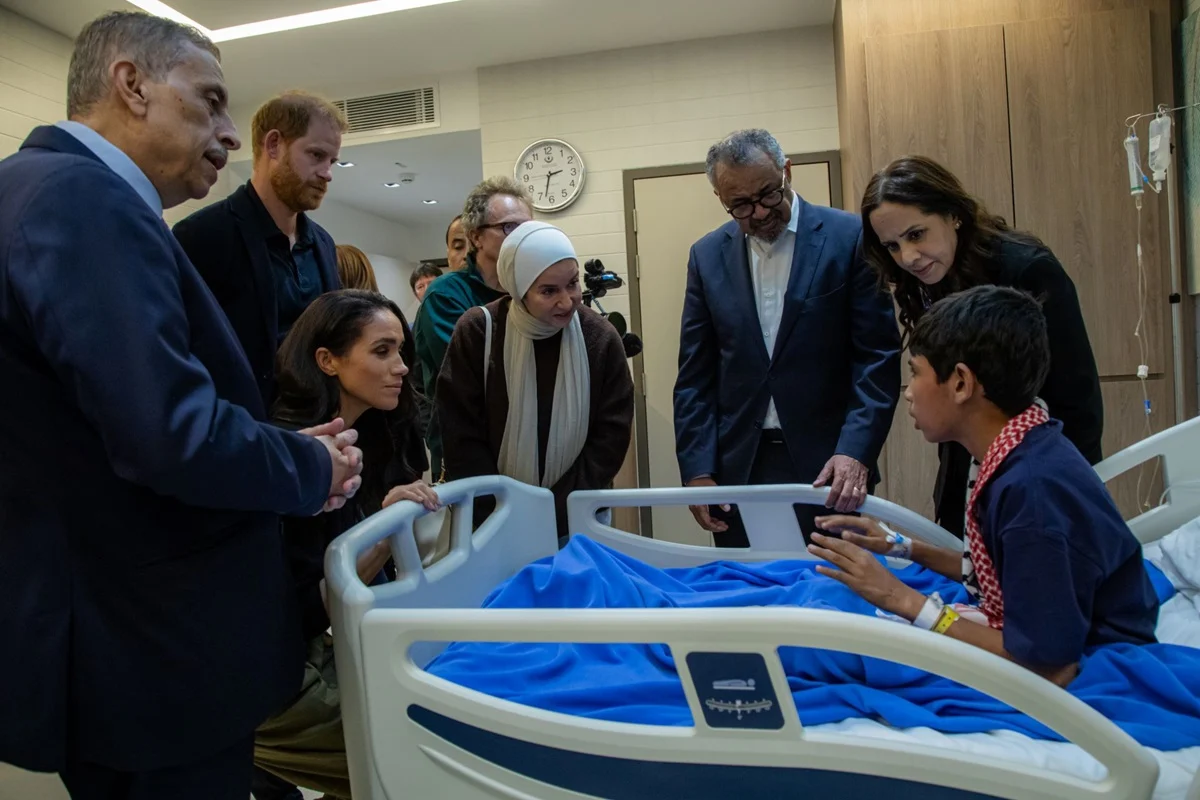
Moving from diplomatic boardrooms to the realities of clinical care, Dr. Tedros traveled to a specialized, WHO-supported hospital in Amman dedicated to treating pediatric patients evacuated from conflict zones. The visit provided the WHO chief with a direct window into the immense physical and psychological toll of modern warfare on children.
Walking through the pediatric wards, Dr. Tedros met with young patients undergoing intensive treatments for severe conflict-related trauma, oncological conditions, and other life-threatening medical issues. He also engaged extensively with the frontline physicians, nurses, and allied health professionals whose tireless labor underpins the medical evacuation pipeline.
The hospital visit served to underscore a pressing global appeal: the urgent need for predictable, sustained international funding to keep these medical corridors open. Without robust financial backing from donor countries and multilateral institutions, the capacity of transit nations like Jordan to absorb, treat, and rehabilitate complex trauma cases remains perpetually strained. Health officials noted that continuous logistics coordination, specialized equipment procurement, and psychological support teams are mandatory to prevent bottlenecks in patient transfers from conflict hotspots.
Mobilizing Resources and Financing Priorities
Following his hospital tour, Dr. Tedros convened a strategic, high-level roundtable meeting with key stakeholders. The gathering brought together representatives from major donor nations, United Nations partner agencies, international philanthropic organizations, and domestic health authorities.
The primary agenda item was the structuring of sustainable financing mechanisms for health system strengthening in Jordan. As a host nation managing a vast refugee demographic alongside its native population, Jordan’s public health expenditure faces persistent structural pressures. Participants at the roundtable debated strategies to scale up mental health services—traditionally an underfunded sector in emergency humanitarian responses—and devised frameworks to ensure that host-country health systems do not suffer from systemic degradation due to overstretched resources.
Dr. Tedros welcomed the tangible expressions of solidarity from international partners, urging them to move beyond short-term emergency funding toward multi-year investments. Such predictable financing, he argued, is vital for fortifying primary health care infrastructure, ensuring medicine supply chains remain robust, and preparing national health systems to absorb future shocks.
Advancing Mental Health Integration and Primary Care
Earlier in the day, Dr. Tedros held extensive bilateral discussions with Jordan’s Minister of Health, centering on the nation’s ongoing structural reforms aimed at achieving comprehensive universal health coverage. Jordan has increasingly emerged as a regional pioneer in institutionalizing a primary health care-led model of health delivery.
Of particular note is Jordan’s integration of mental health and psychosocial support (MHPSS) directly into its routine primary health care facilities. Historically, mental health services across the Middle East have been heavily centralized, stigmatized, and isolated from general medical care. By decentralizing these services and embedding them into local clinics, Jordan has ensured that marginalized populations—including refugees and trauma survivors—can access psychological care as a routine component of primary medicine.
This progressive policy aligns closely with the WHO Director-General’s Special Initiative for Mental Health. WHO officials reiterated their technical and operational commitment to supporting Jordan’s Ministry of Health as it expands these services, trains community-level mental health practitioners, and works systematically to dismantle the societal stigma associated with psychological distress.
High-Profile Advocacy with the Duke and Duchess of Sussex
A notable dimension of the first day’s engagements was the active participation of Prince Harry, Duke of Sussex, and Meghan, Duchess of Sussex, who accompanied Dr. Tedros during several key events. Operating in their capacities as the founders of Archewell Philanthropies and long-standing global advocates for public health, the Duke and Duchess brought significant international visibility to the mission.
Archewell Philanthropies has a documented history of collaboration with the WHO, ranging from financial and advocacy support for equitable global access to COVID-19 vaccines to targeted funding for medical evacuation and mental health programs in crisis-affected regions. During the visit, Prince Harry participated directly as an ally of the WHO’s mental health initiatives, emphasizing the critical importance of addressing psychological trauma across communities and emergency settings. Particular emphasis was placed on the mental health vulnerabilities of men, young people, and children navigating the chronic stress of displacement and conflict.
Expressing appreciation for their enduring advocacy, Dr. Tedros remarked: “I want to thank our partners, including Prince Harry, Duke of Sussex and Meghan, Duchess of Sussex, whose commitment to mental health and humanitarian action has helped bring visibility, resources and hope to some of the world’s most vulnerable communities. Their collaboration is helping to advance WHO’s mission to ensure health for all.”
Echoing these sentiments, Prince Harry underscored the moral imperative of prioritizing mental well-being in humanitarian response frameworks. “It is an honour to join the Director-General of the World Health Organization in Jordan, a country that is leading by example in compassion, resilience and innovation,” Prince Harry said. “Through our work with Archewell Philanthropies, my wife and I have seen first-hand the impact of WHO’s efforts to support mental health and deliver life-saving care in emergencies. We remain deeply committed to advancing awareness, reducing stigma and expanding access to mental health support for all those affected by conflict and crisis.”
The Duke further stressed that psychological rehabilitation is not an optional add-on to physical medicine, but an indispensable foundation of long-term recovery. “Mental health is fundamental to recovery, dignity and long-term peace, and we are proud to stand with WHO and partners around the world to make it a global priority,” he added.
Looking Ahead: Day Two Itinerary and Strategic Outlook
As the first day of the high-profile State visit drew to a close, preparations were finalized for the second and final day of Dr. Tedros’s mission in the Hashemite Kingdom.
The itinerary for the upcoming day is set to feature a visit to Jordan’s National Center for Rehabilitation of Addicts. Supported technically by the WHO, this specialized institution provides comprehensive, integrated medical, psychological, and social rehabilitation services to individuals struggling with substance use disorders—an issue frequently exacerbated by the socio-economic pressures of displacement and protracted regional instability.
Additionally, Dr. Tedros is scheduled to meet with prominent community leaders and grassroots women’s organizations, including representatives from the Jordanian Hashemite Fund for Human Development (JOHUD). These community-level engagements are designed to highlight the indispensable role of local civil society organizations in driving grassroots health literacy, maternal and child health initiatives, and community resilience.
The WHO delegation will also tour the renowned King Hussein Cancer Center (KHCC). Discussions at KHCC will center on cutting-edge advancements in regional oncology care, specialized training programs for health workers across the Levant, and the expansion of cross-border medical partnerships that allow cancer patients from neighboring conflict zones to access advanced radiotherapy and chemotherapy.
The State visit will officially conclude with a series of final consultations involving international humanitarian operators, UN agency directors, and bilateral donors. These closing sessions aim to institutionalize the commitments made during the visit, reinforcing Jordan’s geopolitical and humanitarian standing as an irreplaceable regional hub for medical evacuation, emergency health response, and long-term health system resilience.
Through this high-level mission, the WHO has underscored a vital global message: that sustainable health security in times of unprecedented geopolitical turbulence requires not merely emergency crisis management, but deep, structural investments in universal health coverage, mental health integration, and unwavering international burden-sharing.