The healthcare landscape of the Middle East has faced unprecedented challenges over recent decades, driven by protracted regional conflicts, massive population displacements, and the systemic strain placed on public infrastructure. Against this complex backdrop, the Hashemite Kingdom of Jordan has consistently emerged as a cornerstone of regional stability and humanitarian resilience. On the first day of a significant two-day state visit to Amman, Dr. Tedros Adhanom Ghebreyesus, Director-General of the World Health Organization (WHO), met with Hashemite Kingdom leadership, international stakeholders, and high-profile philanthropic partners to reinforce global collaboration in universal health coverage (UHC), emergency health responses, and specialized pediatric and psychological care.
The visit underscored Jordan’s remarkable capacity to act as a vital medical and humanitarian corridor for vulnerable populations, including refugees from neighboring Syria and patients evacuated directly from conflict zones in Gaza. Throughout a packed itinerary of high-level meetings, hospital visits, and strategic donor discussions, Dr. Tedros spotlighted the indispensable nature of Jordan’s healthcare system and the ongoing necessity for robust international solidarity and financial backing to sustain these life-saving operations.
High-Level Dialogues and the Royal Audience with King Abdullah II
The anchor of the WHO Director-General’s opening day was a formal audience with His Majesty King Abdullah II of Jordan. The discussions between the monarch and the international health chief centered strategically on strengthening national health systems, expanding equitable access to medical care, and cementing long-term international support for emergency health responses across the Middle East. Particular emphasis was placed on the plight of the Palestinian people, specifically individuals and pediatric patients evacuated from the Gaza Strip into Jordanian medical facilities for specialized treatment, alongside the millions of refugees currently integrated into Jordanian communities.
Dr. Tedros expressed profound gratitude to the Jordanian monarch, acknowledging the nation’s exceptional moral and logistical leadership. "I wish to express my appreciation to His Majesty King Abdullah II for his commitment to advancing universal health coverage," Dr. Tedros stated following the meeting. "I also extend my thanks to His Majesty and the people of Jordan for their solidarity and generosity in providing health services to more than three million refugees, primarily from Gaza and Syria, who are living in the country."
Furthermore, the WHO chief praised the broader scope of Jordan’s humanitarian initiatives, highlighting His Majesty’s Medical Corridor initiative. This critical operational framework bypasses severe logistical bottlenecks to deliver urgent, specialized care to critically ill and injured children evacuated from active combat zones in Gaza. Through these concerted efforts, Jordan continues to demonstrate to the global community what it means to place humanitarian imperatives and public health at the very center of state policy.
Ground-Level Realities: Pediatric Care and Medical Evacuations
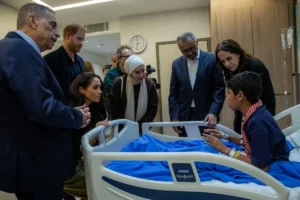
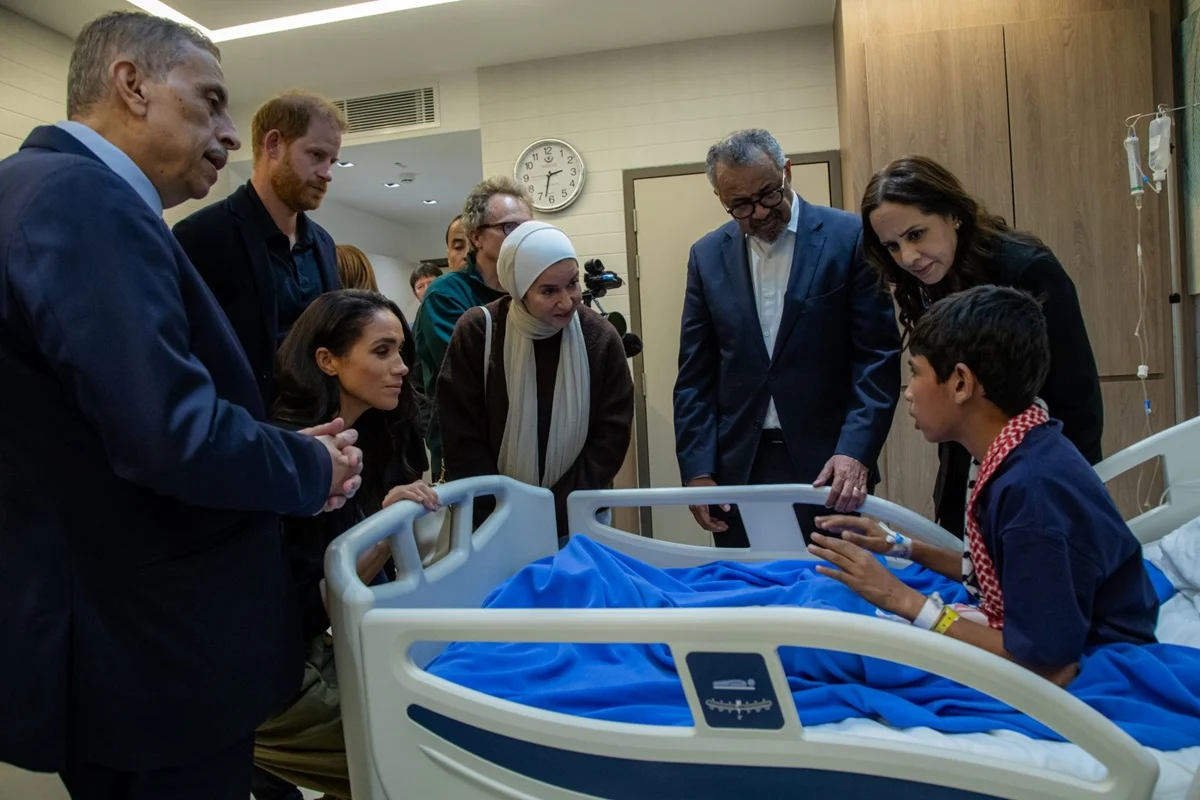
Moving beyond diplomatic engagements, Dr. Tedros traveled to a specialized, WHO-supported hospital facility dedicated to managing the complex medical needs of children evacuated from the Gaza Strip. The visit provided an unvarnished look at the human cost of modern warfare and the extraordinary measures required to sustain pediatric patients suffering from severe trauma, oncological emergencies, and other life-threatening conditions.
During the hospital walkthrough, Dr. Tedros interacted directly with young patients, their families, and the frontline medical professionals working around the clock under immense pressure. Doctors, nurses, and administrative personnel detailed the logistical hurdles of managing severely injured children and the psychological tolls exacted by prolonged exposure to violence. The WHO Director-General emphasized that these facilities represent a vital lifeline, validating the absolute necessity of maintaining and expanding the medical evacuation corridor through Jordan. He issued a renewed call to the international community for sustained, predictable financial and material support to guarantee that children and other critical casualties can continuously access essential medical interventions without administrative or financial obstruction.
Strategic Financing and Multi-Sectoral Partnerships
Recognizing that frontline service delivery requires stable macroeconomic foundations and robust institutional frameworks, Dr. Tedros convened a high-level strategic roundtable later in the day. The gathering brought together key health partners, major donor governments, United Nations agencies, and prominent philanthropic organizations to deliberate on financing priorities for strengthening Jordan’s national health infrastructure.
The discussions focused on two main pillars: securing sustained funding for ongoing humanitarian health actions—including the scaling up of mental health services—and addressing the systemic financial pressures faced by host countries accommodating massive refugee populations. Participants evaluated current funding gaps and explored innovative mechanisms to ensure that international aid transitions smoothly from short-term emergency relief to sustainable, long-term capacity building. Dr. Tedros commended the robust collaboration displayed by the international partner network, urging them to view investments in Jordan’s health sector not merely as regional aid, but as a strategic contribution to global health security.
Advancing Universal Health Coverage and Mental Health Integration
In a subsequent bilateral session, Dr. Tedros met with the Jordanian Minister of Health to review the nation’s ongoing structural reforms aimed at achieving comprehensive universal health coverage. Jordan has increasingly established itself as a global benchmark for embedding primary health care at the heart of its national health strategy.
A standout feature of Jordan’s modern health framework is its proactive integration of mental health services into routine primary care clinics. This integration ensures that patients can access psychiatric and psychological support seamlessly alongside physical medical care, removing traditional stigmas and logistical barriers. This progressive framework is strongly supported by the WHO Director-General’s Special Initiative for Mental Health, which seeks to expand quality mental healthcare in countries facing both routine and emergency-induced burdens. Public health experts note that Jordan’s model provides a valuable blueprint for other developing and middle-income nations striving to treat mental health as an inextricable component of overall human well-being.
High-Profile Advocacy: The Role of Archewell Philanthropies
Adding an influential advocacy dimension to the state visit, Dr. Tedros was accompanied during several key engagements by Prince Harry, Duke of Sussex, and Meghan, Duchess of Sussex. Participating in their capacities as founders of Archewell Philanthropies and long-standing global supporters of the World Health Organization, the Duke and Duchess brought international media attention and high-level visibility to the mission.
Archewell Philanthropies has a well-documented history of supporting critical WHO initiatives, ranging from advocacy for equitable access to global COVID-19 countermeasures to backing complex medical evacuation schemes and mental health support programs. During the visit, Prince Harry actively participated as an expert ally and advocate for WHO’s global mental health agenda. He emphasized the urgent necessity of investing in mental health infrastructure across all communities, with an intentional focus on high-risk cohorts, including men, young adults, and children navigating the psychological aftermath of conflict and displacement.
Dr. Tedros acknowledged the profound impact of their ongoing partnership. "I want to thank our partners, including Prince Harry, Duke of Sussex, and Meghan, Duchess of Sussex, whose commitment to mental health and humanitarian action has helped bring visibility, resources, and hope to some of the world’s most vulnerable communities," Dr. Tedros remarked. "Their collaboration is helping to advance WHO’s mission to ensure health for all."
Reflecting on the significance of the mission, Prince Harry shared his perspective on Jordan’s resilience: "It is an honour to join the Director-General of the World Health Organization in Jordan, a country that is leading by example in compassion, resilience, and innovation. Through our work with Archewell Philanthropies, my wife and I have seen first-hand the impact of WHO’s efforts to support mental health and deliver life-saving care in emergencies."
The Duke further underscored the foundational role of psychological wellness in global recovery efforts: "We remain deeply committed to advancing awareness, reducing stigma, and expanding access to mental health support for all those affected by conflict and crisis. Mental health is fundamental to recovery, dignity, and long-term peace, and we are proud to stand with WHO and partners around the world to make it a global priority."
Broader Implications and Regional Health Security
Public health analysts observing the visit emphasize that Jordan’s role extends far beyond that of a traditional host nation. Positioned at a volatile geopolitical crossroads, the Kingdom functions as an indispensable shock absorber for regional instability. When health systems in neighboring territories collapse under the weight of conflict, Jordan’s infrastructure, administrative capacity, and social solidarity prevent humanitarian catastrophes from escalating exponentially.
However, this immense responsibility places a disproportionate fiscal and operational strain on Jordanian public services. International health economists point out that sustained support from multilateral institutions like the WHO, alongside bilateral donors, is not optional; it is an absolute prerequisite for maintaining regional stability. Without robust financial burden-sharing, the dual pressures of managing domestic health needs while absorbing millions of refugees could risk compromising the quality and availability of care for all residents within Jordan’s borders.
Looking Ahead: Day Two Itinerary and Strategic Conclusions
As the two-day state visit moves into its final phase, Dr. Tedros’s itinerary remains focused on comprehensive care models and community-level resilience. The WHO Director-General is scheduled to visit the National Center for Rehabilitation of Addicts in Jordan—a specialized facility backed by WHO that offers integrated medical, psychological, and social intervention services.
Additionally, Dr. Tedros will engage directly with grassroots community leaders and women’s empowerment organizations, including the Jordanian Hashemite Fund for Human Development (JOHUD), which plays a pivotal role in local development and social support networks. The itinerary also features a high-profile visit to the globally renowned King Hussein Cancer Center. There, discussions will center on cutting-edge advancements in oncological care, clinical research, and opportunities to foster deeper regional collaboration in specialized medicine.
The state visit will formally conclude with a series of debriefing sessions involving international humanitarian partners, reinforcing Jordan’s permanent strategic value as an essential hub for medical evacuations, rapid emergency response coordination, and long-term health system resilience throughout the Eastern Mediterranean region. Through this high-level mission, the WHO has reaffirmed its commitment to standing shoulder-to-shoulder with Jordan, ensuring that the nation’s remarkable humanitarian efforts receive the global visibility, technical backing, and financial solidarity they so richly deserve.