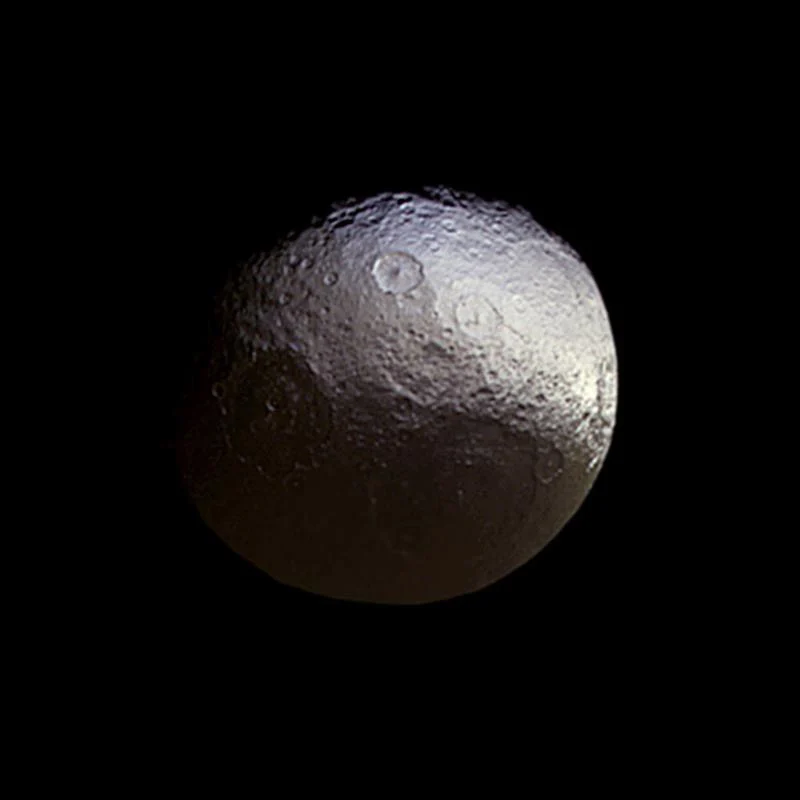
On October 26, 2004, NASA’s Cassini spacecraft executed one of the most significant planetary flybys in the history of deep-space exploration, capturing the first high-resolution, close-up images of Saturn’s largest moon, Titan. Sweeping just 745 miles (1,200 kilometers) above the smog-shrouded surface, the spacecraft pierced a dense, nitrogen-rich atmosphere that had long hidden the moon’s true geological features from astronomers. This landmark encounter not only redefined humanity’s understanding of the Saturnian system but also laid the vital groundwork for deploying the European Space Agency’s Huygens probe months later. By revealing a complex landscape featuring continent-sized landmasses, mountain chains, and river-like drainage networks, the 2004 flyby transformed Titan from a fuzzy astronomical dot into one of the most Earth-like and compelling worlds in the solar system.
The Chronology of the Encounter: From First Glance to Close-Up
The journey to Titan’s doorstep was the culmination of decades of planetary science planning and a grueling seven-year interplanetary cruise. Launched in October 1997, the joint NASA, ESA, and Italian Space Agency Cassini-Huygens mission utilized multiple gravity-assist maneuvers around Venus, Earth, and Jupiter to build the velocity necessary to reach the outer solar system. On July 1, 2004, Cassini successfully inserted itself into orbit around Saturn, becoming the first spacecraft to achieve orbit around the gas giant.
Just two days after orbit insertion, Cassini completed its very first distant flyby of Titan on July 3, 2004, capturing preliminary data from a distance of roughly 210,000 miles (339,000 kilometers). While valuable, these distant observations served primarily as a reconnaissance test. The true scientific breakthrough occurred on October 26, 2004, during the second flyby. Plummeting inward toward the hazy moon, Cassini approached roughly 300 times closer than it had in July, bringing its suite of optical, infrared, and radar instruments within striking distance of the surface.
During this nail-biting close approach, the spacecraft traveled at a relative velocity of approximately 3.7 miles per second (6 kilometers per second). Despite the high speed and the technological hurdles of imaging through a thick, obscuring photochemical haze, Cassini’s cameras and radar altimeters recorded hundreds of detailed images. These frames yielded unprecedented views of Titan’s surface topography, capturing features down to scales of tens of meters and providing planetary scientists with their first concrete look at a world previously shrouded in absolute mystery.
Unveiling Xanadu and Deciphering a Smoggy World
Before Cassini’s arrival, scientists knew from Voyager flybys in the early 1980s that Titan possessed a dense, opaque atmosphere composed mostly of molecular nitrogen, along with methane and various complex hydrocarbons. However, the surface remained entirely hidden beneath a global orange-brown haze layer generated by solar ultraviolet light interacting with atmospheric gases.
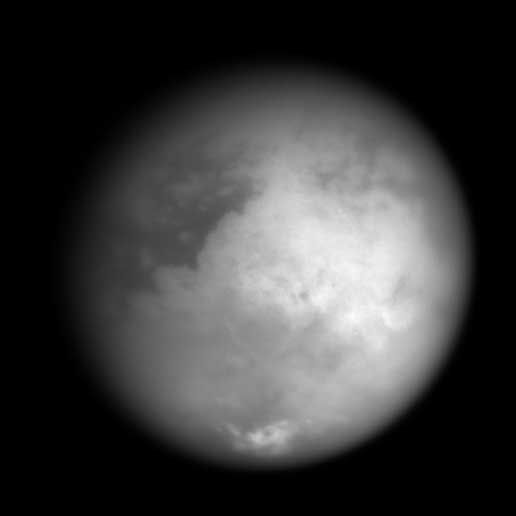
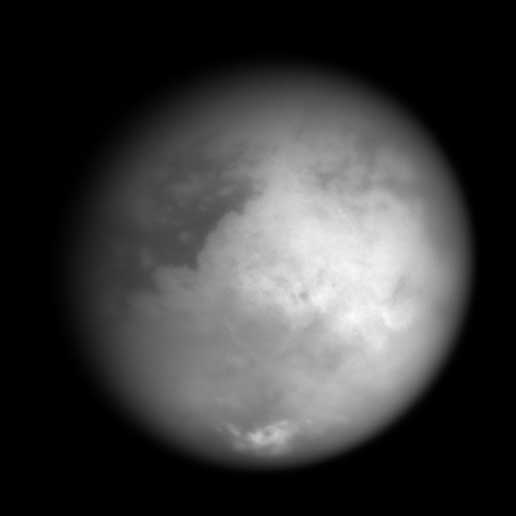
The October 2004 flyby pierced this atmospheric veil. Among the most startling discoveries was a vast, highly reflective, continent-sized bright region that mission scientists dubbed "Xanadu." Spanning an area roughly the size of Australia, Xanadu featured intricate networks of dark lineaments, mountainous ridges, and smooth plains. Infrared mapping and radar data suggested that Xanadu was a heavily cratered, ancient terrain composed of water ice bedrock, standing in stark contrast to the surrounding darker lowland regions.
Furthermore, the data collected during the flyby allowed researchers to measure the density, temperature gradient, and chemical composition of Titan’s atmosphere with exquisite precision. These measurements were not merely academic; they were mission-critical. Engineers and scientists needed precise atmospheric models to ensure that the European-built Huygens probe—which was still bolted to Cassini’s side—could successfully survive parachute deployment, atmospheric entry, and a safe descent to the surface.
Official Responses and Scientific Implications
The success of the October 2004 flyby generated widespread excitement within the global planetary science community. Project scientists and NASA officials lauded the telemetry and imagery as a watershed moment in comparative planetology.
"We have just seen a glimpse of a world that looks remarkably Earth-like in its processes, yet profoundly alien in its composition," noted members of the Cassini imaging team following the event. Researchers realized that while Earth relies on a hydrological cycle of liquid water, Titan operates on an analogous "methane cycle." On Titan, frigid surface temperatures averaging -290 degrees Fahrenheit (-180 degrees Celsius) allow methane and ethane to exist as liquids, carving river channels, filling vast lakes, and evaporating back into the atmosphere to form clouds and rain.
This realization prompted a fundamental shift in how astrobiologists viewed habitable zones within the solar system. Although Titan is far too cold to support liquid water on its surface, its complex organic chemistry provides a natural laboratory for studying prebiotic chemical reactions. Scientists began drawing parallels between Titan’s present-day atmosphere and the primordial atmosphere of a young Earth, theorizing that Titan could offer clues about the chemical pathways that eventually led to the origin of life on our own planet.
The Broader Impact: A Legacy That Extended Through 2017
The October 2004 flyby was only the beginning of an intensive long-term exploration campaign. Over the course of its 13-year operational life at Saturn, Cassini performed a staggering 127 targeted flybys of Titan. Each close pass peeled back another layer of the moon’s geographical and meteorological complexity, revealing hydrocarbon seas in the polar regions, shifting dune fields of organic sand near the equator, and even evidence of a subsurface liquid water ocean.
Just a few months after the historic October flyby, on January 14, 2005, Cassini successfully released the Huygens probe. The probe plunged into Titan’s atmosphere, deployed its parachutes, and safely touched down on the frozen surface, transmitting the first-ever ground-level images of an alien world in the outer solar system. The synergy between Cassini’s orbital radar and optical mapping and Huygens’ in-situ measurements created the most comprehensive planetary atlas of a moon outside the Earth-Moon system.
When the Cassini mission finally concluded on September 15, 2017, with a controlled plunge into Saturn’s atmosphere to protect pristine moons like Titan and Enceladus from potential Earth contamination, its legacy was secure. The October 26, 2004 flyby remains cemented in the annals of space exploration as the definitive moment humanity breached Titan’s atmospheric barrier, transforming an enigmatic orange haze into a dynamic, active world of ice, rock, and organic liquids.