Global Markets Market Cap Pix: Navigating the Landscape of Cryptocurrency Valuations
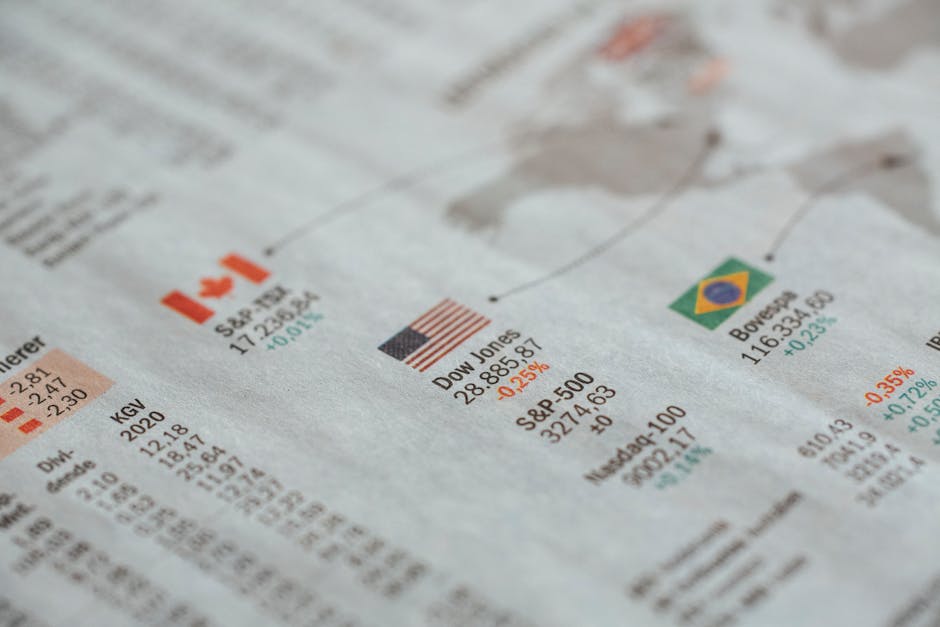
The term "Global Markets Market Cap Pix" refers to the comprehensive valuation and tracking of the total market capitalization across all publicly traded cryptocurrencies. This metric is not a single entity but rather a dynamic aggregate derived from individual cryptocurrency market caps, calculated by multiplying the current circulating supply of a digital asset by its current market price. Understanding this aggregate valuation is crucial for investors, traders, and analysts seeking to grasp the overall health, growth, and sentiment of the burgeoning cryptocurrency industry. The "pix" component, while not a standard financial term, likely alludes to the visual representation and constant fluctuation of these numbers, emphasizing their real-time, data-driven nature. As the cryptocurrency market continues to mature, the significance of global market cap data, often visualized through charts and graphs that offer a "picture" of its scale, becomes increasingly pronounced.
The methodology for calculating the market capitalization of an individual cryptocurrency is straightforward yet fundamental. It begins with the circulating supply, which represents the number of coins or tokens currently available to the public and actively trading. This differs from the total supply, which might include locked tokens, burned tokens, or tokens yet to be released. Multiplying this circulating supply by the current trading price of the cryptocurrency yields its individual market cap. For instance, if Bitcoin (BTC) has a circulating supply of 19 million BTC and is trading at $50,000 per BTC, its market capitalization would be $950 billion (19,000,000 * $50,000). This calculation is then replicated for every cryptocurrency listed on reputable exchanges and data aggregators. The sum of all these individual market caps, aggregated globally, forms the "Global Markets Market Cap."
The total global cryptocurrency market capitalization serves as a primary indicator of the industry’s size and overall investor sentiment. A rising global market cap suggests increased capital inflow into the crypto space, indicating growing investor confidence and demand for digital assets. Conversely, a declining market cap signals capital outflow, potentially driven by negative news, regulatory concerns, or broader market downturns. This macro-level view allows for a qualitative assessment of the crypto market’s trajectory, distinguishing periods of bull market euphoria from bear market consolidation. Tracking its historical performance reveals patterns of exponential growth, punctuated by significant corrections, a characteristic often attributed to the nascibyte nature of this asset class and its sensitivity to macroeconomic factors and technological advancements.
Different cryptocurrencies contribute to the global market cap in varying degrees, with the largest ones, such as Bitcoin and Ethereum, wielding significant influence. Bitcoin, often referred to as "digital gold," typically holds the largest share of the market cap due to its first-mover advantage, established network effect, and perceived status as a store of value. Ethereum, as the second-largest cryptocurrency by market cap, plays a pivotal role as the foundational platform for decentralized applications (dApps), smart contracts, and a vast ecosystem of other cryptocurrencies (tokens) built upon its blockchain. The dominance of these top-tier assets means that their price movements can disproportionately impact the overall global market cap, underscoring the importance of analyzing their individual performance alongside the aggregate.
The concept of "market cap dominance" is a vital sub-metric within the global market cap analysis. It refers to the percentage of the total global cryptocurrency market cap that is held by a specific cryptocurrency. Bitcoin dominance, for example, has historically been a closely watched indicator. When Bitcoin dominance is high, it suggests that investors are primarily allocating capital to Bitcoin, often seen as a safer bet within the volatile crypto market. A declining Bitcoin dominance, on the other hand, can signal a rotation of capital into altcoins (cryptocurrencies other than Bitcoin), often during periods of increased risk appetite and a search for higher returns. This dynamic interplay between Bitcoin and altcoin performance is a key characteristic of crypto market cycles.
The visualization of global market cap, the "pix" aspect, is crucial for accessibility and understanding. Websites like CoinMarketCap, CoinGecko, and others provide real-time charts and graphs that illustrate the total market cap’s progression over various timeframes (daily, weekly, monthly, yearly, all-time). These visual aids enable users to quickly identify trends, potential turning points, and the overall volatility of the market. Interactive charts allow users to zoom in on specific periods, compare the performance of different cryptocurrencies, and gain insights into the ebb and flow of capital within the digital asset ecosystem. The sheer volume of data points that contribute to the global market cap necessitates effective visualization to make it comprehensible.
Several factors influence the global cryptocurrency market cap. Macroeconomic conditions play a significant role, with inflation concerns often driving investors towards perceived inflation hedges like Bitcoin. Interest rate hikes by central banks can lead to a general deleveraging across asset classes, including cryptocurrencies, thus impacting market cap negatively. Regulatory developments are another critical driver. Positive regulatory clarity can boost investor confidence and attract institutional capital, leading to an increase in market cap. Conversely, stringent regulations or outright bans in major economies can trigger sell-offs and diminish market valuations.
Technological advancements and network upgrades within the cryptocurrency space also contribute to market cap fluctuations. For instance, successful upgrades to blockchains like Ethereum, such as the transition to Proof-of-Stake (known as "The Merge"), can enhance scalability, reduce transaction fees, and improve energy efficiency, thereby increasing investor interest and potentially the platform’s overall market cap. The development of new use cases and the adoption of blockchain technology by mainstream industries can further drive demand for cryptocurrencies and their associated market valuations.
The growth of decentralized finance (DeFi) and non-fungible tokens (NFTs) has significantly impacted the global market cap. DeFi platforms, built primarily on Ethereum and other smart contract-enabled blockchains, offer alternative financial services like lending, borrowing, and trading without intermediaries. The total value locked (TVL) in DeFi protocols, a metric that represents the amount of cryptocurrency deposited in DeFi smart contracts, often correlates with the market cap of the underlying tokens and the broader DeFi ecosystem. Similarly, the explosion of NFTs, digital assets representing ownership of unique items, has created new avenues for value creation and speculation within the crypto market, contributing to the overall market cap.
However, the global cryptocurrency market cap is not without its challenges and limitations. The data aggregation process relies on information provided by exchanges, which can sometimes be inaccurate or manipulated. Wash trading, a form of market manipulation where an individual or entity repeatedly buys and sells an asset to create misleading activity, can artificially inflate trading volumes and circulating supply figures, impacting market cap calculations. Furthermore, the decentralized nature of many cryptocurrencies makes it difficult to ascertain the exact circulating supply and ownership of tokens at any given moment.
The volatility of individual cryptocurrency prices is another inherent characteristic that contributes to the dramatic swings observed in the global market cap. Unlike traditional asset classes that tend to exhibit more predictable price movements, cryptocurrencies are susceptible to rapid and significant fluctuations driven by speculation, news events, and the speculative nature of the market. This volatility, while presenting opportunities for profit, also poses substantial risks to investors.
Understanding the nuances of "Global Markets Market Cap Pix" is essential for anyone participating in or observing the cryptocurrency market. It’s not just about a single number; it’s about the collective valuation of a rapidly evolving technological and financial frontier. The data provides a broad overview, but a deeper understanding requires dissecting the contributions of individual assets, analyzing market cap dominance, and comprehending the myriad factors that influence these valuations. As the industry continues to mature, the accuracy and comprehensiveness of market cap data, and its effective visualization, will become even more critical for informed decision-making and navigating the complexities of the global digital asset landscape. The ongoing development of more sophisticated tracking tools and analytical frameworks will further refine our ability to interpret these "pictures" of market valuation, providing clearer insights into the future of finance and technology.
