An international research team has successfully re-examined one of the oldest precisely dated records of a total solar eclipse, a scientific endeavor that bridges the gap between ancient historical chronicles and modern astrophysics. By synthesizing historical geography, archaeological data, and sophisticated astronomical calculations, the researchers have reconstructed the solar event of July 17, 709 BCE, as viewed from the ancient capital of the Lu Duchy in China. This study, recently published in the Astrophysical Journal Letters, provides definitive evidence regarding the long-term variability of Earth’s rotation speed and offers a potential, independent validation of solar activity models derived from radiocarbon dating.
The study underscores the enduring value of ancient astronomical observation. While modern scientists rely on satellite telemetry and atomic clocks to measure the mechanics of our solar system, historical records provide the only window into the deep-time dynamics of planetary motion. By correcting a long-standing geographic error regarding the location of the ancient Lu capital, the researchers have turned a 2,700-year-old text into a precise calibration tool for Earth’s geophysical history.
The Chronology of an Ancient Event
The eclipse in question occurred during the Spring and Autumn period of Chinese history, a time when the Lu Duchy held significant cultural and political influence. The event was formally documented in the Spring and Autumn Annals, a chronicle traditionally attributed to Confucius. The original entry was stark and direct: "The Sun was totally eclipsed."
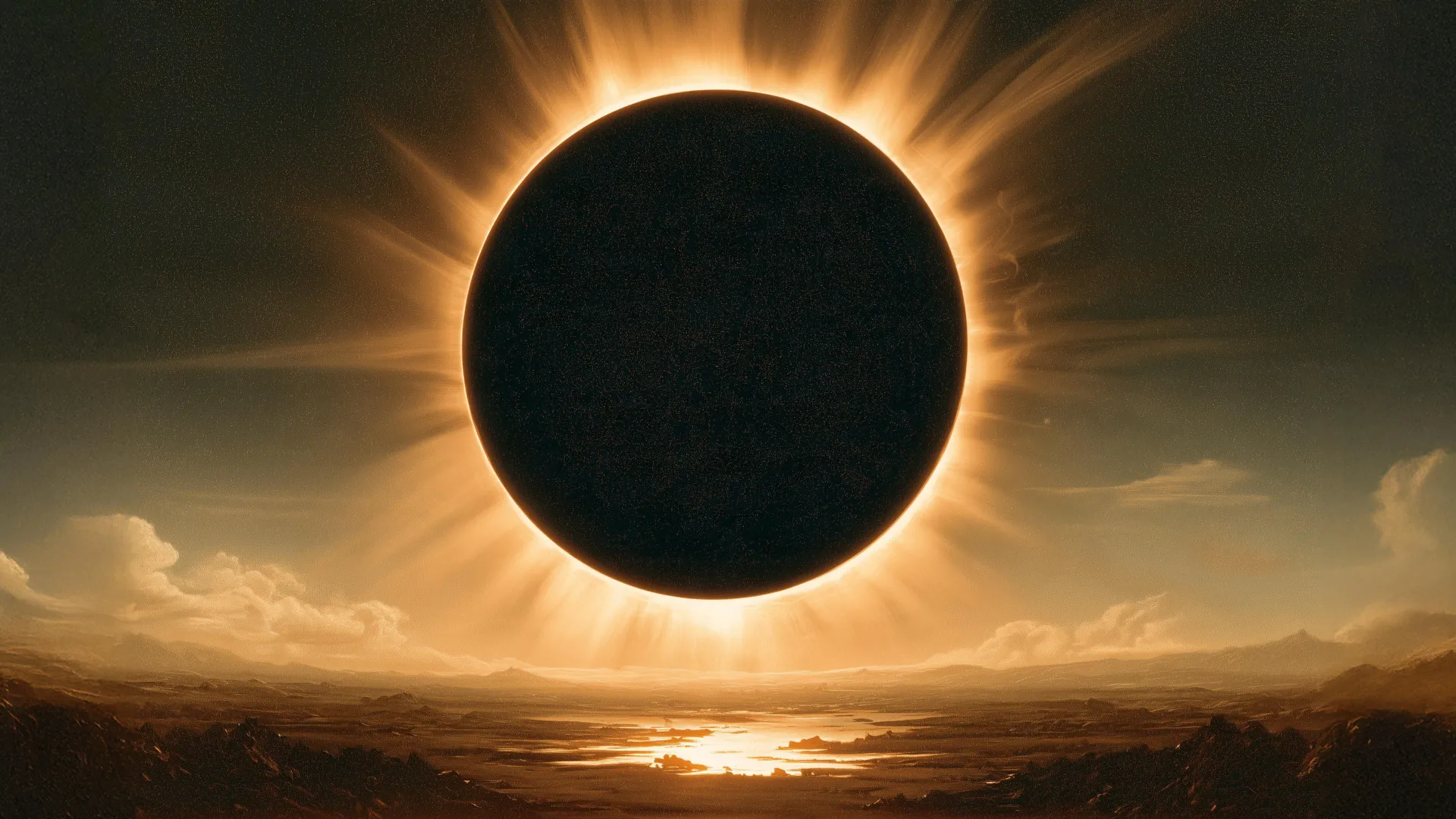
However, the scientific utility of this record was significantly expanded by a later addendum found in the Hanshu, or Book of Han, compiled approximately seven centuries after the event. The Hanshu text describes the eclipsed sun as appearing "completely yellow above and below." Scientists have long hypothesized that this description refers to the solar corona—the elusive, pearly-white outer atmosphere of the Sun that remains hidden by the solar disk’s brilliance until the moment of totality.
The timeline of the investigation began with the researchers identifying a discrepancy between the historical record and modern astronomical projections. Initial calculations suggested that a total solar eclipse should not have been visible from the traditional site of Qufu, the capital of the Lu state. By integrating archaeological excavation reports that pinpointed the exact location of the ancient capital, the team discovered that previous studies had misplaced the city by roughly eight kilometers. This seemingly minor geographic correction was the "missing link" that reconciled the historical account with the laws of celestial mechanics.
Refining Earth’s Rotational Mechanics
Earth’s rotation is not a static process. It is subject to subtle, long-term fluctuations caused by a variety of geophysical forces, most notably the gravitational interaction between the Earth, the Moon, and the Sun. The tidal friction generated by the Moon’s gravity acts as a perpetual brake on Earth’s rotation, causing the length of the day to increase by approximately 1.7 to 2.3 milliseconds per century.
Because this change is cumulative, calculating the precise path of an eclipse that occurred over two millennia ago requires an extremely accurate value for delta T (ΔT)—the difference between Terrestrial Time, which is uniform, and Universal Time, which is tied to the Earth’s actual, fluctuating rotation. By anchoring their model to the corrected coordinates of Qufu, the team established a ΔT range of 20,264 to 21,204 seconds for the 709 BCE eclipse.
This finding serves as a critical data point for geophysicists. Improved constraints on ΔT allow for more accurate reconstructions of past oceanic and atmospheric conditions, as well as providing a clearer picture of how the Earth’s mantle and core interact over millennial timescales. Coauthor Mitsuru Sōma of the National Astronomical Observatory of Japan noted that this dataset effectively fixes errors present in previous Earth rotation studies, thereby enhancing the reliability of future historical astronomical reconstructions.
Solar Activity and the Grand Minimum
One of the most intriguing aspects of the research is the potential identification of the solar corona. If the "yellow above and below" description is indeed a record of the corona, it suggests the Sun was in a state of high magnetic activity. This is particularly significant because the eclipse occurred at the tail end of the "Neo-Assyrian Grand Minimum," a prolonged period of suppressed solar activity that lasted roughly from 808 to 717 BCE.
Grand minima are characterized by a significant reduction in the number of sunspots and a weakening of the solar magnetic field. These periods are typically identified through the analysis of radiocarbon isotopes (14C) trapped in ancient tree rings. Radiocarbon is produced in the atmosphere by cosmic rays; when solar activity is high, the Sun’s magnetic field shields the Earth, reducing the influx of these rays and, consequently, the production of 14C.
By comparing the potential coronal structure described in the 709 BCE record with radiocarbon data, the research team found that the eclipse occurred just as the Sun was emerging from its quiet phase. The evidence suggests that by 709 BCE, the Sun had resumed its standard 11-year cycle, with the corona’s structure indicating substantial magnetic activity. This provides independent, observational support for radiocarbon-based solar models, confirming that historical records can indeed provide a "spot check" for scientific theories built on proxy data.
The Cultural Legacy of Omenology
The preservation of this record is not an accident of history but a result of the sophisticated, albeit different, scientific priorities of ancient Chinese dynasties. In ancient China, the court employed astronomers specifically to monitor the heavens. This practice, often referred to as "omenology," was rooted in the belief that celestial phenomena reflected the moral integrity of the Emperor.
Eclipses, comets, and solar flares were treated as divine warnings or omens of political instability. Consequently, court astronomers were incentivized to document these events with the highest degree of precision possible. The Spring and Autumn Annals and subsequent historical works like the Hanshu were not merely diaries; they were foundational texts for statecraft. This cultural emphasis on celestial observation has left a legacy that modern astrophysicists are only now fully harvesting.
Dr. Hisashi Hayakawa, an assistant professor at Nagoya University and the lead author of the study, holds doctorates in both solar physics and oriental history. His dual expertise highlights the necessity of interdisciplinary approaches in modern research. "What makes this record special isn’t just its age, but the integration of historical text with rigorous physics," Dr. Hayakawa remarked. "It proves that our ancestors were very skilled observers whose work remains a critical resource for contemporary science."
Broader Implications for Future Research
The implications of this study extend beyond the specific events of 709 BCE. The methodology established by the team—correcting historical geographic coordinates to fit modern astronomical models—provides a repeatable framework for analyzing other ancient records. Many such accounts currently exist in various archives, yet they remain underutilized because of the lack of precision in their geographic or temporal metadata.
Furthermore, the study provides a validation of current solar activity models. As researchers attempt to understand the long-term patterns of the Sun, including the potential for future grand minima that could impact modern global infrastructure, having a long-term, multi-millennial record is invaluable. The ability to cross-reference historical observations of the solar corona with tree-ring radiocarbon data provides a cross-validation that neither method could achieve on its own.
The research also underscores the fragility and importance of historical manuscripts. The fact that an eight-kilometer shift in geographic knowledge could clarify the entire physics of the event illustrates how delicate the link between history and science can be. As technology improves, enabling researchers to conduct more high-resolution simulations, the demand for high-quality, historically accurate astronomical data will only grow.
In conclusion, the investigation into the 709 BCE eclipse stands as a testament to the power of collaborative, multidisciplinary science. By looking back 2,700 years, researchers have not only clarified the rotational mechanics of our own planet but have also gained a clearer understanding of our star’s life cycle. As Dr. Meng Jin of the Lockheed Martin Solar and Astrophysics Laboratory stated, the ability to combine ancient, carefully recorded history with modern computational power allows for the discovery of new information about the Earth and the Sun that would otherwise be lost to time. The heavens may be vast and complex, but the path to understanding them often leads back to the meticulous observations of those who walked the Earth long before the dawn of modern science.