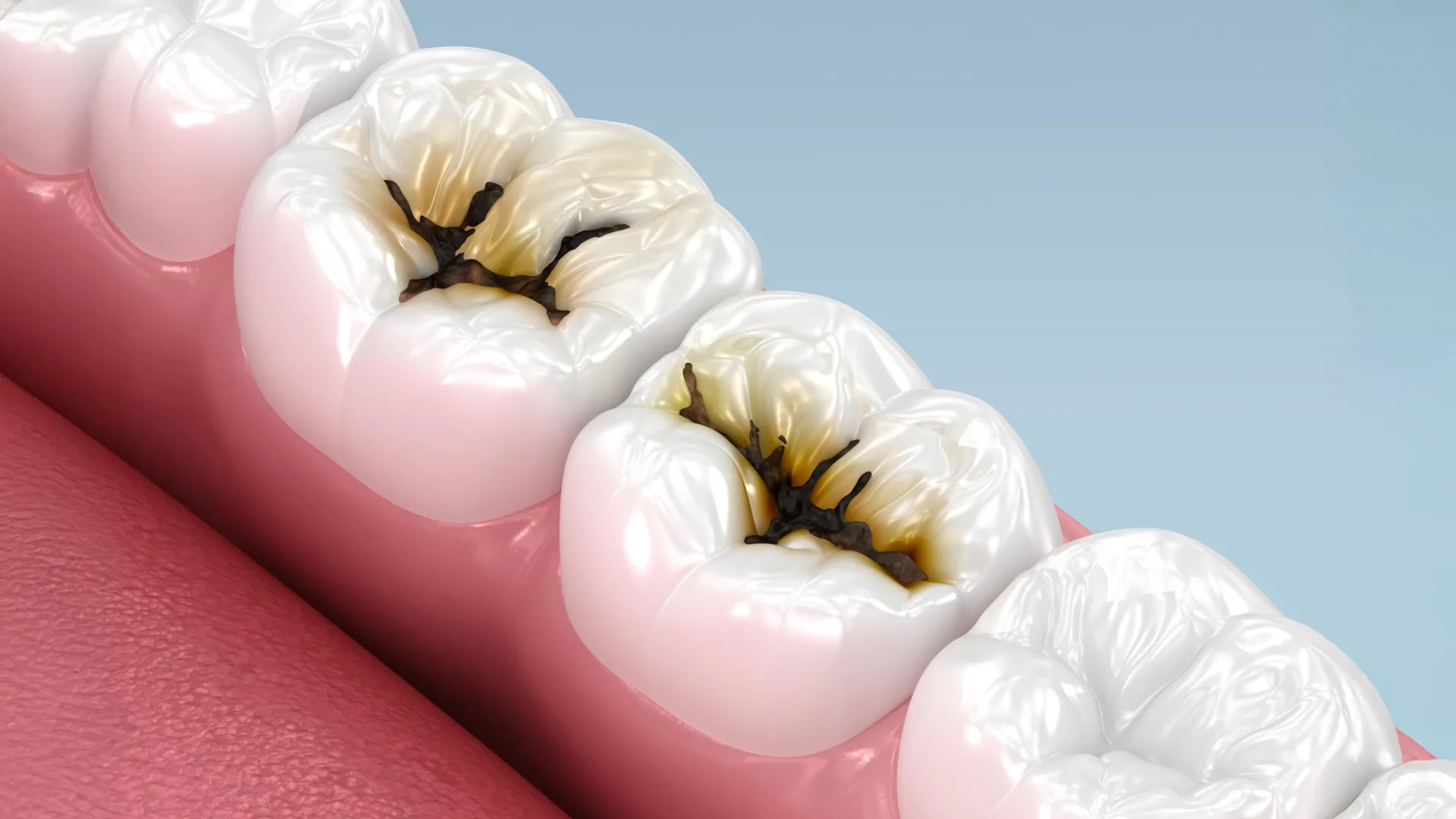
Tooth decay has long been synonymous with the dreaded whine of the dental drill, local anesthetic injections, and the anxiety of the clinical chair. For millions of children worldwide, the traditional management of cavities involves invasive procedures that can trigger lifelong dental phobias. However, a landmark Phase III clinical trial has provided definitive, large-scale evidence that a simple, inexpensive liquid can halt tooth decay in its tracks without a single drop of local anesthetic, no drilling, and no surgical intervention.
The treatment, known as silver diamine fluoride (SDF), takes only seconds to apply and represents a paradigm shift in how pediatric oral health is managed. Published in JAMA Pediatrics, the multi-site study evaluated the efficacy of a 38% SDF solution in arresting dental caries among young children. As researchers push for broader regulatory approval and integration into routine medical and dental practices, this decades-old compound could fundamentally transform preventative healthcare, offering a lifeline to vulnerable populations who face insurmountable barriers to traditional dental care.
The Mechanics of a Simple Solution
Unlike traditional restorations that require mechanical removal of damaged tooth structure followed by the placement of a composite or amalgam filling, SDF operates on a biological level. The application process is remarkably straightforward: a dental professional uses a tiny, sponge-tipped applicator to paint the liquid directly onto the affected surface of the tooth. The procedure is entirely non-invasive, requiring no sedation, drilling, or injections, making it uniquely suited for populations that struggle with conventional dental procedures.
The chemical formulation of SDF relies on a dual-action mechanism. Silver acts as a potent antimicrobial agent, effectively neutralizing the bacteria responsible for generating the acids that break down tooth enamel and dentin. Simultaneously, fluoride remineralizes the compromised tooth structure, significantly enhancing its resistance to further acidic attacks.
Dentists refer to this process as "arresting" tooth decay. Rather than replacing lost tissue, the treatment stabilizes the existing lesion, preventing it from expanding or deepening into the pulp, which would otherwise cause painful infections. Applied at six-month intervals, the treatment can successfully control a cavity until the affected primary tooth naturally exfoliates to make way for permanent adult dentition.
There is, however, a notable aesthetic trade-off. Upon contact with decayed tooth material, silver ions oxidize, permanently staining the cavity a dark, obsidian black. While this discoloration is purely cosmetic and structurally harmless, it can be visibly striking, particularly when applied to anterior teeth in the front of the mouth. Nevertheless, for millions of patients and their families, the distinct advantage of avoiding pain, anxiety, and invasive surgery far outweighs the visual drawback.
A Public Health Crisis and the Urgent Need for Alternatives
Tooth decay remains the single most common chronic childhood disease on a global scale. In the United States alone, more than 40% of children experience cavities before entering kindergarten. While early-stage decay may present few or no symptoms, untreated cavities frequently escalate into severe toothaches, debilitating localized infections, nutritional deficits from painful chewing, and disrupted sleep. The downstream consequences extend into the classroom, resulting in missed school days and diminished academic performance, alongside a heavy burden of emergency medical appointments.
For very young children, traditional dental interventions present immense logistical and physiological hurdles. Toddlers and infants frequently lack the developmental maturity required to remain completely still throughout a lengthy restorative procedure. Consequently, children with extensive decay often require comprehensive dental rehabilitation performed under general anesthesia, a costly and invasive measure that carries inherent medical risks and requires hospital-level infrastructure.
Furthermore, systemic disparities in healthcare access mean that thousands of young children visit hospital emergency departments every year suffering from acute dental pain. Emergency room physicians, constrained by their training and lack of specialized dental equipment, are generally unable to treat the underlying pathology. They are typically limited to prescribing antibiotics and analgesics, providing only temporary relief while the root cause of the infection remains unaddressed.
This systemic bottleneck leaves vulnerable children exposed to recurrent bouts of pain and infection while waiting for specialized pediatric dental care. By introducing a treatment that can be administered swiftly in non-traditional settings, public health advocates hope to bridge this critical gap in the healthcare continuum.
Chronology of a Breakthrough: From Global Practice to U.S. Validation
While silver diamine fluoride is celebrated as a modern marvel in American dentistry, its underlying components and clinical applications are far from novel. Dentists in various international jurisdictions, including Japan, Australia, and parts of South America and Europe, have utilized SDF formulations for decades to manage caries successfully.
The regulatory journey in the United States reached a major milestone in 2014, when the U.S. Food and Drug Administration (FDA) cleared SDF as a medical device specifically indicated for the treatment of dental hypersensitivity. Recognizing its potent antimicrobial properties, forward-thinking American dental practitioners quickly began utilizing the product "off-label"—applying an FDA-cleared substance for a purpose beyond its original narrow indication—to arrest active tooth decay.
Despite widespread anecdotal success and endorsement by professional bodies like the American Academy of Pediatrics and the American Dental Association, widespread adoption was hindered by a distinct lack of large-scale, rigorous clinical data derived specifically from diverse U.S. patient populations. Public health agencies and conservative medical insurers required high-tier empirical evidence before endorsing broad systemic integration.
To address this evidentiary deficit, a collaborative consortium of researchers launched a major Phase III clinical trial in 2018. Headed by the University of Michigan School of Dentistry, the research initiative brought together academic powerhouses including New York University College of Dentistry, the University of Iowa, and Indiana University. Funded by a robust grant of more than $12 million from the National Institute of Dental and Craniofacial Research (NIDCR)—a division of the National Institutes of Health (NIH)—the trial was designed to establish irrefutable proof of safety and efficacy.
The research protocol encountered unprecedented operational hurdles with the onset of the COVID-19 pandemic in early 2020. Despite widespread public health lockdowns, supply chain disruptions, and clinical access restrictions, the research team persevered, adapting protocols to maintain cohort retention and ensure rigorous data collection across multiple states.
Inside the Phase III Clinical Trial
The findings published in JAMA Pediatrics represent the culmination of years of meticulous field research. The clinical trial enrolled 830 young participants, all under the age of six, recruited through a diverse network of dental clinics, pediatric medical practices, and community-based programs. Notably, participants were heavily drawn from Head Start and Early Head Start initiatives—federally funded programs dedicated to providing comprehensive early childhood education, health, and nutrition services to low-income families.
The geographical breadth of the study encompassed urban and rural communities across Michigan, New York, and Iowa, ensuring that the trial population reflected the socioeconomic and demographic diversity of the United States. The product utilized in the investigation was Advantage Arrest 38% SDF, manufactured and supplied by Elevate Oral Care.
The trial’s primary endpoint evaluated the ability of the solution to arrest decay in primary teeth when applied at consistent six-month intervals. The results were compelling: the 38% SDF solution successfully halted the progression of tooth decay in more than half of all treated baby teeth.
Dr. Margherita Fontana, professor of dentistry at the University of Michigan School of Dentistry and the study’s lead investigator, emphasized the safety and universal applicability of the findings. "This is a very effective and safe treatment—even in children as young as 1," Fontana noted.
Her co-investigator, Dr. Amr Moursi, a professor of pediatric dentistry at NYU College of Dentistry, highlighted the regulatory significance of the data. "Our results support FDA approval of SDF for managing arrest of tooth decay in young children. Removing SDF from off-label status would be an important innovation which could lead to increased utilization by providers, enhanced payments by insurers and more consistent product quality," Moursi explained.
Broader Implications and Future Horizons
The publication of these definitive clinical trial results is expected to catalyze significant changes across multiple sectors of the healthcare landscape. Armed with rigorous Phase III data, manufacturers can now pursue formal FDA approval to market SDF as a dedicated drug for arresting dental caries, transitioning the product out of its current off-label status.
Such a regulatory transition carries profound economic and practical implications. With formal FDA indication, commercial health insurers and state-administered Medicaid programs are far more likely to establish standardized reimbursement codes for SDF applications. This financial incentive is crucial for incentivizing community health centers, general dental practices, and rural clinics to incorporate the treatment into their standard preventative care workflows.
Furthermore, researchers and public health advocates are championing the integration of SDF application into non-dental healthcare environments. Because toddlers and infants visit pediatricians and primary care clinics years before they ever sit in a dental chair, medical professionals are strategically positioned to identify early signs of enamel demineralization.
If pediatricians, family practice physicians, and nurse practitioners are trained and authorized to apply SDF during routine wellness checks, millions of children could receive immediate, preventative intervention. This early stabilization can protect the tooth from catastrophic structural failure while the clinician actively facilitates a successful referral to a permanent "dental home"—an ongoing, continuous relationship with an oral health provider.
While the primary beneficiary cohort of the current trial comprised young children, experts emphasize that the long-term utility of SDF extends far beyond early childhood. The treatment offers profound promise for older adults experiencing root caries—decay that develops on the exposed roots of teeth due to gum recession—which is increasingly common in aging populations. Similarly, individuals with severe developmental or physical disabilities, patients suffering from acute dental phobias, and marginalized populations living in professional dental deserts stand to benefit immensely from a therapy that is fast, inexpensive, and entirely non-surgical.
Ultimately, silver diamine fluoride does not completely eradicate the need for traditional restorative dentistry, nor is it structurally appropriate for every advanced cavity. However, by transforming a complex, expensive, and emotionally taxing surgical procedure into a matter of a few seconds with a sponge-tip applicator, modern medicine has taken a monumental step forward. As policy changes, regulatory approvals, and clinical guidelines catch up with the science, millions of patients may soon find themselves looking back on dental visits defined not by fear and drilling, but by quick, painless preservation.