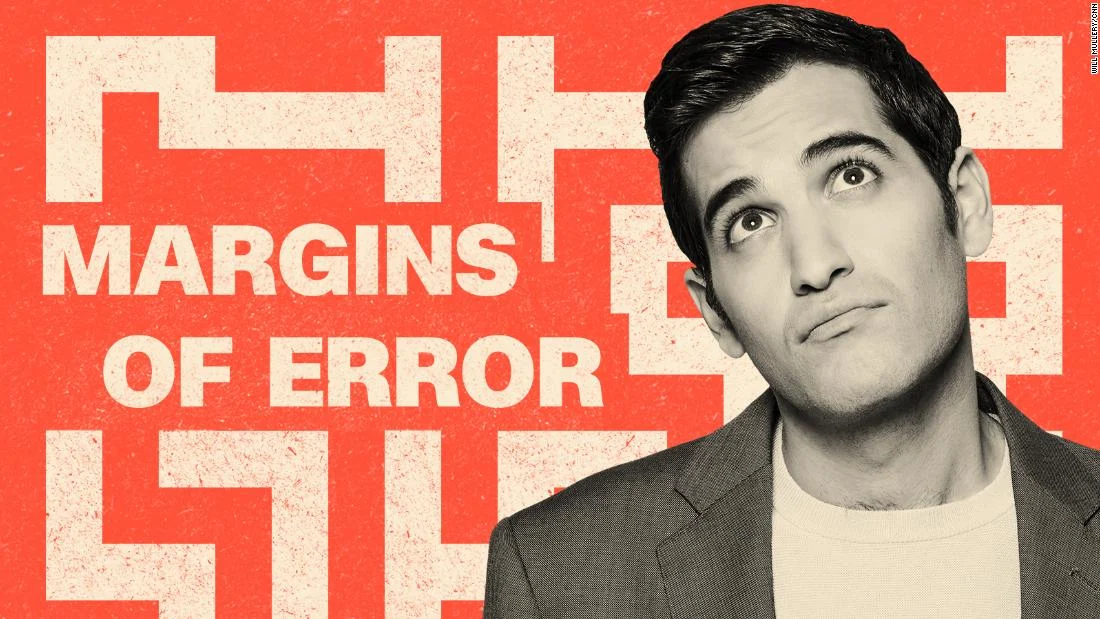
In an era defined by the sheer volume of information, understanding the narrative behind the numbers has become an essential skill for navigating modern life. CNN’s podcast, Margins of Error, hosted by senior data reporter Harry Enten, serves as a deep dive into the statistical realities that shape human behavior, cultural norms, and societal structures. By moving beyond raw calculation, the program seeks to interpret what vast datasets reveal about collective identity and belief systems. Through a blend of investigative journalism and quantitative analysis, Enten explores topics ranging from the nuances of regional linguistics to the economic thresholds of personal happiness, effectively bridging the gap between dry statistics and the lived human experience.
The Methodology of Data Storytelling
The premise of Margins of Error is rooted in the philosophy that data is rarely neutral. While statistics are often utilized to provide definitive answers, Enten’s approach emphasizes the "margin of error"—the space where uncertainty resides and where human complexity often defies rigid categorization. Each episode functions as a case study, dissecting phenomena that many consider mundane, such as the evolution of dietary labels or the social implications of wearing eyeglasses. By interviewing experts, ranging from urban planners and sociologists to artificial intelligence researchers, the podcast provides a multidimensional view of how data influences policy and personal choice.
Chronology of Inquiry: A Seasonal Overview
The podcast’s investigative journey has covered a wide array of topics, reflecting a chronological progression of cultural inquiry throughout its 2022 run. Each episode serves as a snapshot of American life, framed by rigorous data collection:
- May 3, 2022: The series opened with an examination of linguistic regionalism, questioning whether the distinct American accents are fading in the face of mass media and national conformity.
- May 10, 2022: An investigation into the history of hygiene, challenging modern standards of bathing frequency and the societal pressures that dictate grooming habits.
- May 17, 2022: A look at the shifting perception of eyewear, analyzing the transition of glasses from a symbol of intellectual stigma to a fashionable accessory, and the psychological weight they carry in legal settings.
- May 24, 2022: A critical assessment of the "money-happiness" correlation, utilizing real-time tracking data to determine if financial gain is truly the primary driver of life satisfaction.
- May 31, 2022: An analysis of the rebranding of the beverage industry, specifically the shift from "diet" to "zero sugar" labels and the marketing psychology behind it.
- June 7, 2022: A historical and political exploration of why the United States remains a holdout in the global adoption of the metric system, highlighting the interplay between national identity and practical logistics.
- June 14, 2022: An investigation into the decline of traditional romantic markers, such as dating and marriage, using census and social data to contextualize modern relationship trends.
- June 21, 2022: A forecast on the future of meteorology, assessing how climate change impacts the accuracy and reliability of modern weather prediction models.
- June 28, 2022: A deep dive into the psychology of the "underdog," analyzing why public support frequently gravitates toward teams or candidates who are statistically disadvantaged.
- July 5, 2022: A practical inquiry into travel efficiency, applying algorithmic solutions to optimize everything from road trips to the boarding processes of commercial airlines.
Quantitative Context and Social Implications
The data presented throughout the series often contradicts prevailing intuition. For instance, in the discussion regarding the "optimal road trip," the podcast references the work of researcher Randal Olson, whose genetic algorithm calculations provide a mathematical route for traveling across the United States. This application of data to personal leisure demonstrates how computational optimization can solve logistical problems that appear subjective at first glance.
Similarly, the investigation into the metric system provides a clear example of how cultural inertia often supersedes mathematical efficiency. Despite the technical advantages of a base-10 system, the U.S. continues to rely on imperial measurements. The podcast suggests that this is not a failure of logic, but rather a reflection of historical identity and the economic costs of a total systemic transition—a classic example of the "margin of error" in human decision-making.

In the realm of social psychology, the episode concerning underdogs provides significant insight into human altruism and fairness. By speaking with experts such as Nadav Goldschmied, Enten highlights the psychological mechanism of "empathy for the underdog." This phenomenon is not limited to sports; it significantly impacts political polling and voter behavior, where the perception of an candidate’s struggle can influence their popularity more than their actual policy positions.
Expert Perspectives and Interdisciplinary Collaboration
The success of the program is largely attributed to its interdisciplinary approach. Enten frequently engages with figures such as Neil Paine of FiveThirtyEight, whose contributions reinforce the importance of statistical rigor in political analysis. By bringing in non-traditional experts—such as trapeze instructors to test happiness theories or linguists to analyze accent decay—the podcast breaks out of the "newsroom" echo chamber. This methodology ensures that the findings are grounded in real-world application rather than abstract theory.
For example, when discussing the future of weather forecasting, the podcast engages with meteorological professionals to explain that while climate change is creating more extreme and volatile weather patterns, the actual accuracy of short-term forecasting has reached unprecedented levels due to advances in satellite technology and high-performance computing. This provides a nuanced view of a topic that is often oversimplified in general news cycles.
Broader Impact on Public Literacy
The significance of Margins of Error lies in its contribution to public data literacy. In an age where misinformation often stems from the misinterpretation of numbers, the podcast encourages listeners to adopt a more skeptical, analytical lens. By questioning the source of data—such as why a soda company would change its branding, or why a certain travel route is considered "optimal"—Enten teaches the audience to look for the variables and the hidden factors that influence outcomes.
The program also highlights the limitations of data. By admitting that certain human experiences—like the intricacies of love and romance—are difficult to quantify, the podcast maintains a level of journalistic integrity that is often missing from purely quantitative analyses. It acknowledges that while numbers can provide a map, they cannot capture the entirety of the human journey.
Conclusion: The Future of Data Journalism
As digital media continues to evolve, programs like Margins of Error set a precedent for how specialized knowledge can be made accessible to a broader audience. By stripping away the jargon of statisticians and replacing it with relatable, human-centric narratives, CNN has created a template for modern journalistic storytelling. The podcast remains a testament to the idea that, when examined with curiosity and rigor, even the most mundane aspects of our daily lives hold significant meaning. Whether investigating the nuances of our speech or the chemistry of our diet soda, Harry Enten reminds listeners that there is always more to the story than what appears on the surface, and that the "margin of error" is where the most interesting truths are often found. As listeners continue to seek clarity in a complex world, the utility of such analytical journalism will only grow, cementing its place as a vital resource for those looking to understand the mechanics behind the modern experience.