Explosions rocked the Saudi Arabian capital of Riyadh on Thursday, sending shockwaves through a region already severely strained by months of continuous conflict. The blasts occurred just hours after Iran-backed Houthi rebels reported deadly strikes on residential areas in western Yemen, which the group claims killed at least 12 civilians. The Saudi-led coalition fighting the Houthis confirmed on Thursday that its air defenses successfully intercepted and destroyed two ballistic missiles launched toward Riyadh, an attack that prompted civil defense alerts across several major cities, including Kharj and Najran.
The latest escalation underscores the fragile and volatile security landscape in the Middle East. The ongoing war, which has persisted for months, continues to widen past its initial flashpoints, drawing in regional actors, disrupting vital global trade corridors, and putting immense pressure on international diplomatic efforts to secure a lasting ceasefire.
Chronology of Escalation and Rising Tensions
The dramatic events unfolding in Riyadh and the Strait of Hormuz represent the culmination of months of heightened hostilities following the collapse of a multi-year truce in Yemen over the summer. The breakdown of the ceasefire fused the long-running Yemeni civil war directly into the broader regional crisis involving the United States, Israel, and Iran.
Earlier on Thursday, Agence France-Presse correspondents in Riyadh heard at least eight distinct explosions as emergency phone alerts warned residents that the city was under a hostile aerial threat. Although Saudi civil defense temporarily issued warnings regarding potential dangers in Riyadh, Kharj, and Najran, these advisories were quickly lifted after the coalition’s air defense systems neutralized the incoming threats.
This missile attack follows a pattern of increasing aggression by the Houthis against Saudi infrastructure. In recent weeks, the group launched a strike on Riyadh’s international airport, forcing its closure for two weeks and derailing flagship public events. These repeated assaults pose a direct threat to Saudi Arabia’s Vision 2030 economic diversification plans, which rely heavily on regional stability and international tourism and investment.
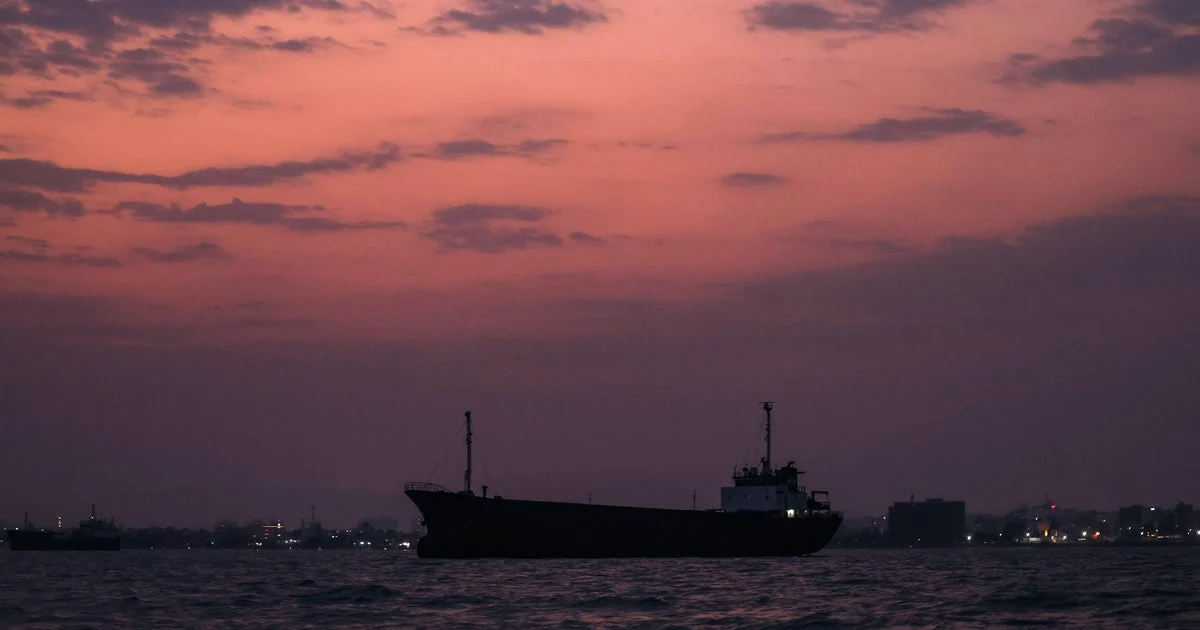
Meanwhile, in the vital maritime chokepoint of the Strait of Hormuz, maritime security continued to deteriorate. The U.K. Maritime Trade Operations Centre (UKMTO) reported that a tanker was struck by a projectile while exiting the strait along a southern route promoted by the United States. This followed statements from Iran’s navy claiming responsibility for several ships hitting sea mines near prohibited northern routes administered by Tehran. The Iranian Islamic Revolutionary Guard Corps (IRGC) asserted that three oil tankers were disabled and caught fire after ignoring warnings and navigating unauthorized southern paths. The conflicting directives over shipping lanes—with the U.S. declaring the primary channels safe and demined, and Iran enforcing its own strict maritime restrictions—have transformed the strait into a high-risk zone for global commerce.
Diplomatic Maneuvers and Stalled Peace Talks
Against this backdrop of kinetic military action, diplomatic channels remain active yet fraught with friction. Reports emerged this week that Vice President JD Vance sent a letter to Mohsen Rezaei, secretary of Iran’s Supreme National Security Council and a senior hard-liner, in an effort to jumpstart peace negotiations. According to sources cited by The Wall Street Journal and The New York Times, the initiative proposed an early meeting between American and Iranian officials, potentially mediated by Qatar.
However, conflicting narratives from Washington and Tehran have complicated the outreach. While reports indicated the correspondence aimed to restart comprehensive peace talks focusing on the Iranian nuclear program, President Trump stated publicly that the communication was a focused humanitarian outreach intended solely to facilitate the delivery of vital medical supplies to the Iranian populace.
Iranian state-affiliated media outlet Tasnim reported that Tehran was not prepared to drop its core preconditions for a ceasefire, which include lifting the American naval blockade, easing sweeping economic sanctions, and granting Iran access to billions of dollars in frozen financial assets held abroad. Concurrently, Qatari mediators have continued working to bridge the gap, presenting a new draft agreement to Iranian officials earlier in the week, with a formal response anticipated by the weekend.
Regional Fallout and Geopolitical Shockwaves
The ripple effects of the broader conflict extend far beyond the immediate battlefields of Yemen and the Persian Gulf, impacting domestic politics and energy markets globally.
In Israel, the aftermath of Tuesday’s national elections has created a severe political stalemate. Exit polls and preliminary counts indicate that Prime Minister Benjamin Netanyahu’s right-wing Likud party remains the largest single faction in the 120-seat Knesset, but his bloc falls short of securing a majority. Amid the political turmoil, Netanyahu accused Arab parties of widespread election fraud and called for an immediate security investigation. The historic turnout among Arab Israeli voters—who make up roughly 20% of the population—reflects deep community concerns under the hard-right administration. Meanwhile, opposition figures like Gadi Eisenkot have publicly clashed with government leaders, urging the military to resist political pressure regarding potential post-election military operations against Iran.
In Kuwait, diplomatic friction spiked after the state security court sentenced three men to death for plotting to assassinate Deputy Prime Minister and Interior Minister Sheikh Fahad Al-Yousef, while collaborating with Iran and Hezbollah. In response to Iran’s vehement denials and rejection of the court’s findings, Kuwait summoned the Iranian ambassador to formally protest what it termed a blatant infringement on national sovereignty and judicial independence.
Economic Implications and the Cost of War
The financial and economic tolls of the prolonged conflict are mounting exponentially. Central Command estimates place the total cost of the U.S. military operations surrounding the Iran war at approximately $47 billion, with the vast majority—around $29 billion—allocated strictly toward replacing expended munitions such as precision-guided missiles and interceptors. Nonpartisan budget projections indicate that ongoing operations continue to drain between $2 billion and $3 billion monthly.
These expenditures are mirrored by acute economic pressures felt globally. In the United Kingdom, Treasury chief John Healey unveiled emergency budget measures designed to cushion households and businesses from severe energy price spikes driven by the Middle East crisis. The package includes one-off payments for millions of lower- and middle-income families, alongside tax adjustments on electricity and gas bills, as governments across Europe grapple with imported inflation and supply chain disruptions.
Implications and Outlook
As the region braces for potential military escalations following upcoming political cycles—including U.S. midterm elections—diplomats and defense analysts warn of a precarious window. The convergence of persistent maritime hazards in the Strait of Hormuz, unyielding ballistic missile exchanges involving the Houthis and Saudi Arabia, and rigid negotiating positions in Tehran signal that a sustainable diplomatic resolution remains elusive.
While international intermediaries continue to push for humanitarian allowances and renewed talks, the underlying structural disputes—ranging from maritime transit rights and nuclear policy to regional proxy alignments—ensure that the Middle East will remain on high alert for the foreseeable future.