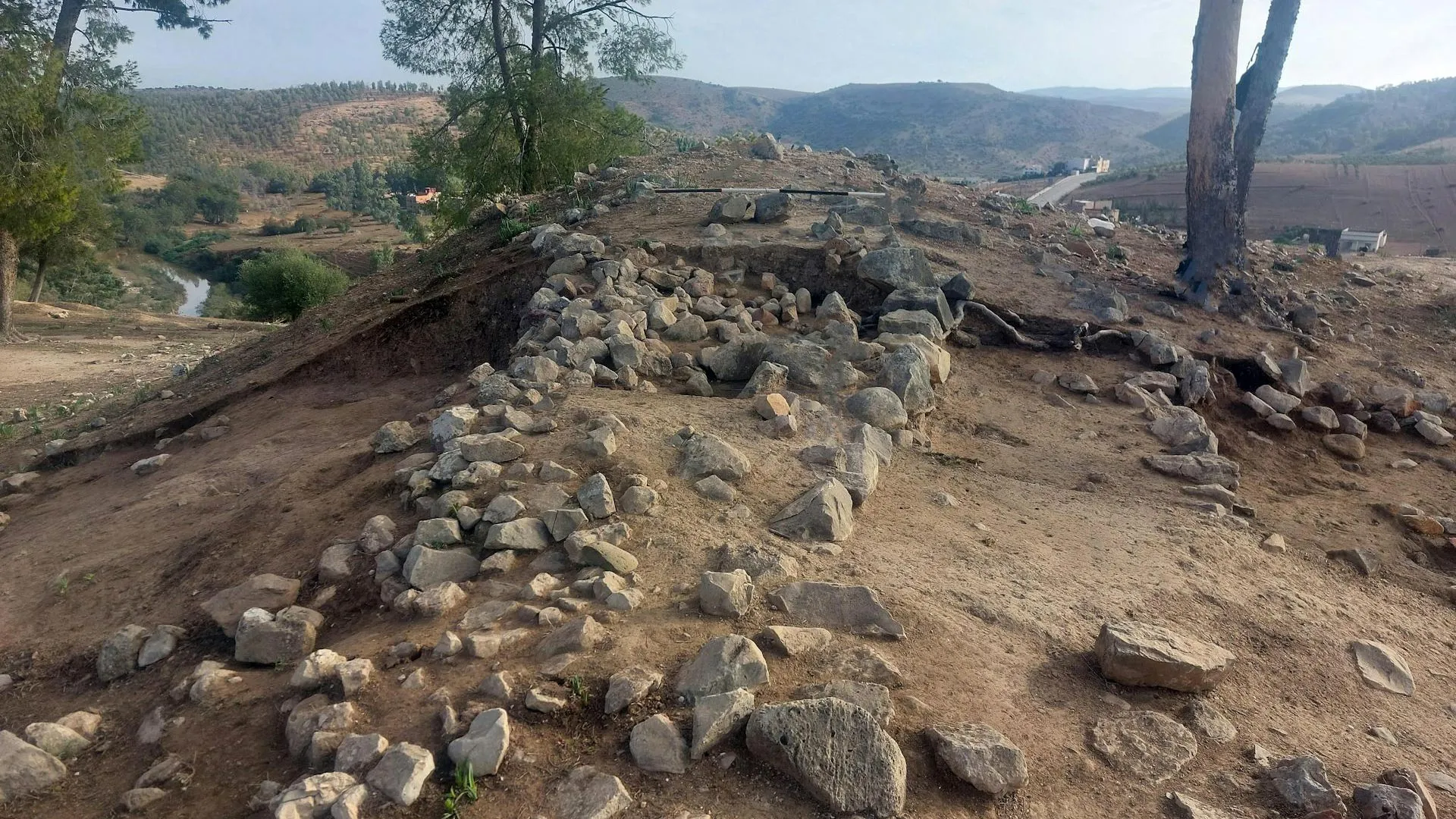
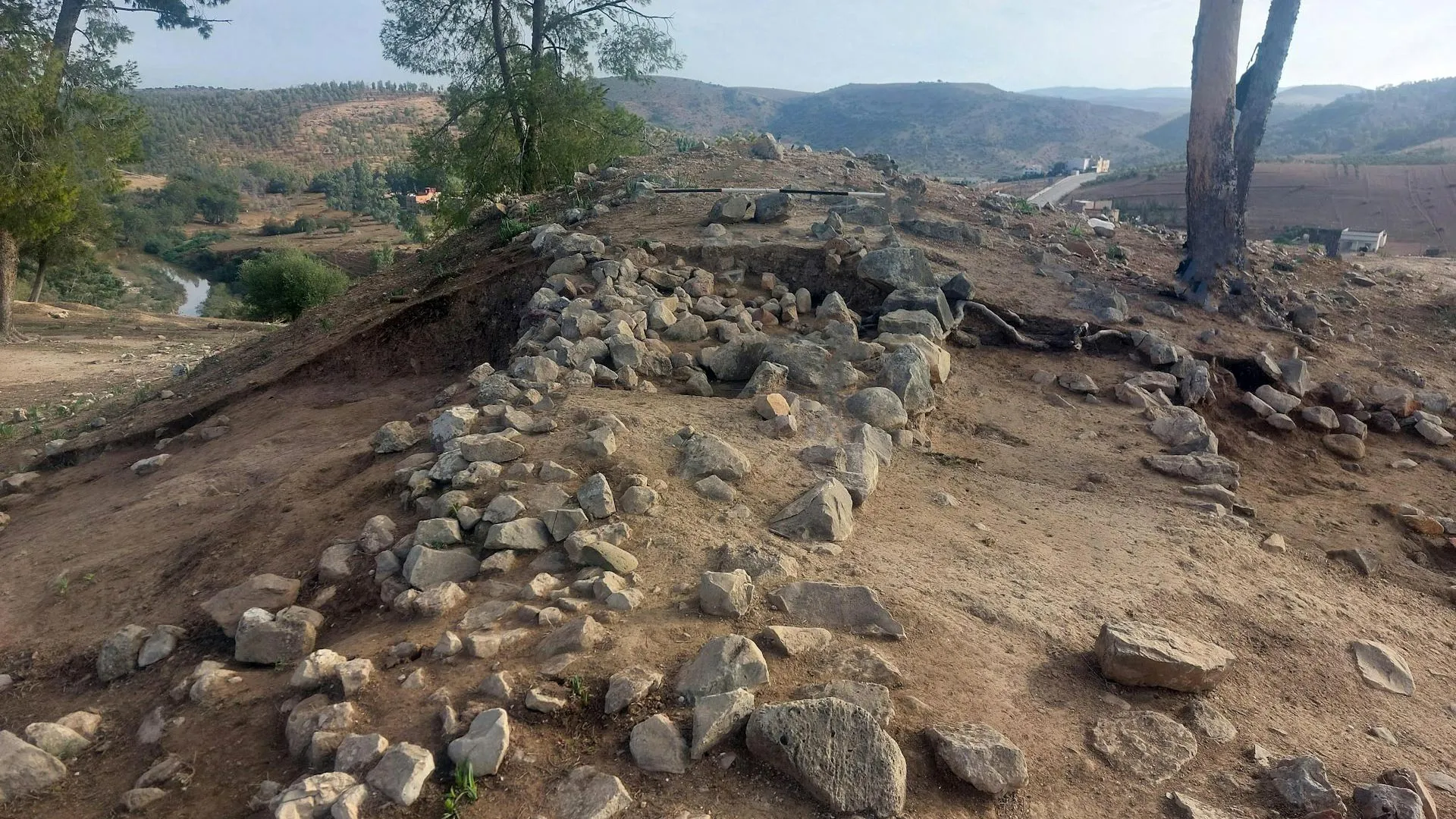
In the rolling hills of north-west Morocco, overlooking the river that gives the site its name, a revolutionary archaeological discovery is fundamentally altering our understanding of human development in the Maghreb. Recent findings at Oued Beht have unearthed a substantial built structure dating to the second millennium BC, providing the first definitive evidence of large-scale defensive architecture in North Africa outside of the Nile Valley. This discovery, which confirms that prehistoric communities in the region were not only capable of complex engineering but were also active participants in the broader Mediterranean cultural and economic sphere, fills a long-standing void in the history of the African continent.
The Oued Beht Archaeological Project, an international collaborative effort, has been systematically peeling back the layers of a site that has long been considered a "missing link" in human history. Following the 2023 excavation season, researchers have identified a site that serves as both a testament to early agricultural sophistication and an indicator of rising social complexity during the Bronze Age. By pushing back the timeline for organized defensive construction in the Maghreb, these findings suggest that the region was a bustling hub of interaction rather than a peripheral backwater, as some historical models had previously suggested.
A Chronology of Human Persistence
The history of Oued Beht is not a singular narrative but a palimpsest of human activity spanning millennia. The earliest major phase of the site dates to the Final Neolithic period, between 5,400 and 4,900 years ago. During this epoch, Oued Beht functioned as a vast, sprawling agricultural complex, likely one of the largest of its kind in Africa outside of Egypt. Archaeological evidence recovered from this layer includes a wealth of botanical and faunal remains, indicating that the early inhabitants were adept farmers cultivating barley and wheat, while maintaining livestock and supplementing their diet with gathered wild resources.
The transition from the Neolithic to the subsequent period, roughly 4,000 to 3,500 years ago, marks a shift in the site’s strategic usage. While earlier activity was concentrated in the open northern reaches of the ridge, the focus migrated toward the narrower, more defensible southern tip. It was here that the community undertook the massive project of constructing a multi-phase ditch, rampart, and wall system. This construction, categorized by early 20th-century French archaeologist Armand Ruhlmann as a "barred spur," has now been scientifically verified through radiocarbon dating to be the earliest large-scale defensive structure discovered in North Africa beyond the Nile.
The site’s utility did not end with the Bronze Age. The 2023 excavations provided striking evidence of reoccupation during the medieval period, specifically between the 11th and 13th centuries AD. During this era, the ancient defensive earthworks were rehabilitated, a hamlet was established on the nearby hilltop, and a cemetery was placed between the two structures. This cyclical use of the landscape suggests that the geographic advantages of Oued Beht—its proximity to water and its commanding view of the surrounding terrain—were recognized by successive generations over a span of several thousand years.
Supporting Data and Archaeological Analysis
The scale of the findings at Oued Beht is immense, covering at least ten hectares of human activity. The sheer volume of material culture recovered—including thousands of polished stone axes, specialized tools, and finely decorated pottery—points to a center of significant craft production. The transition from an open farming community to a fortified settlement is particularly noteworthy.
Researchers have analyzed the nature of the defensive wall, noting that such an undertaking required significant logistical planning, social organization, and the mobilization of communal labor. In the context of the second millennium BC, this is a clear indicator of a society with emerging hierarchical structures and a need to project power. While the specific nature of the threat necessitating such defenses remains a subject of academic debate, the construction suggests a shift toward the protection of resources and the control of strategic movement through the Moroccan landscape.
The comparison with contemporary societies in the western Mediterranean, such as the Argaric culture of southern Iberia (c. 2200–1550 BC), provides crucial context. Like the Argaric settlements, Oued Beht exhibits signs of planned architecture and a preoccupation with territorial dominance. This reinforces the hypothesis that the Maghreb was not an isolated entity but a connected node within a dynamic Mediterranean network, characterized by the exchange of goods, technologies, and social models.
Official Perspectives and Academic Implications
The academic community, represented by researchers from the Oued Beht Archaeological Project and their partners, emphasizes that these findings necessitate a wholesale rewriting of North African prehistory. For decades, the archaeological record of the Maghreb was characterized by fragmentation, often overshadowed by the more visible, urbanized legacies of Athens or the Iberian Peninsula.
"The defensive wall shows that communities here were able to coordinate large construction projects and points to social transformations that are only very tentatively beginning to be recognized," notes the research team in their latest study. By documenting the capacity for organized labor and structural defense, the project effectively challenges the narrative that social complexity in the Maghreb was a late-stage arrival influenced solely by external Mediterranean civilizations. Instead, the evidence suggests an indigenous trajectory of development, where local communities were actively shaping their environment in response to internal and regional pressures.
Furthermore, the integration of medieval data into the broader analysis provides a rare glimpse into the continuity of rural life in North Africa. The fact that medieval populations chose to build upon the foundations of their prehistoric ancestors implies a persistent cultural memory or, at the very least, a persistent appreciation for the site’s tactical utility.
Broader Impact: Rewriting the History Books
The implications of the Oued Beht discoveries extend far beyond the immediate site. They demand a recalibration of the "historical significance" attributed to different regions of the Mediterranean world. If North Africa was indeed a central player in the trade and cultural exchange of the Bronze Age, the current gaps in our knowledge are a result of insufficient research rather than an absence of history.
This discovery serves as a catalyst for future archaeological endeavors in Morocco, Algeria, and Tunisia. It highlights the potential for "deep history" to be unearthed in regions that have been traditionally sidelined in global historical surveys. As the Oued Beht project continues its analysis, the data is expected to clarify how rural communities evolved, adapted to climate fluctuations, and managed the increasing competition for land and resources that defined the late prehistoric period.
The project also underscores the importance of interdisciplinary research. By combining radiocarbon dating, environmental archaeology, and traditional excavation techniques, the team has managed to bridge the gap between the Final Neolithic, the Bronze Age, and the medieval period. This longitudinal view is essential for understanding the evolution of the Maghreb from early, decentralized farming groups to the structured, complex societies of the medieval era.
As research moves forward, Oued Beht stands as a beacon for what remains to be discovered. It serves as a reminder that the history of human civilization is not just written in the records of great empires, but in the earthworks, pottery shards, and defensive walls of rural communities that, for millennia, held the keys to their own survival and development. The "missing chapter" of the Maghreb is finally being written, and it is a narrative defined by resilience, innovation, and an inherent connection to the wider Mediterranean world. The work at Oued Beht is not merely an archaeological success story; it is a vital step toward a more inclusive and accurate understanding of the deep history of Africa and the wider Mediterranean Basin.