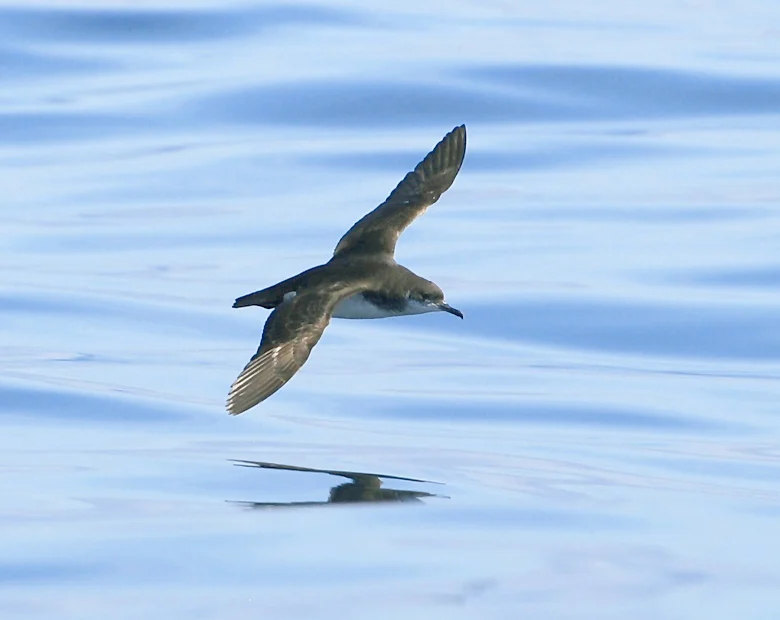
Human travelers crossing multiple time zones are intimately familiar with the physiological disorientation of jet lag—a persistent mismatch between the body’s internal circadian rhythm and the local solar time. While this phenomenon has long been treated as a human inconvenience, a groundbreaking study published in the journal Science reveals that this biological struggle is shared by avian navigators. Manx shearwaters, resilient seabirds that traverse vast stretches of the North Atlantic, experience a form of "biological jet lag" during their foraging expeditions. This internal misalignment, while seemingly minor, significantly impacts their ability to navigate using the sun as a compass.
The Mechanism of Avian Navigation
Manx shearwaters (Puffinus puffinus) are masters of long-distance transit. These medium-sized, pigeon-like birds are characterized by their striking black-and-white plumage and long, slender wings, which allow them to glide effortlessly over oceanic swells. Native to the coastal islands of the North Atlantic, they primarily nest in burrows across the United Kingdom and Ireland, with Wales hosting nearly half of the global population.
To sustain themselves, these birds embark on foraging trips that can span from a few dozen to over 1,000 kilometers into the open ocean. Successful return to their burrow requires a complex, dual-layered navigation system. Researchers hypothesize that the birds utilize a "map sense"—potentially triggered by olfactory cues—to determine their general location, followed by a "sun compass" to maintain a specific heading.
The sun compass is an elegant but demanding biological tool. Because the sun shifts its position across the sky throughout the day, an animal must possess a precise internal clock to interpret the sun’s angle correctly. For instance, to maintain a southern trajectory, a bird must account for the sun’s position in the east at dawn, its zenith at midday, and its descent in the west at sunset. If the bird’s internal clock is even slightly out of sync with the actual solar time at their current longitude, their perception of the sun’s orientation becomes skewed, leading them to inadvertently veer off course.
Two Decades of Data Collection
The discovery that these birds suffer from jet lag is the culmination of a 20-year research project led by behavioral and sensory ecologist Patrick Lewin of the University of Oxford, alongside long-time shearwater researchers Tim Guilford and Chris Perrins. The study relied on a massive longitudinal dataset comprising 3,688 individual foraging trips made by 1,045 birds, collected via GPS tracking technology that has evolved significantly since its inception in 2004.
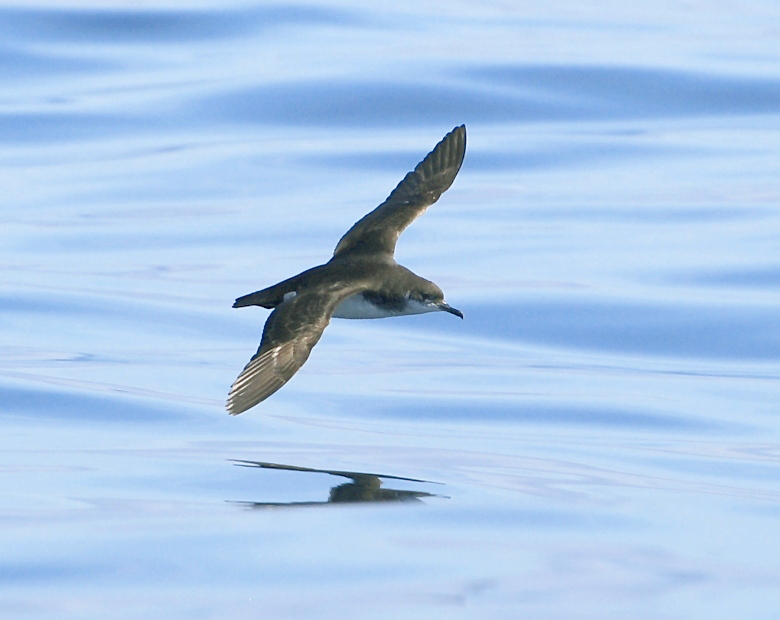
By tracking these birds from their coastal colonies, the team was able to analyze the "homing" phase of their journey. Unlike the erratic, winding paths taken during active hunting, homeward-bound shearwaters exhibit a distinct behavioral shift: they fly in remarkably straight, high-speed lines toward their nesting burrows. This consistency allowed the researchers to isolate variables and compare the birds’ actual flight paths against the expected trajectories based on a functioning, perfectly calibrated sun compass.
The researchers calculated the "time shift" by identifying where each bird last observed sunrise—the point at which its internal clock was last synchronized with local solar time. As the birds moved across longitudinal lines, the team measured the discrepancy between their predicted path and their actual deviation.
Quantifying the Biological Cost
The resulting data revealed that the jet lag experienced by the shearwaters is subtle but measurable. Most time shifts observed by the team were in the range of 10 to 15 minutes, with an upper limit of approximately one hour. While this would be barely noticeable to a human in a sedentary environment, for a bird navigating by the sun at high speeds, the effect is physically manifest.
The study found that when shearwaters flew eastward, they veered clockwise; when flying westward, they drifted anticlockwise. These navigational errors reached deviations of up to 15 degrees. In a vacuum, such a deviation would be catastrophic for a long-distance traveler, but the researchers found that the shearwaters possess built-in compensatory mechanisms.
"The birds are not helpless," noted Lewin. Because they likely employ a dual-navigation system—relying on both the sun compass and familiar coastal landmarks—they are able to perform real-time course corrections. For a bird covering 1,000 kilometers, an average deviation of seven degrees might only add roughly five kilometers to the total flight distance, a negligible cost for a creature adapted to thousands of miles of travel.
Broader Scientific Implications
The implications of this study extend far beyond the biology of the Manx shearwater. By confirming that wild animals experience the same physiological constraints as humans, researchers are now looking at how this might affect the broader animal kingdom. The "jet lag effect" is likely present in any organism with an internal clock that traverses significant longitudinal distances in a short window of time, particularly those inhabiting high latitudes where the distance between lines of longitude is compressed.

This discovery has prompted discussions in fields such as bio-inspired engineering and autonomous navigation. As developers seek to create more resilient AI-driven navigation systems for drones and remote sensors, understanding how nature mitigates the "clock errors" inherent in solar navigation could prove invaluable.
Furthermore, the study raises critical questions regarding the long-term health of migratory species. While the current findings focus on navigation, the potential for other symptoms—such as disrupted sleep cycles, metabolic instability, or suboptimal foraging efficiency—remains an open field of inquiry. If these birds are in a state of chronic jet lag during their peak breeding seasons, the energy expenditure required to correct their course or recover their rhythms could have subtle but cumulative effects on their overall survival and reproductive success.
Future Research Directions
The research team is now shifting its focus toward the physiological consequences of this perpetual state of misalignment. The next phase of the study aims to determine whether the time shifts affect the birds’ ability to forage efficiently, the quality of food they bring back to their chicks, and their long-term breeding outcomes.
Beyond the ecological impact, the study provides a unique window into the evolution of biological clocks. If animals have evolved to endure constant jet lag, they may possess specialized, robust mechanisms for circadian resetting that remain poorly understood. "In humans, chronic jet lag is associated with significant long-term health risks," Lewin noted. "If we can identify how these seabirds mitigate these effects, it could eventually offer insights into human health and our own struggles with circadian disruption."
This study serves as a stark reminder of the complexity of animal migration. The Manx shearwater, once seen simply as a creature of habit, is now understood to be an active, calculating traveler that manages its internal biological clock with the same precision—and the same flaws—as the human pilots and sailors who navigate the same vast, shifting oceans. As data sets continue to grow and tracking technology becomes even more granular, the field of sensory ecology will likely uncover many more instances where the "nuisances" of human life are, in fact, foundational aspects of the natural world.