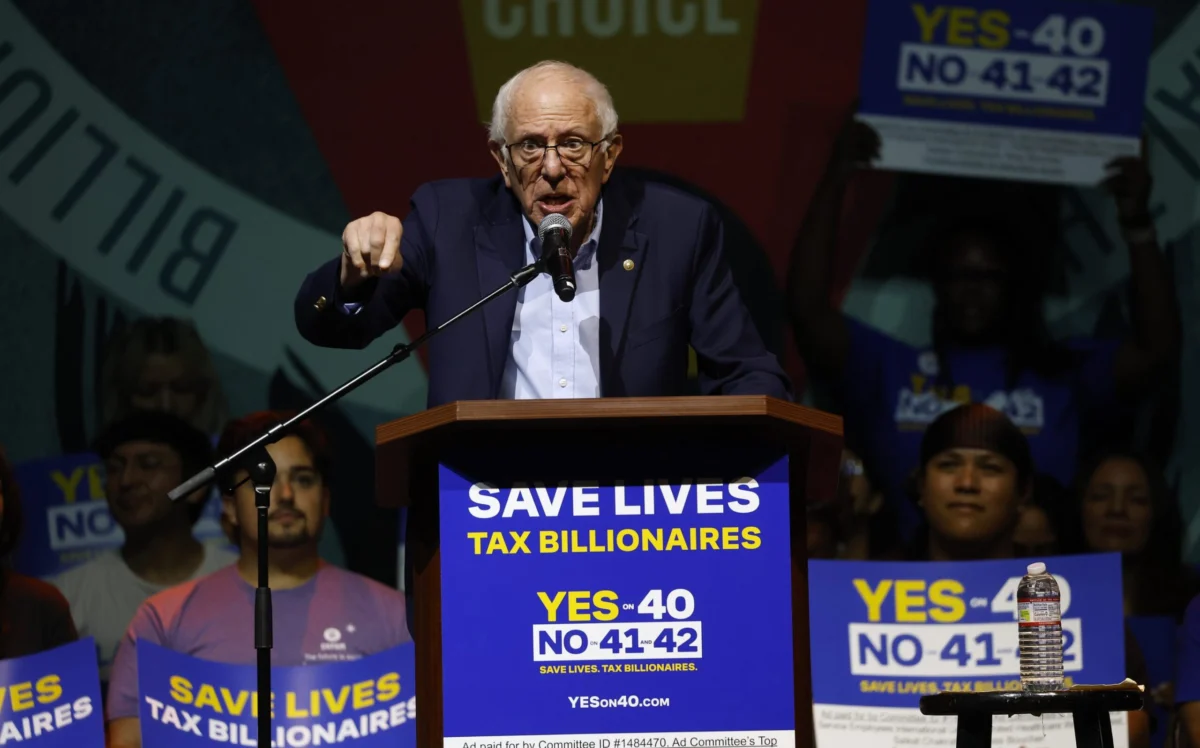
While the proposal is framed as a targeted strike at the state’s ultra-wealthy elite, it has inadvertently reignited a half-century-old debate regarding California’s foundational tax policies. To understand the stakes of Proposition 40, one must look back to the political landscape of 1978, when voters overwhelmingly passed Proposition 13. That landmark measure fundamentally altered the state’s relationship with revenue by capping property taxes at 1% of assessed value, restricting annual increases to 2%, and tethering reassessments to ownership changes rather than market fluctuations.
The Legacy of the 1978 Tax Revolt
The passage of Proposition 13 was not merely a local legislative adjustment; it was a watershed moment in American fiscal policy. Emerging in the wake of a broader tax revolt that preceded the election of Ronald Reagan, the measure signaled a shift toward fiscal conservatism and a distrust of government spending. However, the unintended consequence of this restrictive property tax environment was a structural shift in how California funded its public sector.
With property tax revenue effectively hamstrung, the state was forced to pivot toward an aggressive reliance on income taxation. Over the ensuing decades, California cultivated what is currently the most progressive income-tax structure in the nation, featuring a top marginal rate of 13.3%. When combined with federal liabilities, the total tax burden on high earners can exceed 50%. This dependency has created a "boom-bust" cycle for state coffers, where the treasury’s health is tethered to the volatility of the stock market and the performance of high-net-worth individuals.
Proposition 40: The Billionaire Tax Proposal
The current effort behind Proposition 40, championed by labor unions and progressive advocacy groups, aims to extract a one-time 5% levy on the assets of those with a net worth over $1 billion. Proponents argue that the explosion of wealth driven by the artificial intelligence boom warrants a significant clawback to fund essential services, including healthcare spending that has faced potential federal budget cuts. Supporters suggest that even with this levy, the ultra-wealthy would remain among the most affluent individuals on the planet.
However, the proposal faces fierce opposition from business leaders, tech founders, and economic analysts. Critics contend that the tax is not only structurally flawed but potentially catastrophic for the state’s long-term economic competitiveness. They warn that such a levy would discourage capital investment, incentivize the migration of founders and innovators to lower-tax jurisdictions, and ultimately result in a net revenue loss for the state.
Economic Analysis: Beyond the Billionaire Tax
The debate over Proposition 40 has drawn in prominent economists, including Owen Zidar of Princeton and Eric Zwick of the University of Chicago Booth School of Business. In their analysis of the state’s fiscal architecture, they argue that policymakers are focusing on the wrong target. In a recent op-ed for The New York Times, Zidar and Zwick pointed to "the original sin" of California’s tax structure: Proposition 13.
Their data suggests that if California sought a more durable and efficient way to capture tax revenue, it should look to the property market. Currently, California homeowners pay an average of just 0.8% in property taxes. In contrast, property owners in Texas—a state with no income tax—pay an average of 2%. Zidar and Zwick estimate that if California were to align its residential property tax rates with those of Texas, the state could more than double its property tax revenue. Furthermore, they posit that such a move could cool the state’s overheated housing market, potentially lowering home prices by approximately 13%.
The Political and Logistical Hurdles
While the economic argument for reforming property taxes may appear sound on paper, the political reality is far more daunting. Proposition 13 remains a "third rail" of California politics. Any attempt to significantly raise property taxes would likely trigger a massive backlash from homeowners across the state, many of whom have built their retirement security on the stability of their property tax liabilities.
Moreover, the current fiscal year’s budget, totaling $540 billion, highlights the difficulty of managing the state’s massive operational needs. Zidar and Zwick argue that relying on a few hundred billionaires to fill the gaps in such a massive budget is a "politically appealing" but mathematically insufficient strategy. They maintain that the state must broaden its base, including the hundreds of thousands of affluent individuals who have largely avoided increased tax burdens due to the current property tax regime.
Expert Warnings and the Risk of Flight
The concerns surrounding Proposition 40 are not merely theoretical. Laura Tyson, a former White House economic adviser, and Lenny Mendonca, a former chief economic adviser to Governor Gavin Newsom, have warned that the wealthy are highly sensitive to estate and wealth-based taxes. Their analysis notes that six billionaires, whose potential tax payments would have accounted for roughly 25% of the revenue projected from Prop 40, have already departed California ahead of the potential implementation date.
Beyond the risk of capital flight, there is the issue of administrative complexity. Proposition 40 introduces an entirely new, untested method of asset valuation. Tyson and Mendonca argue that this would inevitably lead to a "tidal wave of litigation," effectively tying up the anticipated funds in court for years. Rather than a wealth tax, they suggest that the focus should be on taxing the capital income that fuels wealth creation—specifically through increased corporate tax rates, taxes on both realized and unrealized capital gains, and the closure of loopholes such as carried interest.
The Broader Fiscal Implications
As the election approaches, the discourse surrounding Proposition 40 serves as a microcosm for the larger struggle of American governance in the 21st century. The state is forced to reconcile its ambitious social and environmental goals with a tax structure that has become increasingly narrow and volatile.
The dependency on the top 1% of earners for nearly half of the state’s revenue leaves California uniquely vulnerable to economic downturns. If the stock market falters, the state’s ability to fund schools, healthcare, and infrastructure is immediately compromised. While the billionaire tax is presented as a solution, critics argue it acts as a "Trojan Horse" that ignores the underlying, structural weaknesses of the state’s tax base.
The dilemma for voters is clear: they are choosing between an immediate, high-profile attempt to capture wealth from the ultra-rich, or a prolonged, painful re-evaluation of the property tax laws that have defined California for nearly 50 years. The former offers a quick influx of cash but risks economic instability and litigation; the latter offers a more sustainable path to revenue but requires a level of political courage that has been absent in Sacramento for decades.
Ultimately, the debate over Proposition 40 underscores the limitations of using a ballot measure to fix complex macroeconomic problems. Whether voters pass or reject the measure, the fundamental question of how to fund the California Dream in a sustainable, equitable, and competitive way remains unresolved. As the state moves forward, the shadow of 1978 and the legacy of Proposition 13 will continue to loom, reminding all involved that tax policy is not just about the numbers—it is about the kind of society California intends to be.