Ford Motor Company announced a significant leadership and organizational transition on Wednesday, confirming that Doug Field, the executive vice president overseeing electric vehicle (EV), digital, and software development, will depart the company in May. The exit of one of the industry’s most prominent "tech-to-auto" leaders coincides with a broader structural reorganization designed to streamline Ford’s industrial system and accelerate the deployment of next-generation vehicle technologies. Under the new alignment, Ford’s EV, digital, and design teams will be integrated into a single division titled Product Creation and Industrialization. This new entity will be led by Kumar Galhotra, Ford’s Chief Operating Officer, who is now tasked with scaling the company’s technological breakthroughs across its global manufacturing footprint.
Doug Field’s departure marks the end of a high-profile four-year tenure at the Detroit automaker. Field joined Ford in September 2021, a move that was widely viewed as a major coup for CEO Jim Farley. Field arrived with a blue-chip resume that spanned the most influential corners of the modern transportation and technology sectors. He previously served as the vice president of Apple’s Special Projects Group (often referred to as "Project Titan"), where he led the tech giant’s secretive autonomous vehicle efforts. Before Apple, Field was a central figure at Tesla, where he served as the senior vice president of engineering and was credited with successfully leading the production ramp-up of the Model 3—the vehicle that transformed Tesla into a mass-market powerhouse. His earlier career included nearly a decade at Segway, where he served as Chief Technology Officer and Vice President of Design and Engineering.
In a statement released through the company, Field reflected on his time at Ford as a period of profound transformation. "I’m honored to have been a part of leading Ford during an unprecedented period of technology and market disruption," Field said. "I believe Ford now has a winning technology strategy and plan." Despite his departure, Ford officials emphasized that the strategic foundations laid by Field—particularly the development of a low-cost, high-efficiency EV platform—remain central to the company’s long-term survival in an increasingly competitive global market.
The California Skunkworks and the Universal EV Platform
One of Field’s most enduring legacies at Ford is the establishment of a specialized "skunkworks" team based in California. This group was intentionally separated from Ford’s traditional engineering hubs in Michigan to foster a startup-like culture and bypass the bureaucratic inertia often associated with century-old industrial giants. The team, led by Alan Clarke—another former Tesla engineering veteran who helped develop the Model 3—has been tasked with creating a "blank slate" electric vehicle architecture.
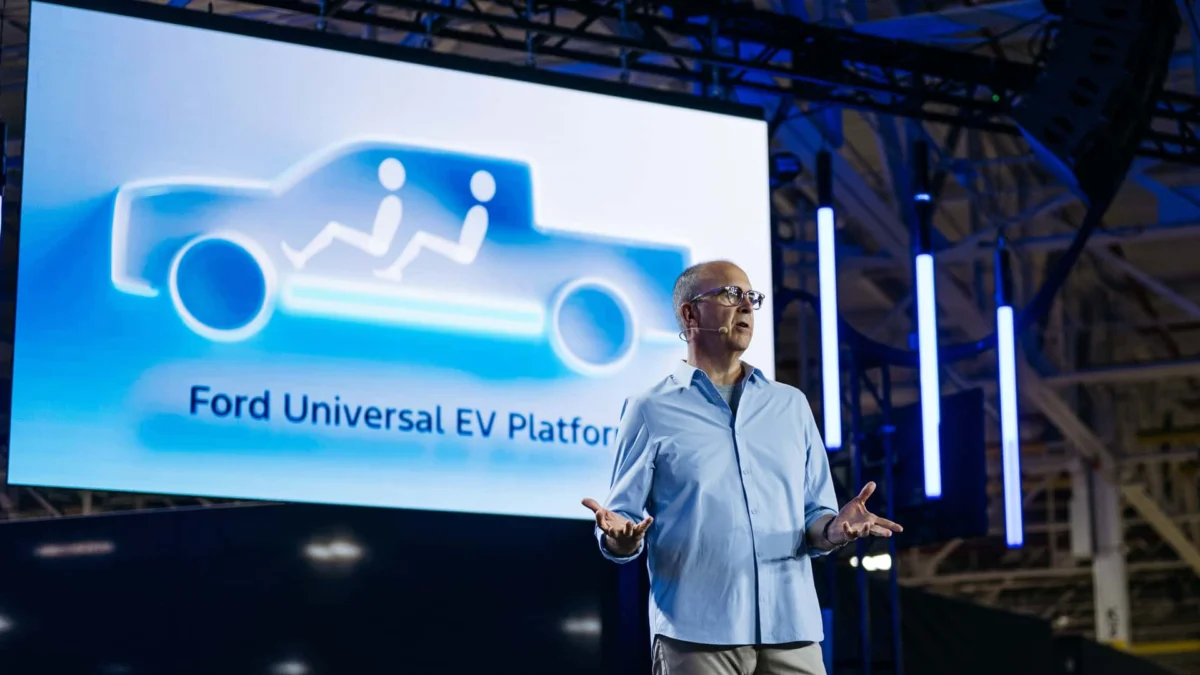
This initiative resulted in the Universal Electric Vehicle (UEV) platform, which represents a radical departure from traditional automotive manufacturing. The UEV platform focuses on extreme efficiency and cost reduction, utilizing "unicastings"—large, single-piece structural components—to replace dozens of individual parts that would typically require complex welding and assembly. This manufacturing philosophy, pioneered by Tesla, is designed to significantly reduce the bill of materials and labor costs, allowing Ford to compete more effectively with low-cost Chinese manufacturers like BYD and Geely.
With Field’s departure, Alan Clarke will take on an elevated role as Vice President of Advanced Development Projects. Clarke’s team is currently finalizing the first vehicle based on the UEV platform: a mid-sized electric pickup truck slated for production in 2027. This vehicle is expected to be a cornerstone of Ford’s "Model e" division, targeting a price point and efficiency level that has thus far eluded traditional American automakers in the EV space.
Strategic Realignment Amid Financial Headwinds
The restructuring comes at a precarious moment for Ford’s electrification strategy. Throughout 2024 and early 2025, Ford has been forced to recalibrate its ambitious EV targets in response to shifting consumer demand and high production costs. Late last year, the company made the difficult decision to cancel the next-generation F-150 Lightning pickup and several other future models. These cancellations, combined with the abandonment of a planned three-row electric SUV project, led to a staggering $19.5 billion write-down.
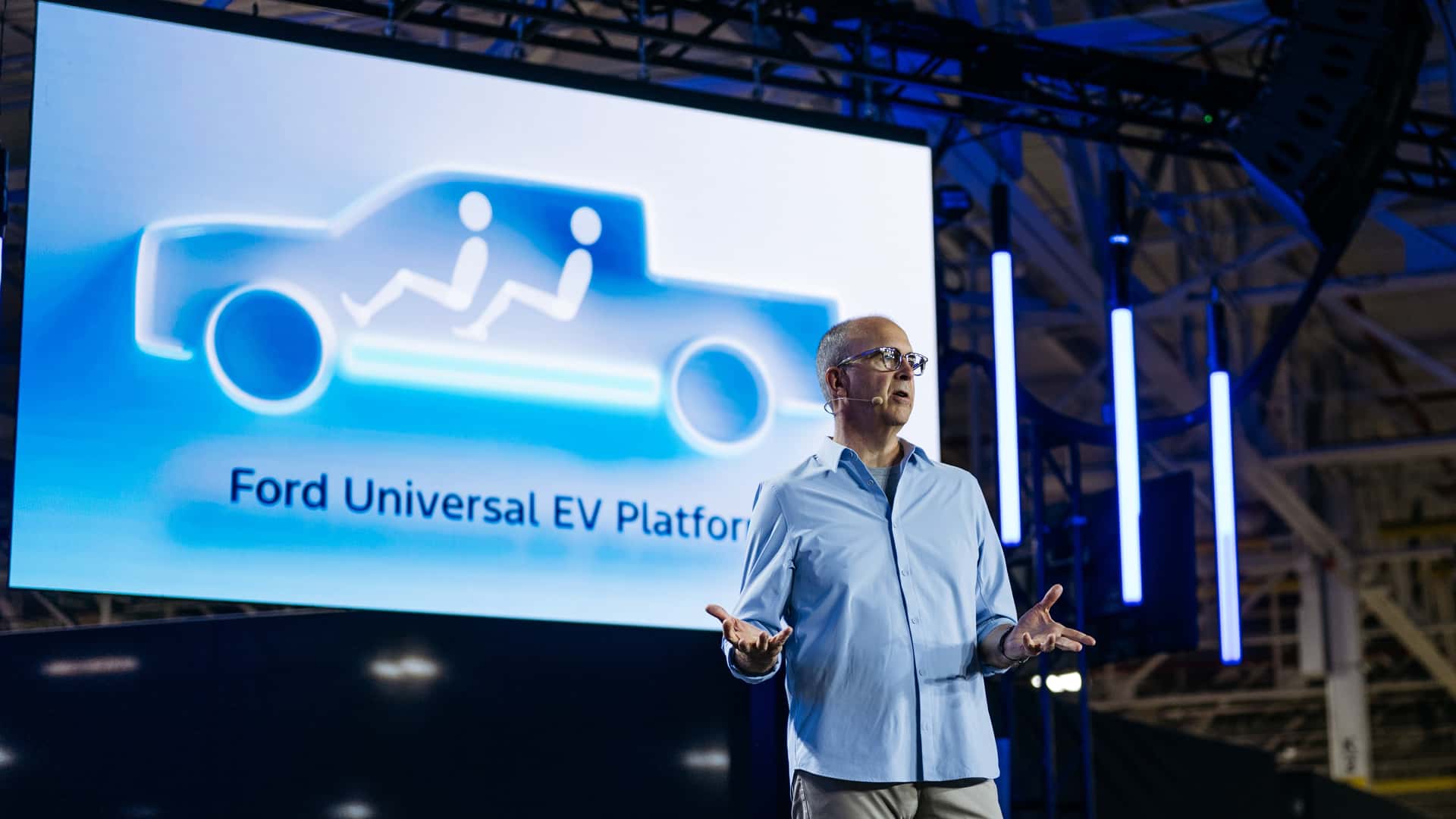
Ford’s leadership has acknowledged that the economics for large, heavy consumer EVs are currently unfavorable due to the high cost of large battery packs and the infrastructure requirements for heavy-duty towing and hauling. Consequently, the company has shifted its focus toward smaller, more efficient vehicles where the UEV platform can provide a competitive edge. The integration of EV and software teams under COO Kumar Galhotra is intended to bridge the gap between "innovation" and "industrialization," ensuring that the high-tech concepts developed in California can be manufactured profitably at scale in Ford’s traditional assembly plants.
Chronology of Ford’s EV Evolution under Doug Field
The timeline of Doug Field’s tenure at Ford illustrates the rapid acceleration—and subsequent cooling—of the EV market:
- September 2021: Doug Field joins Ford as Chief EV and Digital Systems Officer, reporting directly to Jim Farley.
- March 2022: Ford announces its "Ford+" plan, splitting the company into three distinct units: Ford Blue (internal combustion), Ford Model e (electric vehicles), and Ford Pro (commercial services).
- Late 2022: Field begins recruiting high-level talent from Apple, Tesla, and Rivian to staff the California-based skunkworks team.
- 2023: Ford reveals the development of the UEV platform, focusing on "affordable" EVs to counter the rising threat of Chinese imports.
- August 2024: Ford cancels its planned three-row electric SUV, citing a lack of profitability, and pivots toward hybrid powertrains for larger vehicles.
- Late 2024: The company takes a $19.5 billion charge related to EV asset write-downs and project cancellations.
- February 2025: Ford announces Field’s departure and the merger of EV, software, and design teams under Kumar Galhotra.
Future Projections: The 2030 Electrification Mandate
Despite the leadership shakeup and the scaling back of certain projects, Ford has signaled that it remains committed to an electrified future, albeit one that is more diversified than originally envisioned. The company’s updated roadmap for 2030 sets aggressive targets for technological integration:
- Software-Defined Vehicles: By 2030, Ford expects 90% of its global vehicle volume to feature updated electrical architectures. These "next-generation" systems will enable robust over-the-air (OTA) update capabilities, allowing the company to improve vehicle performance, safety features, and digital services throughout the car’s lifecycle.
- Electrified Lineup: Ford aims for nearly 90% of its lineup to offer an electrified option by the end of the decade. This includes a mix of full battery-electric vehicles (BEVs), traditional hybrids (HEVs), and extended-range electric vehicles (EREVs).
- The Rise of EREVs: The company is placing significant bets on EREVs, which use a small internal combustion engine as a generator to charge the battery while driving. This technology is intended to solve "range anxiety" for truck owners, with Ford confirming that the next iteration of its electric truck platform will feature an EREV variant.
Industry Implications and Market Reaction
Industry analysts view the departure of Doug Field as a sign that Ford is moving out of its "experimental" phase and into a phase of disciplined execution. While Field was instrumental in designing the future, Galhotra is seen as the executive capable of making that future commercially viable within the constraints of a legacy manufacturing system.
The "Tesla-fication" of Ford’s manufacturing—specifically the adoption of unicastings and a software-first architecture—remains the primary strategy for defending against Chinese automakers. Ford CEO Jim Farley has frequently cited Chinese EVs as the "existential threat" to the American auto industry, noting that companies like BYD possess a 20% to 30% cost advantage over Western rivals. The UEV platform is Ford’s direct answer to this challenge.
However, Field’s exit also highlights the difficulty of merging Silicon Valley culture with Detroit’s industrial heritage. The integration of the "Model e" design and digital teams back into the broader "Industrialization" division suggests a return to a more unified corporate structure, moving away from the "company within a company" model that characterized Field’s early years at the firm.
As Ford prepares for the 2027 launch of its UEV-based pickup, the focus will remain on whether the company can successfully translate Doug Field’s technological vision into a profitable, mass-produced reality. The coming years will determine if Ford’s pivot toward smaller EVs, hybrids, and EREVs can sustain the company through the volatile transition away from fossil fuels, or if the $19.5 billion write-down was a harbinger of deeper structural challenges yet to come. For now, the "winning technology strategy" Field leaves behind will be the benchmark by which Ford’s future success is measured.