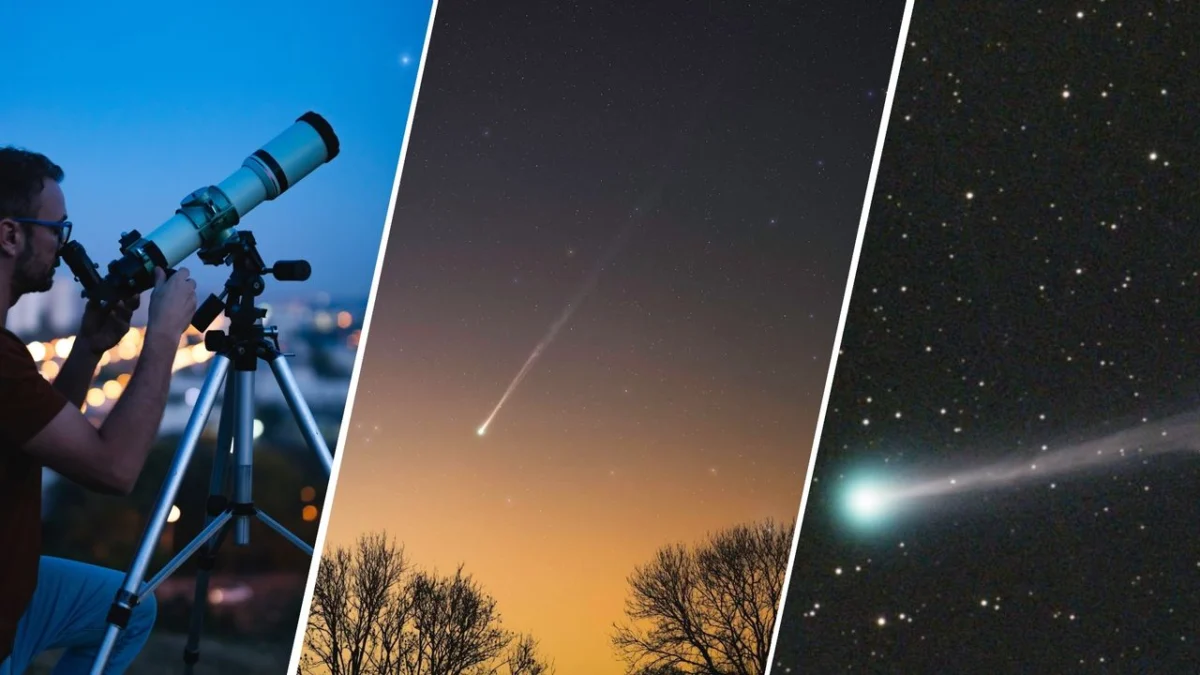
As the predawn sky of April 17th begins to lighten, stargazers in the Northern Hemisphere will have their final opportunity to witness a fleeting cosmic spectacle: Comet C/2025 R3, also known as PanSTARRS. This icy wanderer, currently visible low on the eastern horizon, is poised to depart the Northern Hemisphere’s night sky permanently, offering a last chance for unaided observation before its journey takes it beyond our view. For those with a keen eye and a dedication to seeking out celestial wonders, the hours before sunrise on this particular date present a prime window to catch a glimpse of this transient visitor.
The comet’s visibility is a race against time, as it steadily approaches its perihelion – its closest point to the Sun – on the night of April 19th. This celestial maneuver, while bringing the comet into closer proximity with our star, also means it will be increasingly obscured by the Sun’s overwhelming glare. Therefore, the predawn hours of April 17th are crucial for observation, offering a balance between the comet’s brightness and its position in the sky before it becomes indistinguishable from the Sun’s overpowering light.
Understanding the Comet’s Brightness and Visibility
Comet C/2025 R3 (PanSTARRS) has already achieved a magnitude of approximately +4.7, according to observations logged in the Comet Observation Database (COBS). In astronomical terms, magnitude is a measure of an object’s brightness, with lower numbers indicating greater luminosity. For comparison, the brightest stars in our night sky possess negative magnitudes, while the faintest objects visible to the naked eye under ideal dark sky conditions reach a magnitude of +6.5. A magnitude of +4.7 suggests that C/2025 R3 is bright enough to be discernible as a faint, fuzzy patch of light for observers situated away from light pollution.
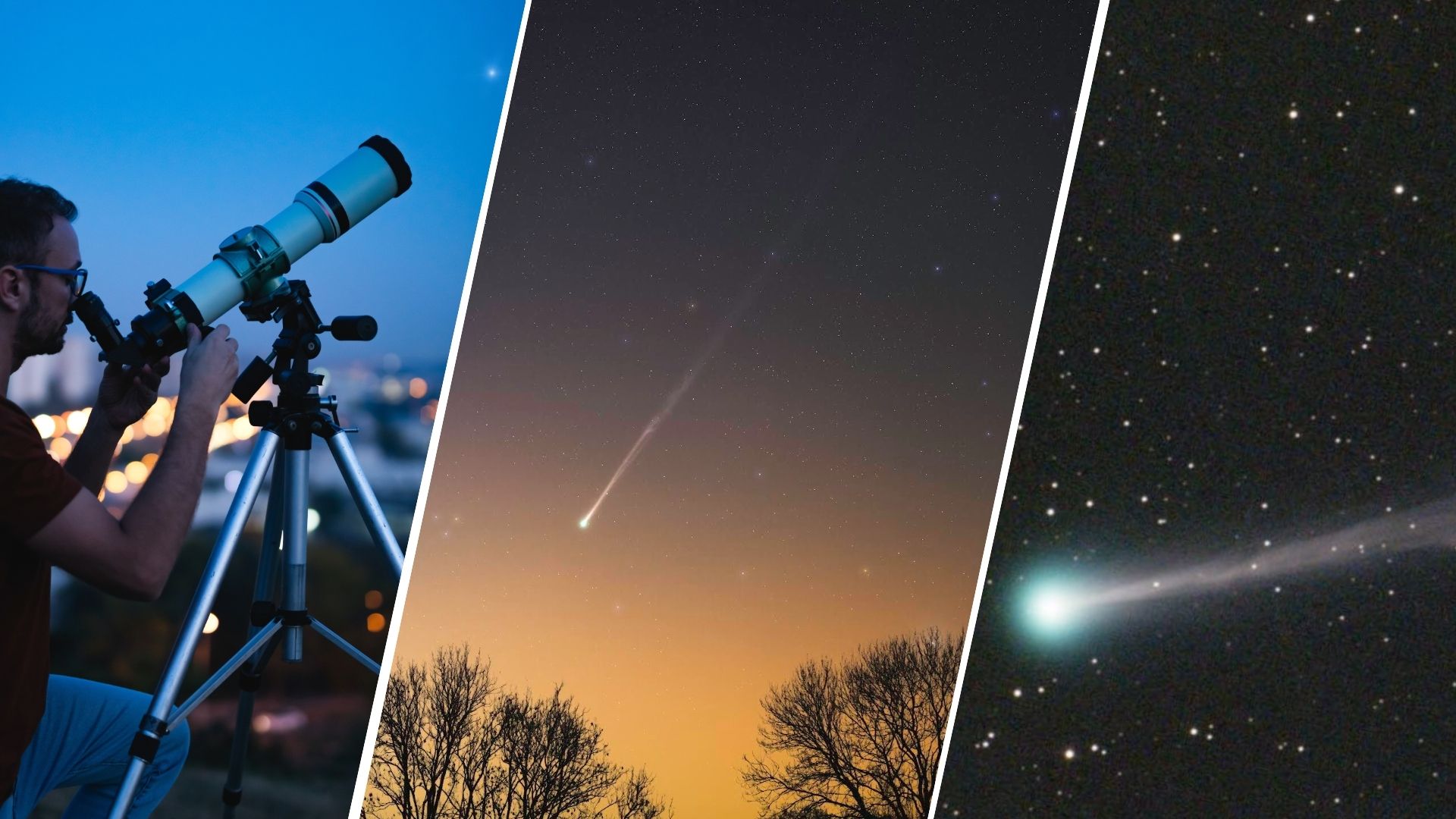
While the unaided eye can offer a basic viewing experience, enhanced observation can reveal more intricate details. A pair of 10×50 binoculars is recommended for a clearer view of the comet’s nucleus, the bright, solid core of ice and dust. For those with a passion for astrophotography, long-exposure techniques can capture the comet’s ethereal tail, which is sculpted and shaped by the relentless flow of the solar wind. This interaction between the comet and the solar wind can create spectacular visual effects, showcasing the dynamic nature of interplanetary space.
The Journey of Comet PanSTARRS: A Timeline of Observation
The Pan-STARRS (Panoramic Survey Telescope and Rapid Response System) program, a groundbreaking astronomical survey conducted by the University of Hawaii, is responsible for the discovery of this comet. These telescopes are designed to continuously scan the sky, identifying celestial objects that exhibit motion against the backdrop of fixed stars, thereby detecting asteroids, comets, and other transient phenomena.
Comet C/2025 R3 (PanSTARRS) has been on a trajectory that has brought it progressively closer to Earth and the Sun. Its visibility in the Northern Hemisphere night sky has been a gradual process, with its brightness increasing as it neared its closest approach. The comet’s current status as a naked-eye object is a testament to its increasing luminosity.
The critical period for observation is now. Following its perihelion passage on April 19th, the comet will begin its journey away from the Sun. This transition will mark its gradual disappearance from the Northern Hemisphere’s celestial panorama. Subsequently, C/2025 R3 will trace a path through the constellations of Pisces, Cetus, Eridanus, and Orion, moving from the Northern to the Southern Hemisphere night sky. This will be its final appearance in our lifetimes, as its orbital path will carry it far into the outer solar system and beyond, never to return within observational range of Earth.
Locating Comet PanSTARRS: A Guide for Observers
To maximize your chances of spotting Comet C/2025 R3 (PanSTARRS), it is essential to be in a location with minimal light pollution. Urban environments, with their bright artificial lights, significantly hinder astronomical observation by washing out fainter celestial objects. Seeking out rural areas, designated dark sky parks, or simply venturing away from city centers will provide a much darker and more rewarding viewing experience.
The optimal time for observation is in the predawn hours, approximately 90 minutes before sunrise on April 17th. At this time, the sky will be dark enough to discern fainter objects, yet the Sun will not have risen high enough to dominate the eastern horizon.
A key navigational aid for locating the comet is the "Great Square of Pegasus," a prominent asterism formed by four bright stars. This familiar pattern will be rising low in the eastern sky during the predawn hours. Comet PanSTARRS is expected to be visible approximately five degrees above the star Algenib, which is the lowest of the four stars forming the Great Square. To gauge this distance, hold your hand at arm’s length; the width of your three middle fingers held together will approximate five degrees in the sky.
Technological Assistance for Comet Viewing
While the naked eye can detect the comet, modern technology can significantly enhance the viewing and recording experience. The Canon EOS R7 camera, as highlighted in accompanying materials, is presented as an excellent tool for beginners aiming to capture celestial events. Its capabilities in low-light photography make it suitable for capturing the subtle glow of comets.
For more dedicated observers, binoculars, particularly 10×50 models, are invaluable for resolving the comet’s nucleus and potentially discerning a faint tail. Astrophotographers can employ sophisticated long-exposure techniques with advanced camera equipment and telescopes to record intricate details of the comet’s structure, including its coma (the hazy atmosphere surrounding the nucleus) and the delicate tendrils of its ion and dust tails, which are dynamically shaped by solar radiation and the solar wind.
The Science Behind Comets: Icy Visitors from the Solar System’s Edge
Comets are essentially cosmic time capsules, remnants from the formation of the solar system approximately 4.6 billion years ago. They are composed primarily of ice (water, methane, ammonia, carbon dioxide) mixed with dust and rock particles. These celestial bodies originate from the Kuiper Belt and the Oort Cloud, vast reservoirs of icy bodies located in the outer reaches of our solar system.
When a comet’s orbit brings it into the inner solar system, the Sun’s heat causes its ices to sublimate, transforming directly from solid to gas. This process releases dust particles, forming the comet’s characteristic coma and tail. The solar wind, a stream of charged particles emanating from the Sun, plays a crucial role in shaping the comet’s tail, often pushing the material directly away from the Sun, creating the ion tail, while the dust tail trails behind the comet’s orbital path.

The scientific study of comets provides invaluable insights into the early conditions of the solar system, the composition of interstellar material, and the processes that govern planetary formation. Each comet that ventures into the inner solar system offers a unique opportunity for astronomers to gather data that can refine our understanding of cosmic history.
Broader Implications and Future Observations
The passage of Comet C/2025 R3 (PanSTARRS) serves as a reminder of the dynamic and ever-changing nature of our solar system. While this particular comet’s visit is a fleeting one for the Northern Hemisphere, the ongoing work of astronomical surveys like Pan-STARRS ensures that new discoveries are constantly being made.
The scientific community eagerly anticipates future comet discoveries, each offering new avenues for research. The development of advanced observational technologies, both ground-based and space-borne, continues to push the boundaries of what we can see and understand about the cosmos.
For amateur astronomers and the general public, events like the visibility of Comet PanSTARRS offer a tangible connection to the universe beyond Earth. They inspire curiosity, encourage exploration of the night sky, and foster a deeper appreciation for the vastness and wonder of space.
A Final Call to the Sky
As the date of April 17th approaches, astronomers and skywatchers alike are urged to prepare for this final viewing opportunity of Comet C/2025 R3 (PanSTARRS) in the Northern Hemisphere. The combination of its current brightness and its position on the eastern horizon before sunrise creates a window of opportunity that should not be missed. Whether observed with the naked eye, through binoculars, or captured by the lens of a camera, this celestial farewell promises to be a memorable event for all who take the time to look up.
For those who manage to capture compelling images of Comet C/2025 R3 (PanSTARRS), Space.com encourages readers to share their photographs, along with their comments, names, and locations, by sending them to [email protected]. This allows for a collective appreciation of the celestial event and contributes to a broader record of its passage.