The intricate dance between presidential power and the autonomy of the nation’s central bank has taken a dramatic turn, as President Donald Trump’s recent statements regarding Federal Reserve Chairman Jerome Powell threaten to derail his own nominee, Kevin Warsh, and cast a long shadow over the institution’s revered independence. The question of whether Trump would set aside his long-standing antagonism towards Powell to facilitate a smooth transition for a new leader now appears decisively answered: he will not.
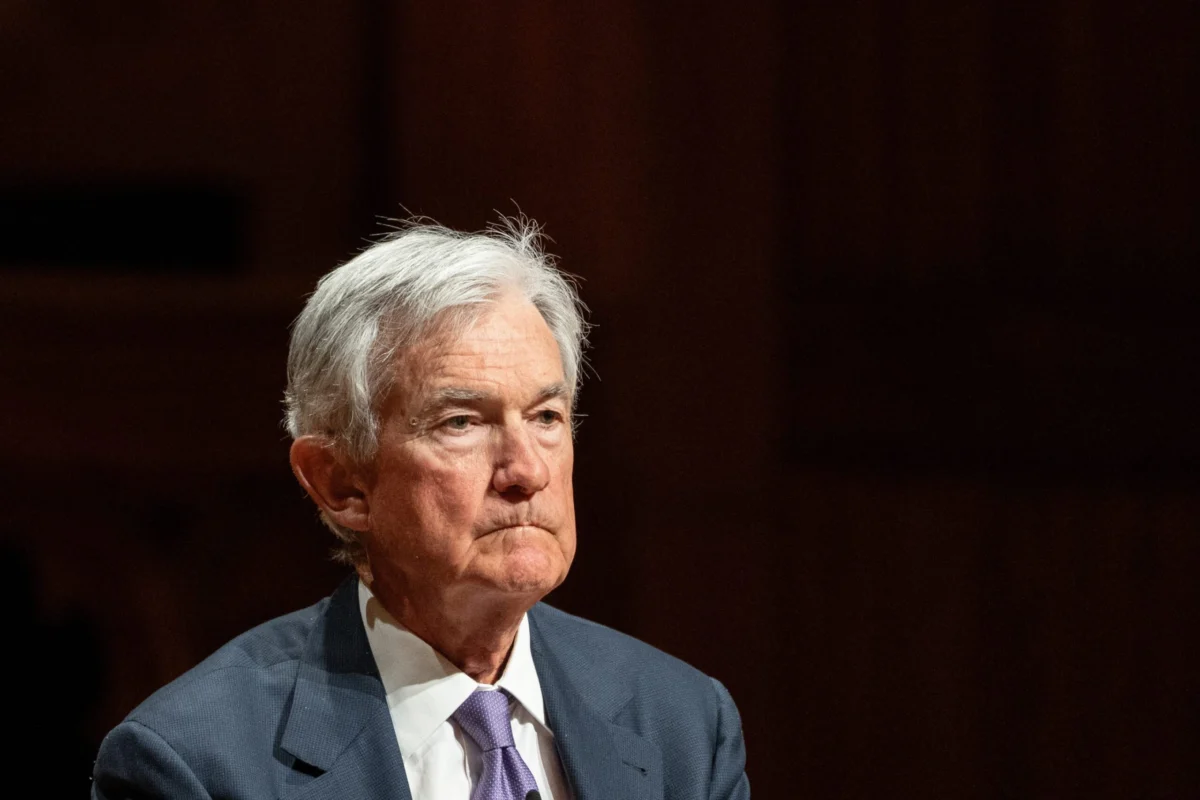
In an interview published yesterday by Fox News, President Trump confirmed that a criminal probe into Chairman Powell, related to renovations at the Fed building, would not be dropped. This revelation comes months after Powell himself announced in January that the Department of Justice had served subpoenas on the central bank, specifically concerning his testimony about construction work on the offices overlooking the National Mall. Trump’s unyielding stance signals a deepening of the executive-central bank rift, adding an unprecedented layer of political scrutiny to the already delicate process of leadership transition at the Federal Reserve.
The Deepening Executive-Central Bank Rift
President Trump’s latest remarks underscore a persistent pattern of executive interference and public criticism directed at the Federal Reserve. "Don’t you think we have to find out what happened there?" the president reportedly told Fox, adding, "I have to find out." He further asserted his restraint, stating, "I’ve held back from firing him. I’ve wanted to fire him, but I hate to be controversial, you know?" This statement, delivered with characteristic Trumpian irony, only serves to amplify concerns about the politicization of an institution designed to operate free from political pressure.
The criminal probe itself, focusing on renovations to the Eccles Building—the Fed’s headquarters—has been a source of significant bewilderment and concern within financial and political circles. While details of the specific allegations remain somewhat opaque, the involvement of the Department of Justice in investigating the sitting Fed Chairman, particularly under such circumstances, is highly unusual and carries profound implications for institutional integrity. The central bank, tasked with managing the nation’s monetary policy and ensuring financial stability, traditionally operates with a high degree of transparency in its internal affairs, yet a criminal investigation represents a far more serious level of oversight and potential challenge to its autonomy.
This latest development is not an isolated incident but rather the latest salvo in a protracted feud between Trump and Powell. Since nominating Powell in 2017, Trump has repeatedly expressed dissatisfaction with the Fed’s monetary policy decisions, particularly its interest rate hikes, which he often blamed for economic slowdowns or perceived challenges to his administration’s growth agenda. These criticisms frequently escalated into public threats of dismissal and personal attacks on Powell’s competence, challenging decades of established protocol regarding the President’s respect for the Fed’s independent decision-making. The current inquiry, ostensibly about building renovations, is widely seen as another avenue through which the President can exert pressure or express his displeasure with the current leadership.
Warsh’s Candidacy and the Senate Gauntlet
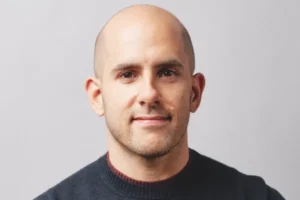
The president’s decision to maintain the pressure on Powell directly complicates the path for his preferred nominee, Kevin Warsh, a former Fed Governor. Warsh, who served under Chairman Ben Bernanke during the 2008 financial crisis, is widely regarded among Republicans as an ideal candidate for the top Fed post. His appeal stems from several key attributes: he is a staunch advocate for Fed independence, a quality reassuring to both Wall Street analysts and D.C. policymakers who value the central bank’s insulation from political whims. Furthermore, his previous experience at the central bank provides institutional familiarity, and he has consistently signaled a more optimistic outlook on the U.S. economy than the current incumbent, aligning more closely with the administration’s stated economic goals.
Warsh’s journey back to the central bank, specifically to the chairman’s office, is slated to include Senate Banking Committee hearings, tentatively scheduled for April 21. The committee, crucial for confirming presidential nominees, currently holds a slim Republican majority of 13 members, two seats ahead of their Democratic counterparts. This narrow margin means that every Republican vote is critical, and any defection could jeopardize a nomination.
A significant obstacle has emerged in the form of Senator Thom Tillis, a Republican member of the Banking Committee, who has explicitly stated his intention to block Warsh’s progression through the confirmation process unless the case against Chairman Powell is unequivocally dropped. Senator Tillis’s position is not personal, as he previously articulated in January: "My position has not changed: I will oppose the confirmation of any Federal Reserve nominee, including for the position of Chairman, until the DOJ’s inquiry into Chairman Powell is fully and transparently resolved." This stance highlights a principled concern among some Republicans about the executive branch’s encroachment on judicial and institutional independence, viewing the probe against Powell as a dangerous precedent that could undermine the integrity of the Fed.
The Principle of Fed Independence Under Scrutiny
The ongoing saga profoundly impacts the perception and reality of Federal Reserve independence, a cornerstone of U.S. economic policy and global financial stability. The Fed’s ability to make monetary policy decisions—such as setting interest rates or managing its balance sheet—free from political influence is considered vital for maintaining credibility, managing inflation, and fostering long-term economic growth. Historically, presidents, regardless of party, have largely respected this independence, understanding that a politically compromised central bank risks making short-sighted decisions that could destabilize markets and erode investor confidence.
Market participants and lawmakers alike are highly sensitive to any suggestion that political influence is seeping into the U.S. Federal Reserve. Trump’s repeated threats to fire Powell, coupled with his disparaging remarks about the chairman’s character and policies, have already stoked fears of politicization. His clear preference for a more "dovish" Fed chairman, one who would favor lower interest rates, and his overt praise for Warsh, further fuel these concerns. The current situation, with a criminal probe hanging over the sitting chairman and a key senator holding a nominee hostage to its resolution, elevates these anxieties to an unprecedented level.
This scenario has broad implications for investor confidence. Uncertainty regarding the Fed’s leadership and its policy trajectory can lead to market volatility, as investors price in potential changes in monetary policy or perceived instability in economic governance. The dollar’s strength, bond yields, and stock market performance are all sensitive to the Fed’s stance, making the clarity and predictability of its leadership paramount.
A Contentious Confirmation Path
If Warsh manages to navigate the immediate hurdle posed by Senator Tillis, his journey will only have just begun. Republican sources, while generally supportive of Warsh, acknowledge that his own qualifications are unlikely to be the primary cause of any vote against him. However, Democratic sources indicate that Warsh faces an uphill battle to convince critics, particularly those on the left, that he is not merely a "puppet for the White House." Senator Elizabeth Warren, a prominent voice on economic policy, has previously expressed deep skepticism about nominees perceived as overly aligned with presidential agendas, signaling potential vigorous opposition during hearings.
Indeed, if Tillis maintains his blockade, the Senate Banking Committee would effectively be split, creating a deadlock. Even without Tillis, it would take only one additional "maverick" vote among the remaining Republicans to derail Warsh’s chances, given the narrow majority. Trump, ever the political strategist, seems to be betting on Tillis eventually backing down. "He’s on his way out… and I think he doesn’t want the legacy of stopping a great person who could be great," Trump told Fox, though he conceded, "I know he said what he said, and maybe it’s true, in which case I’ll have to live with it." This mix of pressure and resignation reflects the delicate political calculus at play.
Should Warsh ultimately make it to the chairman’s office, his tenure would likely begin under a cloud of heightened scrutiny and skepticism. He would face the immediate challenge of convincing his colleagues—career economists and policymakers who have dedicated their professional lives to upholding the Fed’s institutional credibility and independence—that he is not a mere political appointee but a genuinely independent leader. This task is made harder by the very circumstances of his nomination and the public comments from the president that preceded it.
Warsh’s Economic Vision and Potential Policy Shifts
Kevin Warsh’s economic philosophy suggests a distinct shift from current Fed policy. Among a raft of reforms he has previously indicated he would like to see at the central bank, he has consistently advanced a bullish outlook on the productivity benefits of artificial intelligence (AI). He believes that the transformative power of AI could provide a strong basis for an argument to initiate a rate-cutting cycle, positing that enhanced productivity could allow for lower inflation even with looser monetary policy. This contrasts with a more cautious approach that often characterizes central bank thinking, particularly regarding the long-term, verifiable impacts of technological shifts on core economic metrics.
Furthermore, Warsh has advocated for a fundamental reshaping of the Fed’s relationship with the bond market. He is an economist who wants the Fed to scale back its core remit, implying a potential reduction in its balance sheet and a more hands-off approach to market interventions, particularly compared to the expansive role the Fed has taken since the 2008 financial crisis. These views, while publicly stated for some time, might be harder to "sell" internally at the Fed, where current policy debates often center on the efficacy and necessity of its expanded tools, especially in a volatile global economy. Heightened skepticism about his motives, stemming from the politicized nature of his nomination, could make internal consensus-building a significant hurdle.
The Renovation Inquiry: A Distraction or a Strategy?
The criminal probe into the Fed building renovations, while ostensibly a serious legal matter, has also been interpreted by some as a politically convenient distraction or even a deliberate strategy. President Trump’s well-known penchant for real estate development and his focus on physical infrastructure—evidenced by his attention to projects like the East Wing of the White House—might explain his unusual fixation on the Fed’s "bricks-and-mortar activities."
In the event that Warsh successfully navigates the hearings process, Trump’s continued preoccupation with the Fed building, rather than its monetary policy, could ironically prove useful. If the president’s focus remains drawn away from the intricate details of interest rates, quantitative easing, or inflation targeting, it might afford Warsh some much-needed breathing room to establish his own policy agenda and assert his independence within the institution. This would be a precarious benefit, however, built on the premise that the president’s attention could be sufficiently diverted by a relatively minor, albeit legally charged, issue.
Broader Implications for Financial Markets and Governance
The spectacle of a president actively pursuing a criminal investigation against the very central bank chairman he previously appointed, while simultaneously pushing for a new nominee whose confirmation is directly tied to the cessation of that investigation, sends troubling signals across financial markets and international governance circles. It underscores the fragility of institutional norms and the potential for executive power to undermine the checks and balances designed to ensure stability and impartiality.
For financial markets, this protracted uncertainty can translate into increased risk premiums and a reluctance to make long-term investments. The U.S. dollar, often seen as a safe-haven currency, could face downward pressure if global investors perceive a weakening of the fundamental institutions underpinning the American economy. Moreover, international partners and central banks around the world, who often look to the Federal Reserve as a model of independence and sound governance, would likely view these developments with concern, potentially impacting global financial cooperation.
Ultimately, while Powell and Warsh may diverge significantly on the optimal path of monetary policy, they can certainly agree on one fundamental principle: the Federal Reserve should be kept well away from partisan politics, and even further away from the court system. "Stay out of elected politics," was reportedly Powell’s succinct advice to his successor, a sentiment echoed by Warsh’s consistent advocacy for the Fed to return to its core economic remit. The irony is stark: a nominee who desires to fundamentally reshape the Fed’s relationship with the bond market is inherently not a man who wants the central bank tangled in criminal investigations or political battles, yet these are precisely the circumstances now defining his potential path to leadership. The coming months will be a critical test for the resilience of America’s most powerful economic institution.