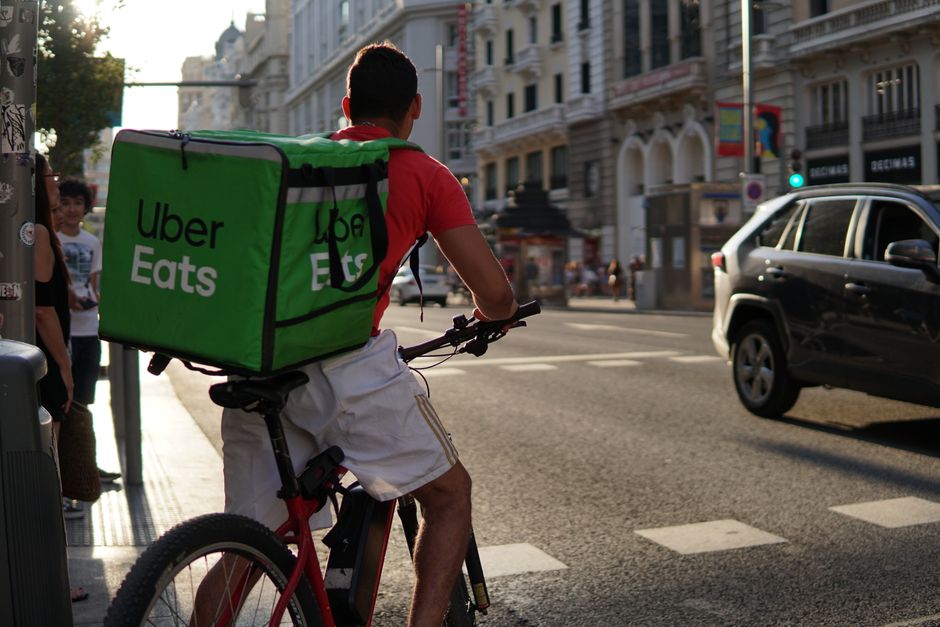
Uber Delivery Business Head Departs; Insider Macdonald Appointed COO
The leadership structure within Uber’s burgeoning delivery division has undergone a significant shake-up with the departure of its long-standing business head. This strategic move, coupled with the swift appointment of a seasoned insider to a newly created Chief Operating Officer (COO) role, signals a pivotal moment for the ride-hailing giant’s aggressive expansion into the food, grocery, and retail delivery markets. The outgoing executive, whose tenure saw the initial conceptualization and scaling of Uber Eats, departs amid increasing competition and evolving consumer expectations in the on-demand delivery landscape. While specific reasons for the departure remain undisclosed, the timing suggests a strategic recalibration of Uber’s delivery strategy, potentially driven by the need for more integrated operational efficiency and a sharper focus on profitability. The appointment of Danielle Macdonald, a senior vice president within Uber’s broader operations, to the newly established COO position is a clear indicator of the company’s commitment to leveraging internal talent and consolidating operational oversight. Macdonald, who has been instrumental in optimizing various facets of Uber’s global operations, is expected to bring a deep understanding of the company’s infrastructure and a proven track record of driving operational excellence. The creation of the COO role itself underscores a strategic shift, suggesting a move towards a more centralized and unified approach to managing the complex logistics and diverse partnerships inherent in the multi-faceted delivery business. This change in leadership is likely to have far-reaching implications for Uber’s delivery services, impacting everything from restaurant and retailer relationships to courier management and customer experience.
The departure of the former business head of Uber Delivery marks the end of an era for a division that has become a critical pillar of Uber’s overall business. Launched initially as a small experimental venture, Uber Eats rapidly evolved into a global phenomenon, transforming the way consumers access food and other goods. Under the former leader’s stewardship, the platform navigated the intricate challenges of building a three-sided marketplace, connecting consumers with restaurants and a vast network of delivery partners. Key milestones achieved during this period include rapid international expansion, the introduction of innovative features like group orders and pickup options, and the strategic acquisition of companies like Postmates, which significantly bolstered Uber’s market share in the United States. However, the rapid growth also brought its share of challenges. The intense competition from rivals such as DoorDash, Deliveroo, and Just Eat Takeaway, all vying for dominance in a highly fragmented market, has put considerable pressure on profit margins. Furthermore, ongoing debates surrounding the classification and compensation of delivery partners, as well as evolving regulatory landscapes in various jurisdictions, have added layers of complexity to the operational environment. The former head’s departure, therefore, could be interpreted as a signal that Uber is seeking fresh perspectives and a refined strategy to navigate these ongoing challenges and capitalize on future growth opportunities. The success of Uber Delivery is intrinsically linked to its ability to maintain a competitive edge while simultaneously driving towards sustainable profitability, a balancing act that requires constant innovation and agile operational management.
Danielle Macdonald’s ascension to the newly created Chief Operating Officer (COO) role within Uber Delivery is a strategic move designed to inject operational rigor and foster greater synergy across the company’s diverse delivery verticals. Macdonald, a seasoned executive with over a decade of experience at Uber, has a deep and nuanced understanding of the company’s intricate global operations. Prior to this appointment, she held several senior leadership positions, most notably as Senior Vice President of Global Operations, where she was instrumental in streamlining complex processes, optimizing resource allocation, and driving efficiency improvements across Uber’s ride-sharing and delivery businesses. Her tenure has been characterized by a data-driven approach and a relentless focus on execution, qualities that are paramount in the fast-paced and logistics-intensive world of on-demand delivery. The creation of the COO position itself signifies a more centralized and integrated approach to managing Uber’s delivery operations, which encompass not only food delivery but also a growing portfolio of grocery, convenience store, and retail product offerings. This consolidation of oversight is expected to enable greater economies of scale, facilitate more cohesive strategic planning, and enhance the overall efficiency of Uber’s delivery network. Macdonald’s responsibilities will likely include overseeing the day-to-day operations of Uber Eats, Uber Grocery, and other emerging delivery services, ensuring seamless integration between different platforms and services, and driving operational excellence at every touchpoint. Her experience in managing large-scale, geographically dispersed teams and her proven ability to navigate complex operational challenges will be crucial in this new capacity.
The strategic rationale behind appointing Macdonald as COO and creating this distinct role within Uber Delivery is multifaceted. Firstly, it addresses the growing complexity of managing multiple delivery verticals. Uber is no longer solely a food delivery platform; it has strategically expanded into groceries, convenience items, and even alcohol, each with its unique logistical demands and customer expectations. A dedicated COO can provide focused leadership to harmonize these operations, ensuring a consistent and high-quality customer experience across all delivery categories. This integrated approach can also lead to significant operational efficiencies, such as optimizing driver utilization across different service types and leveraging shared infrastructure. Secondly, the COO role can act as a crucial bridge between the global strategy set by senior leadership and the granular execution required at the ground level. Macdonald’s deep operational background positions her perfectly to translate strategic objectives into actionable plans, monitor key performance indicators, and identify areas for continuous improvement. This will be particularly important as Uber aims to achieve profitability in its delivery business, a goal that requires meticulous cost management and revenue optimization. Thirdly, the appointment of an internal leader like Macdonald signals a commitment to retaining and developing talent within the organization. It demonstrates Uber’s confidence in its existing leadership pool and its ability to foster growth from within. This can be a significant morale booster for employees and a testament to the company’s investment in its people.
The competitive landscape in the food and grocery delivery market is exceptionally fierce, characterized by rapid innovation, significant venture capital investment, and intense customer acquisition efforts. Uber Eats operates in a highly dynamic environment where customer loyalty can be ephemeral, and the cost of acquiring and retaining both customers and delivery partners is substantial. Key competitors, including DoorDash, which has a dominant market share in North America, and a host of regional players across Europe, Asia, and Latin America, are constantly pushing the boundaries of service offerings and operational efficiency. This necessitates a relentless focus on innovation and operational excellence for Uber to maintain and grow its market position. The introduction of new product categories, such as alcohol and general merchandise, reflects a strategic attempt to diversify revenue streams and capture a larger share of the consumer’s discretionary spending. Furthermore, partnerships with major retailers and grocery chains are crucial for expanding the reach and appeal of Uber’s delivery services. The company’s ability to effectively integrate these partnerships and provide a seamless experience for both consumers and partners will be a key differentiator. The ongoing challenge of achieving profitability in this sector remains a significant hurdle for all players. High operating costs, including delivery partner compensation, marketing expenses, and technological investments, often outweigh the revenue generated, leading to sustained losses for many companies in the space. Uber’s strategic decisions, including leadership changes and operational realignments, are intrinsically linked to its ambition to navigate these economic realities and establish a sustainable and profitable delivery business.
The ongoing evolution of the on-demand delivery market is also being shaped by several macro trends. The increasing demand for convenience and instant gratification, amplified by the pandemic, has cemented delivery services as an integral part of modern consumer behavior. This has led to a proliferation of specialized delivery services, from meal kits to prescription medications. As consumer expectations rise, delivery platforms are under pressure to offer faster delivery times, a wider selection of goods, and more personalized experiences. The role of technology is also paramount, with advancements in artificial intelligence, machine learning, and route optimization algorithms playing a crucial role in improving efficiency and reducing costs. Furthermore, the ethical considerations surrounding the gig economy, particularly the working conditions and compensation of delivery partners, continue to be a major point of discussion and regulatory scrutiny. Companies like Uber are increasingly expected to demonstrate a commitment to fair labor practices and provide adequate support and benefits to their vast network of independent contractors. The regulatory environment is also constantly shifting, with governments worldwide introducing legislation to address issues such as worker classification, data privacy, and competition within the delivery sector. Navigating this complex and ever-changing landscape requires agile leadership, a robust operational framework, and a proactive approach to addressing both market dynamics and societal expectations. Macdonald’s role as COO will be central to steering Uber Delivery through these multifaceted challenges and opportunities, ensuring the company remains at the forefront of the on-demand delivery revolution. Her mandate will likely involve a deep dive into optimizing the existing delivery network, exploring new partnership opportunities, and ensuring that Uber Delivery not only meets but exceeds evolving consumer demands while navigating the intricate operational and regulatory complexities of this rapidly expanding sector. The success of this leadership transition will be closely watched by investors and industry observers alike as Uber continues its ambitious journey to dominate the global delivery market.
