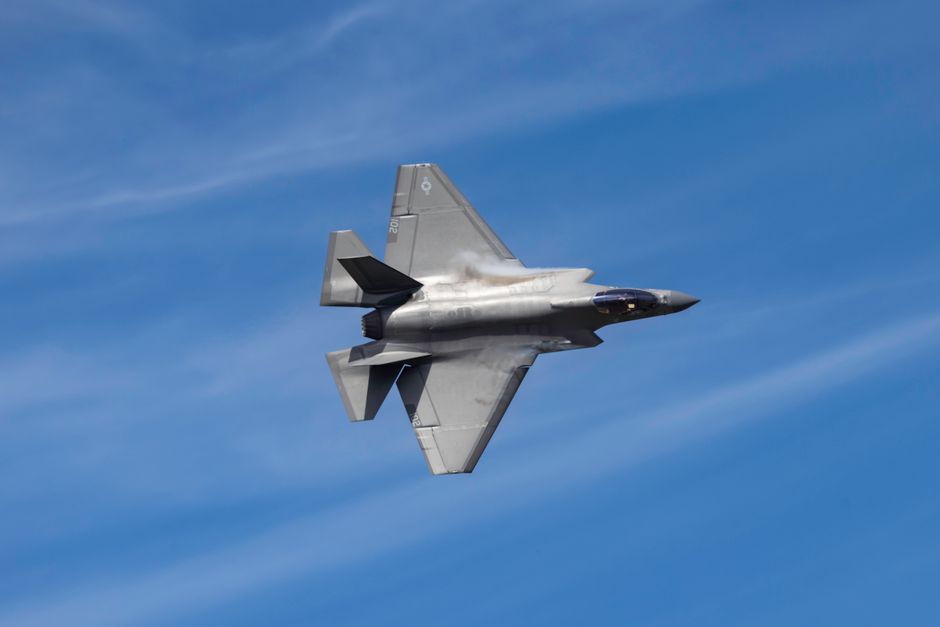
Trump’s "Vision" Twin-Engine F-55 Fighter Jet Faces Reality Check
The aspiration for a new, advanced, twin-engine fighter jet, often championed with a vision for American technological dominance, encountered significant headwinds when confronted with the stringent realities of military procurement, technological feasibility, and economic constraints. This ambitious undertaking, conceptually envisioned as a successor to existing fighter platforms, aimed to embody a leap forward in aerial combat capabilities, boasting enhanced speed, range, stealth, and sensor fusion. However, the path from conceptualization to a fully operational airframe is fraught with complexities that demand a rigorous and pragmatic approach, often leading to a recalibration of initial grand designs. The allure of a “next-generation” fighter jet, particularly one that evokes a sense of nationalistic pride and technological superiority, is undeniable. Yet, the development of such a sophisticated weapon system is not merely an exercise in engineering prowess; it is a complex interplay of strategic imperatives, budgetary limitations, and the ever-evolving landscape of global aerial threats.
The initial concept of an F-55, or a similar advanced twin-engine fighter, likely stemmed from a desire to outmaneuver and outfight potential adversaries. This typically involves considerations for superior kinematic performance – meaning faster acceleration, higher top speeds, and greater maneuverability – crucial for gaining an advantage in dogfights and for rapid deployment across vast operational theaters. Furthermore, the integration of advanced stealth technologies, designed to reduce radar cross-section and other signatures, is paramount in an era where adversaries are rapidly developing sophisticated air defense networks. The notion of twin engines often implies increased survivability and redundancy, a critical factor in combat aircraft where engine failure can be catastrophic. This design choice also typically allows for greater payload capacity, accommodating a wider array of weaponry and sophisticated sensor suites. The envisioned F-55 would likely have incorporated cutting-edge avionics, artificial intelligence-driven combat systems, and unprecedented sensor fusion capabilities, allowing pilots (or even autonomous systems) to possess a comprehensive and near-real-time understanding of the battlespace. Such a platform would not only be a deterrent but a potent force multiplier, capable of projecting American air power with unparalleled effectiveness.
However, translating these ambitious desiderata into a tangible reality involves grappling with a series of formidable challenges. The most immediate and perhaps most significant hurdle is the immense cost associated with developing and fielding a next-generation fighter jet. The F-22 Raptor, a previous flagship of American fighter innovation, incurred staggering development costs, and its per-unit price remained a significant factor in its limited production run. A new platform, aiming for even greater technological advancements, would inevitably carry an even heavier price tag. This escalates beyond the initial research and development (R&D) to encompass sophisticated manufacturing processes, advanced materials, extensive testing, and the development of a robust sustainment infrastructure. The economic realities of defense budgets, often subject to political winds and competing national priorities, mean that any program of this magnitude must demonstrate a clear and compelling return on investment, not just in terms of technological capability but also in terms of affordability and long-term viability. The historical precedent of high-cost, low-production fighter programs underscores the inherent tension between cutting-edge ambition and fiscal prudence.
Technological feasibility also presents a critical juncture for such a vision. Pushing the boundaries of aerospace engineering requires significant breakthroughs in numerous disciplines simultaneously. Developing truly effective fifth or sixth-generation stealth technologies, for instance, involves intricate aerodynamic shaping, specialized radar-absorbent materials, and the careful management of heat signatures, all of which are complex and costly to perfect. Similarly, the integration of advanced artificial intelligence, quantum computing for sensor processing, and highly sophisticated electronic warfare suites demands not only theoretical advancements but also practical implementation and rigorous validation. The potential for unforeseen technical challenges, delays in component development, or the inability to achieve desired performance metrics can significantly inflate costs and push back timelines, rendering the initial vision increasingly distant and potentially obsolete by the time it reaches fruition. The history of military aircraft development is replete with examples of programs that faced significant technical hurdles, leading to compromises, increased expenditure, or even outright cancellation.
Furthermore, the strategic and operational context in which the F-55 would be deployed is a constantly shifting landscape. The primary threats that such a fighter would be designed to counter may evolve significantly during its multi-year development cycle. Adversaries are not static; they too are investing in advanced air defense systems, next-generation fighters, and innovative combat doctrines. A fighter jet developed to counter threats of today might be less effective against the threats of tomorrow. This necessitates a flexible and adaptable design that can incorporate future upgrades and modifications, or a highly sophisticated foresight into potential future threats that is notoriously difficult to achieve with absolute certainty. The concept of “future-proofing” a multi-billion dollar weapons system is a daunting task, and any miscalculation in threat assessment can render the investment suboptimal. The emphasis on a twin-engine configuration, for example, while offering survivability advantages, might also come with trade-offs in terms of agility or cost compared to single-engine designs that may offer comparable or superior performance in specific operational scenarios.
The established acquisition processes within military branches also act as a significant constraint on purely aspirational visions. The United States Air Force, Navy, and Marine Corps each have their own unique operational requirements, pilot training doctrines, and logistical chains. A new fighter jet program must satisfy the diverse and often conflicting needs of these different services to achieve broad adoption and justification for its development. This involves extensive requirements definition, iterative design reviews, rigorous testing protocols, and a complex bureaucratic approval process. The desire for a singular, groundbreaking platform might be tempered by the practical necessity of tailoring aspects of the design to meet the specific needs of different branches, potentially diluting the purity of the initial concept and adding further complexity and cost. The current landscape, with the F-35 Joint Strike Fighter already representing a monumental investment in a multi-role, stealthy fighter across multiple services, presents a significant challenge in justifying the development of an entirely new, potentially overlapping, twin-engine platform without a clearly delineated and unique operational niche.
The economic feasibility of such a program also extends beyond the initial acquisition cost to the long-term operational and sustainment expenses. A highly advanced fighter jet, with its complex systems and specialized maintenance requirements, incurs substantial costs throughout its operational lifespan. This includes fuel, spare parts, specialized training for maintenance crews, software updates, and periodic upgrades. If the per-unit cost of acquisition is exceptionally high, the total cost of ownership over several decades can become prohibitive, potentially limiting the number of aircraft that can be procured and fielded, thereby diminishing the overall impact and strategic advantage of the program. A realistic assessment of the total lifecycle cost is therefore as critical as the initial development budget. The lessons learned from programs like the F-22, where the high operating costs contributed to its early retirement from production, serve as a stark reminder of this crucial consideration.
Moreover, the competitive landscape of the global defense industry necessitates careful consideration of cost-effectiveness. While American technological superiority is a stated goal, the ability to field a sufficient number of advanced platforms to maintain air dominance is equally important. If a hypothetical F-55 is so prohibitively expensive that only a limited number can be procured, it could leave the nation vulnerable in certain scenarios compared to adversaries who might field larger numbers of less technologically advanced but still capable aircraft. The development of the F-35, with its emphasis on a more affordable and multi-service approach, reflects this understanding of balancing technological advancement with the need for widespread deployment. The vision of an F-55 would therefore need to demonstrate a clear and sustainable cost-benefit analysis against the existing and emerging threats, and the capabilities of potential adversaries’ air forces.
The narrative surrounding a “visionary” twin-engine fighter jet, while compelling, often requires a rigorous reality check against the multifaceted demands of military modernization. The economic, technological, and operational constraints are not merely bureaucratic hurdles; they are fundamental determinants of whether an ambitious concept can be transformed into a deployable and effective weapon system. The history of military aviation is replete with examples of grand visions that were either scaled back, significantly altered, or ultimately abandoned due to these practical considerations. The aspiration for an F-55, or any similarly advanced fighter, must be grounded in a sober assessment of these realities, ensuring that any proposed development path offers a realistic, affordable, and strategically sound approach to maintaining air superiority. The future of aerial combat development will likely be shaped by a pragmatic blend of groundbreaking innovation and a keen understanding of the inherent limitations and demands of large-scale defense procurement. The success of any future fighter program hinges not just on the brilliance of its initial design, but on its ability to navigate the complex and often unforgiving terrain of real-world implementation.
