The global shipping industry, the backbone of international commerce responsible for transporting approximately 80 percent of the world’s goods, is currently navigating an unprecedented convergence of geopolitical instability and regulatory paralysis. For the first time in modern maritime history, two of the world’s most vital arterial waterways—the Strait of Hormuz and the Red Sea—have been effectively compromised simultaneously. This dual-theater crisis has coincided with a critical gathering of the International Maritime Organization (IMO) in London this week, where the future of the industry’s climate strategy hangs in the balance. As member states attempt to negotiate a "net-zero framework" to curb the sector’s substantial carbon footprint, the combined weight of military conflict in the Middle East and aggressive diplomatic intervention from the United States has fractured a once-promising international consensus.
A Maritime Industry Under Siege: The Crisis in the Middle East
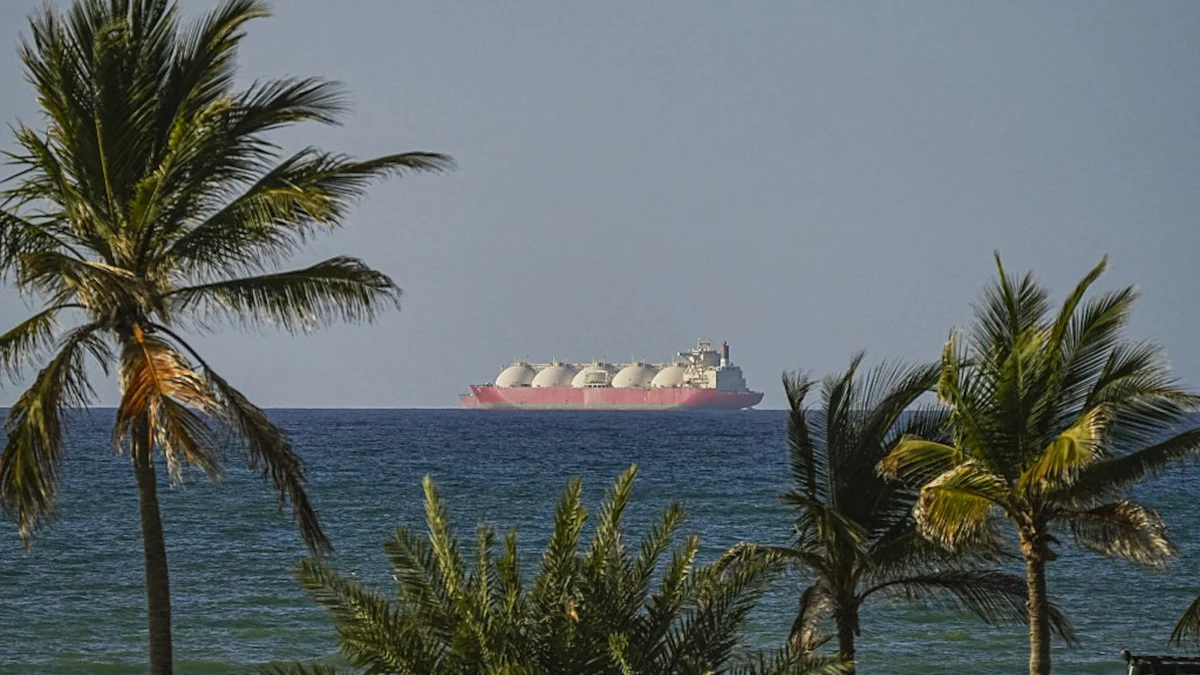
The logistical integrity of global trade has been severely undermined since early March, as regional tensions escalated into a direct threat to merchant shipping. The Strait of Hormuz, a narrow passage between Oman and Iran through which 20 percent of the world’s daily oil consumption passes, has become a flashpoint for Iranian naval activity. Simultaneously, Houthi rebels in Yemen have intensified their campaign against vessels in the Red Sea, citing U.S. and Israeli military actions as justification for their blockade.
The impact of these disruptions is both immediate and profound. More than 150 commercial vessels were recently reported as marooned or stationary, unable to risk passage through the Strait of Hormuz following a brief reopening that was abruptly rescinded by Iranian forces over the weekend. For those seeking to avoid the volatility, the only viable alternative is the arduous detour around the Cape of Good Hope at the southern tip of Africa. This route adds approximately 3,500 nautical miles and 10 to 14 days of travel time to a standard journey between Asia and Northern Europe.
The economic fallout is manifesting in the energy markets. Crude oil prices have surged in response to the perceived threat to supply stability. Furthermore, the cost of maritime fuel—already volatile due to post-pandemic recovery and shifting environmental regulations—has spiked so dramatically that the price gap between traditional heavy fuel oil and certain biofuels has narrowed. In some European markets, high-grade biofuels have become more cost-competitive than conventional bunker fuel for the first time, though supply remains insufficient to meet global demand.
The IMO Net-Zero Framework: Ambition vs. Reality
It is against this backdrop of high-seas instability that the IMO, the United Nations’ specialized agency for shipping, is meeting to finalize its decarbonization roadmap. The shipping industry accounts for roughly 3 percent of global greenhouse gas emissions; if the sector were a nation, it would rank as the sixth-largest emitter in the world, comparable to Germany or Japan.
For three years, the 176 member nations of the IMO have been refining a "net-zero framework." The core of this proposal is an economic mechanism—a global carbon levy or fee—that would charge shipowners for every ton of carbon dioxide emitted above a specific efficiency threshold. The projected revenue from such a fee is estimated to reach $12 billion annually by 2030. These funds are intended to be reinvested into the research and development of zero-emission fuels, such as green ammonia and hydrogen, while also providing financial assistance to developing nations to ensure a "just and equitable" transition.
A Timeline of Political Interruption
The momentum toward a global carbon agreement reached its zenith in early 2024, with many delegates optimistic that a formal vote would take place by the end of the year. However, the political landscape shifted dramatically during the summer months.
- July 2025: As technical committees finalized the fee structure, the Trump administration issued a stern warning to the international community. U.S. Secretary of State Marco Rubio, in coordination with trade and energy officials, released a memorandum characterizing the IMO framework as an "extraterritorial carbon tax" that would unfairly penalize American consumers and businesses.
- August 2025: The U.S. State Department reportedly engaged in a series of bilateral discussions with key maritime partners, suggesting that support for the IMO levy could result in punitive trade measures, including increased port fees for foreign vessels and visa restrictions for officials from supporting nations.
- October 2025: During a pivotal IMO meeting, the unified front of supporting nations began to crumble. Under pressure from the world’s largest economy, several middle-income nations that had previously championed the levy voted to delay the final decision by at least twelve months.
- March 2026 (Present): The current session begins with the framework in a state of political limbo, as technical work continues without a clear mandate for implementation.
Fractured Proposals: The Search for a Middle Ground
The current meeting has highlighted a deep schism among member states, with several competing proposals now on the table to replace or dilute the original net-zero framework:
- The Japanese "Market-Based" Compromise: Japan has proposed a carbon trading system similar to the European Union’s Emissions Trading System (ETS). Instead of a flat fee, companies that exceed emission limits could purchase "credits" from companies that operate more efficiently. This moves away from the "tax" label but has been criticized by environmental groups for potentially allowing wealthy companies to "buy their way out" of actual emission reductions.
- The Latin American/Liberian Alternative: A proposal submitted by Liberia, Argentina, and Panama—nations that represent significant portions of the world’s shipping registry (flag states)—suggests doing away with the economic element entirely. Their plan focuses on technical fuel standards without the financial penalties that incentivize rapid adoption.
- The Petrostates’ Resistance: A coalition of oil-producing nations has called for the total abandonment of the framework, arguing that the current energy crisis makes any additional costs to shipping untenable for the global economy.
- The Island States’ Ultimatum: Small Island Developing States (SIDS), which are the most vulnerable to rising sea levels, remain the most vocal proponents of the original plan. They argue that a substantial carbon levy is the only way to fund the infrastructure needed to protect their coastlines and transition their domestic shipping fleets.
The U.S. Position: Domestic Interests Over International Regulation
The United States has maintained a firm stance, arguing that the IMO’s proposed economic measures are fundamentally flawed. In its latest submission to the Marine Environment Protection Committee (MEPC), the U.S. delegation stated that the most "logical development" would be to end consideration of the net-zero framework entirely.
The American argument centers on the "economic element" of the policy. The Trump administration contends that a global levy would function as a regressive tax, ultimately passed down to consumers in the form of higher prices for imported goods, from electronics to agricultural products. Instead, the U.S. advocates for a voluntary approach and bilateral agreements that do not involve a centralized global fund.
"The United States submits that the most appropriate path forward is to end consideration of the IMO Net-Zero Framework entirely," the proposal reads, citing a "clear lack of consensus" as the primary justification for abandonment.
Industry Concerns: The Threat of a Regulatory Patchwork
Perhaps surprisingly, much of the private shipping industry remains in favor of a unified global policy, even if it includes a fee. Major shipowners and trade associations, such as the International Chamber of Shipping (ICS), fear that the failure of the IMO will lead to a "patchwork" of regional regulations.
The European Union has already integrated shipping into its carbon pricing mechanism. If China, the United States, and other major trade blocs follow suit with their own disparate sets of rules, shipping companies will face a logistical nightmare. A vessel traveling from Shanghai to Rotterdam via the Middle East could theoretically be subject to three or four different carbon accounting systems, each with its own compliance costs and reporting requirements.
Thomas Kazakos, Secretary General of the International Chamber of Shipping, emphasized that the industry needs certainty to invest in the multi-billion-dollar transition to new fuels. "The shipyards of tomorrow will not only build vessels; they will build confidence in the industry’s ability to meet its sustainability goals," Kazakos stated, reaffirming the industry’s preference for the IMO as the sole global regulator.
Analysis of Implications: A Dangerous Precedent
The current stalemate at the IMO represents more than just a delay in climate policy; it reflects a broader shift toward protectionism and the erosion of multilateralism. Experts warn that if the IMO—one of the few international bodies with a track record of successful global regulation—cannot reach an agreement, it bodes poorly for other international climate efforts.
Evelyne Williams of Columbia University’s Center on Global Energy Policy notes that the U.S. is leveraging its position as a dominant exporter of Liquefied Natural Gas (LNG) to influence the negotiations. "It’s tricky because if the U.S. does want to kill this thing, it has considerable leverage," Williams said. "The fear for most parties is that this is abandoned in its entirety, and then you have to start from scratch."
From an environmental perspective, the stakes are equally high. Em Fenton of Opportunity Green warns that removing the "regulatory teeth" of the carbon fee would be catastrophic. Without a financial incentive to switch to cleaner, more expensive fuels, the industry is likely to remain tethered to heavy fuel oils for decades, making the goal of limiting global warming to 1.5 degrees Celsius virtually impossible.
As the IMO meeting continues through the week, the global community is watching to see if a compromise can be salvaged. The shipping industry remains at a crossroads, caught between the immediate violence of regional conflict and the slow-motion crisis of a changing climate, with the world’s most powerful nations unable to agree on the path forward.