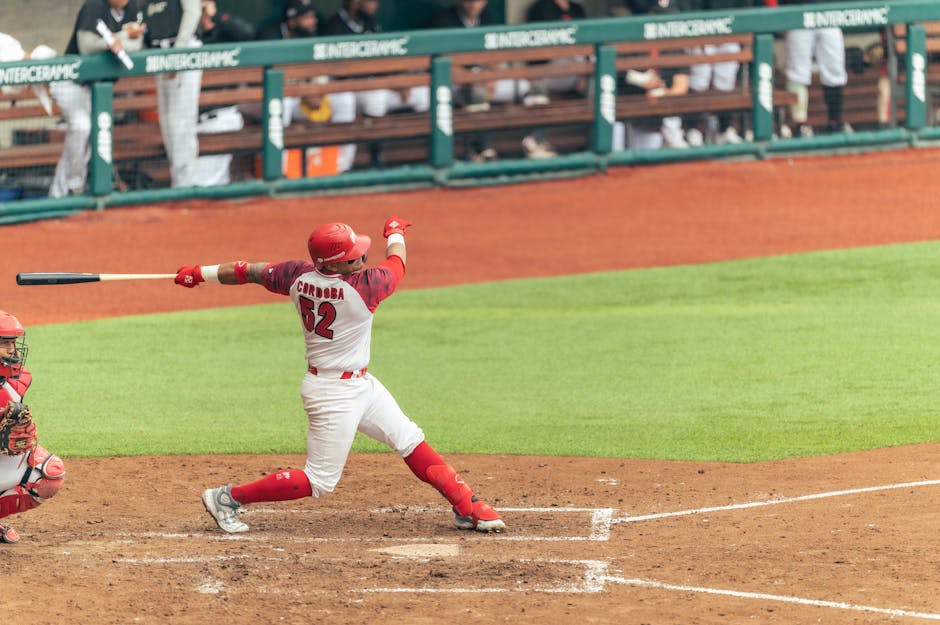
Category Baseball Matchups: Mastering Fantasy Sports Strategy
Category baseball matchups represent a fundamental pillar of success in fantasy baseball, particularly within the increasingly popular "category" or "roto" leagues. These leagues, unlike head-to-head (H2H) leagues where managers directly compete week-to-week, score participants based on their cumulative performance across a predetermined set of statistical categories at the end of the season. This dynamic shifts the strategic focus from winning individual matchups to maximizing overall statistical output. Understanding and exploiting category baseball matchups is paramount for any serious fantasy manager.
The core principle of category baseball is to assemble a roster that can compete effectively across a balanced set of offensive and pitching statistics. Typically, these categories are divided into five hitting categories and five pitching categories: Batting Average (AVG), Home Runs (HR), Runs Scored (R), Runs Batted In (RBI), and Stolen Bases (SB) for hitters, and Earned Run Average (ERA), Walks Plus Hits Per Inning Pitched (WHIP), Strikeouts (K), Wins (W), and Saves (SV) for pitchers. Some leagues might include additional categories like On-Base Percentage (OBP) or Slugging Percentage (SLG) for hitters, or Holds (H) for pitchers, but the foundational ten remain the most common. Success in a category league is not about dominating every single category; it’s about winning enough categories to outscore your opponents and secure the highest overall rank. This necessitates a nuanced approach to player evaluation, drafting, and in-season management, all centered around optimizing your team’s performance within these specific statistical buckets.
The initial stage of mastering category baseball matchups begins long before the first pitch is thrown, during the fantasy draft. A successful draft strategy hinges on understanding your league’s specific category settings and identifying your preferred roster construction. Some managers adopt a "stars and scrubs" approach, prioritizing elite talent at a few key positions and then filling out the roster with cheaper players who excel in specific, often undervalued, categories. Others prefer a more balanced build, aiming for consistent contributors across all categories. A crucial element here is recognizing "gambles" and "safeties." Stars with high ceilings but potential injury risks are gambles. Players with lower ceilings but consistent production and low injury risk are safeties. The interplay of these within your draft board dictates your team’s initial profile. For instance, if your league heavily emphasizes stolen bases, you might target early-round speedsters or later-round players with exceptional stolen base rates, even if they are weak in other areas. Conversely, if home runs are your focus, you’ll prioritize power hitters. The key is to identify which categories you are likely to win and which you are likely to lose, and build your team accordingly. This requires scouting players not just for their overall value but for their category-specific contributions. A player might be an average hitter overall but an elite stolen base threat, making them incredibly valuable in a category league.
Beyond the draft, the constant evaluation of player performance against these specific categories is the engine of in-season management. This involves not just checking individual player stats but understanding how those stats contribute to your team’s overall standing in each category. Weekly lineup decisions become tactical battles. For example, if you are weak in batting average and have a few borderline hitters on your bench, you might look to start the hitter with the highest current batting average, even if their power numbers are lower, to try and gain ground in that specific category. Similarly, when considering pitcher starts, you might prioritize a pitcher with a high strikeout rate against a team that struggles to make contact, even if their ERA is slightly higher than another pitcher facing a more potent offense. This requires a deep dive into schedule analysis and opponent matchups. Knowing that a particular hitter is facing a pitcher who consistently gives up home runs can be a significant advantage. Likewise, understanding that a pitcher you’re considering is facing a lineup with a high strikeout percentage can inform your decision to start them.
The concept of "punting" categories is a sophisticated strategy that can significantly impact a manager’s success. Punting a category means intentionally de-prioritizing it during the draft and in-season management, accepting that you will likely finish last or near last in that specific stat. The goal is to free up draft capital and roster spots to focus on dominating the remaining categories. For example, a manager might decide to punt stolen bases. This means they wouldn’t spend early draft picks on elite speedsters and would likely ignore players with high stolen base potential if it meant acquiring a more impactful player in another category. By shedding the need to acquire significant stolen base contributions, this manager can dedicate those resources to acquiring more power hitters, high-strikeout pitchers, or players who drive in runs. The key to successful punting is to ensure you have a clear plan for what you are sacrificing and what you are gaining in return. It’s a calculated risk that requires a strong understanding of your league’s scoring and your opponents’ tendencies. If everyone else is also punting the same category, the strategy loses its edge.
Pitching matchups in category leagues are particularly intricate. Unlike hitters who contribute across multiple offensive categories, pitchers are often specialized. Some pitchers are strikeout artists, while others are groundball specialists who limit hard contact and boast low ERAs and WHIPs. Savvy managers identify these strengths and weaknesses in their own staff and exploit them against their opponents. For instance, if you have a stable of high-strikeout pitchers, you want to face teams that strike out frequently. Conversely, if your pitching staff is more about limiting baserunners, you might target teams that are prone to walks and extra-base hits. Understanding a pitcher’s historical performance against a specific team or hitter is also valuable. Some pitchers have a "kryptonite" in certain lineups, and avoiding those matchups can save your ERA and WHIP.
One of the most crucial, yet often overlooked, aspects of category baseball matchups is roster construction and flexibility. Building a roster that isn’t overly reliant on one or two categories is key. This means avoiding teams that are heavily skewed towards power hitters with no speed, or pitchers who only rack up strikeouts but have shaky control. A balanced approach, where players contribute meaningfully across multiple categories, provides a safety net. However, this doesn’t negate the need for specialization within your strengths. Identifying players who are exceptional in one or two categories, even if they are average elsewhere, can be more valuable than a player who is simply average across the board. For example, a player who hits .250 with 20 HR and 10 SB might be less valuable than a player who hits .220 with 30 HR and 2 SB if your team is already strong in stolen bases but needs power.
The waiver wire becomes a battleground for category supremacy. Managers constantly scan for players who are exceeding expectations in specific categories. A hitter who has suddenly found their swing and is putting up excellent batting averages and runs scored can be a crucial pick-up to bolster a weak hitting category. Similarly, a relief pitcher who has emerged as the closer, or a starter who has an extended streak of high-strikeout performances, can provide a significant boost. This proactive approach to the waiver wire, driven by a deep understanding of category needs, is what separates good managers from great ones. It’s not just about picking up the player with the highest overall fantasy points, but the player who addresses a specific deficiency or enhances a particular strength for your team.
Understanding your league’s specific scoring nuances is critical. Some leagues might award bonus points for exceptional performances in certain categories. For example, a league might give a bonus for a player hitting for the cycle, or for a pitcher throwing a no-hitter. Recognizing these bonus opportunities can inform your drafting and in-season decisions. A player with a history of extra-base hits might be more valuable if your league offers bonuses for doubles and triples.
The analytical aspect of category baseball is paramount. Utilizing advanced metrics and player projections can provide a significant edge. Looking beyond traditional statistics like batting average and ERA, and delving into metrics like Weighted On-Base Average (wOBA), Expected Weighted On-Base Average (xwOBA), FIP (Fielding Independent Pitching), and SIERA (Skill-Imitating ERA) can offer a more accurate assessment of a player’s true talent and future potential. These advanced metrics often better predict future performance than traditional stats, which can be influenced by luck or defensive variability. For example, a pitcher with a low ERA but a high FIP might be experiencing good luck, and their ERA is likely to regress. Conversely, a pitcher with a higher ERA but a lower FIP might be due for positive regression.
Finally, the psychological aspect of category baseball should not be underestimated. Understanding your opponents’ tendencies, their draft strategies, and their in-season waiver wire habits can be a significant advantage. If you know an opponent is weak in a particular category, you can tailor your roster moves and draft picks to exploit that weakness. This involves active observation and analysis of other teams’ rosters and recent activity. For instance, if an opponent consistently prioritizes power hitters, you might focus on acquiring speed and batting average to counter their strengths.
In conclusion, mastering category baseball matchups is a continuous process of analysis, strategy, and adaptation. It transcends simply drafting the "best" players and requires a deep understanding of how individual player contributions translate into statistical dominance across a defined set of categories. From the initial draft to the last out of the season, every decision, every waiver wire claim, and every lineup change should be viewed through the lens of optimizing your team’s performance within these specific statistical buckets. The managers who can effectively identify their strengths, exploit their opponents’ weaknesses, and consistently adjust their strategies based on category needs will invariably find themselves at the top of the standings.
