Category: Energy Resources: A Comprehensive Overview of Global Energy Landscapes and Future Trajectories
The global energy landscape is defined by a diverse array of resources, each with unique characteristics, extraction methods, environmental impacts, and economic implications. Understanding these categories is paramount for informed policy-making, technological advancement, and sustainable development. The primary categorization of energy resources often hinges on their renewability and origin. Fossil fuels – coal, oil, and natural gas – represent non-renewable, carbon-intensive sources that have historically powered industrial revolutions and continue to dominate global energy consumption. Renewable energy sources, in contrast, are naturally replenished and offer a pathway towards decarbonization and energy security. These include solar, wind, hydro, geothermal, and biomass. Nuclear energy, while often debated, presents a low-carbon alternative with distinct advantages and challenges. Beyond these broad categories, secondary classifications emerge based on specific forms, applications, and emerging technologies. This article delves into the intricacies of each major energy resource category, analyzing their current standing, future prospects, and the critical interplay between them in shaping our energy future.
Coal, a combustible black or brownish-black sedimentary rock, is primarily composed of carbon along with variable quantities of other elements, chiefly hydrogen, sulfur, oxygen, and nitrogen. Its formation involves the accumulation of plant matter in ancient swamps, subjected to immense pressure and heat over millions of years. The energy content of coal varies significantly depending on its rank, with anthracite being the highest grade, followed by bituminous, sub-bituminous, and lignite. Extraction primarily occurs through surface mining (strip mining) for shallower deposits and underground mining for deeper seams. Historically, coal has been the bedrock of industrialization, providing affordable and abundant energy for electricity generation, steel production, and various industrial processes. Its energy density and ease of transport made it a cornerstone of the First and Second Industrial Revolutions. However, coal combustion releases significant amounts of greenhouse gases, particularly carbon dioxide (CO2), methane (CH4), and nitrous oxide (N2O), contributing substantially to anthropogenic climate change. It is also a major source of air pollutants such as sulfur dioxide (SO2), nitrogen oxides (NOx), particulate matter, and heavy metals like mercury, leading to respiratory illnesses, acid rain, and environmental degradation. Despite its environmental drawbacks, coal remains a dominant energy source in many developing nations due to its cost-effectiveness and established infrastructure. The ongoing debate surrounding coal centers on the feasibility and economic viability of carbon capture and storage (CCS) technologies, as well as the potential for cleaner coal combustion processes. The declining costs of renewable energy and increasing global pressure to mitigate climate change are driving a gradual shift away from coal in many developed economies, although its role in the global energy mix is projected to persist for several decades, albeit with a declining share.
Petroleum, commonly known as crude oil, is a naturally occurring, yellowish-black liquid found in geological formations beneath the Earth’s surface. It is a complex mixture of hydrocarbons, primarily alkanes, cycloalkanes, and aromatic hydrocarbons, with varying amounts of other organic compounds. Oil is extracted through drilling into underground reservoirs, often requiring sophisticated exploration techniques to locate commercially viable deposits. Once extracted, crude oil undergoes fractional distillation in refineries to produce a wide range of valuable products, including gasoline, diesel fuel, jet fuel, kerosene, heating oil, lubricants, asphalt, and the feedstock for petrochemical industries. Petroleum has been the dominant energy source for transportation and a crucial component in the production of plastics, fertilizers, pharmaceuticals, and countless other materials that underpin modern life. Its high energy density and portability have made it indispensable for global trade and mobility. However, the combustion of petroleum-based fuels is a primary contributor to greenhouse gas emissions and air pollution, analogous to coal. The extraction and transportation of oil also carry significant environmental risks, including oil spills that can devastate marine ecosystems and coastal environments. Geopolitical factors, supply chain vulnerabilities, and price volatility have long characterized the global oil market. The transition to electric vehicles (EVs) and the development of alternative fuels are gradually challenging oil’s dominance in the transportation sector, while advancements in petrochemical recycling and the pursuit of bio-based alternatives aim to reduce reliance on virgin petroleum. The long-term outlook for oil is one of declining demand in certain sectors, but it is expected to remain a significant energy and material feedstock for the foreseeable future, particularly in regions with substantial reserves and established infrastructure.
Natural gas, a fossil fuel consisting primarily of methane (CH4), is found in underground deposits, often alongside oil. It is formed through similar geological processes as coal and oil but is typically found in a gaseous state. Natural gas is extracted through conventional drilling methods or hydraulic fracturing (fracking) for shale gas deposits. Its primary advantage over coal and oil is its cleaner combustion profile. When burned, natural gas produces significantly less CO2 per unit of energy than coal and oil, and it releases substantially lower amounts of sulfur dioxide, nitrogen oxides, and particulate matter. This makes it an attractive transitional fuel in efforts to reduce air pollution and greenhouse gas emissions while scaling up renewable energy sources. Natural gas is widely used for electricity generation, industrial heating, and residential heating and cooking. The development of liquefied natural gas (LNG) technology has enabled the global transport of natural gas across vast distances, enhancing energy security and market interconnectivity. However, methane itself is a potent greenhouse gas, and fugitive emissions during extraction, processing, and transportation can significantly offset its climate benefits. The environmental concerns surrounding fracking, including potential groundwater contamination and induced seismicity, are subjects of ongoing scientific and regulatory scrutiny. The debate surrounding natural gas often focuses on its role as a bridge fuel to a fully renewable energy system, balancing its immediate emissions reduction benefits against the long-term imperative to transition away from all fossil fuels.
Solar energy harnesses the radiant light and heat from the Sun, utilizing photovoltaic (PV) panels to convert sunlight directly into electricity or solar thermal systems to concentrate solar heat for electricity generation or direct heating. The Sun is an inexhaustible energy source, making solar power a quintessential renewable resource. PV technology has seen dramatic cost reductions and efficiency improvements in recent decades, making solar energy increasingly competitive with traditional energy sources. Solar PV systems can be deployed at various scales, from small rooftop installations for residential use to large-scale solar farms generating utility-scale power. Solar thermal power plants often employ mirrors to focus sunlight onto a receiver, heating a fluid that drives a turbine to generate electricity. Solar energy offers significant environmental advantages, producing zero operational greenhouse gas emissions and minimal air pollution. Its decentralized nature allows for energy independence and resilience. However, solar power is intermittent, dependent on sunlight availability, requiring energy storage solutions such as batteries or integration with other dispatchable energy sources to ensure a reliable power supply. Land use for large-scale solar farms can also be a consideration. Ongoing research focuses on improving solar cell efficiency, developing advanced battery technologies, and exploring novel applications like building-integrated photovoltaics (BIPV). The continued decline in solar costs and supportive government policies are driving rapid global expansion of solar capacity, positioning it as a cornerstone of future decarbonized energy systems.
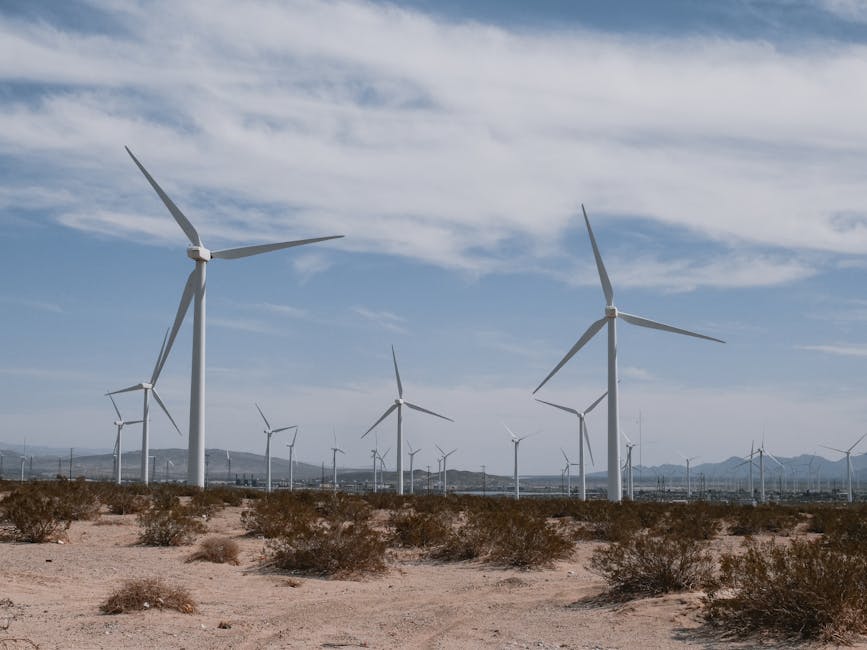
Wind energy captures the kinetic energy of moving air, converting it into electricity using wind turbines. Wind turbines, with their characteristic rotor blades, are designed to rotate when wind passes through them, driving a generator. Like solar power, wind is a naturally replenished and abundant resource, making it a key renewable energy source. Wind farms can be located on land (onshore) or at sea (offshore). Offshore wind farms generally benefit from stronger and more consistent wind speeds, leading to higher capacity factors. Technological advancements in turbine design, including larger rotor diameters and taller towers, have significantly increased efficiency and energy capture. Wind power offers substantial environmental benefits, producing no operational greenhouse gas emissions or air pollutants. It is a cost-competitive energy source in many regions. However, wind power is also intermittent and variable, necessitating complementary energy storage or grid management strategies. Visual impact, noise pollution, and potential impacts on bird and bat populations are considerations for onshore wind farms, while offshore wind farms face challenges related to installation, maintenance, and potential impacts on marine ecosystems and navigation. The ongoing development of floating offshore wind technology is opening up new frontiers for wind energy deployment in deeper waters. The continued growth in wind power capacity, driven by cost reductions and policy support, solidifies its role as a critical component of the global transition to clean energy.
Hydroelectric power, or hydropower, generates electricity from the force of moving water, typically by damming rivers to create reservoirs. Water released from the reservoir flows through turbines, which spin generators to produce electricity. Hydropower is a mature and reliable renewable energy technology, offering a significant source of dispatchable power. Large-scale hydropower projects can provide substantial amounts of electricity, and their reservoirs can also serve for water storage, flood control, and irrigation. Hydropower has a relatively low operational carbon footprint. However, the construction of large dams can have significant environmental and social impacts. These include the inundation of large land areas, displacement of communities, alteration of river ecosystems, disruption of fish migration, and changes in sediment flow downstream. The decomposition of organic matter in reservoirs can also release methane, a potent greenhouse gas. Smaller-scale hydropower projects, such as run-of-river systems, often have a reduced environmental footprint but generate less power. The future of hydropower development is increasingly focused on maximizing the efficiency of existing facilities, exploring pumped-storage hydropower for grid stabilization, and considering smaller, less impactful run-of-river schemes.
Geothermal energy taps into the heat stored within the Earth’s crust. This heat can be accessed in several ways. In areas with high geothermal activity, steam or hot water can be directly extracted from underground reservoirs to drive turbines and generate electricity. In other regions, geothermal heat pumps can be used for heating and cooling buildings by transferring heat between the ground and the building. Geothermal energy is a continuously available, baseload power source, meaning it can operate 24/7, regardless of weather conditions. It has a very low greenhouse gas emission profile and a small land footprint compared to some other renewable energy sources. However, the geographical availability of commercially viable high-temperature geothermal resources is limited. The drilling and extraction processes can release small amounts of greenhouse gases and hydrogen sulfide. Enhanced Geothermal Systems (EGS), which artificially create or improve permeability in hot dry rock, aim to expand the geographic reach of geothermal energy. The stability and reliability of geothermal power make it an attractive option for complementing intermittent renewable sources.
Biomass energy is derived from organic matter, including agricultural residues, forest products, animal waste, and dedicated energy crops. This organic matter can be converted into energy through various processes: direct combustion for heat and electricity generation, gasification to produce syngas (a mixture of hydrogen and carbon monoxide), or anaerobic digestion to produce biogas (primarily methane). Biomass is considered a renewable resource if it is sustainably harvested, meaning the rate of harvest does not exceed the rate of regrowth. When biomass is burned, it releases CO2, but if the plants from which it is derived are regrown, they absorb an equivalent amount of CO2 from the atmosphere, theoretically making the process carbon-neutral. Biomass can provide dispatchable power and can be a useful tool for waste management. However, the sustainability of biomass sourcing is critical; unsustainable harvesting can lead to deforestation, biodiversity loss, and soil degradation. The combustion of biomass can also release air pollutants. The efficiency of conversion processes and the lifecycle greenhouse gas emissions, including those from cultivation, harvesting, and transportation, are important considerations. Biofuels, derived from biomass, are also a significant category, used primarily in the transportation sector.
Nuclear energy is generated through nuclear fission, a process where the nucleus of an atom, typically uranium, is split, releasing a large amount of energy. This energy is used to heat water, producing steam that drives turbines to generate electricity. Nuclear power plants produce virtually no greenhouse gas emissions during operation, making them a significant source of low-carbon electricity. Nuclear energy provides a reliable, baseload power source. However, nuclear power faces significant challenges. The mining and enrichment of uranium have environmental impacts. The primary concern is the management of radioactive waste, which remains hazardous for thousands of years and requires secure, long-term storage. The risk of nuclear accidents, although rare, can have catastrophic consequences, as demonstrated by Chernobyl and Fukushima. The proliferation of nuclear materials and the potential for their diversion to weapons programs are also significant global security concerns. The high upfront costs of building nuclear power plants and the long construction times contribute to their economic challenges. Research and development are ongoing in areas like advanced reactor designs, such as small modular reactors (SMRs), and waste recycling technologies to address these concerns.
The interplay and evolution of these energy resource categories are central to addressing climate change and ensuring global energy security. The increasing competitiveness of solar and wind power, coupled with advancements in energy storage, is accelerating the transition away from fossil fuels. Natural gas is often viewed as a bridging fuel, offering lower emissions than coal and oil, but its long-term role is debated due to methane emissions. Hydropower, geothermal, and biomass provide valuable renewable and dispatchable energy, though with specific geographical and environmental considerations. Nuclear energy offers a low-carbon baseload option but grapples with waste management and safety concerns. Emerging technologies, such as advanced battery storage, green hydrogen production, and fusion energy, hold the potential to further transform the energy landscape. Policy frameworks, international cooperation, and continued technological innovation are crucial for navigating this complex transition towards a sustainable and secure energy future, where the optimal mix of energy resources will be determined by a delicate balance of environmental, economic, and social factors.
