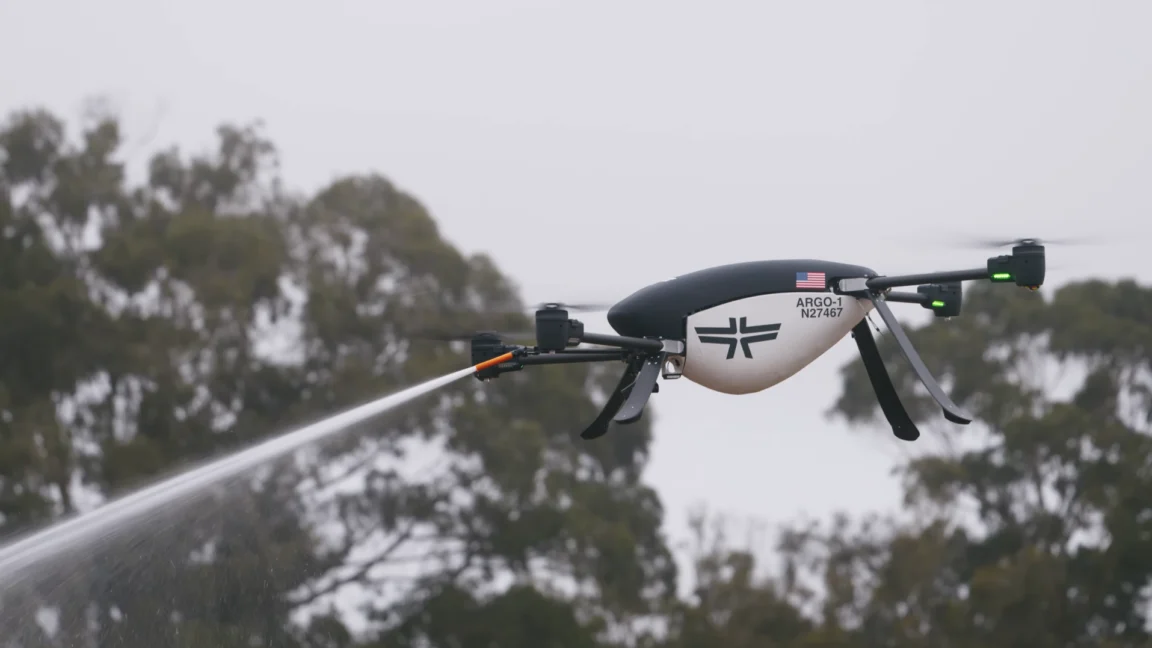
Drones capable of spraying water and fire retardants have been practicing how to snuff out wildfires early in California and Alaska this summer—demonstrating a possible rapid-response tool for firefighting as climate change transforms wildfire season into a nearly year-round risk for much of the United States. While most drones are significantly smaller than crewed aircraft and have shorter flight ranges, meaning they cannot replace large airtankers in delivering massive payloads of water or other fire-suppressing payloads to remote, established wildfires, companies and fire agencies—along with organizers of the $11 million XPRIZE competition—are rigorously testing whether these unmanned aerial systems can help firefighting crews respond more quickly to small fires and extinguish them before they escalate into more destructive, uncontrollable infernos. The implications of successfully deploying such technology are profound, promising enhanced safety for human firefighters, more efficient resource allocation, and potentially mitigating the devastating economic and ecological impacts of large-scale wildfires that have plagued regions like the American West for decades.
The Intensifying Wildfire Challenge: A Climate-Driven Imperative
The urgency behind developing innovative firefighting solutions like autonomous drones stems directly from the escalating global wildfire crisis. Climate change is unequivocally altering fire regimes across the planet, characterized by longer, hotter dry seasons, increased fuel loads due to drought-stressed vegetation, and more frequent extreme weather events that fan flames. In the United States, particularly the Western states, wildfire seasons have expanded dramatically, transforming from predictable seasonal occurrences into a near-constant threat.
Statistical data underscores this alarming trend. According to the National Interagency Fire Center (NIFC), the average number of acres burned annually in the U.S. has steadily increased over the past two decades. For instance, the period from 2011-2020 saw an average of 7.5 million acres burned per year, a significant jump compared to previous decades. California, often considered the epicenter of this crisis, has experienced unprecedented megafires, such as the 2020 August Complex (over 1 million acres) and the 2021 Dixie Fire (nearly 1 million acres), which shattered previous records in terms of size and destructive power. These fires not only devastate ecosystems and wildlife but also lead to immense economic losses, including property destruction, agricultural impacts, tourism declines, and significant healthcare costs associated with smoke inhalation. The human toll is also considerable, with communities displaced and lives tragically lost, both among the civilian population and the brave firefighters on the front lines.
Traditional aerial firefighting, primarily relying on large airtankers and helicopters, is indispensable for large-scale operations. However, these assets come with significant limitations. They are incredibly expensive to operate, require large ground crews for reloading, have specific weather and visibility constraints, and, most critically, involve inherent risks to pilots flying in hazardous, low-altitude environments, often through dense smoke and unpredictable winds. Response times can also be a critical factor; by the time large aircraft are deployed and reach a remote fire, a small ember can have already grown into a rapidly spreading blaze, making suppression exponentially more difficult and costly. This gap in early, rapid intervention is precisely where autonomous drone technology offers a compelling solution.
Pioneering the Future: Drone Technology in Action
The recent field tests in California exemplify the concerted effort to integrate advanced drone technology into wildfire management strategies. On July 15, the California Department of Forestry and Fire Protection (CAL FIRE) conducted a pivotal demonstration involving a swarm of five autonomous drones. This exercise, organized with the support of the nonprofit FireWERX and the California-based company Seneca, showcased the drones’ capability to collectively deploy between 500 and 1,000 gallons of fire-suppressing foam. This marked a significant step forward in validating the operational feasibility of autonomous drone swarms in a real-world simulation environment.
Seneca, a company at the forefront of this innovation, is developing the Argo-1 drones, which they plan to make commercially available starting in 2026. Each Argo-1 drone is engineered to carry approximately 100 pounds of water or fire retardant. The true innovation, however, lies in their ability to operate collaboratively in swarms of four to six drones. This synchronized operation dramatically enhances their suppressive capacity and efficiency.
The operational sequence for these drones highlights their advanced autonomous capabilities. Once a human operator uploads a GPS waypoint, designating the target area, the drones navigate autonomously towards it. Upon nearing the target, sophisticated onboard sensors, including thermal cameras and optical systems, are activated to accurately detect the heat signature of the fire. This precise identification allows the drones to differentiate between active flames and surrounding hot spots. Following detection, the drones intelligently determine the optimal hovering altitude to maximize the effectiveness of their spray. They then line up, one after another, to systematically douse the fire, ensuring comprehensive coverage.
The Argo-1 drones, while highly capable, have specific operational parameters. A fully loaded drone is limited to a round trip of approximately 10 miles, flying at an average speed of about 30 miles per hour. These specifications suggest an ideal deployment strategy where drones are either pre-positioned in fire-prone areas or rapidly transported by ground vehicle to within their operational range. Their design facilitates this mobility; each drone is compact enough to fit in the back of a standard pickup truck with the tailgate down, and two individuals can easily carry an empty drone manually, allowing for rapid deployment even in rugged terrain inaccessible to larger vehicles.
Beyond California, similar tests and development efforts are underway in other fire-prone regions, including Alaska, indicating a broader national interest in leveraging this technology. The XPRIZE competition, with its substantial $11 million prize, serves as a powerful catalyst for innovation in this field. It challenges teams globally to develop autonomous technologies that can detect and extinguish wildfires in their nascent stages, pushing the boundaries of what is technologically possible and accelerating the pace of research and development.
The Strategic Advantage: Early Detection and Rapid Suppression
The primary strategic advantage of autonomous firefighting drones lies in their capacity for early detection and rapid suppression. Wildfires, particularly in their initial stages, can grow exponentially. A small, manageable fire can, within hours, become an uncontainable conflagration under adverse conditions. The ability of drones to reach nascent fires faster than traditional ground crews or large airtankers is a game-changer. They can be deployed within minutes of a fire being reported or detected by satellite imagery or ground sensors, providing a crucial window for intervention.
This rapid response capability directly addresses the "before they become more destructive" objective. By deploying a swarm of drones to deliver targeted retardant or water payloads to a new ignition, the aim is to contain and extinguish the fire while it is still small, preventing it from escalating into a megafire that requires days, weeks, or even months and billions of dollars to control. This proactive approach not only saves natural resources and property but also significantly reduces the risk to human lives.
Moreover, the deployment of drones for initial attack operations can enhance safety for human firefighters. By taking on the dangerous task of directly engaging new ignitions in potentially volatile environments, drones can reduce the exposure of ground crews and airtanker pilots to immediate hazards. This shift allows human personnel to focus on larger containment strategies, mop-up operations, and community protection, optimizing the overall firefighting effort. In the long run, preventing large fires through early drone intervention could lead to substantial cost reductions, as the expense of fighting a megafire dwarfs the investment in preventative and early-suppression technologies.
Technical Specifications and Operational Logistics
Delving deeper into the technical and logistical aspects, the Seneca Argo-1 drones represent a significant leap in drone utility for critical missions. With a 100-pound payload capacity, a swarm of four to six such drones can deliver a collective impact equivalent to a small helicopter bucket drop, but with greater precision and potentially faster turnaround times for initial attack. Their operational range of a 10-mile round trip, while seemingly limited compared to large aircraft, is strategic. It emphasizes their role as a first-response tool for fires within a localized radius or those accessible via rapid ground transport to a forward operating base. The 30 mph average speed ensures that they can reach a fire quickly once launched.
The concept of pre-positioning drones in high-risk, fire-prone areas is central to maximizing their effectiveness. Imagine small, modular drone stations strategically located near wildland-urban interfaces or in remote forest regions. These stations could house multiple drone units, ready for immediate launch upon detection of a fire, significantly cutting down response times. Such a distributed network would require robust communication infrastructure and potentially autonomous recharging capabilities.
However, it’s crucial to understand that these drones are not designed to replace large airtankers. Airtankers like the C-130 Hercules or Boeing 747 Supertanker can deliver thousands of gallons of retardant in a single pass, essential for creating large fire breaks and slowing the advance of massive fires. Drone swarms, with their smaller, more precise payloads, serve a complementary role: they are the surgical instruments for initial attack, pinpointing and neutralizing threats before they demand the blunt force of larger assets. Their precision allows for targeted application of retardant, minimizing environmental impact and maximizing effectiveness on small, developing fires. Logistical challenges such as battery life, rapid recharging capabilities in remote locations, maintenance, and the safe deployment and retrieval of drones must be continuously addressed through ongoing research and development.
Stakeholder Perspectives and Reactions
The integration of autonomous drones into wildfire suppression strategies elicits varied but largely positive reactions from key stakeholders.
CAL FIRE, as a leading agency in wildfire management, views these drones as a valuable enhancement to their existing toolkit. While official statements are typically measured, the agency’s participation in these field tests strongly implies an interest in augmenting firefighter safety, improving response efficiency, and proactively managing the escalating wildfire threat. It is logical to infer that CAL FIRE sees drones as a means to gain an early advantage against fires, potentially reducing the overall scale and duration of incidents, and thus lessening the burden on their extensive human and traditional aerial resources.
Seneca, the company developing the Argo-1 drones, is focused on bringing this technology to the market. Their stated goal of commercial availability by 2026 indicates confidence in the system’s readiness and scalability. Representatives from Seneca would likely emphasize the drones’ autonomous capabilities, precision spraying, and the inherent safety benefits of removing human pilots from hazardous operations. Their vision is likely centered on a future where drone swarms are a standard component of initial attack strategies, deployed globally to protect communities and ecosystems.
The XPRIZE competition organizers consistently highlight their mission to incentivize radical innovation to solve humanity’s grand challenges. Their focus on wildfire detection and suppression reflects the critical nature of the problem. Statements from XPRIZE leadership would likely underscore the importance of fostering breakthrough technologies, the potential for global impact, and the role of competition in accelerating solutions that might otherwise take decades to develop. They would emphasize the innovative spirit behind autonomous systems and their potential to revolutionize emergency response.
From the perspective of wildfire management specialists and drone technology experts, the outlook is cautiously optimistic. Experts acknowledge the immense potential for drones to improve early detection, rapid response, and even gather critical intelligence on fire behavior. However, they also point to significant hurdles. Dr. John R. H. Carter, a renowned expert in drone applications, might note, "The technology is undeniably powerful, but integrating autonomous swarms into a complex, dynamic airspace alongside crewed aircraft requires sophisticated air traffic management systems and robust regulatory frameworks to ensure safety and prevent collisions." Other experts might highlight the need for continued development in payload capacity, range, and the ability of drones to operate reliably in extremely challenging environmental conditions (high winds, dense smoke, extreme heat).
Regulatory Landscape and Future Integration
The successful integration of autonomous firefighting drones hinges significantly on navigating the existing and evolving regulatory landscape. In the United States, the Federal Aviation Administration (FAA) governs all airspace operations, including those involving unmanned aerial systems (UAS). Current regulations for drones are stringent, particularly concerning beyond visual line of sight (BVLOS) operations and autonomous flights. For drones to operate effectively in wildfire scenarios, often far from human operators and potentially in complex, dynamic environments, specific waivers and new regulatory frameworks will be essential.
One of the major challenges is ensuring the safe integration of autonomous drone swarms into crowded wildfire airspace. During active incidents, the sky above a wildfire can be teeming with various crewed aircraft—helicopters, airtankers, reconnaissance planes—all operating under immense pressure. Introducing autonomous drones requires robust command and control systems that can communicate seamlessly with existing air traffic control and incident commanders, ensuring deconfliction and preventing mid-air collisions. This necessitates advanced sense-and-avoid technology on the drones themselves, coupled with a centralized, real-time airspace management system.
Furthermore, issues of data security, cyber resilience (to prevent hacking or interference), and fail-safe protocols are paramount for autonomous systems. If a drone loses communication or experiences a malfunction, its programmed response must prioritize safety, such as returning to base or performing a controlled landing without endangering ground personnel or other aircraft.
The training of operators and ground crews will also be critical. Firefighters will need to be trained not only in operating the drones but also in understanding their capabilities, limitations, and how to effectively integrate them into overall incident strategies. This includes maintenance, battery management, and payload handling. The development of standardized protocols for drone deployment, communication, and coordination will be crucial for widespread adoption.
The Path Forward: Complementary Roles and Evolving Strategies
The advent of autonomous firefighting drones signals a pivotal moment in wildfire management, yet it is essential to frame their role accurately: they are a powerful, complementary tool, not a wholesale replacement for traditional firefighting methods. The future of wildfire response will likely involve a sophisticated, multi-faceted approach, combining the enduring strengths of ground crews, the massive impact of large air assets, and the precision and rapid response capabilities of drone swarms.
Ongoing research and development will undoubtedly push the boundaries of drone technology further. This includes advancements in sensor technology for even more accurate fire detection and mapping, integration of artificial intelligence for predictive modeling of fire behavior, and the development of larger drone platforms capable of carrying greater payloads or extending flight ranges. Imagine drones equipped with AI that can not only detect a fire but also analyze terrain, wind patterns, and fuel types to predict its likely spread, then autonomously coordinate a swarm to hit critical points with retardant.
Ultimately, the long-term vision is a more proactive, safer, and efficient wildfire response system globally. By investing in and integrating technologies like autonomous firefighting drones, societies can move towards a future where the initial sparks of a wildfire are extinguished before they have a chance to ignite catastrophe, thereby protecting lives, livelihoods, and the planet’s invaluable natural heritage. The tests conducted this summer in California and Alaska are not just demonstrations of technology; they are glimpses into a future where innovation helps us confront one of nature’s most destructive forces with unprecedented precision and speed.