The global energy landscape is facing a prolonged period of volatility and restriction as market analysts at Rapidan Energy Group have significantly revised their outlook for the Strait of Hormuz. According to the firm’s latest assessment, the critical maritime chokepoint is expected to remain a theater of conflict and restricted navigation through the end of 2027. This revision marks a stark departure from earlier market assumptions, which held that the current hostilities between the United States and Iran would reach a diplomatic or military resolution in the near term. Instead, the reality of a "forever war" scenario in the Persian Gulf is beginning to settle into the consciousness of global investors, signaling a period of sustained high energy costs and supply chain instability.
For decades, the Strait of Hormuz served as the world’s most vital energy artery, facilitating the passage of roughly 21 million barrels of oil per day—approximately 21% of global petroleum liquids consumption. While the region has seen intermittent flare-ups of tension, the fundamental principle of "freedom of navigation" generally held firm, supported by international maritime law and a robust U.S. naval presence. However, the escalation of conflict under the current administration has fundamentally dismantled this status quo. Shipping lanes that were once open to all commercial traffic are now subject to massive tolls, prohibitive insurance premiums, and the constant threat of kinetic military action.
The Shift in Market Sentiment and the Rapidan Forecast
Rapidan Energy Group, led by former White House energy advisor Bob McNally, issued a sobering statement that has sent ripples through the commodities markets. The firm explicitly stated that it can no longer assume a return to the "status quo ante" for freedom of navigation in the immediate future. The analysts noted that "Hormuz disruptions will be deeper and more persistent than we previously expected, materially tightening global oil balances through 2027."
This update is particularly significant because it addresses the "hope trade" that had kept oil prices somewhat tethered. Many traders had banked on a swift ceasefire or a decisive military outcome that would restore normalcy. Rapidan’s analysis suggests that the current military risks will constrain vessel transits well into next year and beyond, keeping Arab Gulf production levels significantly below their pre-conflict capacity until at least the fourth quarter of 2027. This timeline suggests that the global economy must prepare for nearly four more years of restricted supply from one of the world’s most productive oil-bearing regions.
A Chronology of Escalation and the Failed Ceasefire
The path to the current crisis began with the collapse of diplomatic channels and the subsequent transition into open hostilities. While a temporary ceasefire agreement offered a brief reprieve earlier this year, the failure of negotiators to secure a lasting peace deal led to a resumption of active warfare. During the ceasefire, there was a tentative hope that a "grand bargain" could be reached to secure the shipping lanes, but those hopes evaporated as both sides returned to entrenched positions.
The current state of the conflict is characterized by what military analysts call a "grey zone" war, where Iran utilizes asymmetric capabilities—including drones, fast-attack craft, and naval mines—to disrupt commercial shipping. In response, the U.S. and its remaining allies have pivoted toward a defensive posture focused on "degrading" Iran’s ability to strike. However, as Rapidan’s CEO Bob McNally noted in a recent interview, this strategy has yet to achieve the level of security required for unescorted commercial transit. Currently, the U.S. military is forced to provide direct escorts for tankers, a resource-intensive process that limits the volume of traffic that can safely traverse the 21-mile-wide strait.
The Bullish Outlook for Crude and the $200 Barrel
From an investment perspective, the continued closure of the Strait is viewed as "bullish" for crude prices. Rapidan’s updated global inventory forecasts show significant inventory draws through the end of the year. In market terms, an inventory draw occurs when demand exceeds supply, forcing a reliance on stored reserves. As these reserves dwindle, the upward pressure on prices intensifies.
The implications for the price of Brent and West Texas Intermediate (WTI) crude are severe. McNally has outlined a scenario where, if the U.S. and its allies are unable to "get attacks down to a reasonable level," the market will continue to push prices higher until it hits a "destruction point"—the price level at which fuel becomes so expensive that it induces a global economic downturn. While the historical high for oil sits at approximately $147 per barrel (set in 2008), current projections suggest that a sustained closure of Hormuz could push prices into the $200 range.
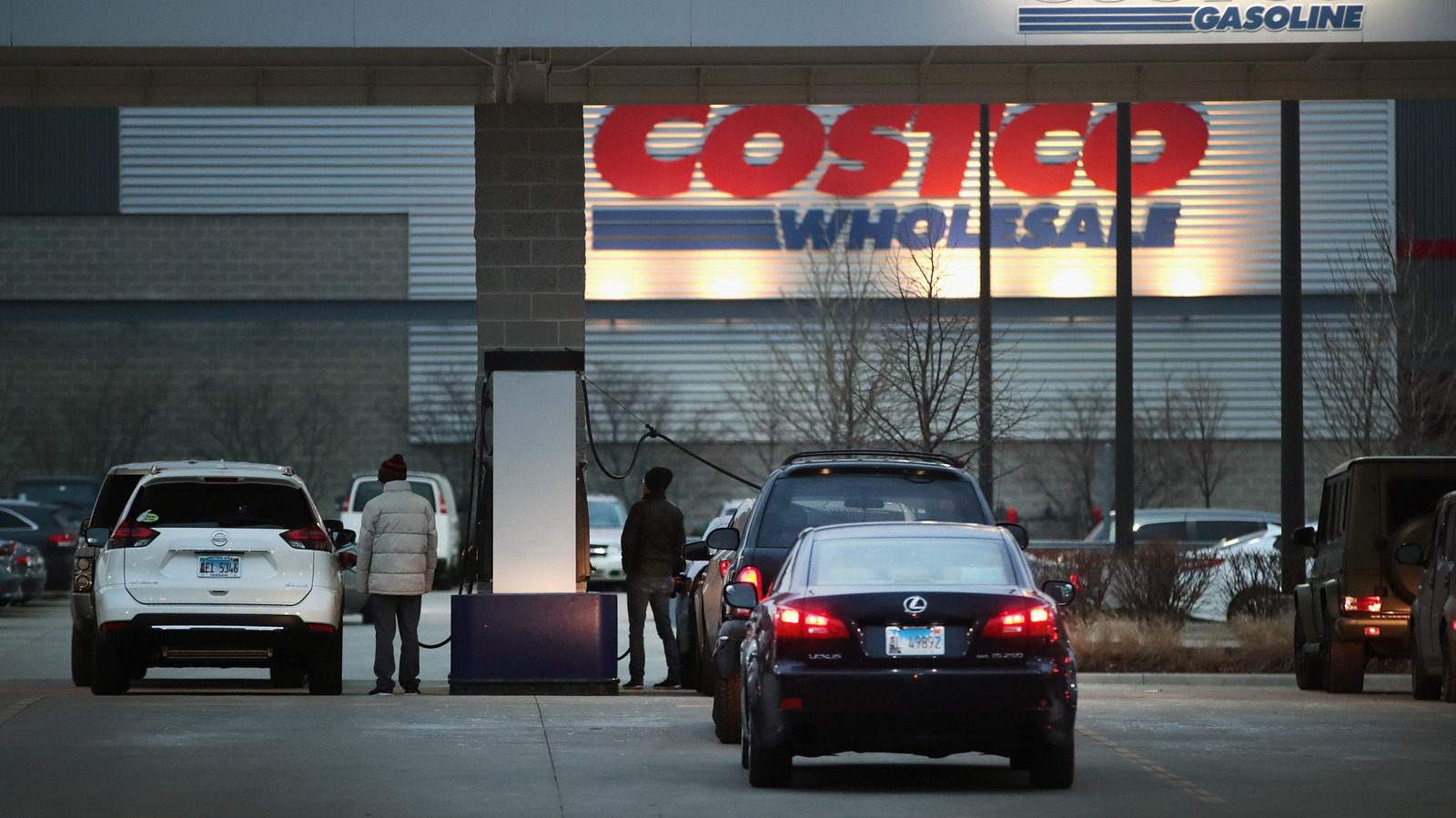
At $200 a barrel, the economic ramifications would be felt in every sector of the global economy. For the average consumer, this would likely translate to U.S. national average gas prices between $6.50 and $7.00 per gallon. Such a spike would represent a massive transfer of wealth from consumers to energy producers and would likely trigger a period of stagflation—a combination of stagnant economic growth and high inflation.
Impact on Domestic Energy Markets and the Consumer
The domestic impact of the Hormuz crisis is already evident at American gas stations. For the first time in U.S. history, gas prices have crossed the $4.00 per gallon threshold, receded, and then surged back above $4.00 within the same calendar year. This "double-peak" phenomenon, highlighted by GasBuddy’s Patrick De Haan, underscores the extreme volatility of the current market.
Diesel prices have been even more resiliently high, remaining over $5.00 per gallon for much of the year. Because diesel is the primary fuel for the trucking, shipping, and agricultural industries, these sustained high costs are being passed directly to consumers in the form of higher grocery bills and increased prices for consumer goods. The "energy tax" imposed by the conflict in the Middle East is effectively acting as a drag on the entire American economy, reducing discretionary spending and increasing the cost of living for middle- and lower-income households.
Strategic Military Challenges and Global Trade
The military challenge of securing the Strait of Hormuz cannot be overstated. Unlike the open ocean, the Strait is a narrow waterway where ships have limited room to maneuver. This geography favors the defender or the insurgent force. The U.S. Navy’s current objective is to degrade Iran’s offensive capabilities to a point where the risk to commercial vessels is "manageable." However, "manageable" does not mean "zero risk."
As long as the threat of missile or drone attacks persists, insurance companies will continue to charge "war risk" premiums. These premiums can add hundreds of thousands of dollars to the cost of a single voyage, costs that are eventually reflected in the price of a barrel of oil at the refinery. Furthermore, the reliance on military escorts creates a bottleneck. Even if the oil is available to be pumped in Saudi Arabia, Kuwait, or the UAE, the physical limitation of how many ships the Navy can escort through the Strait daily creates an artificial cap on global supply.
Broader Implications and the Road to 2028
The Rapidan report suggests that the global energy market is entering a "new normal." The assumption that geopolitical crises are temporary spikes in an otherwise smooth supply chain is being replaced by the realization that structural conflict can redefine markets for years at a time. If the Strait remains contested through 2027, the world may see an accelerated shift toward alternative energy sources and a radical reconfiguration of global trade routes.
Countries that rely heavily on Persian Gulf oil, particularly in Asia, are already looking for ways to bypass the Strait. Projects like pipelines across the Arabian Peninsula to the Red Sea or the Gulf of Oman are being fast-tracked, but these infrastructures take years to build and can only handle a fraction of the volume that moves by sea.
As the international community looks toward 2028, the focus will likely remain on whether the U.S. can facilitate a diplomatic exit from the conflict or if the military "degradation" strategy will finally yield a secure environment for trade. Until then, the energy markets remain in a state of high alert. The "bullish" trend for crude may benefit certain investors and oil-producing entities, but for the global consumer and the broader economy, the forecast through 2027 remains one of significant hardship and uncertainty. The era of cheap, easily accessible energy from the Middle East appears to be, at least for the foreseeable future, a thing of the past.