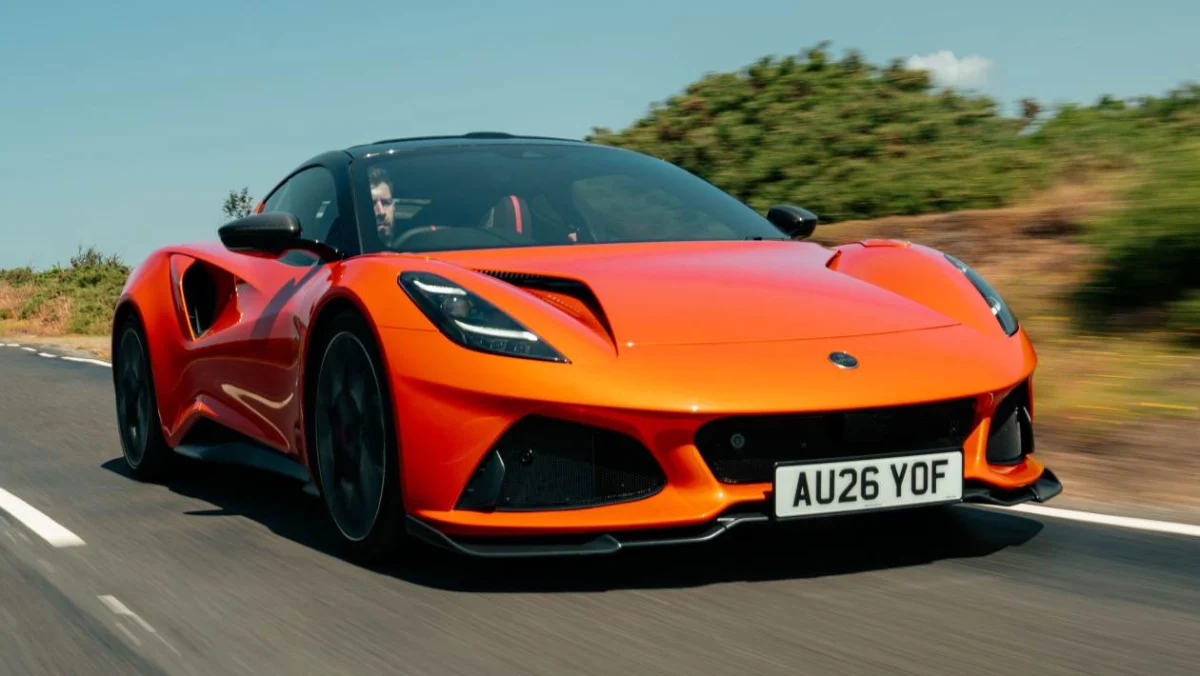
The Lotus Emira 420 Sport arrives as a definitive statement in the twilight era of internal combustion sports cars, refining the already acclaimed Emira platform into a precision instrument for track enthusiasts and spirited drivers alike. As the British marque continues its ambitious transition toward a fully electric future under the "Vision 80" strategy, the Emira stands as the final combustion-powered vanguard of the Hethel-based manufacturer. The 420 Sport variant represents more than just a marginal power increase; it is a comprehensive re-engineering of the vehicle’s aerodynamic profile, thermal management, and suspension geometry, designed to bridge the gap between a daily-usable grand tourer and a dedicated circuit machine.
The Evolution of the Sport Moniker at Hethel
In the history of Lotus, the "Sport" designation has rarely been used as a mere marketing tool. Historically, the badge has been reserved for iterations that established a direct lineage to the company’s motorsport endeavors. This tradition began in earnest with the Esprit Sport 300—a car heavily influenced by the X180R race car—and continued through the most hardcore iterations of the Elise and Exige. By applying this label to the Emira, Lotus engineers have signaled a shift in focus toward high-frequency feedback and track-day durability.
The Emira lineup has now expanded to five distinct variants: the entry-level Turbo, the mid-tier Turbo SE, the traditional supercharged V6, the V6 Automatic, and the new flagship of the four-cylinder range, the 420 Sport. This expansion allows Lotus to cater to a broader spectrum of buyers, from those seeking the charismatic soundtrack of a V6 to those who prioritize the lightweight, high-revving agility of a modern turbocharged four-cylinder unit.
Powertrain and Performance Metrics
At the heart of the Emira 420 Sport lies the M139 2.0-liter turbocharged four-cylinder engine, sourced through a technical partnership with Mercedes-AMG. While this power unit is familiar from the Mercedes-AMG A 45 S, Lotus has implemented bespoke engine mapping and a recalibrated eight-speed dual-clutch transmission (DCT) to suit a mid-engine rear-wheel-drive configuration.
The numerical "420" in the model’s name refers to its metric horsepower (PS), which translates to approximately 416bhp. This represents a significant 56bhp increase over the base Emira Turbo and a 16bhp jump over the Turbo SE. Torque has also been substantially bolstered, rising to 500Nm at 5,000rpm, up from the 430Nm found in the standard model.
Weight management remains a cornerstone of the Lotus philosophy. Despite the luxury-oriented cabin of the Emira, the 420 Sport is approximately 250kg lighter than the Mercedes-AMG hatchback from which it borrows its engine. This weight advantage enables a 0-62mph sprint of just 3.9 seconds and a top speed of 186mph, allowing the 420 Sport to claim the title of the world’s fastest four-cylinder production car.
Aerodynamic Enhancements and Thermal Management
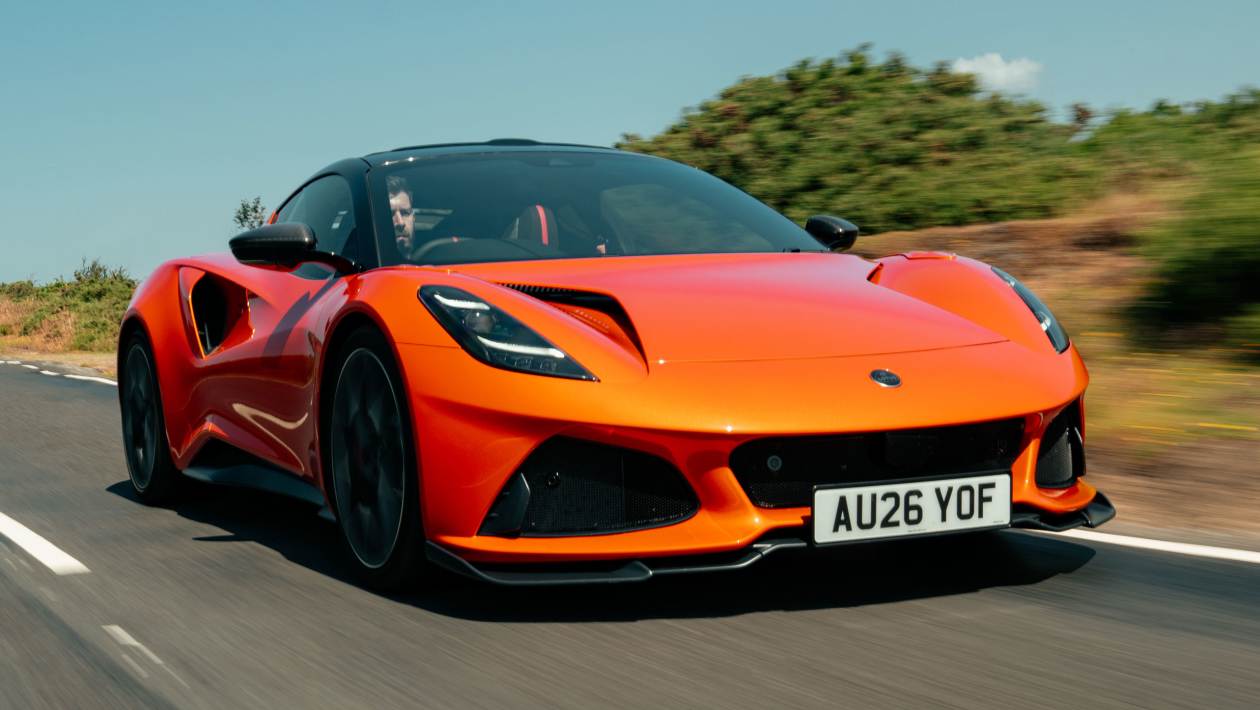
To manage the increased performance, Lotus engineers have revisited the Emira’s aerodynamic package. The most visible changes are found at the front of the vehicle, where a new, more aggressive splitter has been integrated. The front fascia also features enlarged air intakes designed to provide a higher volume of cooling air to the braking system.
A critical discovery during wind tunnel testing revealed that the increased airflow into the wheel arches was creating unwanted lift at high speeds. In response, Lotus has incorporated functional air vents into the tops of the front wings, allowing trapped high-pressure air to escape, thereby stabilizing the front axle. Further modifications include exclusive side sills and enlarged side intakes that improve the "ram-air" effect for the engine’s induction system.
At the rear, a new lip spoiler on the edge of the engine cover works in tandem with the front modifications to produce an additional 25kg of downforce. Remarkably, these aerodynamic improvements were achieved without increasing the vehicle’s drag coefficient or negatively impacting its CO2 emissions, which remain rated at 209g/km.

The Lightweight Handling Pack: A Deep Dive
For buyers intending to use the 420 Sport primarily on the circuit, Lotus offers the optional Lightweight Handling Pack. Priced at £12,900, this package is an intensive exercise in mass reduction and chassis optimization. It replaces several standard components with carbon fiber alternatives, including the engine cover and various interior and exterior trim pieces, resulting in a total weight saving of 25kg.
However, the most significant upgrades within this pack are mechanical. A titanium exhaust system not only reduces weight by 9kg at the rear—improving the car’s polar moment of inertia—but also provides a deeper, more resonant acoustic profile that mitigates some of the clinical nature of the four-cylinder engine.
The suspension is upgraded to race-derived adjustable dampers from Multimatic. These dampers feature independent adjustment for compression and rebound, allowing owners to fine-tune the car’s behavior for specific track surfaces. On the road, these dampers provide a firmer, more controlled ride, though they retain enough compliance to ensure the car remains viable for long-distance touring.
Interior Refinement and the Targa Experience
The cabin of the 420 Sport receives a model-specific treatment featuring high-grade leather and Alcantara upholstery. New carbon fiber gearshift paddles offer a more tactile and immediate connection to the eight-speed DCT. To coincide with the launch, Lotus introduced "Tangelo Orange" as the signature colorway, which can be extended into the interior stitching and accents.
A significant addition to the Emira options list, debuting alongside the 420 Sport, is a removable roof panel. For an additional £5,000, the car can be equipped with a glass overhead section. Using a manual twin-lever system on the windscreen frame, the panel can be removed and stored in a bespoke bag behind the seats. This "Targa" style configuration offers an open-air driving experience without the weight penalty or structural compromises often associated with full convertible soft-tops.
Driving Dynamics: Road and Track
The driving experience of the Emira 420 Sport is defined by the retention of a hydraulic steering rack. In an era where almost all competitors have transitioned to electric power-assisted steering (EPAS), the Emira’s steering remains a standout feature, providing a level of granular feedback and "road-feel" that is increasingly rare.
On public roads, the 420 Sport feels alert and immediate. The recalibrated DCT offers faster downshifts and more decisive logic in automatic mode. While the ride height reduction of 5mm and the stiffer damping make for a busier ride in urban environments, the car settles at higher speeds, showcasing the inherent balance of its mid-engine layout.
On the track, the "Track Mode" transforms the digital instrument cluster and relaxes the electronic stability controls. In this environment, the bespoke Michelin Pilot Sport Cup 2 tires provide immense lateral grip. The car’s behavior at the limit is described as progressive and predictable; rather than snapping into oversteer, the Emira communicates its loss of traction clearly through the steering and seat, allowing the driver to make micro-adjustments with ease.
Market Context and Competitive Landscape
The Lotus Emira 420 Sport occupies a unique position in the 2026 automotive market. With a base price of £110,475—rising to over £123,000 with the Lightweight Handling Pack—it moves the Emira into a higher price bracket, encroaching on the territory of the Porsche 911.
However, the competitive landscape has shifted significantly. With the discontinuation of internal combustion versions of the Porsche Cayman and the Alpine A110, the Emira 420 Sport stands as one of the few remaining mid-engine, ICE-powered sports cars available new. For enthusiasts seeking a pure mechanical connection before the industry’s total shift to electrification, the Emira represents a final opportunity to own a piece of Hethel’s combustion heritage.

Chronology of the Lotus Emira
- July 2021: Global debut of the Lotus Emira at Hethel, announced as the brand’s final internal combustion engine car.
- 2022: Initial deliveries of the V6 First Edition begin, featuring the Toyota-sourced 3.5-liter supercharged engine.
- 2023: Introduction of the four-cylinder "Turbo" models, utilizing the Mercedes-AMG M139 engine.
- 2024-2025: Launch of the Turbo SE and various regional limited editions.
- July 2026: Launch of the 420 Sport, introducing significant aerodynamic updates, the Lightweight Handling Pack, and the removable roof option.
Final Analysis and Implications
The release of the Emira 420 Sport suggests that Lotus is committed to supporting its enthusiast base even as its sales volume shifts toward electric SUVs like the Eletre and sedans like the Emeya. By refining the Emira into this "420 Sport" iteration, Lotus has addressed the primary criticisms of the earlier four-cylinder models—namely, that they lacked the visceral edge required to compete with the V6.
The 420 Sport is a high-performance valedictory for the internal combustion engine at Lotus. It combines the sophisticated manufacturing techniques of the Geely era with the fundamental "simplify, then add lightness" philosophy established by Colin Chapman. For the collector or the track-day regular, it represents the most capable and technologically advanced version of the Emira to date, ensuring that the brand’s transition to electricity is preceded by a loud, high-performance celebration of its gasoline-fueled past.