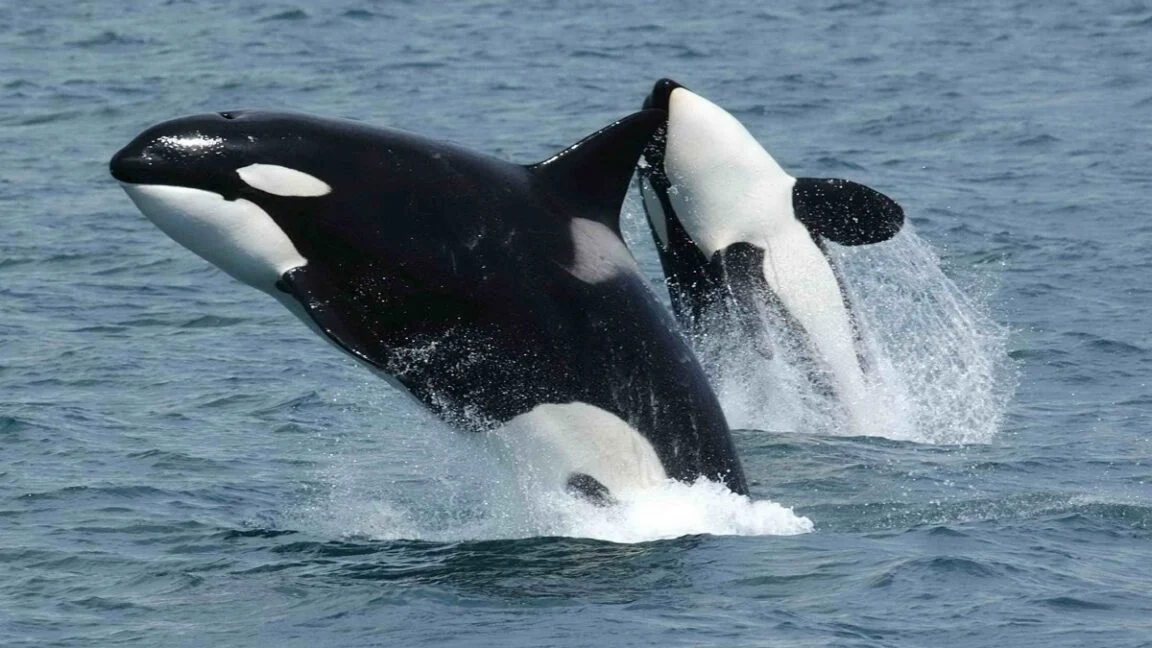
In a remarkable new observation that adds another layer to the complex behavioral repertoire of killer whales, orcas in the Gulf of California have been filmed employing an unprecedented cooperative hunting strategy: ramming large ocean sunfish with such immense force that the carcasses explode into small, consumable fragments. This discovery, detailed in a new paper published in the journal Frontiers in Ethology, presents compelling evidence of sophisticated, potentially culturally learned feeding techniques, drawing parallels to other recent enigmatic orca behaviors, such as the widely reported boat-ramming incidents. The "ram-to-fragment" method appears to be a specialized tactic, distinct from previously documented forceful prey manipulation, and offers crucial insights into the intelligence, social learning, and adaptability of these apex marine predators.
A Novel Hunting Strategy Emerges in the Gulf of California
The groundbreaking footage, captured in July 2024 off the coast of San Jose del Cabo in Mexico, depicts a coordinated effort by a pod of orcas targeting a sunfish. The observation involved a pod consisting of three adult female orcas, one male, and one juvenile. According to co-author Kathryn Ayres of Beneath The Waves, a non-profit dedicated to ocean health, "We think this may help younger orcas feed more easily, or it could also just be for fun. Orcas are known for playing with their food." This statement encapsulates the dual hypotheses surrounding this new behavior: efficiency in provisioning for the young, or an expression of complex play and social interaction inherent to these highly intelligent animals.
The incident unfolded shortly after the same pod was observed successfully catching and consuming a spine-tail devil ray. Following this, one of the adult females was seen holding the carcass of a sunfish in her mouth. The sunfish already bore a significant lateral wound, suggesting that the initial stages of viscera removal might have already occurred. What followed was a precise and powerful maneuver: the male orca charged directly at the held carcass, with the female releasing her grip just milliseconds before impact. The force of the collision was audibly registered and resulted in the sunfish carcass fragmenting spectacularly, dispersing bits of flesh throughout the water. Crucially, the juvenile orca was then observed actively consuming these smaller fragments, while the adult members of the pod fed on the larger pieces of the split-open body. This sequence of events strongly suggests a deliberate, cooperative strategy designed to break down a large, potentially difficult-to-manage prey item into more accessible portions, particularly beneficial for younger, less experienced hunters.
The Enigma of Orca Cultural Learning
This newly documented "ram-to-fragment" behavior adds to a growing body of evidence indicating the profound capacity for cultural transmission within orca populations. In recent years, public attention has been drawn to numerous accounts of orcas, particularly in the Iberian Peninsula, ramming boats – and occasionally causing them to sink. Scientists widely believe this phenomenon to be a form of culturally learned behavior, potentially initiated by a single individual and then propagated through generations or direct observation within a pod. The motivations behind these boat interactions remain a subject of intense scientific inquiry, with theories ranging from playful curiosity to stress-induced reactions, or even a form of "fad" behavior. Regardless of the specific impetus, these incidents underscore the remarkable ability of orcas to acquire and disseminate complex behaviors socially, rather than relying solely on genetic programming.
The ramming of sunfish, while different in its target and apparent purpose, echoes this theme of learned, sophisticated interaction with their environment and prey. Unlike the boat interactions, which can be interpreted as territorial, defensive, or purely recreational, the sunfish ramming appears to be a direct adaptation to a hunting challenge, designed to maximize feeding efficiency. This distinction highlights the adaptive flexibility of orca culture, allowing them to develop and refine strategies for a diverse array of circumstances.
Orca Cooperative Hunting: A Legacy of Ingenuity
Orcas (Orcinus orca), often referred to as killer whales, are apex predators found in all the world’s oceans, renowned for their intelligence, social complexity, and highly diverse hunting strategies. Their cooperative behaviors are legendary and vary significantly among different ecotypes (populations with distinct diets, genetics, and behaviors). For instance, transient orcas in the North Pacific primarily prey on marine mammals, employing silent, coordinated ambushes. Resident orcas, conversely, specialize in fish, often using complex echolocation and "carousel feeding" techniques to herd schooling fish into tight balls before striking. Offshore orcas, less studied, are thought to prey on sharks and other pelagic fish.
Beyond these broad categories, specific, highly specialized cooperative strategies have been documented globally:
- Wave-Washing: In Antarctic waters, orcas are famous for deliberately creating powerful waves to wash seals or penguins off ice floes, making them vulnerable. This requires precise timing, coordination, and an understanding of hydrodynamics.
- Herding and Blocking: Orcas have been observed cooperatively herding mobile rays, guiding them into positions where they can be more easily captured. Similarly, when hunting formidable prey like white sharks, orcas have been seen blocking escape paths, working in tandem to corner and subdue their quarry.
- Targeted Disabling: Instances of orcas ramming larger marine animals, such as whale sharks, while another orca holds the prey steady, have also been recorded. This suggests a capacity for multi-role coordination and a clear understanding of disabling specific parts of the prey.
- Organ-Specific Predation: Some orca populations have developed techniques to target specific, nutrient-rich organs from large prey, such as the livers of sharks, often leaving the rest of the carcass. This demonstrates a highly refined understanding of prey anatomy and caloric efficiency.
The "ram-to-fragment" technique observed with sunfish represents a potential evolution or specialization within this broad spectrum of cooperative hunting. Previously, when hunting species like sunfish, orcas typically employed a three-pronged strategy: first, targeting the pectoral fins to immobilize; then slashing across the body to remove viscera; and finally, using their powerful beaks to access remaining tissue. The new "ram-to-fragment" method appears to be a more sophisticated version, potentially bypassing some of these steps or making the process more efficient, especially for processing the large, tough body of a sunfish.
The Ocean Sunfish: A Challenging Prey Item
To fully appreciate the ingenuity of the orcas’ new technique, it’s essential to understand the nature of their prey: the ocean sunfish (genus Mola). These colossal creatures are the heaviest known bony fish in the world, with adults often weighing hundreds of kilograms and some exceeding two tons. Their distinctive, flattened, disc-like bodies and tough, leathery skin, often covered in parasites, make them a unique challenge for predators. While they are not fast swimmers, their sheer size and robust structure could make them difficult to tear apart using conventional methods.
Ocean sunfish primarily feed on jellyfish, small fish, and zooplankton, inhabiting both temperate and tropical waters. Despite their size, they are generally considered docile. For an orca pod, efficiently processing such a large, cartilaginous, and oddly shaped animal presents a logistical puzzle. The "ram-to-fragment" approach offers a clever solution, using brute force and cooperation to achieve what might otherwise be a protracted and energy-intensive dismemberment. The creation of smaller fragments not only facilitates feeding for the entire pod but is particularly advantageous for the juvenile, whose developing teeth and jaws might struggle with larger, tougher pieces.
Broader Implications for Ethology and Conservation
The discovery of the "ram-to-fragment" technique has significant implications for the field of marine ethology, the study of animal behavior in marine environments. It reinforces the idea that orcas are not merely instinct-driven hunters but highly intelligent, adaptive learners capable of innovating and transmitting complex behaviors across their social groups. The observation provides empirical evidence for the ongoing evolution of hunting strategies within cetacean cultures, suggesting that our understanding of orca capabilities is still expanding.
From a scientific perspective, this finding opens several avenues for future research:
- Prevalence: Is this behavior isolated to this specific pod in the Gulf of California, or is it observed in other populations targeting sunfish or similar large, robust prey?
- Energy Expenditure vs. Gain: How does the energy expended in a "ram-to-fragment" maneuver compare to traditional hunting methods, and what are the net benefits for the pod?
- Developmental Role: Does this technique serve a pedagogical role, specifically designed to teach younger orcas efficient feeding strategies? The direct observation of the juvenile consuming fragments supports this hypothesis.
- Environmental Factors: Are there specific environmental conditions or prey densities that favor the development of such a specialized hunting method?
Understanding these complex behaviors is not just an academic exercise; it has practical implications for marine mammal conservation. As human activities increasingly impact ocean ecosystems, comprehending the full spectrum of orca behaviors, including their cultural adaptations, becomes critical for developing effective conservation strategies. It allows researchers to better assess the resilience and adaptability of these populations in the face of changing environments and potential threats. For instance, if certain hunting techniques are culturally transmitted, disruptions to social structures could have long-term impacts on a pod’s ability to forage efficiently.
The continued observation of novel and complex behaviors in orcas, from boat interactions to sophisticated hunting techniques like "ram-to-fragment," serves as a powerful reminder of the profound intelligence and cultural depth of these magnificent marine predators. Each new discovery deepens our appreciation for their intricate social lives and their remarkable capacity to adapt and innovate within the dynamic marine environment. The Gulf of California incident stands as a testament to the ongoing revelations in the study of cetacean ethology, promising further insights into the nuanced world of killer whales.