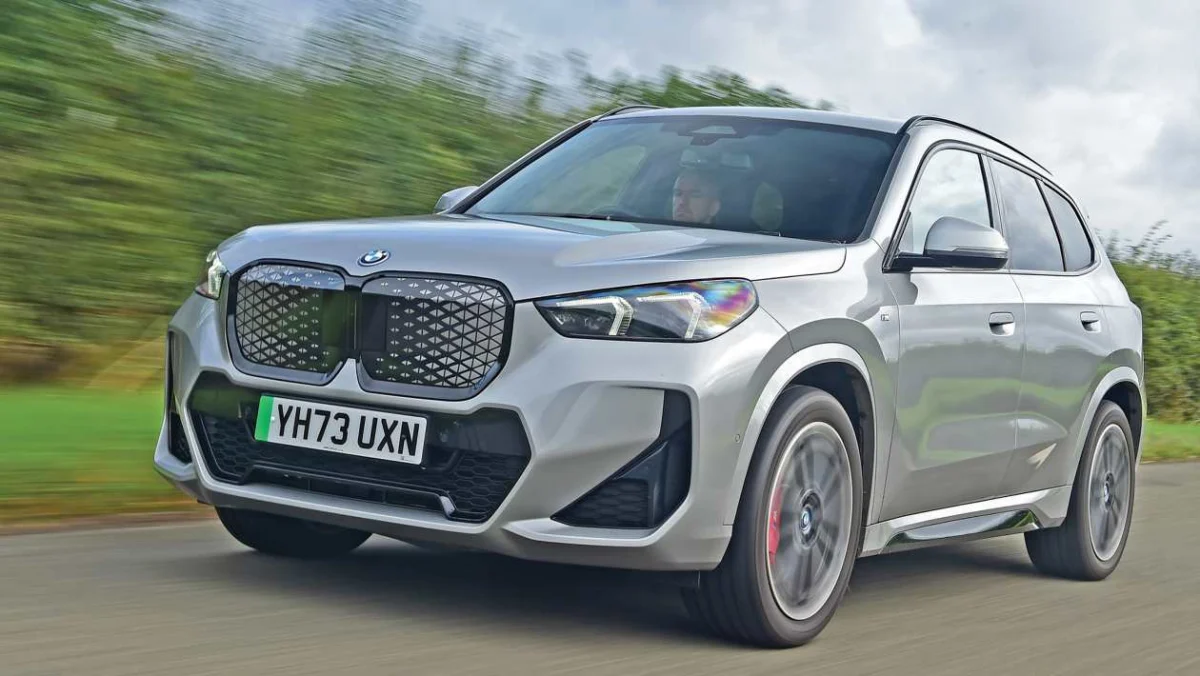
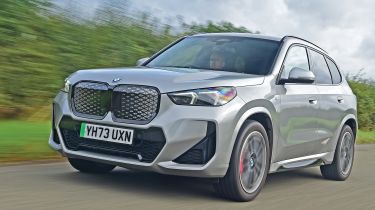
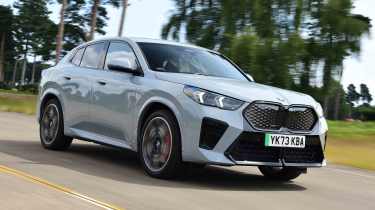
The eligibility of the eDrive20 variants of these two models marks a pivotal moment in the UK’s transition to zero-emission vehicles. By strategically aligning pricing and meeting rigorous sustainability criteria, BMW has managed to secure the full Band 1 grant, which is reserved for vehicles that not only produce zero tailpipe emissions but also adhere to stringent production standards and long-term reliability guarantees.
.jpg)
The Mechanics of the Electric Car Grant
The UK government’s Electric Car Grant has undergone several iterations since its inception. Historically designed to subsidize affordable electric vehicles to encourage mass adoption, the scheme has recently evolved to include specific "Bands" based on a vehicle’s environmental credentials and price point.
To qualify for the Band 1 grant, which provides the maximum £3,750 deduction, a vehicle must meet several difficult-to-attain benchmarks. Firstly, the car must have a list price (including VAT and delivery charges) of less than £42,000. Secondly, it must emit zero grams of CO2 per kilometer at the tailpipe. Thirdly, the manufacturer must provide a comprehensive warranty covering at least eight years or 100,000 miles, ensuring that the batteries remain viable for a significant portion of the vehicle’s lifespan.

However, Band 1 status goes beyond the vehicle itself. It requires manufacturers to demonstrate "higher sustainability credentials" throughout the production process. This includes the ethical sourcing of raw materials for batteries—such as cobalt and lithium—and the use of renewable energy during the assembly phase. BMW’s inclusion in this bracket is a testament to the brand’s "circular economy" philosophy and its investment in green manufacturing infrastructure.
Sustainable Production at the Regensburg Plant
A primary factor in BMW securing the Band 1 grant is the operational efficiency of its Regensburg plant in Germany, where both the iX1 and iX2 are manufactured. The facility has become a flagship for BMW’s "iFactory" strategy, which focuses on lean, green, and digital production.
The Regensburg site features approximately 25,000 square metres of solar panels. According to BMW, this array generates enough electricity to power the equivalent of 1,000 single-family homes annually. This renewable energy is fed directly into the factory’s power grid, significantly lowering the carbon footprint of every vehicle that rolls off the assembly line. Furthermore, the plant utilizes advanced water recycling systems and has eliminated a significant portion of its production waste through sophisticated sorting and recycling programs. By meeting these high-level environmental standards, the iX1 and iX2 have satisfied the "production standards" clause of the UK’s premium EV grant criteria.
Pricing Strategy and the Path to Price Parity
Perhaps the most striking aspect of this announcement is the resulting price comparison between electric and petrol models. For years, the "green premium"—the additional cost of buying an electric car over a petrol or diesel one—has been a major barrier for consumers. With the application of the £3,750 grant, BMW has effectively inverted this dynamic.
The entry-level BMW iX1 eDrive20 Sport is now priced at £33,315 after the grant is applied. In contrast, its petrol-powered sibling, the BMW X1 sDrive20i Sport, carries a retail price of £37,540. This creates a price gap of more than £4,200 in favor of the electric model. This shift is expected to significantly accelerate the adoption of the iX1 among private buyers who may have previously been deterred by the higher upfront cost of electrification.
The pricing structure for the eligible models is as follows:
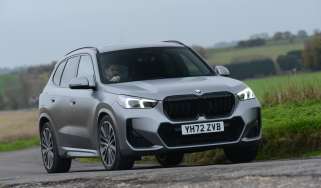
- BMW iX1 eDrive20 Sport: £33,315 (after grant)
- BMW iX2 eDrive20 Sport: £33,315 (after grant)
- BMW iX1 eDrive20 xLine: £35,315 (after grant)
- BMW iX1 eDrive20 M Sport: £38,065 (after grant)
- BMW iX2 eDrive20 M Sport: £38,065 (after grant)
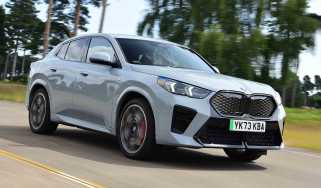
To facilitate this, BMW introduced a new "Sport" trim level for the iX2, specifically designed to sit under the grant’s price cap. This model comes equipped with 17-inch alloy wheels, sports seats, and the high-gloss Shadowline exterior trim, ensuring that even the "budget-friendly" version maintains the premium aesthetic associated with the brand.
Technical Performance and Specifications
Despite being the "entry-level" electric offerings in the BMW lineup, the eDrive20 variants do not compromise significantly on performance or utility. Both the iX1 and iX2 eDrive20 utilize a single electric motor mounted on the front axle, producing 204hp (201bhp) and 250Nm of torque. This allows for a 0-62mph sprint in approximately 8.6 seconds, providing ample performance for both urban commuting and motorway driving.
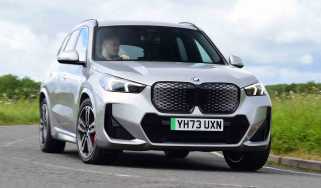
Battery technology remains a strong suit for the Bavarian firm. The iX1 eDrive20 is fitted with a 66.4kWh battery pack, while the iX2 features a slightly different 65.2kWh configuration. Despite the minor difference in battery size, both vehicles are rated for a range of up to 318 miles on the WLTP cycle. This range puts the BMW pair at the top of their class, outperforming many rivals in the compact premium SUV segment.
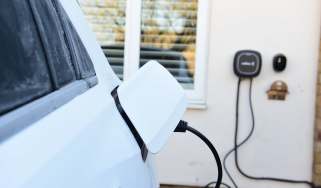
Charging capabilities are equally competitive. Both models support DC fast charging at rates up to 130kW. Under optimal conditions, this allows the battery to be replenished from 10% to 80% in just 29 minutes. For home charging, an 11kW onboard charger is standard, with an optional 22kW upgrade available for those with access to three-phase power, allowing for a full charge in roughly 6.5 hours.
Market Context and the ZEV Mandate
The timing of BMW’s pricing adjustment is no coincidence. The UK automotive market is currently operating under the Zero Emission Vehicle (ZEV) mandate, which requires manufacturers to ensure that a specific percentage of their total sales are zero-emission vehicles. For the current year, that target is set at 22%, rising annually until reaching 100% by 2035.
Manufacturers that fail to meet these targets face swingeing fines of up to £15,000 per non-compliant vehicle sold. By making the iX1 and iX2 more financially attractive than their petrol counterparts, BMW is not only offering better value to consumers but also insulating itself against potential regulatory penalties. This aggressive pricing strategy is likely to force competitors such as Audi (with the Q4 e-tron) and Mercedes-Benz (with the EQA) to re-evaluate their own UK pricing structures to remain competitive in the volume-heavy compact SUV sector.
Broader Implications for the UK EV Market
The inclusion of premium brands in the Band 1 grant category suggests a maturing of the electric vehicle market. It signals that high-end manufacturers are now capable of producing sophisticated, long-range EVs at price points that were previously the sole domain of mainstream brands like Hyundai, Kia, and Volkswagen.
Industry analysts suggest that this move could trigger a "price war" in the premium compact SUV segment. As BMW captures a larger share of the market through grant eligibility, other luxury marques may be forced to introduce "de-contented" versions of their EVs or reduce margins to stay under the £42,000 threshold.
Furthermore, the total cost of ownership (TCO) for the iX1 and iX2 now looks exceptionally favorable. When the lower purchase price is combined with reduced "fuel" costs, lower maintenance requirements, and significant Benefit-in-Kind (BiK) tax advantages for company car drivers, the argument for choosing a petrol X1 or X2 becomes increasingly difficult to sustain from a purely financial perspective.
Chronology of BMW’s Electric SUV Expansion
The journey to this point has been a rapid one for BMW’s compact SUV range.
- Late 2022: BMW launched the third-generation X1, introducing the all-wheel-drive iX1 xDrive30 as its first fully electric compact SUV.
- Late 2023: The BMW iX2 was unveiled, offering a "Sports Activity Coupe" (SAC) alternative with a more sloping roofline and aggressive styling.
- Early 2024: BMW introduced the eDrive20 (front-wheel drive) variants to broaden the appeal and lower the entry price of the "i" range.
- July 2026: Official confirmation that the eDrive20 models have met the criteria for the UK’s Band 1 Electric Car Grant, following audits of the Regensburg plant’s sustainability data and a strategic realignment of UK trim levels.
Conclusion
The eligibility of the BMW iX1 and iX2 for the £3,750 Band 1 grant represents a landmark moment for the UK’s automotive industry. By combining a premium badge with a purchase price that undercuts traditional petrol models, BMW has dismantled one of the primary psychological and financial barriers to EV adoption.
As the government continues to tighten regulations through the ZEV mandate, the success of the iX1 and iX2 will likely serve as a blueprint for other luxury manufacturers. For the British consumer, the message is clear: the transition to electric mobility is no longer a costly compromise, but a financially savvy path into the world of premium motoring. With a 318-mile range, sustainable production credentials, and a price tag starting at just over £33,000, the BMW eDrive20 models are set to become a common sight on UK roads, spearheading the next phase of the electric revolution.