For the past ten years, the USC Games Expo has quietly established itself as a critical launchpad for burgeoning independent game developers. Nestled within the hallowed halls of the University of Southern California’s School of Cinematic Arts, specifically its Interactive Media & Games Division, this annual showcase has been the crucible for groundbreaking ideas that have gone on to redefine interactive storytelling and push the boundaries of the medium. Games that have achieved critical acclaim and reshaped the industry’s narrative landscape, such as Journey, What Remains of Edith Finch, and Threes!, all trace their conceptual origins back to creators who honed their craft and experimented with nascent concepts at USC long before their public debuts. This year’s iteration of the USC Games Expo continued this esteemed tradition, offering a compelling glimpse into the future of interactive entertainment.
Held every spring, the USC Games Expo serves as a vibrant exhibition of student-created works. Attendees are treated to an eclectic array of playable experiences, spanning digital and tabletop games, alongside immersive themed entertainment installations. The true heart of the event lies in the student creative directors observing firsthand as real players engage with their creations, a pivotal moment of feedback and validation.
"In layman’s terms, the USC Games Expo is the largest academic games showcase in the world," stated Jim Huntley, an associate professor of Interactive Media & Games and head of marketing for USC Games, in an interview following this year’s event, which took place in May. Huntley elaborated on the expo’s consistent growth: "We’ve been doing it for a little over 10 years now, and it’s been getting bigger and bigger each time." This sustained expansion underscores the expo’s increasing prominence within both academic and professional gaming circles.
While the event primarily features projects from USC Games students, its scope extends to any currently enrolled USC student who has developed a game. This inclusivity transforms the Expo into a university-wide celebration of interactive storytelling. However, the centerpiece remains the Advanced Games Project (AGP), the division’s capstone course. Within this rigorous program, multidisciplinary teams dedicate three semesters to developing an original game, guiding it from its initial concept through to a fully playable demo.
"It’s the final expression of all the stuff that they’ve learned throughout their time learning with us," Huntley explained, highlighting the comprehensive nature of the AGP. Students embark on an approximately 18-month development cycle, evolving from an initial pitch to a polished project. These teams function akin to small, independent studios, with around 30 collaborators working in concert before unveiling their games to the public at the Expo.

The extended development timeline, Huntley noted, has become increasingly crucial. USC Games has recently integrated an additional semester dedicated to pre-production. This enhancement provides students with more time to thoroughly refine their ideas before commencing full-scale production. "We value pre-production so much," Huntley emphasized, as it allows teams to develop a more profound understanding of their project’s core vision before the intensive production phase begins.
This strategic emphasis on preparation reflects the program’s dynamic evolution, mirroring the relentless pace of the gaming industry. Huntley explained that USC consistently engages with external studios and publishers. These collaborations ensure that the curriculum remains aligned with the skills graduates will need upon entering the professional workforce. Crucially, the program navigates this by discerning between fleeting industry trends and more profound, lasting shifts worthy of curriculum integration.
Artificial Intelligence serves as a pertinent example of this approach. Rather than teaching students to rely on AI-generated content, the program prioritizes foundational creative and technical skills. AI is framed as a tool to augment, not replace, the development process. "We do want to make sure that the students know how to script and code and write and design by hand, so that they’re not relying on the tool as a crutch," Huntley stated. He added, "It’s awesome to see the raw creativity that our students bring to bear. [The program is very] blue sky: what do you want to make? This is where they can make that dream happen, and it’s fun seeing what kind of dreams they have." This year’s showcase, indeed, exemplified this very spirit.
Spotlight on Emerging Talent: Aftertaste
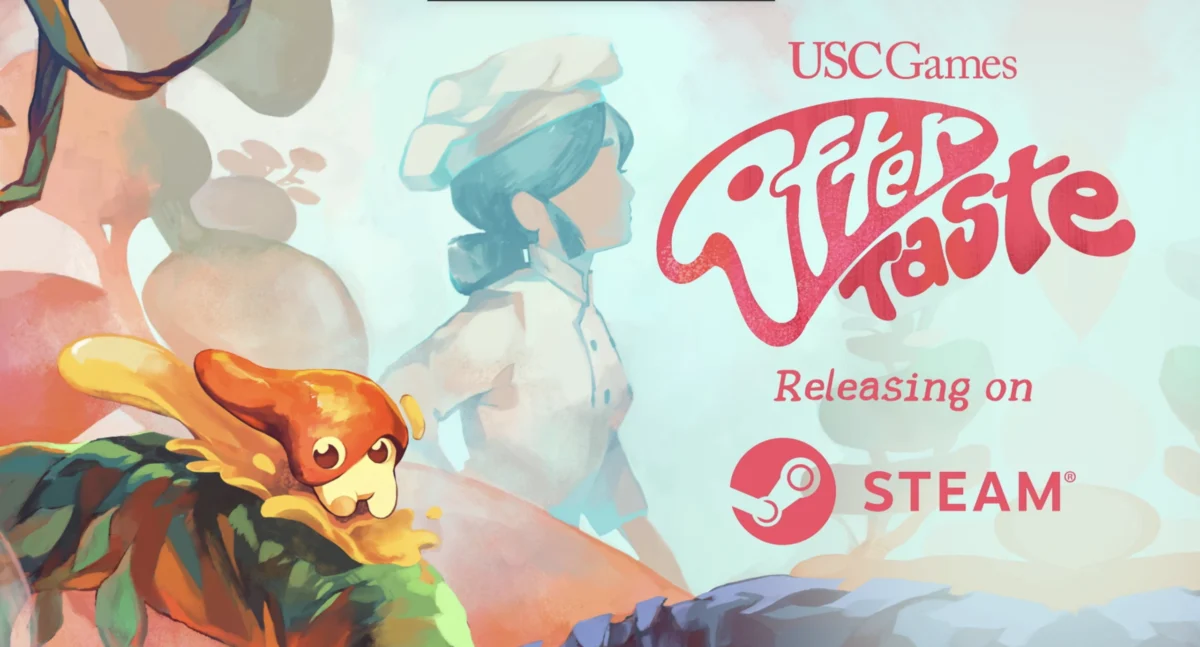
Among the standout projects was Aftertaste, a surreal narrative platformer developed by Baozee, a 22-year-old creator from Hefei, China. Aftertaste follows Tammy, a sentient tongue, as she navigates the internal landscape of an overworked chef struggling with burnout and a lost passion for cooking. Drawing inspiration from traditional Chinese medicine, Baozee creatively transforms the chef’s internal organs into evocative emotional landscapes. The game artfully blends quirky visuals with a poignant narrative exploring themes of burnout, healing, and the rediscovery of creativity.
"Aftertaste is a 2D side-scrolling platformer where you play as a tongue named Tami," Baozee explained. "Tami is helping an overworked chef named Keh, who has experienced burnout and lost her sense of taste. So, her [anthropomorphic] tongue goes inside her body to explore the reason behind that. It’s a story about recovering her sense of taste and reclaiming her memories and lost passion. It’s a narrative adventure game."
The unconventional protagonist of a tongue initially elicited mixed reactions. "Yeah. During the AGP program at USC Games, when I got my first round of feedback, a lot of people didn’t enjoy it. They didn’t think it was very appealing because they couldn’t picture what it would look like," Baozee admitted. However, this initial apprehension gave way to appreciation: "But other people liked it because it was a combination of weird and cute." This feedback loop, Baozee noted, was invaluable: "Yeah, it was my first time, especially receiving feedback from professionals and from a wide range of people at the school and from different industries."

The recruitment process presented a significant challenge. "Recruitment. Our team consisted of students from different schools across USC, and some of them didn’t have experience making games," Baozee recounted. "In a professional studio, people are paid to work on a project. At school, each team has around 50 to 60 people, so it was hard to connect with everyone and figure out whether they genuinely enjoyed the game or were just there to earn class credit." This reliance on trust and personal connection was paramount: "So, I trusted my friends a lot. The design lead was my roommate, and the art director was a very good friend of mine. I trusted them, and I think friendship, love and care can build beautiful things."
The most rewarding aspect, Baozee shared, was witnessing the tangible results of their labor: "Seeing the trailer come out and seeing everyone at the Expo cheering for the work we’d done. We also really appreciated that we created such a cute and beautiful character. We made a lot of merchandise. That was one of the biggest gifts from my team and from the game." Inspirations for Aftertaste include Super Mario Odyssey for its themes of transformation and interaction, and the film Inside Out for its personification of internal states. Notably, Baozee cited What Remains of Edith Finch, another USC Games alumnus project, as a formative influence that inspired their pursuit of game development. Post-graduation, Baozee aspires to a career as a freelance game developer, focusing on crafting compelling indie titles with small teams.
Mythological Mazes and Perpetual Puzzles: Sisyphus’s Worst Day (Again)
Jason Lin, a 21-year-old from Taiwan, explored themes of loops and perseverance with Sisyphus’s Worst Day (Again). This 3D puzzle game reimagines the myth of Sisyphus, tasking players with engineering elaborate contraptions to keep the titular figure trapped in an eternal, cyclical struggle. The game masterfully blends dark humor, inventive puzzle design, and a playful reinterpretation of classical mythology.
"I initially wanted to make a game about loops or cycles," Lin explained. "I started exploring mechanics where players would reverse-engineer AI by preventing it from reaching its goal. But I realized that premise wasn’t very interesting on its own. I wanted a narrative that players would connect with, so I turned to Greek mythology, which I’ve always been interested in. The myth of Sisyphus fit perfectly, so I created my own interpretation of it to serve the game."
The creation of Sisyphus’s Worst Day (Again) was a testament to collaborative vision. "In the beginning, we had to design the game while also leading a large team that didn’t really know what the game was until we built the first demo," Lin stated. "Our design lead had to create levels while believing they would eventually work, and at the same time assign work to teammates even though none of us knew for certain how everything would come together." This challenge required a shared commitment: "Everyone had to believe in the vision before they could fully see it. Building that confidence was probably the hardest part."
The most rewarding moments for Lin were tied to player reception. "Seeing people play it. The first time we really believed the game was fun was after we built our demo last December. Watching play-testers solve the puzzles and hearing them say, ‘Oh my God, these puzzles are really interesting,’ was incredibly rewarding." The USC Games Expo provided a crucial public platform: "Showcasing the game at the USC Games Expo was also another highlight. We finally got to show the game to the public, watch people interact with it, and hear their reactions." Inspirations for the game include the narrative approach of Hades and Hades II for their fusion of mythology and modern gaming, and the puzzle mechanics of traditional Sokoban games, alongside the visual style of Order of the Sinking Star.

Navigating the Absurdity of Homeownership: Unrealtor
Ariel Sol, a 25-year-old from Chicago, channeled frustrations with the Los Angeles apartment hunting scene into Unrealtor. This surreal co-op puzzle adventure transforms a mundane house tour into a labyrinthine experience where players must escape impossible architecture and perspective-bending puzzles. Inspired by games like Superliminal, Sol’s creation merges optical illusions with a dreamlike atmosphere, turning a familiar ordeal into an inventive mystery.
"Unrealtor is a local co-op game where two people play together on the couch," Sol explained. "You and a friend are touring an apartment you’re thinking about renting, but the house tour turns into a surreal labyrinth, and you have to escape while the landlord keeps trying to sell it to you. It’s a puzzle game, and our main mechanic relies on perspective. You look at objects from certain angles to create a 2D image across the split screen."
The development cycle for Unrealtor spanned one year as part of the Advanced Games Project within the two-year Master’s program at USC. The concept emerged from a confluence of interests: "There were two starting points. The first was the mechanic. I was really interested in optical illusions and the relationship between 3D and 2D space. But I also wanted a narrative because I think a game without a story is more like a toy," Sol stated. The personal experience of navigating the housing market provided a thematic anchor: "At the same time, I was moving around Los Angeles and thinking about all the truly terrible apartments I’d toured. I’d ask, while seeing these small places, like, ‘Where do I even fit a bed?’ and someone would tell me, ‘Just put it diagonally.’ Without the real-life stress, apartment hunting almost becomes a game just trying to figure out the layout. That’s when I realized those ideas could fit together."
The most significant hurdle was interdisciplinary communication. "I’m really proud of my team because I brought them an idea that was already difficult for me to explain. If it’s difficult for the director, it’s even harder to communicate to everyone else," Sol reflected. "The biggest challenge was combining design and art. Normally, designers figure out the mechanics and artists make them look great. But because our core mechanic relied on visual alignment in a 3D space, art had to be involved in the design process, and designers had to weigh in on the visuals. It took time to figure out that communication pipeline." The solution involved fostering a more integrated approach: "At first, we held separate meetings with the designers and artists. Eventually, it became much easier to bring everyone together in one room and ask, ‘What do you need from each other?’ That streamlined the whole process."
For Sol, the most rewarding aspect of developing Unrealtor was observing playtesters. "Especially with a puzzle game, there’s nothing better than watching someone have that ‘aha’ moment when they suddenly understand what they’re supposed to do," Sol shared. "When you’re designing the puzzles, you already know the solutions, so you’re estimating where that realization will happen. Seeing players actually reach that moment is incredibly satisfying." Inspirations for Unrealtor include Superliminal, Blueprints, and Monument Valley. On a personal level, Sol cited Journey as a transformative experience that demonstrated the artistic potential of games.
USC Games: Cultivating Future Industry Leaders
The USC Games Expo, now in its tenth year, stands as a testament to the university’s commitment to fostering innovative game development talent. The program’s emphasis on rigorous project development, coupled with its proactive engagement with industry trends and needs, positions its graduates to make significant contributions to the evolving landscape of interactive entertainment. The diverse and imaginative projects showcased each year underscore the program’s success in cultivating not just skilled developers, but also visionary creators capable of shaping the future of the medium. The expo’s continued growth and the subsequent success of its alumni serve as compelling evidence of its enduring impact.