
The energy landscape of the American Southeast is undergoing a profound structural shift as massive corporate power consumers increasingly step directly into the arena of electrical infrastructure financing. In a landmark decision finalized last week, the Georgia Public Service Commission (PSC) voted overwhelmingly to approve a novel commercial agreement between state utility giant Georgia Power and technology conglomerate Google. Under the terms of this newly minted accord, Google will inject substantial capital starting in 2028 to help finance major efficiency and capacity upgrades across several of the state’s nuclear reactors.
This regulatory approval not only marks a crucial milestone for Georgia’s power generation portfolio but also establishes a pioneering blueprint for how large-scale electricity consumers—specifically the operators of power-hungry hyperscale data centers—can shoulder the financial burdens of grid expansion. Rather than relying solely on traditional ratepayer funding or pushing utilities toward carbon-intensive fossil fuel additions, the arrangement introduces a subscription-based model that channels corporate investment directly into reliable, zero-emission baseload generation.
The decision has wide-ranging implications for regional energy planning, corporate sustainability commitments, and the broader race to satisfy soaring electricity demands driven by the artificial intelligence boom, cloud computing expansion, and general digital infrastructure growth.
A Novel Financing Model for State Nuclear Upgrades
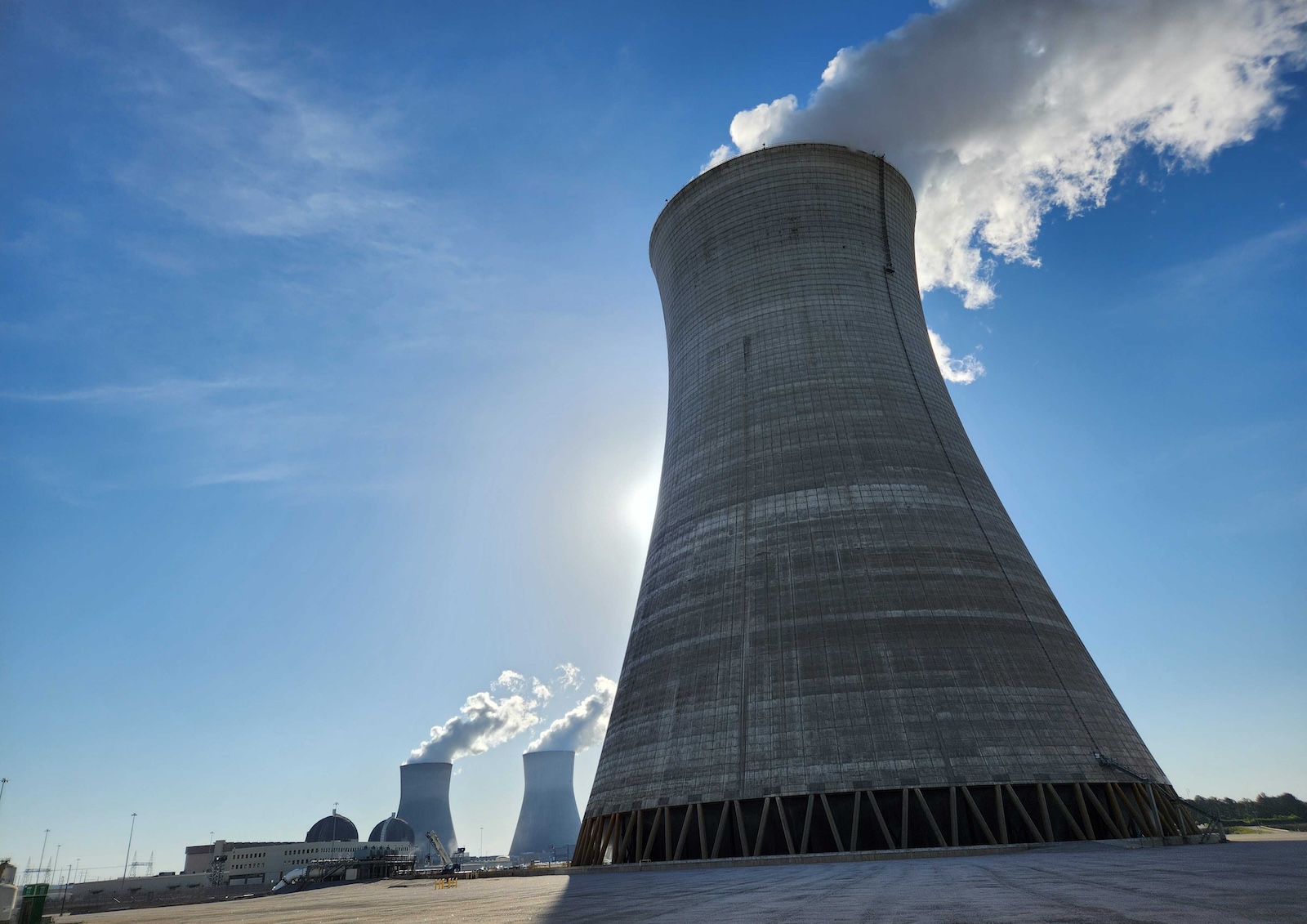
At the core of the agreement is an effort by Georgia Power to squeeze additional energy output out of its existing nuclear infrastructure. The utility has set its sights on modernizing four of its older nuclear reactors situated at two key facilities: Plant Vogtle in Burke County and Plant Hatch in Appling County. While state regulators previously gave the green light for capacity-boosting upgrades at Plant Vogtle last year, the precise financial mechanics regarding how the multi-million-dollar modernization projects would be funded remained an open question.
Last week’s vote resolved that uncertainty by clearing the path for identical modernization work at Plant Hatch while simultaneously greenlighting a bespoke subscription-based program. This program is specifically designed to allow major enterprise customers, beginning with Google, to voluntarily pay a subscription surcharge on top of their routine monthly electricity bills. These funds are earmarked specifically to offset the capital costs required to complete the nuclear reactor overhauls.
In exchange for their financial contributions, corporate participants receive verifiable credits toward their internal corporate sustainability targets. For Google, the stakes are exceptionally high: the tech giant has publicly committed to operating entirely on 24/7 carbon-free energy by the year 2030. Because nuclear energy generates electricity via nuclear fission rather than burning fossil fuels, it qualifies cleanly under corporate greenhouse gas accounting standards. Furthermore, unlike intermittent renewable sources such as solar arrays and wind turbines, nuclear reactors provide steady, around-the-clock baseload power that is immune to weather fluctuations, making them an ideal match for the continuous operational needs of modern data centers.
While the precise financial particulars and contractual minutiae of the bilateral agreement between Google and Georgia Power remain proprietary and have not been fully disclosed to the general public, utility executives have offered preliminary projections. According to Georgia Power estimates, the collaboration is anticipated to introduce approximately 96 megawatts of additional carbon-free nuclear capacity to the regional grid. More importantly for local residential and small commercial consumers, the utility projects that the partnership will yield roughly $900 million in cumulative benefits over the operational lifespan of the upgraded units, thereby buffering everyday ratepayers from absorbing the entire financial shock of grid modernization.
The Tech Industry Pivot Toward Nuclear Energy
Google’s strategic arrangement with Georgia Power is far from an isolated corporate maneuver; rather, it reflects a broader, accelerating trend of major technology firms securing direct stakes in nuclear power generation. The rapid proliferation of energy-intensive artificial intelligence applications and massive data center campuses has placed unprecedented strain on regional transmission organizations across the United States. To meet their ambitious climate pledges while simultaneously securing the massive blocks of electricity required for their operations, tech titans are increasingly bypassing conventional procurement methods in favor of direct utility partnerships.
Just days prior to the Georgia PSC vote, Google announced a parallel partnership with Constellation Energy, one of the nation’s largest carbon-free energy producers. That multi-state agreement will channel corporate capital into nuclear plant life-extension and power-uprate projects across Illinois, New Jersey, and Pennsylvania, injecting a massive 890 megawatts of clean energy capacity into the PJM Interconnection grid, the largest wholesale electricity market in the United States. Concurrently, e-commerce and cloud computing giant Amazon made headlines with its own dedicated deal to secure power capacity directly from a Constellation nuclear facility in Maryland.
These synchronized corporate moves underscore a strategic realization within the technology sector: achieving true 24/7 carbon-free operations cannot be accomplished through wind and solar alone, particularly in regions where geographic or regulatory hurdles impede the rapid buildout of new renewable transmission lines. Nuclear energy, once considered a stagnant or declining sector due to high initial capital costs and lengthy construction timelines, has experienced a remarkable renaissance driven largely by the deep pockets and urgent decarbonization mandates of Silicon Valley.
Perspectives from State Regulators and Utility Executives
The reaction from state regulators and utility leadership has been overwhelmingly positive, highlighting a rare convergence of corporate self-interest and public utility objectives. During the deliberations leading up to the vote, Georgia Public Service Commissioner Stan Wise expressed unvarnished enthusiasm for the financial structure of the deal.
"So, around 100 megawatts of carbon-free energy, paid for by somebody else," Commissioner Wise remarked to agency staffers during the hearing. "Why don’t you bring us some more of those deals?"
The sentiment was echoed by Aaron Mitchell, senior vice president of strategic growth for Georgia Power. In an official public statement following the commission’s approval, Mitchell praised the collaborative nature of the arrangement and framed it as a viable template for managing future load growth.
"We appreciate Google’s continued leadership in this space and partnership in developing this program, which we see as the latest example of how large-load growth can benefit all electric customers," Mitchell stated.
From Google’s perspective, the partnership is viewed as a model of corporate citizenship and sustainable infrastructure investment. Lucia Tian, director of advanced energy technologies for Google, emphasized that the collaboration is intentionally structured to ensure that digital expansion yields tangible dividends for the surrounding community.
"This collaboration with Georgia Power ensures that digital infrastructure growth goes hand-in-hand with positive local impact, helping to deliver hundreds of millions of dollars in direct customer benefits and supporting a more affordable, clean, and reliable energy system for all Georgia residents," Tian noted in a statement.
Broader Industry Implications and the Race for Grid Reliability
As utility companies across the United States grapple with an unprecedented surge in electricity demand, the traditional playbook for resource planning is being rewritten. Historically, utilities responded to rising demand by constructing new natural gas-fired combustion turbines, purchasing power from the wholesale market, or postponing the retirement schedules of aging coal-fired power plants. In the wake of the recent data center boom, many utilities and independent developers have doubled down on fossil fuel solutions, raising alarm bells among environmental advocates and state climate regulators.
However, industry analysts suggest that the Georgia Power-Google model offers a compelling, pragmatic alternative. Priya Barua, director of market innovation at the Corporate Energy Buyers Association (CEBA)—an organization that advocates for non-fossil energy procurement solutions on behalf of major corporate customers—pointed out that the agreement signals a maturation in how corporate energy buyers approach grid reliability.
"A number of large energy customers are looking kind of across the board at what are all of the tools in the toolkit in order to actually support a reliable, affordable grid," Barua explained. "I do think we’re going to see a lot more of those types of innovations and thinking across the board."
Beyond funding nuclear plant uprates, Barua noted that corporate capital could soon flow into a wider array of grid-supporting interventions. These include advanced energy efficiency deployment programs, high-voltage transmission line upgrades, and targeted demand-response initiatives designed to curtail industrial and commercial energy consumption during peak grid stress events. Because these interventions can be scaled up relatively quickly when backed by corporate capital injections, they offer a nimble way to bridge the gap between surging demand and sluggish infrastructure deployment.
Time is of the essence in this equation. The utility sector is currently plagued by severe supply chain bottlenecks, particularly regarding the manufacturing and delivery of natural gas turbines and other critical heavy electrical components required for traditional fossil-fuel expansion projects. Building a brand-new nuclear power plant from scratch remains a monumental undertaking that can span decades and cost tens of billions of dollars—as vividly demonstrated by the arduous, multi-year construction saga of Units 3 and 4 at Georgia’s own Plant Vogtle.
In stark contrast, executing efficiency uprates and engineering modernizations on existing nuclear reactors is a comparatively rapid process, typically taking roughly five years from conception to commercial operation. This temporal advantage could prove decisive as utilities race to avert capacity shortfalls.
Katie Southworth, another clean energy expert at CEBA, used a sports analogy to contextualize the strategic urgency of these public-private partnerships. "It can mitigate delays in projects coming online," Southworth said, describing programs modeled after the Google-Georgia Power arrangement. "You’ve got a relay race, and who is going to get to the commercial operation date first. In order to have the resources to sort of run a competitive relay race, you have to have a lane for them to go into."
Looking ahead, the success of the Georgia Power and Google partnership will likely be closely monitored by utility regulators, energy economists, and corporate sustainability officers across the nation. If the projected financial windfalls materialize and the nuclear upgrades successfully deliver the promised gigawatts of clean, reliable power without inflating residential utility rates, the subscription-model framework could quickly transition from a regional experiment into a nationwide standard for managing the complex interplay between the digital revolution and the American electrical grid.