The mortgage industry has entered a transformative era, characterized by a departure from the low-interest-rate environment of the previous decade and a transition toward a more complex, service-oriented market. In this climate, account executives (AEs) have emerged as pivotal figures, serving as the bridge between wholesale lenders and the loan officers who interface with the public. Because AEs manage portfolios encompassing dozens of originators across diverse geographical markets, they possess a panoramic view of the strategies that distinguish high-performing originators from those struggling to adapt. As the market stabilizes at higher interest rates, the discourse within the industry is shifting from a state of paralysis to one of proactive adaptation, with a renewed focus on non-Qualified Mortgage (non-QM) products, home equity utilization, and consultative sales techniques.
The Historical Context: From Refinance Boom to Structural Realignment
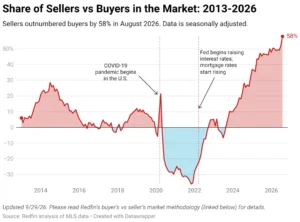
To understand the current strategies being deployed by successful originators, one must look at the trajectory of the U.S. housing market over the last four years. Following the onset of the COVID-19 pandemic in 2020, the Federal Reserve’s aggressive monetary easing led to record-low mortgage rates, sparking a historic refinancing boom. During this period, loan originators functioned largely as order-takers, processing a massive volume of "standard" agency loans.
However, the landscape shifted dramatically in early 2022 when the Federal Reserve began a series of interest rate hikes to combat inflation. By 2023, mortgage rates had climbed to 20-year highs, effectively neutralizing the refinance market and creating a "lock-in effect." This phenomenon occurs when homeowners who secured rates between 2% and 4% are reluctant to sell or refinance, fearing the significantly higher costs of a new 7% mortgage. This structural shift has forced a total re-evaluation of how mortgage professionals find and close deals. Today, the conversations between senior account executives, such as Eric Olson and Stacy Flanigan of Angel Oak Mortgage Solutions, and their originator partners are no longer about "when rates will drop," but rather "how to win in the current environment."
Shifting the Narrative: Education Over Interest Rates
One of the most significant changes in the industry is the psychological shift required of loan officers. Eric Olson, a senior account executive at Angel Oak, notes that his role has evolved into that of a "counselor." In a market where borrowers are often discouraged by headlines, the most successful originators are those who have moved away from selling "rates" and toward selling "solutions."
The educational component of lending has become a primary differentiator. Rather than waiting for the Federal Reserve to signal a pivot, high-performing originators are creating narratives around what is currently working for other borrowers. This includes educating clients on the long-term benefits of homeownership despite higher borrowing costs, such as the potential for future refinancing if rates eventually decline, and the continued appreciation of home values in supply-constrained markets. Stacy Flanigan emphasizes that the current environment demands the cultivation of deep relationships. In the "easy money" era, transactions were often impersonal and speed-driven; today, they are based on trust and the ability of the originator to act as a financial advisor rather than a mere facilitator of paperwork.
The Rise of Non-QM and Alternative Lending Solutions
As traditional agency lending (Fannie Mae and Freddie Mac) becomes more restrictive and less lucrative due to decreased volume, non-QM lending has moved from the periphery to the center of the mortgage industry. Non-QM loans are designed for borrowers who are creditworthy but do not meet the rigid documentation requirements of government-sponsored enterprises. This includes the growing demographic of self-employed individuals, "gig economy" workers, and real estate investors.
According to data from the U.S. Bureau of Labor Statistics and various private sector studies, the number of self-employed individuals in the United States has seen a steady increase since the pandemic. These borrowers often have complex tax returns with significant deductions that lower their qualifying income for traditional loans. Eric Olson points out that while non-QM was once a niche product that required extensive explanation, it is now a cornerstone of the industry. "It’s almost non-QM or bust," Olson remarked, highlighting that originators who have studied these products are the ones finding growth in a stagnant market.
Specifically, "Bank Statement" loans—where income is verified through 12 to 24 months of business or personal bank deposits rather than tax returns—have become a vital tool for originators. By mastering these products, loan officers can serve a massive segment of the population that traditional banks often overlook.
Leveraging Historic Home Equity: The HELOC Opportunity
Perhaps the most significant untapped resource in the current market is the record amount of home equity held by American homeowners. According to recent reports from ICE Mortgage Technology, tappable home equity in the U.S. reached an all-time high of over $11 trillion in 2024. Despite higher interest rates, homeowners are sitting on vast amounts of wealth that can be utilized without disturbing their low-interest first mortgages.
Stacy Flanigan identifies the Home Equity Line of Credit (HELOC) as a primary growth engine. For homeowners who are "locked in" to a 3% mortgage, a traditional cash-out refinance makes no financial sense, as it would require them to reset their entire loan balance to a 7% rate. However, a second-lien HELOC or a fixed-rate second mortgage allows them to access cash for debt consolidation, home improvements, or investment property purchases while keeping their original low rate intact.
This strategy serves a dual purpose: it provides the borrower with necessary liquidity at a lower blended cost than a full refinance, and it allows the originator to maintain a relationship with the client. Successful originators are proactively reaching out to their databases to present these equity-based solutions, transitioning from a reactive "wait for the phone to ring" posture to a proactive "wealth management" approach.
The Evolution of the AE-Originator Partnership
In the current high-stakes environment, the relationship between the loan originator and the account executive has shifted from transactional to strategic. When volume is low, every single lead is precious, and originators cannot afford to spend weeks on a file only for it to be declined in underwriting.
The philosophy of "a quick no is the best yes" has become a mantra for professionals like Olson. By providing transparent, immediate feedback on complex loan scenarios, AEs allow originators to pivot quickly and focus their energy on viable deals. This level of collaboration requires a high degree of trust. Originators are increasingly leaning on their AEs to help structure loans, particularly in the non-QM space where guidelines can be nuanced.
Flanigan notes that the strongest partnerships are those where the AE acts as an extension of the originator’s team. This includes providing marketing support, educational webinars for referral partners (such as real estate agents and CPAs), and deep-dive sessions on product guidelines. In a market where the "easy" loans have vanished, the ability to expertly navigate the "difficult" loans is what keeps a mortgage business solvent.
Focusing on Controllable Variables and Niche Markets
A common thread among originators who are thriving in 2024 is a focus on "what they can control." While they cannot control the Federal Open Market Committee’s (FOMC) decisions or global economic volatility, they can control their daily activities, their depth of product knowledge, and their choice of target markets.
Flanigan encourages originators to "target your niche borrower." This could mean becoming the go-to expert for real estate investors using Debt Service Coverage Ratio (DSCR) loans, which qualify borrowers based on the rental income of the property rather than their personal income. Or it could mean specializing in helping "silver splitters"—older homeowners navigating divorce who need to leverage equity to purchase new residences. By developing specialized expertise, originators reduce their competition and become indispensable to their referral networks.
Furthermore, the "transactional" mindset is being replaced by a "familial" one. Flanigan advises originators to treat every loan as if they were doing it for a family member. In a high-rate environment, the "cost of acquisition" for a new customer is high, making customer retention and word-of-mouth referrals more valuable than ever.
Fact-Based Analysis of Industry Implications
The trends identified by Olson and Flanigan suggest a long-term professionalization of the mortgage industry. The "shakeout" of 2022 and 2023 removed many part-time or less-experienced players from the field. Those who remain are becoming more sophisticated financial consultants.
The growth of non-QM lending also indicates a broader shift in the American economy. As the workforce continues to move toward independent contracting and entrepreneurship, the mortgage industry must continue to innovate away from the 1950s-era "W-2 only" model of creditworthiness. The data suggests that non-QM will not return to being a niche product; rather, it will likely become a permanent and expanding pillar of the mortgage market.
Moreover, the emphasis on home equity products reflects a change in consumer behavior. Americans are increasingly viewing their homes as a strategic financial tool rather than just a place to live. Originators who can help clients manage that equity effectively will likely see more consistent business cycles, regardless of where the headline interest rates sit.
Conclusion: The Outlook for 2024 and Beyond
As the mortgage industry moves through the remainder of the year, the "waiting game" for lower rates is largely over. The most successful professionals have accepted the "higher-for-longer" reality and have re-tooled their businesses accordingly. By shifting the focus to borrower education, embracing non-QM and equity products, and fostering deep strategic partnerships with account executives, originators are finding that opportunity still exists in abundance.
The transition from a volume-driven market to a value-driven market is difficult, but it offers a sustainable path forward. As Tom Hutchens, President of Angel Oak Mortgage Solutions, suggests, the most successful originators are those who recognize they do not have to do it alone. In an increasingly complex financial landscape, the synergy between the originator’s boots-on-the-ground expertise and the account executive’s broad market perspective is the ultimate competitive advantage.