In a decision that has sent shockwaves through Ghana’s political and environmental landscapes, the Accra High Court has sentenced Bernard Antwi Boasiako, a prominent regional chairman of the New Patriotic Party (NPP), to 20 years in prison. The landmark ruling, delivered on July 20, 2026, found Boasiako guilty of facilitating and overseeing unlicensed mining operations within the Samreboi concession, located in the Western Region. The conviction marks a significant turning point in the nation’s long-standing struggle against "galamsey"—the local term for illegal, small-scale gold mining—and signals a potential end to the perceived immunity of high-ranking political figures involved in the trade.
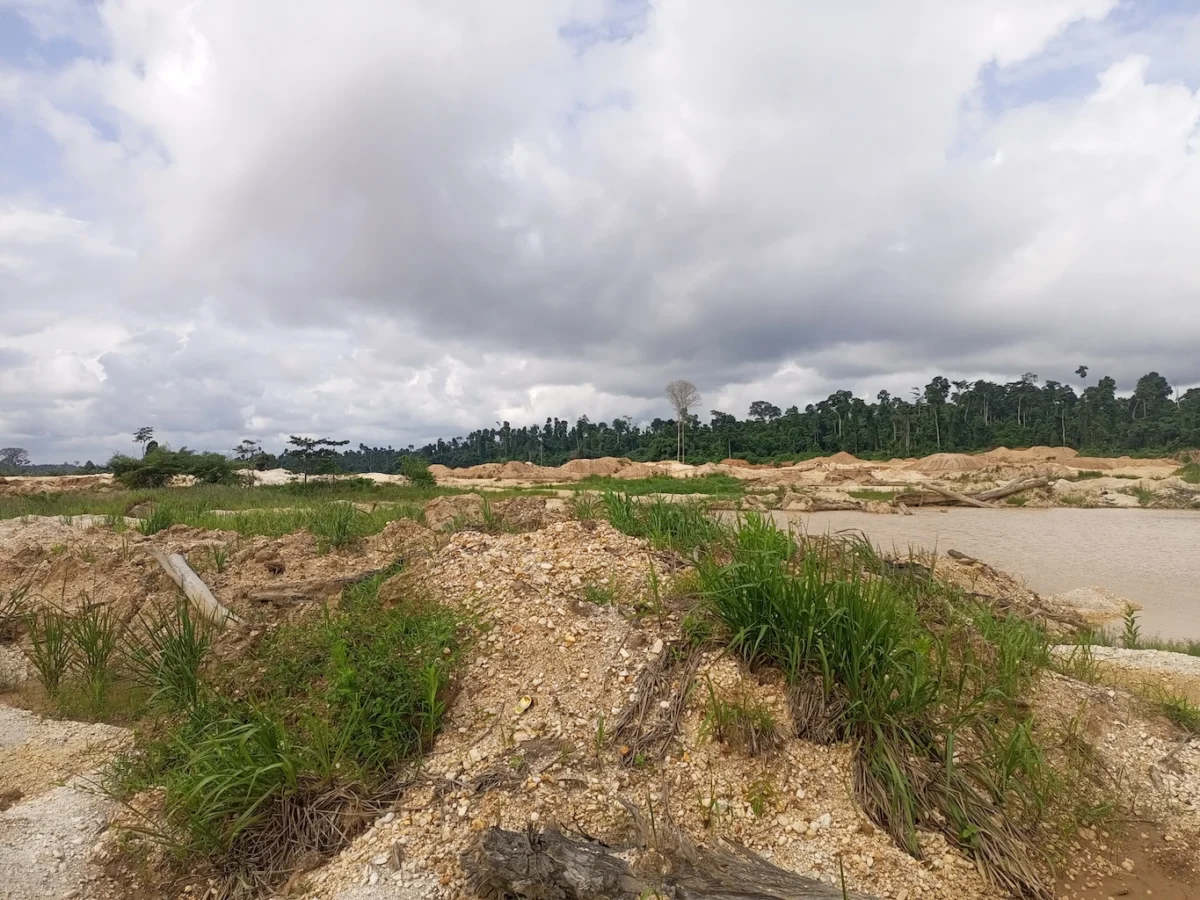
The Samreboi concession sits within the heart of the Upper Guinean Forest Belt, a critical ecological corridor that stretches from Togo and Ghana across to Guinea. This region is home to some of the last remaining tracts of natural tropical rainforest in West Africa, including the ecologically sensitive Tano Nimiri and Aboi forest reserves. For decades, these forests provided a sanctuary for diverse wildlife and a foundation for the local timber and cocoa industries. However, the surge in illegal mining activities has transformed this lush landscape into a scarred terrain of abandoned pits, polluted waterways, and decimated farmland.
The Scale of Environmental Destruction in Samreboi
The court proceedings highlighted the catastrophic environmental toll of the operations linked to Boasiako and his firm, Akonta Mining. While the Western Region has historically dealt with the pressures of logging and agricultural expansion, the recent influx of industrial-scale illegal mining has accelerated the degradation of the ecosystem. The use of heavy machinery, such as excavators and "changfans"—floating diesel-powered dredges—has allowed miners to penetrate the "belly" of river bodies, disrupting natural drainage patterns and destabilizing the earth.
In June 2026, the consequences of this environmental mismanagement became tragically clear. Following a period of heavy rainfall, the Tano River, choked by silt and mining debris, burst its banks. The resulting flood submerged more than 200 houses in Samreboi and neighboring communities. Dozens of buildings collapsed entirely, leaving hundreds of residents homeless and destroying livelihoods. Experts testified that the destruction of natural vegetation and the alteration of the river’s course by illegal mining operations were primary drivers of the flood’s unprecedented severity.

Beyond the physical destruction of property, the court examined the invisible threat of chemical contamination. The extraction of gold in these unlicensed sites frequently involves the use of mercury, cyanide, and arsenic. These heavy metals are often discharged directly into water bodies used by local communities for drinking, washing, and irrigation.
Industry Reactions and the Human Cost
Kenneth Ashigbey, the chief executive of the Ghana Chamber of Mines, provided a scathing assessment of the impact of such operations. Representing the formal mining sector, Ashigbey emphasized that the actions of unlicensed operators like Akonta Mining do not just break the law; they commit an assault on the biological security of the nation.
"We are seeing the impact of the changfans and the dredgers that are going into the core of our river bodies," Ashigbey stated following the verdict. "They are polluting the stability of the water. We are seeing mercury, cyanide, and heavy metals entering our water systems. The biological results are horrifying: women experiencing stillbirths, children born with deformities, and a general decline in public health."
Ashigbey further noted a stark economic paradox. While Ghana remains Africa’s largest producer of gold, the wealth generated from illegal mining rarely trickles down to the residents of the affected areas. "The few greedy folks have gotten very rich because of the gold they alone have had," he told reporters. "But for the masses in Samreboi, it has been a cycle of poverty and squalor. Timber workers have lost their jobs, cocoa farms have been poisoned, and the community is left to deal with the social vices that follow these camps—prostitution, drug abuse, and the trauma of natural disasters like the recent floods."
A Chronology of Policy and Legal Battles
The sentencing of Boasiako is the culmination of a multi-year legal and legislative tug-of-war regarding Ghana’s forest protections. To understand the significance of this ruling, one must look at the timeline of the country’s mining policy:

- 2018–2021: Illegal mining enters a period of rapid expansion, even as the government launches "Operation Halt" to deploy military personnel to mining sites. Critics argue the enforcement is selective and influenced by political affiliations.
- 2022: In a controversial move, the government passes legislation (Environmental Protection Regulations, L.I. 2462) that allows mining concessions to be granted even within designated forest reserves. This opens previously protected areas to legal industrial exploitation, which environmentalists argue provided a "smokescreen" for illegal activities to expand.
- 2024: Public outcry reaches a fever pitch following a series of investigative reports revealing that high-ranking officials were using their influence to secure mining rights in protected zones. Massive protests led by civil society groups and environmental NGOs demand the repeal of L.I. 2462.
- 2025: Facing intense domestic and international pressure, the legislation allowing mining in forest reserves is repealed. The government pledges a "zero-tolerance" approach to forest degradation.
- July 2026: The conviction of Bernard Antwi Boasiako serves as the first high-profile test of this renewed commitment to enforcement.
The Political Implications of the Ruling
The case has been closely watched as a litmus test for the independence of Ghana’s judiciary. Boasiako, widely known as "Chairman Wontumi," is a powerful figure within the ruling NPP, and his prosecution was seen by many as a gamble for the administration’s credibility.
Awula Serwah, the convener of the environmental sustainability NGO Eco Conscious Citizens, hailed the 20-year sentence as a necessary deterrent. She argued that for too long, "political colors" have been used as a shield against the consequences of environmental crimes.
"When people hide behind politics, thinking that there are no consequences for their actions on the environment, the fight cannot be won," Serwah said. "This ruling sends a message that the law applies to everyone, regardless of their rank or party affiliation. The environment does not have a political party. When the Tano River floods, it does not ask for your membership card before it destroys your home."
Serwah and other activists are now calling for the government to expand its focus beyond Samreboi. They point to the Ashanti, Eastern, and Central regions, where illegal mining continues to threaten the Pra, Birim, and Ankobra rivers. The concern remains that without sustained enforcement, the "galamsey" operators will simply relocate their machinery to more remote areas.
Analysis: A Turning Point for Conservation?
The 20-year sentence handed to Boasiako is among the harshest ever given for an environmental crime in Ghana. Legal analysts suggest that the severity of the sentence reflects the court’s recognition of "ecocide"—the deliberate and massive destruction of the environment—as a crime against the state and its future generations.

However, the road to restoration for Samreboi will be long. Environmental scientists estimate that it could take decades, and billions of Ghanaian cedis, to reclaim the land and decontaminate the water bodies. The loss of topsoil and the presence of deep, water-filled pits make the land unsuitable for agriculture in the short term, threatening the food security of a region that was once a breadbasket for cocoa and timber.
Furthermore, the ruling raises questions about the future of the small-scale mining sector. While the Ghana Chamber of Mines represents large, industrial players, thousands of Ghanaians rely on small-scale mining for survival. The challenge for the government moving forward will be to provide viable economic alternatives for these workers while ensuring that the "big men" who finance and profit from illegal operations are held accountable.
As Boasiako begins his sentence, the focus shifts to the dozens of other pending cases involving unlicensed mining. For the people of Samreboi, the hope is that this ruling marks the beginning of a period of recovery, where the roar of the "changfan" is replaced by the sounds of a regenerating forest, and where the Tano River can once again flow clear and safely through their land. The eyes of the international community and the Ghanaian public remain fixed on the High Court, waiting to see if this landmark case is a singular event or the start of a new era of environmental justice.