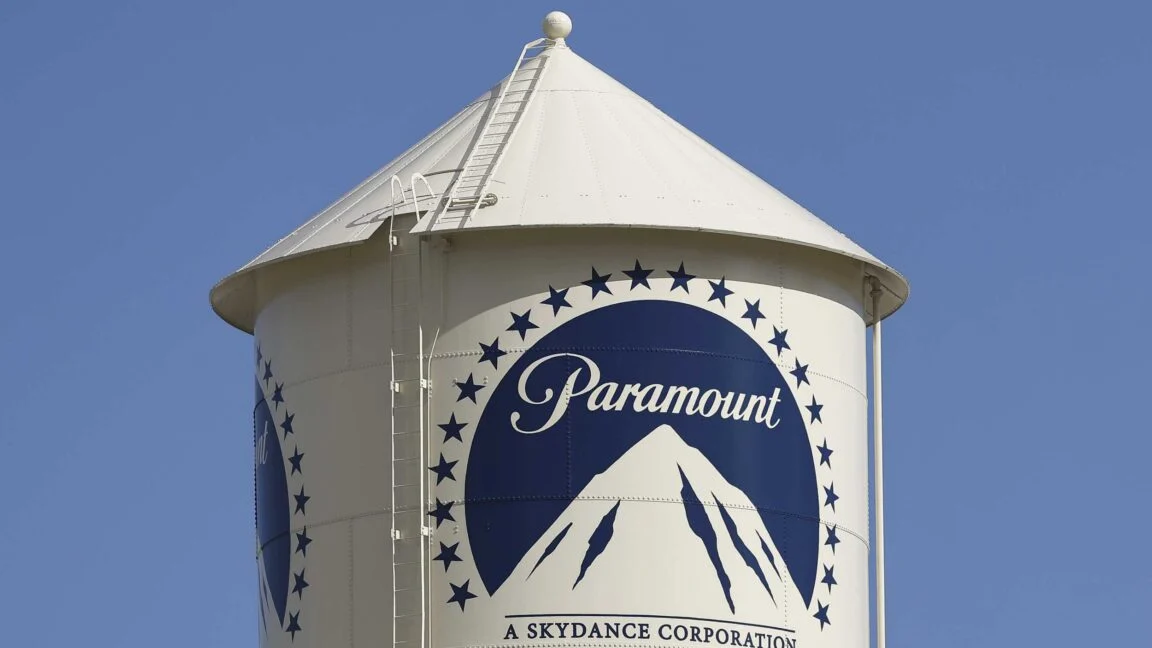
A monumental $111 billion acquisition that promised to reshape the global entertainment landscape has hit a significant roadblock, as Paramount Global (via a proposed acquisition by Skydance Media) and Warner Bros. Discovery (WBD) have agreed to a substantial, longer-term delay of their planned merger. This stipulation prevents the two media titans from combining operations until a judge issues a merits determination in a high-stakes antitrust case brought by a coalition of a dozen U.S. states. The agreement, filed in court, effectively halts the integration process for potentially months, or even years, underscoring the intensifying scrutiny facing mega-mergers in the modern regulatory environment.
Under the terms of the stipulation, which was presented to the court today, the merging parties and the plaintiffs—the coalition of states led by California, along with the Writers Guild of America (WGA)—have mutually consented that the acquisition will not be finalized, nor will the companies integrate their diverse operations, until "five days after the merits determination in these matters." Alternatively, the delay will extend until June 1, 2027, whichever date arrives earlier. This crucial agreement ensures that the legality of the proposed consolidation will be thoroughly vetted in court before any irreversible steps are taken. Should a merits determination not be reached by the June 2027 deadline, the plaintiffs reserve the right to seek a preliminary injunction, a legal tool that could further block the deal indefinitely, pending future legal action.
A Chronology of Mounting Scrutiny
The journey to this significant delay has been fraught with complex legal and regulatory challenges, highlighting a growing tension between corporate ambitions for consolidation and governmental concerns over market competition.
The initial murmurings of a potential merger between Paramount Global and Warner Bros. Discovery began to circulate in late 2025, culminating in a more concrete proposal in early 2026. The proposed $111 billion deal, which would see Skydance Media, led by David Ellison, acquiring Paramount Global, and subsequently merging its media assets with Warner Bros. Discovery, promised to create an entertainment behemoth. Proponents argued it would offer a more robust competitor to market leaders like Disney and Netflix, leveraging a combined portfolio of iconic film studios, extensive television networks, and burgeoning streaming platforms.
Surprisingly, the merger initially received a green light from the Trump administration’s federal antitrust regulators. This approval, however, reportedly caused considerable consternation within the U.S. Department of Justice (DOJ). According to reports, the career staff lawyers who had led the agency’s exhaustive investigation into the proposed deal were leaning towards recommending a lawsuit to block it, citing significant competitive concerns. The ultimate decision to approve, overriding these internal recommendations, raised eyebrows and underscored a perceived divergence between political appointees and career antitrust professionals.
In the wake of federal approval, a formidable coalition of twelve U.S. states, spearheaded by California and New York, took independent action. On July 22, 2026, these states filed a comprehensive lawsuit against Paramount and WBD, asserting that the merger would substantially reduce competition within critical segments of the entertainment industry and thus violate established antitrust laws. The states argued that combining two of the five major Hollywood film studios and two of the five principal owners of basic cable television channels would lead to an undue concentration of market power, harming consumers and content creators alike.
The states’ legal challenge quickly yielded an initial victory. On Monday, July 24, 2026, Judge Araceli Martínez-Olguín of the U.S. District Court for the Northern District of California issued a temporary restraining order (TRO) against the merger. Judge Martínez-Olguín’s ruling indicated that the deal was indeed likely to diminish competition significantly and contravene antitrust statutes, providing critical momentum to the states’ case. This judicial intervention set the stage for the current stipulation, formalizing a pause in the merger process.
Stakeholder Reactions and Strategic Positioning
The agreement to delay the merger elicited distinct, yet strategically framed, reactions from the involved parties, each claiming a measure of success in navigating the complex legal landscape.
New York Attorney General Letitia James, whose office played a pivotal role in the multi-state litigation, characterized the stipulation as a "months-long halt" to the merger, declaring it a "critical victory." In a public statement, James emphasized, "Halting this merger while our case proceeds is a critical victory in our efforts to uphold the law and protect the film and television industries. Our legal challenge is rooted in the principle that robust competition is essential for a vibrant marketplace, fostering innovation and ensuring fair prices for consumers. We are prepared to vigorously pursue our case in court to prevent this unlawful consolidation." This sentiment was echoed by California Attorney General Rob Bonta, who stated, "We are eager to continue to make our case in court and celebrate another tremendous win in our effort to ensure this unlawful merger never sees the light of day. This delay allows the legal process to unfold as it should, with a thorough examination of the potential harms to competition, content creators, and the public."
Conversely, Paramount Global and Skydance, while agreeing to the delay, also projected an air of confidence, framing the development as a positive step towards ultimate approval. A spokesperson for Paramount, in remarks to media outlets, asserted, "The result is exactly what we have sought from the outset: a direct path to a trial based on the evidence. This is the fastest and clearest way to prove that this transaction is good for competition, good for consumers, and good for creators, a conclusion dozens of competition authorities around the world have already reached." This statement implies that the companies believe a full judicial review will ultimately vindicate their position, highlighting prior international approvals as evidence of the deal’s pro-competitive nature. Skydance Media, the driving force behind the Paramount acquisition, likely shares this perspective, viewing the trial as an opportunity to present their strategic vision and rebut antitrust claims.
The Writers Guild of America (WGA), which had filed its own lawsuit to block the merger, also endorsed the stipulation. The WGA’s involvement underscores the concerns within the creative community regarding industry consolidation. Fewer major studios and content buyers typically translate to reduced bargaining power for writers, actors, and other creative professionals, potentially impacting wages, working conditions, and the diversity of content commissioned. The Guild’s support for the delay signals their commitment to protecting the interests of their members and ensuring a competitive market for their talent and intellectual property.
The Broader Context: Media Consolidation and Antitrust Enforcement
The proposed Paramount-WBD merger is not an isolated incident but rather the latest chapter in a decades-long trend of consolidation within the media and entertainment industries. Companies have continually sought scale to compete in an increasingly fragmented and capital-intensive global market, driven by the rise of streaming, direct-to-consumer models, and the need for vast content libraries.
Past mega-mergers, such as Disney’s acquisition of 21st Century Fox assets, AT&T’s takeover of Time Warner (later spun off as Warner Bros. Discovery), and Discovery’s merger with WarnerMedia, illustrate this relentless drive. While proponents argue that these deals create stronger entities capable of investing more in content and technology, critics consistently raise concerns about reduced consumer choice, potential price increases, and diminished opportunities for independent creators.
The current legal challenge also shines a spotlight on the evolving landscape of antitrust enforcement in the United States. Historically, federal agencies like the DOJ and the Federal Trade Commission (FTC) have been the primary arbiters of antitrust law. However, in recent years, state attorneys general have become increasingly active and influential players, particularly when federal enforcement is perceived as lax or politically influenced. The states’ success in securing a temporary restraining order and now a formal delay against the Paramount-WBD merger underscores this growing assertiveness and their capacity to act as independent checks on corporate power. This case could set an important precedent for future state-led antitrust actions, especially in industries where federal oversight might be seen as insufficient.
Market Implications and Future Outlook
The prolonged delay introduces a significant period of uncertainty for Paramount Global, Warner Bros. Discovery, and Skydance Media, with ripple effects throughout the broader entertainment industry.
For Paramount Global, the delay means a continued strategic limbo. The company has been actively seeking a buyer or a significant strategic partner to navigate the challenging media landscape, characterized by declining linear TV revenues and intense competition in streaming. Skydance’s proposed acquisition was seen as a potential lifeline, providing capital and a clear path forward. Now, the company must continue operating under the shadow of a pending, and potentially blocked, deal, which could impact its ability to make long-term investments, retain talent, and pursue other strategic options. Investors in Paramount Global may face continued volatility as the legal process unfolds.
Warner Bros. Discovery, while not the direct target of the acquisition, would have been a key beneficiary of the combined assets and scale. WBD is itself still in the process of integrating its own massive merger and grappling with substantial debt. The uncertainty surrounding the Paramount deal, which would have significantly expanded its content library and global reach, could complicate its strategic planning and financial outlook.
For Skydance Media, the delay represents a substantial test of its commitment and financial staying power. Engaging in a protracted legal battle for a multi-billion dollar acquisition requires significant resources and a willingness to absorb prolonged uncertainty. David Ellison’s vision for a combined entertainment powerhouse now faces a crucial judicial test.
Beyond the immediate parties, the delay sends a clear signal to the entire media industry: large-scale mergers will face intense scrutiny, and antitrust challenges, particularly from state attorneys general, are a formidable obstacle. This could lead other companies contemplating similar consolidations to reconsider their strategies or prepare for more rigorous regulatory hurdles.
The ultimate outcome of the states’ lawsuit will have far-reaching implications. If the court rules in favor of the states and permanently blocks the merger, it would be a landmark victory for antitrust enforcement and potentially signal a shift towards greater skepticism of media consolidation. It would also force Paramount to re-evaluate its future, possibly leading to other acquisition attempts or a significant restructuring. Conversely, if the court ultimately sides with Paramount and WBD, finding the deal to be pro-competitive, it would validate their arguments and provide a clearer path for future consolidation, albeit one achieved through a hard-fought legal battle.
The coming months will be critical as both sides prepare their arguments for the merits trial. The evidence presented, the legal interpretations, and the final judicial determination will not only decide the fate of this $111 billion deal but also contribute to shaping the future competitive landscape of the global entertainment industry.