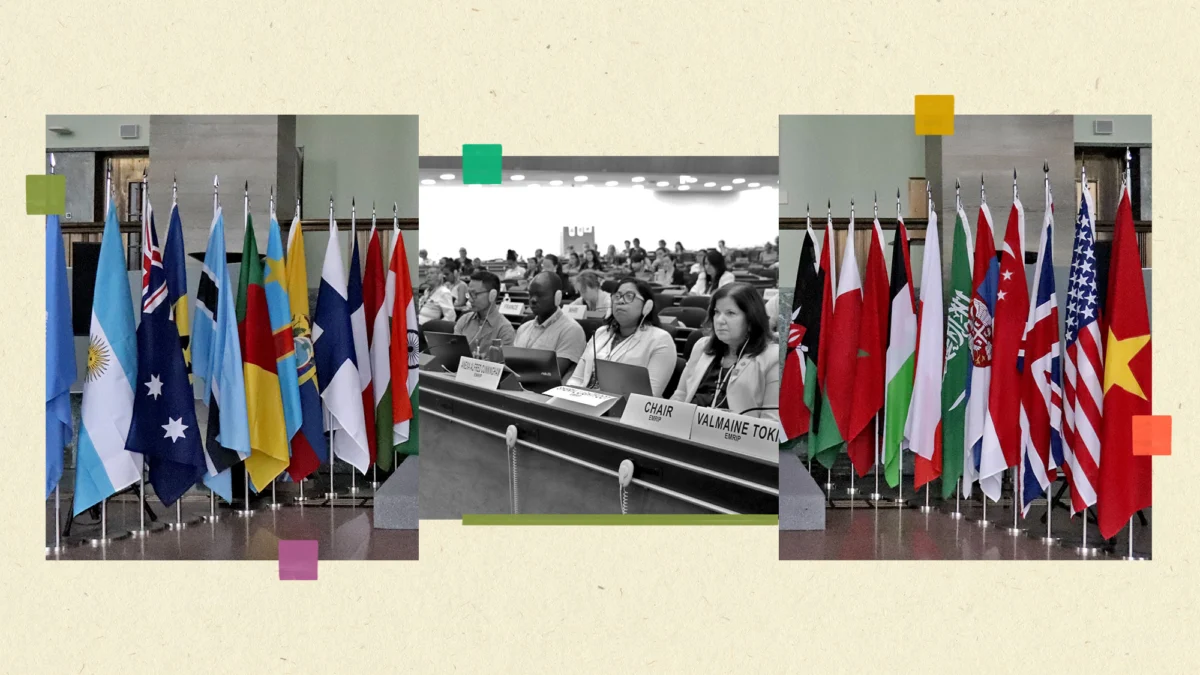
Indigenous leaders and representatives from across the globe have finalized a comprehensive 12-point action plan directed at the United Nations, demanding immediate and sweeping systemic reforms to protect Indigenous lands, cultures, and lives. Presented by the United Nations Expert Mechanism on the Rights of Indigenous Peoples (EMRIP), the proposal arrives at a critical juncture as Indigenous communities face a "collision of crises," ranging from the disproportionate impacts of climate change and escalating violence to emerging threats posed by artificial intelligence and data misappropriation. The proposal, which will be formally submitted to the U.N. Human Rights Council, serves as both a roadmap for international policy and a stark warning regarding the erosion of Indigenous rights on the global stage.
The 12-point plan calls for a fundamental shift in how the United Nations and its member states engage with Indigenous populations. At its core, the document demands that the U.N. transition from symbolic recognition to "rapid and sweeping action." This includes the full implementation of the U.N. Declaration on the Rights of Indigenous Peoples (UNDRIP), the protection of Indigenous women and girls from systemic violence, and the formal recognition of Indigenous peoples as distinct political entities with rights that exceed broader, generalized human rights frameworks.
A Comprehensive Framework for Indigenous Sovereignty
The recommendations finalized by the seven Indigenous members of EMRIP cover a diverse array of urgent issues. Among the most pressing is the call for greater protections for remote Indigenous peoples living in voluntary isolation or initial contact. These groups are increasingly threatened by illegal mining, logging, and infrastructure projects that not only destroy their ancestral lands but also expose them to diseases and violence for which they have no defense.
Data sovereignty and the preservation of Indigenous languages also feature prominently in the plan. As artificial intelligence (AI) technologies expand, Indigenous leaders have expressed concern over the "digital colonization" of their knowledge systems. AI models often scrape Indigenous cultural data without consent, leading to the commercialization of sacred knowledge or the proliferation of harmful stereotypes. The 12-point plan urges the U.N. to establish frameworks that ensure Indigenous communities maintain control over their intellectual property and digital footprints.
Furthermore, the proposal emphasizes the necessity of including Indigenous women in all levels of decision-making. Cora McGuire-Cyrette, a member of the Bingwi Neyaashi Anishinaabek and a representative for the Ontario Native Women’s Association, highlighted the disconnect between international rhetoric and local reality. "Our communities—our women, our children, our families—they have a right to action and that’s what we’re not seeing globally," she stated during the proceedings. The inclusion of Indigenous women is viewed not merely as a matter of equity, but as a vital component of community survival and effective governance.
Chronology of Advocacy and the Stagnation of Rights
The current push for a 12-point plan is the latest chapter in a decades-long struggle for international recognition. The journey began in earnest with the establishment of the Working Group on Indigenous Populations in 1982, which eventually led to the 2007 adoption of the U.N. Declaration on the Rights of Indigenous Peoples. EMRIP was established by the Human Rights Council in 2007 to provide expertise and advice on the implementation of UNDRIP.
However, despite these institutional milestones, recent years have seen what experts describe as a "regression" in progress. Albert Barume, the U.N. special rapporteur on the rights of Indigenous peoples and former chairperson of EMRIP, provided a somber assessment of the current landscape. According to Barume, the global trend for human rights is currently characterized by "stagnation and regression." He noted that in recent years, almost no member states have introduced new measures to protect Indigenous rights. More alarmingly, states that previously had robust legal and policy frameworks are now actively dismantling them.
This sentiment was echoed by Macy Duxfield, a representative of the Māori nations of Ngaa Rauru, Te Ātihaunui-a-Pāpārangi, and Ngāi Tahu. She described the current political climate in Aotearoa New Zealand as regressive, noting that hard-won rights are being challenged by shifting domestic policies. Duxfield emphasized that the work of Indigenous advocacy is an intergenerational relay: "We’ve inherited the work from our ancestors, and we pass it on to our descendants."
The Financial Crisis Threatening Indigenous Platforms
While the 12-point plan offers a vision for the future, the very platforms intended to facilitate these discussions are facing an existential threat. A severe financial crisis within the United Nations has left Indigenous-specific bodies on precarious footing. EMRIP, the Permanent Forum on Indigenous Issues, and the office of the Special Rapporteur on the Rights of Indigenous Peoples—the three pillars of Indigenous representation at the U.N.—are all grappling with dwindling financial support.
The U.N. Voluntary Fund for Indigenous Peoples, which provides financial assistance to help Indigenous representatives travel to Geneva and New York for international meetings, is currently in a state of "perilous" decline. Marjolaine Étienne, an Innu from the Pekuakamiulnuatsh community in Quebec, informed delegates that without increased contributions from member states, Indigenous voices will be effectively sidelined from the international stage.
The statistics regarding these funds highlight a significant lack of international commitment:
- Only eight countries currently contribute to the U.N. Voluntary Fund for Indigenous Peoples.
- The total budget for the Voluntary Fund is less than $2 million annually, a sum considered insufficient to cover the global demand for representation.
- Only three countries contributed to the U.N. Trust Fund for Indigenous Peoples during the most recent cycle.
- The United States, despite its significant influence and large Indigenous population, does not contribute to either fund.
This "liquidity crisis" has led to fears that the U.N. may use financial constraints as a justification to limit the mandate of EMRIP or reduce the frequency of country-specific engagements. McGuire-Cyrette warned that the crisis must not be used as an "excuse" to diminish the depth of follow-up on human rights violations.
Supporting Data: The Disproportionate Impact of Global Crises
The urgency of the 12-point plan is supported by data illustrating the unique vulnerabilities of the world’s approximately 476 million Indigenous people. While they make up less than 6% of the global population, Indigenous peoples account for 15% of the world’s poorest individuals.
Climate change remains the most existential threat. Indigenous lands currently harbor approximately 80% of the world’s remaining biodiversity. However, because many Indigenous communities live in ecologically sensitive areas—such as the Arctic, the Amazon basin, and low-lying Pacific islands—they are the first to experience the catastrophic effects of global warming. The 12-point plan argues that climate action cannot be effective without the direct involvement of Indigenous leaders and the protection of their land tenure rights.
In terms of violence, Indigenous women and girls experience significantly higher rates of assault, disappearance, and murder compared to non-Indigenous populations in many countries. In Canada and the United States, the "Missing and Murdered Indigenous Women and Girls" (MMIWG) crisis has been characterized as a national emergency, yet funding for protective services and specialized investigations remains inconsistent.
Analysis of Implications and the Path Toward UN80
The EMRIP proposal arrives as the United Nations undergoes a broader reform effort known as "UN80," aimed at making the organization more efficient and responsive to 21st-century challenges as it approaches its 80th anniversary. Sheryl Lightfoot, the North America region expert for EMRIP and a member of the Anishinaabe people, acknowledged that there is widespread uncertainty regarding how these reforms will impact Indigenous-specific mechanisms.
"There are a lot of unanswered questions right now about the reforms," Lightfoot said. She noted that while the U.N. is looking for "efficiencies," such measures must not come at the cost of excluding those who are already the most marginalized. The 12-point plan is intended to ensure that Indigenous rights are not "efficiency-ed out" of the U.N.’s future structure.
The broader implication of the EMRIP proposal is a demand for a "decolonized" approach to international law. By calling for rights that are "distinct from broader human rights," Indigenous leaders are arguing that their status as self-determining nations requires a unique legal category. This would involve recognizing Indigenous legal systems, traditional land titles, and the right to "free, prior, and informed consent" (FPIC) for any projects affecting their territories.
Conclusion: A Call for State Accountability
The success of the 12-point plan ultimately rests on the willingness of U.N. member states to move beyond rhetoric and provide the necessary political and financial capital. The current "stagnation" described by Special Rapporteur Barume suggests a widening gap between international human rights standards and domestic implementation.
As the proposal moves to the U.N. Human Rights Council, the international community faces a choice: to bolster the mechanisms that allow Indigenous peoples to advocate for their survival, or to allow those platforms to wither under the weight of financial neglect. For the delegates who gathered to finalize the recommendations, the stakes are nothing less than the preservation of their cultures and the safety of their future generations.
The 12-point plan is not merely a list of requests; it is a assertion of presence. As the U.N. navigates its own internal reforms and a turbulent global landscape, Indigenous leaders have made it clear that they will no longer accept being treated as peripheral stakeholders in a world that their ancestors have stewarded for millennia. The focus now shifts to Geneva, where the Human Rights Council will determine the fate of these recommendations and, by extension, the future of international Indigenous diplomacy.