The American Customer Satisfaction Index (ACSI) recently released its 2025-2026 Automobile Study, revealing a startling trend in consumer sentiment: Americans are currently more satisfied with their vacuum cleaners than they are with their motor vehicles. While the two products occupy vastly different price points and levels of mechanical complexity, the shared benchmarks of durability, ease of use, and warranty coverage suggest that the automotive industry is failing to meet basic consumer expectations in areas where household appliance manufacturers are excelling.
According to the ACSI data, the vacuum cleaner industry earned an aggregate satisfaction score of 79 on a 100-point scale. In contrast, the automotive industry trailed with a score of 78. While a single point may seem negligible, the implications are significant when considering the financial stakes involved. The average price of a new vehicle in the United States has recently hovered around the $48,000 to $50,000 mark, whereas a high-end vacuum cleaner rarely exceeds $1,000. The fact that consumers feel more positive about a device designed to suck up dirt than a primary mode of transportation costing fifty times more highlights a growing disconnect between automotive innovation and consumer utility.
The Quantitative Gap: Benchmarking Satisfaction Across Industries
The ACSI utilizes a proprietary multi-equation model to characterize customer satisfaction, measuring sectors on a 0 to 100 scale. To provide context for the automotive score of 78, it is necessary to look at the broader manufacturing and service landscape. At the top of the spectrum, industries such as athletic shoes and soft drinks maintain a score of 83, reflecting high consistency and brand loyalty. At the bottom, traditional subscription television services languish at a score of 70, plagued by high costs and perceived poor service.
The automotive industry’s decline to 78 is particularly concerning for luxury brands, which have historically enjoyed higher margins of consumer grace. The study suggests that as vehicles become more "tech-heavy," the potential for friction in the user experience increases. Vacuums, despite the integration of robotics and smart sensors in recent years, have managed to maintain a higher baseline of "ease of operation," a metric that is currently a pain point for many car owners.
Warranty and Reliability: A Crisis of Confidence
One of the most telling disparities in the ACSI report lies in the perception of warranty coverage and durability. In the automotive sector, these metrics are categorized under "Dependability" and "Warranty Coverage." For vacuum cleaners, the equivalent metric is "Durability."
Both luxury vehicles and vacuum cleaners earned a score of 81 for durability/dependability. However, the paths diverge sharply when looking at the support systems behind the products. Vacuum cleaner warranties earned a satisfaction score of 80, while automotive warranties lagged at 79. This one-point delta represents a significant psychological hurdle for car buyers.
Automotive repairs are notoriously expensive, often requiring specialized labor and proprietary parts. When a consumer purchases a vehicle for $50,000, there is an inherent expectation of comprehensive protection. The survey results indicate that current automotive warranties are failing to provide that peace of mind. Out of 14 specific benchmarks measured for automobiles, warranty coverage ranked near the bottom—12th for mass-market vehicles and 11th for luxury brands. This suggests that the industry’s standard "3-year/36,000-mile" bumper-to-bumper coverage may no longer be sufficient in an era where vehicle lifespans are extending and repair costs are inflating.
Efficiency and the Paradox of Range
Energy efficiency remains a critical driver of customer satisfaction. For vacuum cleaners—including the increasingly popular cordless and robotic segments—energy efficiency scored a 79. In the automotive world, this metric is split between "Gas Mileage" and "Driving Range" (the distance a vehicle can travel on a full tank or a full charge).
The data reveals a significant dissatisfaction with range, particularly in the luxury segment, which includes a high concentration of Electric Vehicles (EVs). Luxury vehicle owners rated their satisfaction with driving range at a low 72. Mass-market consumers were slightly more forgiving but still voiced dissatisfaction, with range scores averaging 74.
Even in terms of traditional fuel economy, the automotive industry is struggling to impress. Mass-market customers rated gas mileage at 79, matching the vacuum cleaner industry’s efficiency score, but luxury owners were less impressed, rating their fuel economy at 78. These low rankings for range and mileage suggest that despite advancements in hybrid technology and battery density, the actual "economy of use" is not meeting the expectations of the modern American driver, especially as fuel prices remain volatile.
Complexity vs. Simplicity: The User Interface Struggle
Perhaps the most profound lesson automakers can learn from vacuum cleaners involves "Ease of Operation." In the vacuum cleaner industry, this is the top-performing benchmark, boasting a score of 84. Whether it is a traditional upright or a sophisticated robot vacuum programmed via a smartphone app, consumers find these devices intuitive.
Conversely, the automotive industry has moved toward increasingly complex digital interfaces. The ACSI measures this through "Driving Performance" (handling and drivability) and "Technology" (touchscreens, infotainment, and cockpit controls). Satisfaction in these areas is notably lower than the 84 seen in the vacuum industry.
In recent years, automakers have replaced physical buttons and tactile knobs with expansive touchscreens and haptic feedback loops. While this aesthetic shift mimics the smartphone experience, the practical application in a moving vehicle has proven frustrating for many. The ACSI report aligns with a growing body of automotive criticism suggesting that "tech for tech’s sake" is degrading the user experience. Some manufacturers, such as Volkswagen and physical-button proponents like Hyundai, have recently announced a return to more tactile controls in response to this specific type of customer feedback.
Economic Headwinds and the Resale Value Factor
The dissatisfaction with automobiles is inextricably linked to the current economic climate. The ACSI report notes that cars are not only more expensive to purchase but are also taking longer to pay off, with 72-month and 84-month loans becoming common. This extended debt cycle makes consumers more sensitive to the "Value for Money" proposition.
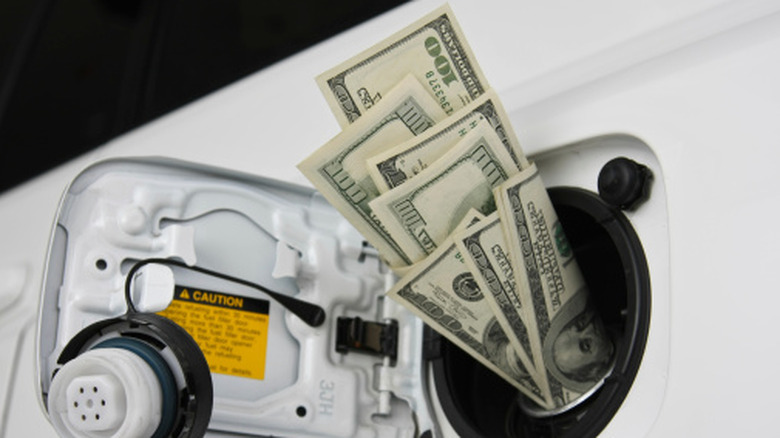
Resale and trade-in values have also become a source of frustration. As the market for used cars stabilized following the post-pandemic surge, many owners found themselves with vehicles worth significantly less than their remaining loan balances. This "negative equity" trap contributes to lower overall satisfaction scores. While resale value is not a primary metric for vacuum cleaners (which are often viewed as consumable goods), it is a vital pillar of the automotive ownership experience. When a vehicle fails to hold its value while simultaneously being perceived as difficult to use or expensive to maintain, satisfaction scores inevitably plummet.
Chronology of the Automotive Satisfaction Decline
To understand how the industry reached this point, one must look at the timeline of the last five years:
- 2020-2021: Supply chain disruptions lead to a shortage of new vehicles. Prices begin to climb, but satisfaction remains relatively stable as consumers emphasize the "safety" of personal transport during the pandemic.
- 2022: The average price of a new car surpasses $45,000. Interest rates begin to rise, increasing the total cost of ownership.
- 2023: Automakers lean heavily into "Software Defined Vehicles." Physical buttons are removed in favor of screens. Initial reports of "software glitches" and "infotainment lag" begin to appear in consumer surveys.
- 2024: The average new car price hits the $50,000 milestone. High fuel prices and the high cost of EV repairs become primary consumer complaints.
- 2025-2026 (Current Study): Automobile satisfaction falls behind household appliances. The "Complexity Gap" becomes a defining characteristic of the market, with consumers favoring the simplicity of other manufactured goods.
Implications for the Future of the Auto Industry
The ACSI study serves as a warning to automotive executives: high-tech features cannot compensate for a lack of fundamental utility. If a consumer feels more confident in the warranty and ease of use of a vacuum cleaner than their SUV, the automotive industry faces a looming brand loyalty crisis.
For automakers to close the gap, the data suggests a three-pronged approach:
- Refining the Interface: Moving away from total reliance on touchscreens and returning to "human-centric" design that prioritizes ease of operation while driving.
- Bolstering Support: Reevaluating warranty structures to match the increasing lifespan and technological complexity of modern vehicles.
- Focusing on Real-World Efficiency: Addressing "range anxiety" not just through larger batteries, but through more transparent and reliable energy-use metrics that align with consumer expectations.
As the industry continues its transition toward electrification and autonomous features, the "vacuum cleaner benchmark" highlights a simple truth: no matter how advanced a product is, it must work reliably, be easy to understand, and offer a clear sense of value. Until automakers master these basics as well as appliance manufacturers have, they may continue to find themselves at the bottom of the satisfaction rankings.