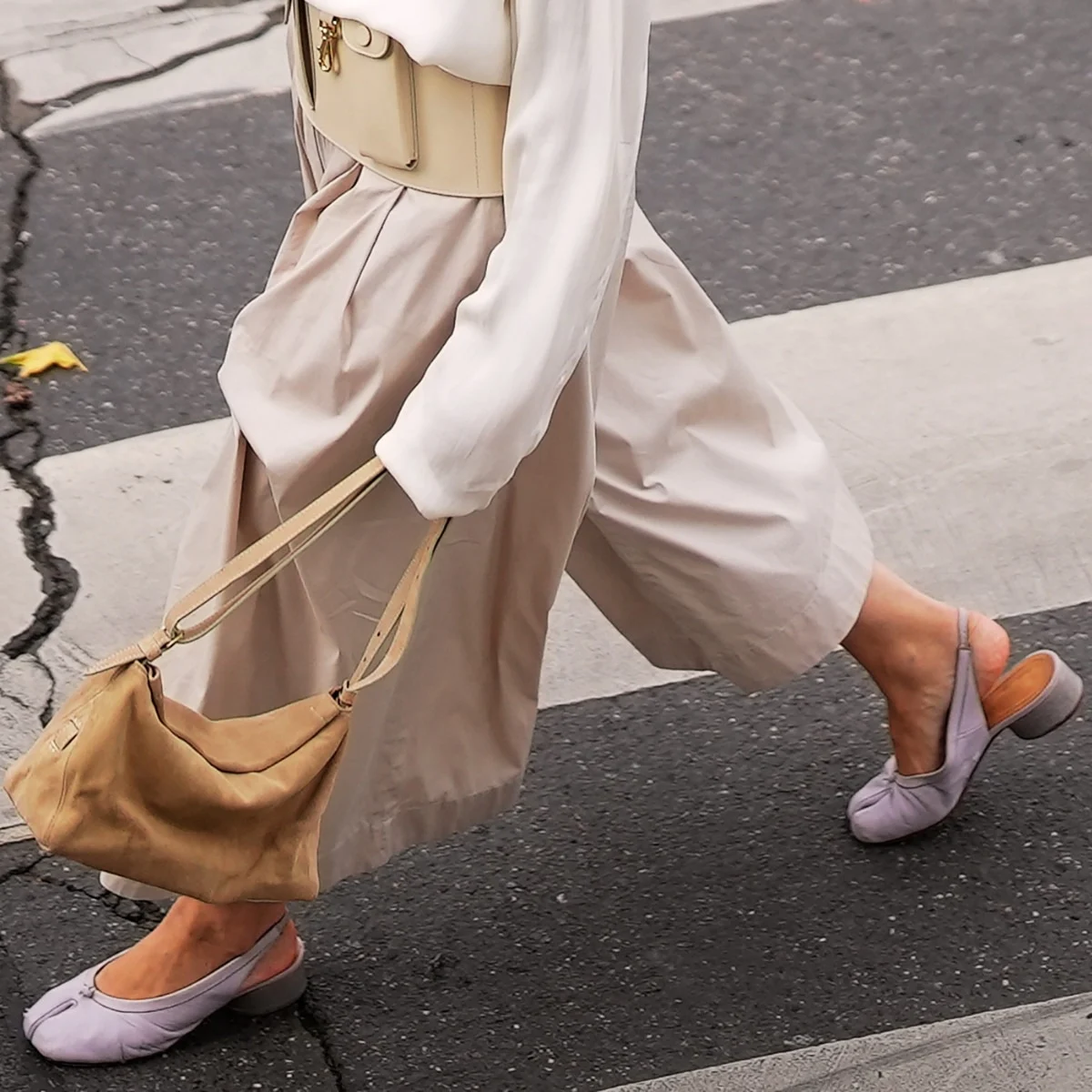
The fashion landscape is perpetually defined by items that divide public opinion, but few recent footwear choices have sparked as much polarizing debate as the split-toe shoe, universally known as the Tabi. Long dismissed by mainstream consumers as eccentric, bizarre, or structurally jarring, the silhouette has successfully transitioned from an avant-garde runway exclusive to a ubiquitous street-style staple. As autumn approaches, market trends indicate that split-toe flats are rapidly cementing themselves as a dominant force in contemporary wardrobe styling, propelled largely by accessible market alternatives that make the historically high-end aesthetic available to a broader demographic.
Originating centuries ago as a practical Japanese design, the Tabi has undergone multiple reinventions before capturing the current digital zeitgeist via social media platforms like TikTok. With authentic designer iterations commanding thousands of dollars, a robust market of alternative interpretations has emerged, offering consumers entry points starting below fifty dollars. This shift in accessibility has transformed the cloven-hoof silhouette from an elite fashion statement into a mainstream trend poised for widespread visibility during upcoming seasonal fashion weeks.
Historical Roots and Evolution of the Split-Toe Design
To understand the current resurgence of the Tabi, one must examine its deep historical origins. The foundational design of the split-toe shoe traces back to 15th-century Japan. Originally, Tabi referred to traditional ankle-high split-toe socks worn alongside traditional Japanese thong footwear known as Zori, which were crafted from materials including rice straw, cloth, lacquered wood, leather, rubber, and animal hide. The functional utility of separating the big toe from the rest of the foot lay in its compatibility with traditional thong sandals, allowing for enhanced balance and grip.
Centuries later, the silhouette made its monumental leap into Western high fashion when Belgian designer Martin Margiela introduced the footwear during his eponymous house’s debut runway collection in Paris in 1989. Inspired by traditional Japanese workmen’s boots, Margiela painted the soles of the shoes red before sending models down the runway, leaving a distinct footprint trail that immediately imprinted the design into fashion history.
Over the subsequent decades, the Maison Margiela Tabi evolved into an enduring house signature, appearing across a wide array of categories including flats, sandals, heels, loafers, and boots. Authentic designer pairs from the luxury house typically command a significant financial investment, ranging from approximately $800 to upwards of $5,000 depending on the materials, craftsmanship, and seasonal exclusivity. This steep financial barrier historically restricted the trend to dedicated fashion insiders, collectors, and affluent enthusiasts, leaving the broader public to admire the design from a distance.
The Democratization of Avant-Garde Footwear via Social Media
The recent trajectory of the Tabi trend changed dramatically with the advent of short-form video platforms. Over the past several seasons, content creators and fashion enthusiasts on platforms like TikTok have propelled affordable alternatives—commonly referred to as "dupes"—into viral prominence. Algorithms frequently serve shopping content highlighting accessible comfort-focused variants, driving substantial consumer demand.
While luxury houses maintain their exclusivity, mainstream footwear brands and fast-fashion retailers have capitalized on the momentum by introducing their own interpretations of the split-toe silhouette. Market options now span a wide price spectrum, ranging from budget-friendly iterations priced near $48 to mid-tier contemporary brands offering quality leather and synthetic alternatives between $100 and $200. This market diversification has effectively democratized a design that was once strictly guarded within high-fashion circles, allowing a new generation of consumers to experiment with polarizing aesthetics without substantial financial risk.
Styling the Silhouette: Versatility Meets Novelty
Stylists and industry experts note that despite initial visual resistance from consumers accustomed to traditional footwear shapes, split-toe flats offer surprising versatility. Structurally comparable to classic ballet flats in terms of profile and low heel height, the distinct partition at the toe adds an architectural, understated edge to everyday outfits.
Fashion commentators frequently recommend pairing Tabi flats with foundational wardrobe staples such as denim trousers, tailored midi skirts, and dresses constructed from diverse fabrics and textures. Because the silhouette bridges the gap between casual comfort and high-fashion novelty, it functions effectively as an accent piece capable of elevating a simple ensemble or complementing a more experimental, luxurious look.
Furthermore, comfort concerns—a common initial criticism from skeptics—have been mitigated by the introduction of specialized accessories. The commercial availability of specialized no-show split-toe socks ensures that wearers can maintain hygiene, warmth, and structural comfort without compromising the clean exterior line of the shoe.

Market Landscape: Notable Split-Toe Offerings for Autumn
As demand for the trend peaks ahead of the autumn season and global fashion weeks, several brands have introduced notable split-toe variants catering to different aesthetic preferences and price points:
Cushionaire Maki Tabi Flats: Emerging as a viral favorite across social media, these flats prioritize everyday wearability by incorporating cushioned footbeds and flexible soles, blending trend-focused design with functional comfort.
Steve Madden Calico Bone Mesh: Utilizing a distinct mesh upper alongside traditional leather detailing and a minimal heel, this editor-favored option offers a breathable, lightweight texture well-suited for transitional weather.
VBDB Tabi Ballet Flats: Positioned as an accessible entry point starting near the sub-$50 mark, this line features an extensive array of colorways and finishes ranging from matte to high-shine surfaces.
Jeffrey Campbell Pit Lane Flats: Distinguished by a higher-sitting profile on the foot, this design utilizes smooth leather uppers and durable rubber soles for a robust, grounded aesthetic.
Matisse Mason Split Toe Ballet Flat: Leaning into classic feminine styling, this red leather variant incorporates traditional ballet flat elements, including a delicate bow detail and a lightly padded footbed.
Bronx Semm-ie Split Toe Ballerina Flats: Offering a warmer tonal palette in rich brown soft leather, this iteration features utilitarian pin-buckle fastenings and metallic stud detailing for a rugged edge.
Jeffrey Campbell Saturna Split Toe Mary Jane Flat: Blending two distinct footwear trends, this Mary Jane variant incorporates wraparound laces and a soft pink colorway for a softer, playful interpretation of the split-toe concept.
Steve Madden Cyra Black Leather: For consumers seeking vertical elevation alongside the split-toe design, this style introduces a modest 1.25-inch heel paired with a classic black leather upper.
Broader Implications and Industry Analysis
The mainstreaming of the Tabi silhouette highlights a broader shift in contemporary consumer behavior: the accelerated translation of runway exclusivity into accessible, mass-market trends via digital channels. Where once avant-garde designs remained isolated to subcultures or high-end luxury consumers for decades, digital platforms now allow niche aesthetics to achieve rapid commercial saturation.
Market analysts observe that polarizing trends often generate the highest engagement and sales conversion rates, as consumers increasingly seek out items that signal fashion literacy and personal expression. As these split-toe flats transition from digital novelty to physical reality on city streets and upcoming runway front rows, the footwear category demonstrates the enduring power of historical design combined with modern digital marketing. Whether the split-toe aesthetic will establish permanent residency in the footwear canon or remain a cyclical trend, its current market dominance confirms that the era of conventional footwear norms is evolving.