The Director-General of the World Health Organization (WHO), Dr Tedros Adhanom Ghebreyesus, successfully concluded the first day of a critical two-day State visit to the Hashemite Kingdom of Jordan today, utilizing the diplomatic mission to spotlight the nation’s enduring resilience and leadership in public health. Against a backdrop of complex regional instability and unprecedented humanitarian demands, the visit served to reinforce the robust, multi-faceted partnership between the global health agency and the Jordanian government. Discussions centered heavily on the advancement of universal health coverage (UHC), the fortification of primary health care frameworks, the scaling of comprehensive mental health services, and the operational coordination of vital humanitarian health actions across the Middle East.
The centerpiece of the initial day’s itinerary was a high-level audience with His Majesty King Abdullah II. This pivotal meeting underscored the strategic importance of the visit, validating Jordan’s proactive stance in positioning health as both a fundamental national right and an indispensable pillar of global security. During their comprehensive discussions, Dr Tedros and King Abdullah II evaluated structural methods for strengthening national health architectures, expanding equitable access to clinical care, and securing sustainable international financing for regional emergency responses. Particular emphasis was dedicated to the ongoing plight of the Palestinian population, the logistical complexities surrounding patients medically evacuated from the Gaza Strip into Jordanian facilities, and the protracted hosting of millions of refugees who have sought sanctuary within the kingdom’s borders over successive decades.
Expressing profound gratitude for the kingdom’s unwavering hospitality, Dr Tedros lauded the monarch’s visionary policies. "I wish to express my appreciation to His Majesty King Abdullah II for his commitment to advancing universal health coverage," Dr Tedros stated during the proceedings. "I also extend my thanks to His Majesty and the people of Jordan for their solidarity and generosity in providing health services to more than three million refugees, primarily from Gaza and Syria, who are living in the country."
Furthermore, the WHO Director-General praised Jordan’s broader diplomatic and logistical contributions to regional crisis management, explicitly referencing the landmark Medical Corridor initiative championed by King Abdullah II. This specialized humanitarian mechanism has proven instrumental in facilitating the transfer and treatment of critically ill and injured children fleeing the active conflict zones of Gaza. "Jordan continues to show the world what it truly means to put health and humanity first," Dr Tedros added, emphasizing that the kingdom serves as an exemplary model of compassion operating under extreme geopolitical duress.
On-Site Engagements and Specialized Clinical Care
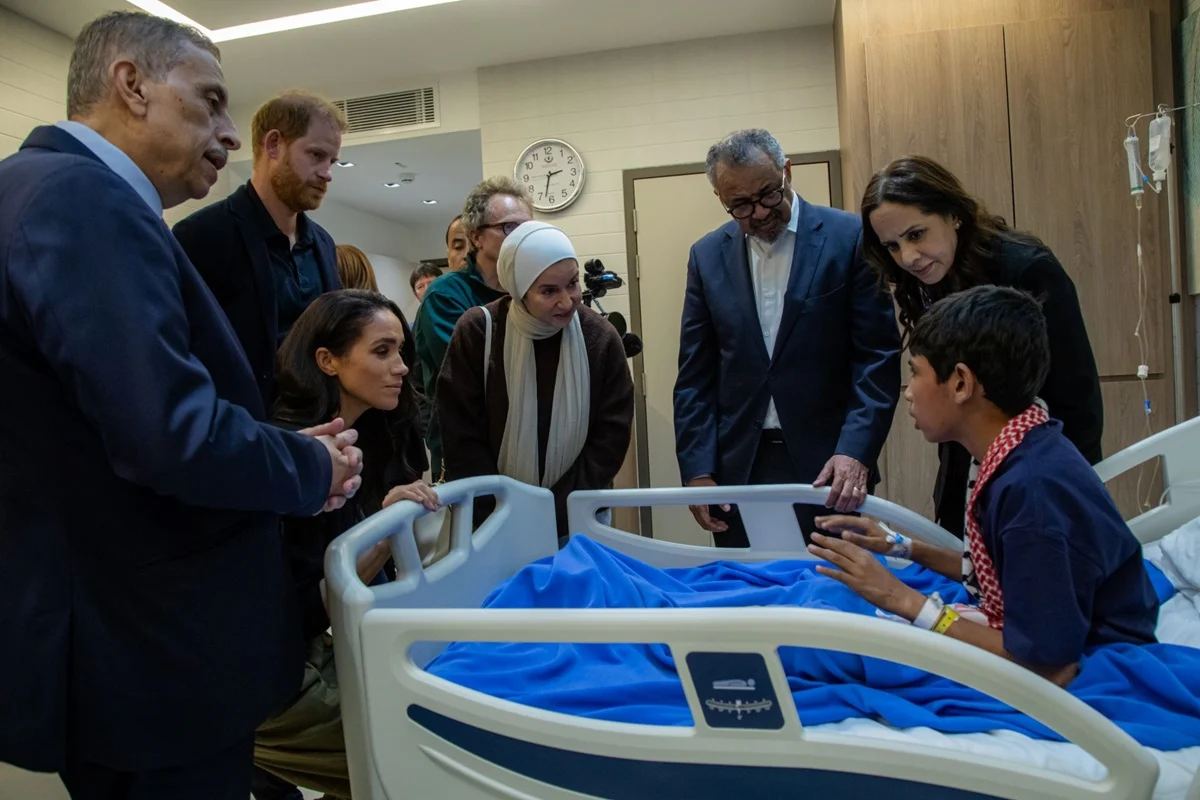
Moving beyond high-level diplomatic circles, Dr Tedros engaged directly with the humanitarian realities on the ground by visiting a specialized, WHO-supported medical facility dedicated to treating pediatric patients evacuated from the Gaza Strip. During the hospital tour, the Director-General interacted personally with young patients, their families, and the multidisciplinary teams of frontline health workers. These medical professionals operate under immense pressure to deliver life-saving interventions for severe traumatic injuries, advanced-stage oncology cases, and other critical medical conditions resulting from the collapse of healthcare infrastructure in the Palestinian territory.
This field visit cast a sharp light on the indispensable nature of the Jordanian medical evacuation corridor. Public health analysts note that without such transit routes, the mortality rates among transferred pediatric cohorts would be exponentially higher. However, the visit also served as an urgent appeal to the international community, highlighting that regional host nations cannot shoulder the staggering financial and infrastructural burdens of mass medical evacuations indefinitely. Sustainable, predictable international financing and technical support remain vital to ensure that vulnerable children and other high-risk patients retain unimpeded access to specialized tertiary care.
Mobilizing Resources and Strategic International Partnerships
In a concerted effort to bridge the widening resource gap in regional humanitarian operations, Dr Tedros convened a high-level strategic roundtable later in the day. The gathering brought together key health partners, donor government representatives, United Nations agencies, and major international philanthropic organizations. The core objective of the meeting was to align international donor priorities with the immediate and long-term financial requirements necessary to fortify Jordan’s health systems.
Discussions during the roundtable also targeted the sustained operational funding needed for broader humanitarian health actions, specifically addressing the urgent requirement to scale up mental health and psychosocial support services in displacement settings. As host to one of the highest per capita refugee populations globally, Jordan faces continuous strain on its public utilities, water sanitation, and healthcare networks. Participants at the high-level meeting examined innovative financing mechanisms, such as blended finance models and targeted philanthropic investments, designed to build long-term resilience for both host communities and displaced populations across the wider region.
Advancing Universal Health Coverage and Mental Health Integration
Earlier in the schedule, Dr Tedros held bilateral consultations with Jordan’s Minister of Health to review national healthcare milestones and chart future strategic trajectories. Jordan has increasingly established itself as a regional pacesetter in primary health care reform, utilizing a decentralized model designed to bring clinical services closer to vulnerable populations. Central to these reforms has been the systematic integration of mental health care into routine primary health service delivery—a policy alignment that ensures psychological support is no longer treated as an isolated specialty, but rather as an elemental component of comprehensive wellness.
This progressive integration aligns closely with the objectives of the WHO Director-General’s Special Initiative for Mental Health, which seeks to expand access to quality, affordable mental health care in countries experiencing acute humanitarian crises or protracted transitions. By embedding mental health practitioners within primary care clinics, Jordan has successfully mitigated some of the social stigma traditionally associated with psychological distress, offering a scalable blueprint for other nations navigating similar demographic and social pressures.
High-Profile Advocacy with Archewell Philanthropies
Adding a prominent advocacy dimension to the state visit, Dr Tedros was accompanied during several key engagements by Prince Harry, Duke of Sussex, and Meghan, Duchess of Sussex. Participating in their official capacities as founders of Archewell Philanthropies and long-standing global advocates for public health equity, the couple’s presence elevated international media visibility surrounding the mission. Archewell Philanthropies has a documented history of supporting core WHO initiatives, ranging from advocacy campaigns for equitable access to COVID-19 vaccines during the global pandemic to targeted financing for emergency medical evacuations and mental health programming.
During the joint engagements, Prince Harry participated actively as a vocal ally of WHO’s strategic mental health initiatives. He emphasized the critical necessity of scaling up investments in psychological resilience across diverse community settings and active emergency zones, drawing specific attention to the unaddressed mental health vulnerabilities experienced by men, adolescents, and children caught in the crossfire of modern conflicts.
Reflecting on the collaborative mission, Dr Tedros remarked, "I want to thank our partners, including Prince Harry, Duke of Sussex and Meghan, Duchess of Sussex, whose commitment to mental health and humanitarian action has helped bring visibility, resources and hope to some of the world’s most vulnerable communities. Their collaboration is helping to advance WHO’s mission to ensure health for all."
Echoing these sentiments, Prince Harry shared his perspective on the ground realities observed during the visit: "It is an honour to join the Director-General of the World Health Organization in Jordan, a country that is leading by example in compassion, resilience and innovation. Through our work with Archewell Philanthropies, my wife and I have seen first-hand the impact of WHO’s efforts to support mental health and deliver life-saving care in emergencies. We remain deeply committed to advancing awareness, reducing stigma and expanding access to mental health support for all those affected by conflict and crisis. Mental health is fundamental to recovery, dignity and long-term peace, and we are proud to stand with WHO and partners around the world to make it a global priority."
Itinerary for Day Two and Forward Outlook
As the high-profile state visit progresses into its second and final day, Dr Tedros’s itinerary maintains its intense focus on specialized care, social infrastructure, and community empowerment. The WHO Director-General is scheduled to visit the National Center for Rehabilitation of Addicts, a specialized facility supported technically by the WHO that delivers integrated medical, psychological, and social rehabilitation services. This visit will underscore the importance of addressing substance use disorders as a public health issue rather than a purely criminal justice matter.
Additionally, Dr Tedros will hold consultative meetings with prominent community leaders and women-led civil society organizations, including the Jordanian Hashemite Fund for Human Development (JOHUD). These sessions are designed to explore grassroots approaches to health promotion, maternal and child welfare, and community-level resilience. The final phase of the day will feature a strategic tour of the renowned King Hussein Cancer Center (KHCC), where discussions will focus on cutting-edge advancements in regional oncology care, specialized training programs for regional clinicians, and the expansion of cross-border oncological referral networks.
The state visit is slated to conclude with further bilateral and multilateral consultations with international partners managing humanitarian supply chains and emergency medical logistics. These closing engagements will decisively reinforce Jordan’s irreplaceable strategic status as the preeminent regional humanitarian hub for medical evacuation, emergency health preparedness, and enduring health system resilience in the Middle East.
Reporting by Paul Garwood, Communications Officer, World Health Organization, in coordination with the WHO Media Team.