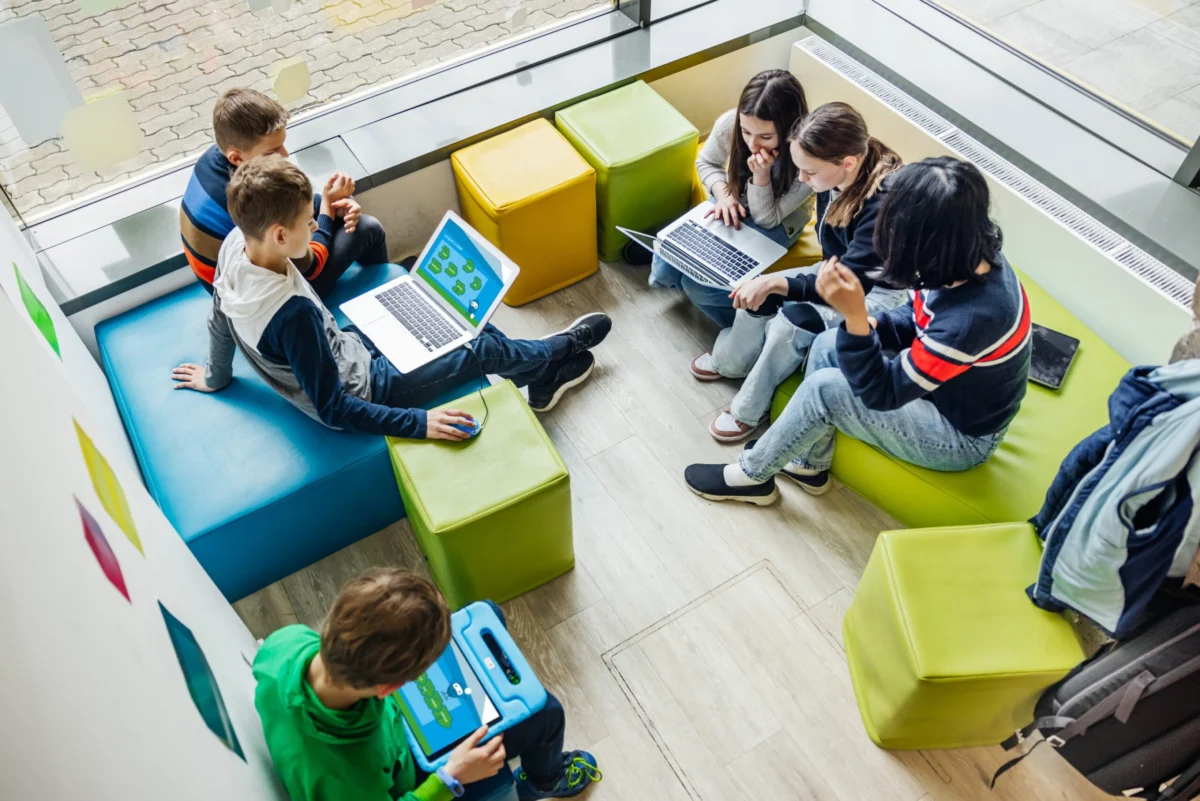
The modern educational landscape is currently undergoing a radical, technology-driven transformation, sparking a fierce debate over the long-term role of human educators versus artificial intelligence. While initial public discourse centered on the fear that AI tools would become a luxury reserved exclusively for the wealthy, emerging trends suggest a more complex and potentially troubling reality. We are approaching a future where AI-driven instruction may become the default for the masses, while the luxury of a human teacher becomes a privilege restricted to those with the financial means to afford it.
The Current Data Landscape
Statistical evidence from the Pew Research Center highlights a significant demographic split in the adoption of AI-based academic tools. Among teenagers from households earning less than $30,000 annually, approximately 20% report relying on chatbots for the entirety or the vast majority of their homework. In contrast, that dependency drops to 7% among students from families earning $75,000 or more. This disparity suggests that students in lower-income brackets are already gravitating toward AI as a primary educational crutch, potentially as a response to under-resourced learning environments or a lack of accessible supplemental support.
A Chronology of the AI Integration Shift
The push to integrate AI into the classroom has been rapid, following a distinct timeline of institutional adoption:
- Pre-2023: EdTech companies experimented with basic adaptive learning algorithms, primarily focused on test prep and remedial math exercises.
- 2023–2024: The public release of advanced Large Language Models (LLMs) catalyzed a surge in student usage, creating a "shadow education" system where students began bypassing traditional writing and critical thinking tasks.
- Early 2025: The U.S. Department of Education signaled a shift in priorities, formally including AI development as a criterion for federal grant allocations, legitimizing the integration of AI tutors as a "solution" for achievement gaps.
- 2026: Leading figures in the EdTech sector, including Sal Khan, acknowledged that while the infrastructure for universal AI tutoring exists, student engagement remains inconsistent, and the long-term pedagogical impacts remain largely unstudied.
The Pedagogical Risk: Cognitive Offloading
The central concern for educators is the phenomenon of cognitive offloading. A landmark experiment conducted by the Wharton School involving Turkish high school students underscored the dangers of AI dependency. While students using both standard chatbots and specialized tutoring bots showed improved results during guided practice sessions, they performed 17% worse than their peers—who had used no AI—when tested in an environment where the assistance was removed.
This indicates that while AI can provide the correct answer, it often fails to instill the procedural knowledge required for independent problem-solving. When a student uses AI to write an essay, they are offloading the struggle of synthesis and articulation, which are the very processes that build cognitive muscle. In essence, the tool provides the outcome, but bypasses the process of learning.
The Economic Drivers of the Human Teacher Shortage
The potential transition away from human-led classrooms is not merely a pedagogical choice; it is driven by urgent economic and structural pressures. According to UNESCO, the world faces a staggering deficit of 44 million teachers by 2030, with nearly 5 million of those vacancies located in Europe and North America. The United States currently struggles with 56,000 unfilled teaching positions, a crisis exacerbated by low pay and high burnout rates.
In the public school system, where salaries account for approximately 30% of total expenditures, budget committees are under increasing pressure to find cost-effective solutions. AI is increasingly viewed by policymakers as a scalable "force multiplier." If one teacher can oversee a class of 40 students while an AI agent provides personalized feedback to each, the temptation for districts to rely on these platforms to offset staff shortages is immense.
Official Responses and Policy Implications
The U.S. Department of Education’s recent inclusion of AI development in federal funding criteria has been met with both optimism and skepticism. Proponents argue that AI provides a 24/7 tutor for every child, potentially democratizing access to elite-level guidance. However, critics, including various education advocacy groups, have warned that this policy risks devaluing the "human element" of instruction.
During the public comment period for these federal guidelines, stakeholders raised significant concerns that increased screen time and reliance on algorithms would erode the teacher-student relationship—a relationship historically proven to be the most vital factor in student motivation and long-term success. Despite these concerns, the final federal guidelines did not significantly pivot away from the inclusion of AI, signaling a clear governmental intent to prioritize technological integration over traditional classroom staffing models.
The Indispensable Role of the Mentor
The argument for retaining human teachers rests on the distinction between "knowledge acquisition" and "learning motivation." True education requires a mentor who can identify a student’s emotional state, validate their struggles, and cultivate an internal desire to learn. The story of a student who overcomes systemic obstacles to succeed is rarely a story of a student finding the right textbook; it is almost always a story of a student encountering a teacher who believed in them.
An algorithm can provide information, but it cannot provide purpose. It cannot read the body language of a student who is discouraged, nor can it offer the empathetic push that keeps a student from dropping out during a personal crisis. If we reduce the teacher’s role to that of a "platform operator" who merely monitors dashboard metrics, we risk losing the essential human connection that makes education transformative.
Broader Implications: The New Educational Inequality
We are standing at a crossroads. The current trajectory suggests that the "rich" will continue to prioritize human-led, small-group, or one-on-one mentorship for their children, while public institutions may be forced by budget constraints to adopt AI-first models. If this occurs, the "achievement gap" will not be bridged by AI; it will be redefined.
Instead of an inequality of access to information, we will see an inequality of access to human guidance. Students in wealthy districts may have both AI for convenience and human teachers for mentorship, while students in underfunded districts may be left with AI as their sole interface for education. This creates a two-tiered system where the ability to engage in critical thinking, creative collaboration, and deep mentorship becomes a luxury commodity.
Conclusion: A Choice for the Future
The decision currently facing school boards and policymakers is whether AI will be utilized to liberate teachers from administrative drudgery—allowing them more time for one-on-one interaction—or whether it will be used as a cost-cutting measure to justify higher student-to-teacher ratios.
If the goal of education is to produce citizens capable of independent thought, critical reasoning, and moral development, the human element cannot be sacrificed. Technology should serve as a tool that amplifies the teacher’s reach, not a replacement that diminishes their presence. As we move forward, society must decide if it is willing to pay the cost of human-led education, or if we are prepared to accept a future where the next generation is educated by the very machines that may eventually supersede their need to think for themselves. The challenge is not technological; it is deeply, fundamentally human.