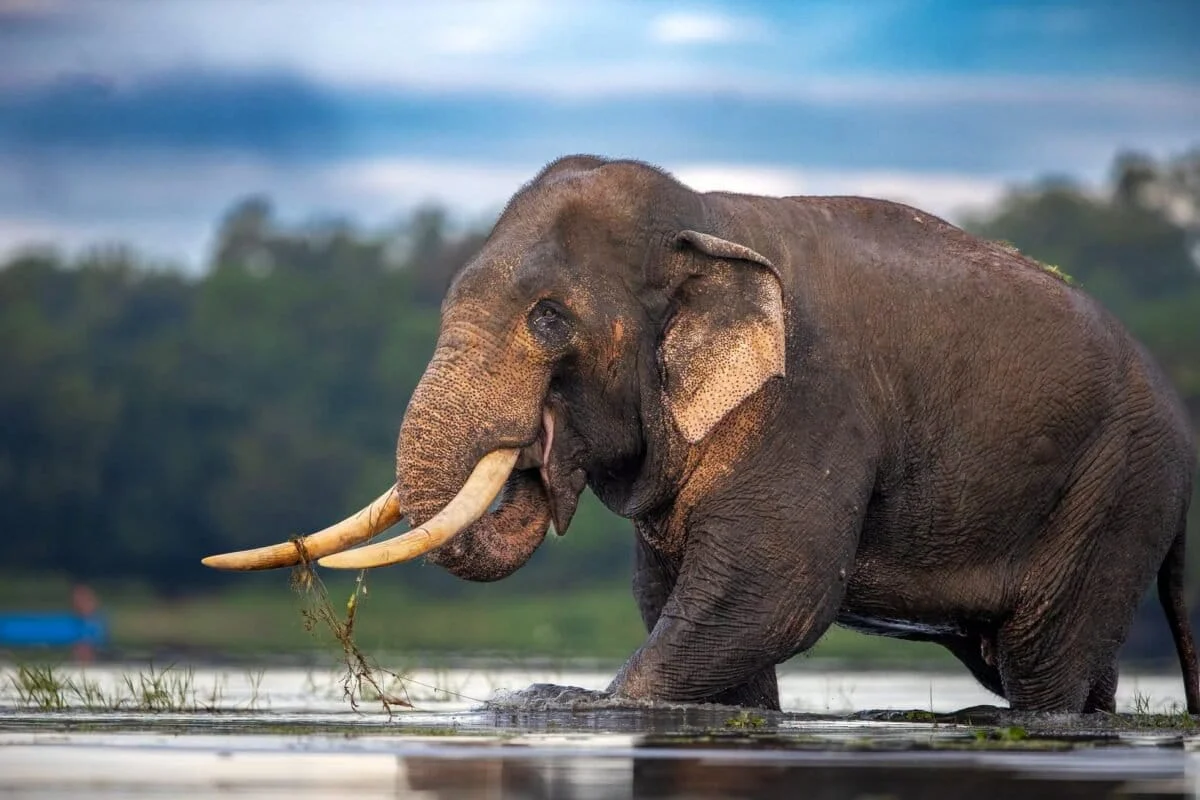
The death of Kavantissa, one of Sri Lanka’s most revered and iconic wild tuskers, has catalyzed a national reckoning regarding the country’s approach to wildlife conservation and the escalating human-elephant conflict. Following a fatal encounter with a trap gun—a primitive but lethal device often used by farmers to protect crops—the elephant’s agonizing decline and subsequent death on October 16, 2026, became a focal point for public grief, political debate, and intense scrutiny of the Department of Wildlife Conservation (DWC).
Kavantissa was not merely an animal; he was a cultural symbol of Sri Lanka’s natural heritage. Named after an ancient Sinhalese king, the majestic bull elephant was widely celebrated by photographers and locals alike for his gentle temperament and his tendency to traverse the landscape near Galgamuwa. His death has exposed deep-seated tensions between the preservation of megafauna and the economic realities faced by rural agricultural communities.

A Chronology of the Tragedy
The final weeks of Kavantissa’s life were marked by a desperate, highly visible, and ultimately unsuccessful struggle for survival. The following timeline outlines the progression of the incident:
- September 22: Kavantissa is first observed exhibiting a limp, indicating a physical injury.
- September 24: The DWC initiates medical intervention, administering antibiotics via dart.
- September 25: Veterinarians proceed with sedation to further examine and treat the wound.
- October 2: After a period of relative silence, the tusker is spotted again, showing signs of declining health.
- October 5: Observers report severe diarrhea, a critical symptom suggesting systemic distress or internal infection.
- October 6: Treatment resumes in an attempt to stabilize the animal.
- October 15: Kavantissa collapses, signaling his condition has become terminal.
- October 16: Despite the presence of senior veterinary surgeons and emergency attempts at resuscitation—including a desperate effort by a veterinarian to perform manual CPR—the elephant passes away at 6:18 p.m.
The Storm of Public and Political Reaction
The decline of Kavantissa drew an unprecedented level of attention, bridging the gap between wildlife experts and the political establishment. As the elephant’s condition deteriorated, high-profile figures, including opposition leader Sajith Premadasa and Environment Minister Dhammika Patabendi, visited the site. The presence of Buddhist monks chanting Pirith—traditional verses intended to bring peace and healing—highlighted the spiritual significance of elephants in Sri Lankan culture.
However, this outpouring of concern quickly shifted toward criticism. As videos circulated on social media showing wildlife officers attempting to dart the already weakened animal, public anger surged. Accusations of medical negligence and mismanagement by the DWC became rampant. Critics questioned the efficacy of the treatment protocols, with some suggesting that the repeated darting caused unnecessary trauma and that the administration of certain medications may have exacerbated the animal’s condition.

Veterinary Care and Official Accountability
The DWC has found itself in a defensive posture. Director General Ranjan Marasinghe has maintained that the agency’s response was comprehensive and followed established protocols for treating large wild animals. He emphasized that the veterinary team worked collaboratively, often consulting with outside experts to ensure the best possible care.
Former DWC director of wildlife health, Tharaka Prasad, has called for a more tempered, evidence-based approach. He notes that the medical complexities—including the elephant’s inability to feed and the subsequent gastrointestinal failure—are standard challenges in treating wild, injured elephants. "The clinical history of this animal requires a thorough, forensic examination of medical records, not just social media conjecture," Prasad stated.
A court-ordered post-mortem is currently pending. This examination is expected to provide the definitive cause of death and potentially resolve whether the initial injury was the sole factor or if complications in the post-injury care played a contributing role.

The Broader Crisis: Human-Elephant Conflict in Sri Lanka
While Kavantissa’s death has captured headlines, it is statistically one of hundreds of similar tragedies occurring annually. According to data provided by the DWC, the human-elephant conflict (HEC) continues to claim lives at an alarming rate:
- 2023: 488 wild elephants died, with 98 deaths attributed to gunshot injuries.
- 2024: 388 wild elephants died, with 84 deaths attributed to gunshots.
- 2025: 455 wild elephants died, with 79 deaths attributed to gunshots.
These numbers reveal that while there has been a slight downward trend in recorded shooting deaths, the use of illegal trap guns and firearms remains a persistent, systemic threat. Conservationists argue that the practice of providing firearms to farmers to deter crop-raiding elephants is a dangerous policy that prioritizes short-term agricultural protection over long-term ecological stability.
The Expert Perspective: Moving Beyond the Icon
Dr. Prithiviraj Fernando, a leading elephant scientist at the Center for Conservation and Research (CCRSL), warns against the "iconic tusker" trap. He argues that by focusing exclusively on famous, large-tusked elephants, the public and the government lose sight of the broader, silent crisis affecting the entire species.

"From an ecological standpoint, the death of an iconic elephant is no different from that of any other member of the species," Dr. Fernando explained. "The public emotional response is understandable, but we must use this energy to address the root causes—habitat fragmentation, the encroachment of human activity into elephant corridors, and the proliferation of lethal anti-crop-raiding devices."
Fernando further argues that the notion of "protecting" specific, famous elephants through 24/7 surveillance is a logistical impossibility. These animals roam over vast, dense territories. Instead, he advocates for landscape-level management strategies that reduce the frequency of human-elephant encounters, such as improved community-based fencing and land-use planning that separates human settlements from primary elephant movement paths.
The Debate Over Ivory and Heritage
A final point of contention has emerged regarding the treatment of Kavantissa’s remains. Following the post-mortem, the DWC opted to separate the head to preserve the tusks in a secure location, while the remainder of the body was cremated.

This decision has drawn fire from conservationists who believe that the preservation of ivory, even for official or state purposes, perpetuates the idea that elephant body parts have inherent value. Dr. Fernando suggests that a more symbolic and conservation-forward approach would have been to cremate the entire animal, including the tusks, thereby signaling that the animal’s life is more valuable than its ivory. By keeping the tusks, critics argue, the authorities are unwittingly reinforcing the market demand that drives the poaching of tuskers in the first place.
Implications for the Future
The death of Kavantissa has left the Department of Wildlife Conservation at a crossroads. To regain public trust, the agency will likely need to increase transparency regarding its clinical procedures and provide a robust, evidence-based report on the medical care provided to the tusker.
More importantly, the incident has highlighted the urgent need for a national policy shift. If the goal is to prevent the next Kavantissa-style tragedy, the focus must move from reactive measures—such as treating injured animals in the field—to proactive, systemic solutions that address the human-elephant conflict at its source. As Sri Lanka looks toward the future of its wildlife, the legacy of Kavantissa may be determined by whether this national outcry results in lasting policy change or merely fades with the next news cycle.