As clear September evenings arrive and the sun sets earlier, signaling the definitive end of the warmest months of the year, stargazers stepping outside often expect the overhead cosmos to undergo a dramatic seasonal shift. Yet, dominating the darkness right above our heads, the prominent celestial formation known as the Summer Triangle—consisting of the bright stars Vega, Altair, and Deneb—remains firmly in place. This familiar asterism persists long after summer fades, remaining nearly overhead at dusk well into mid-November. This enduring visibility invites a compelling astronomical inquiry: if this radiant constellation-spanning landmark remains a fixture of autumn nights, why does it retain its distinctly warm-weather moniker rather than being rebranded as an autumn phenomenon?
The Persistence of a Season in the Stars
To understand why the Summer Triangle belongs to the warmer months of the year, one must look beyond the standard calendar and examine the mechanics of Earth’s rotation and orbital path. The defining characteristic that ties the asterism to summer is not its presence in the sky, but rather its duration of visibility throughout the dark hours.
During the peak of summer, Vega, Altair, and Deneb accompany observers from dusk until dawn. As night falls, the formation is already visible in the east-northeast sky. By the middle of the night, it climbs nearly to the zenith, directly overhead. As daybreak approaches, it descends toward the west-northwest horizon.
By contrast, as the seasons shift into autumn and winter, the Triangle’s behavior changes. While it remains visible early in the evening during September and October, it does not linger all night. By the time dawn breaks in the later months of the year, the asterism has long since dipped below the western horizon, surrendering the predawn hours to the rising constellations of winter. Thus, its identity as a summer marker is rooted in its all-night dominance during the warmest quarter of the Earth’s orbit.
Illusion of Distance: Luminosity and Scale in the Triangle
A casual glance at the Summer Triangle might suggest a group of stellar peers sharing similar physical characteristics, but modern astrophysics reveals a vast disparity in distance, size, and true luminosity among the trio. The apparent brightness of Vega, Altair, and Deneb as seen from Earth is heavily skewed by their proximity to our solar system rather than their actual energy output.
Altair sits as the closest of the three, located approximately 16.7 light-years away from Earth. Vega follows closely behind at a distance of roughly 25 light-years. Both stars are relatively nearby neighbors in cosmic terms, which explains why their moderate energy outputs translate into brilliant points of light in our night sky.
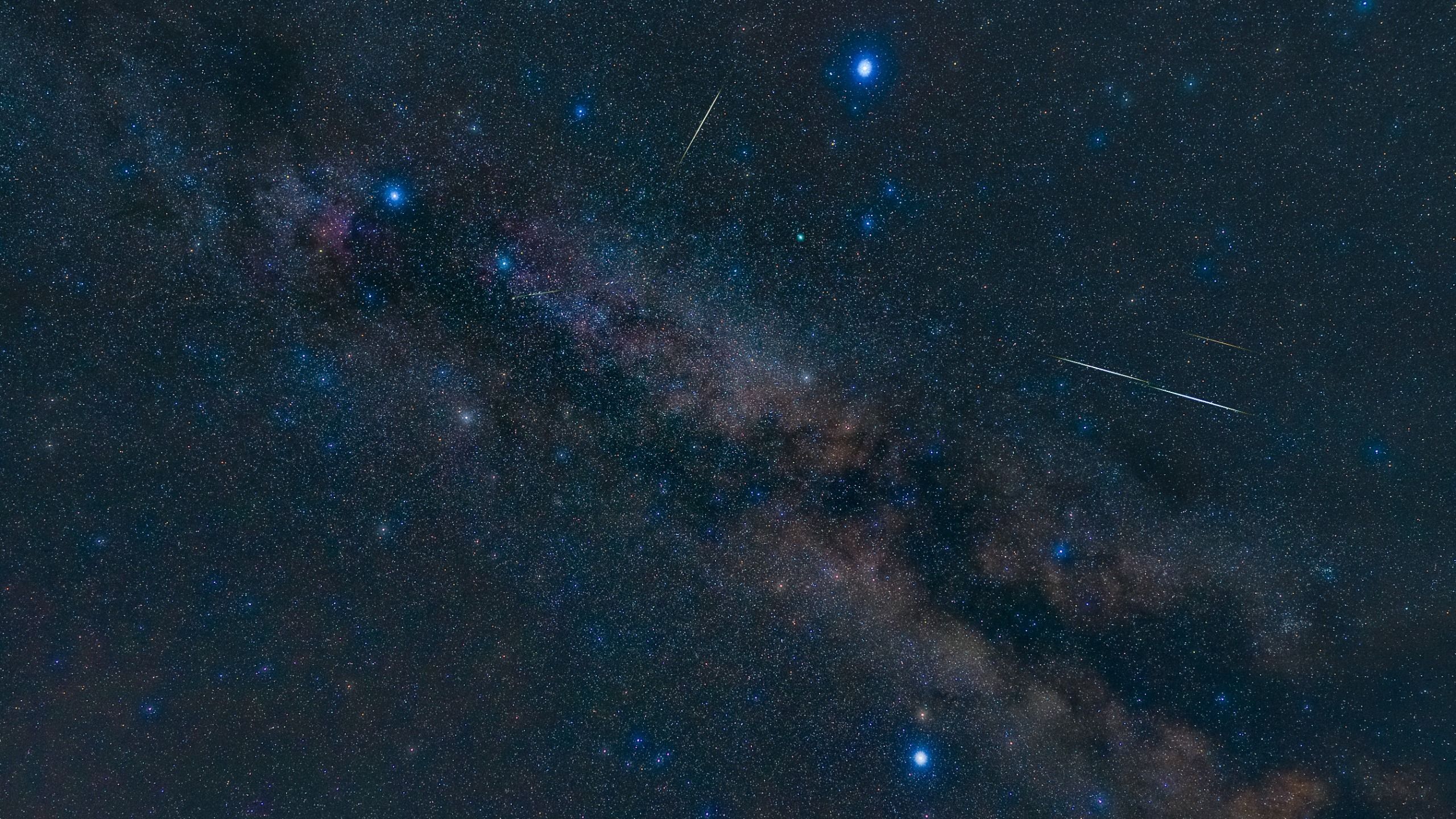
Deneb, on the other hand, shatters this modest scale. Situated at an immense distance—conservatively estimated at 1,600 light-years, with some models placing it anywhere from 1,400 to 2,600 light-years away—Deneb is an extraordinary cosmic engine. The light captured by human eyes today began its journey across the galaxy during the twilight years of the Roman Empire. Deneb maintains a first-magnitude brightness (+1.3) despite its extreme distance because it is a luminous blue supergiant. Astrometric data indicates that Deneb is at least 55,000 times brighter than our sun. If Vega and Altair are viewed as modest flashlights in the cosmic expanse, Deneb acts as a hyper-luminous stellar lighthouse.
The Linguistic Legacy and Pronunciation of Vega
Before delving into the historical nomenclature of the Summer Triangle, astronomers and educators often pause to address a common linguistic debate sparked by popular culture: the correct pronunciation of Vega.
The issue gained widespread public awareness following the release of the 1997 science fiction drama Contact, adapted from the 1985 novel by renowned astronomer and science communicator Carl Sagan. In the film, actress Jodie Foster portrays astronomer Dr. Ellie Arroway, who detects an intelligent radio signal originating from the direction of Vega containing a sequence of prime numbers.
Throughout the cinematic adaptation, the star’s name is pronounced "Vey-gah," a phonetic choice that may have inadvertently echoed the naming conventions of the Chevrolet Vega subcompact automobile popular in the 1970s. However, professional astronomers and linguistic historians adhere to a different standard. The traditional astronomical pronunciation stresses the first syllable, sounding closer to "Vee-gah."
The late George Lovi, a respected authority on star nomenclature and celestial mapping who lived from 1939 to 1993, frequently reminded audiences and planetarium visitors of the distinction with a memorable maxim: "Vee-ga is a star and Vey-gah is a car." While colloquial usage often favors the automotive cadence, professional astronomical circles maintain the traditional pronunciation.
Chronology of a Modern Asterism
Unlike ancient constellations codified by Greco-Roman or Babylonian astronomers, the Summer Triangle is an asterism—an informal, highly recognizable pattern of stars spanning multiple constellations (in this case, Lyra, Aquila, and Cygnus). Because it is not an official IAU constellation, its naming history is surprisingly modern, subject to decades of academic and popular debate.
Historians and astronomy popularizers have long disputed who first coined the term "Summer Triangle." A prominent school of thought credits the legendary British astronomer Sir Patrick Moore, who served as a tireless public advocate for the science through his BBC broadcasts and extensive writing. Moore once noted that during a 1958 television broadcast on the BBC, he introduced the nickname of the Summer Triangle, observing that the term quickly caught on globally despite its unofficial status.
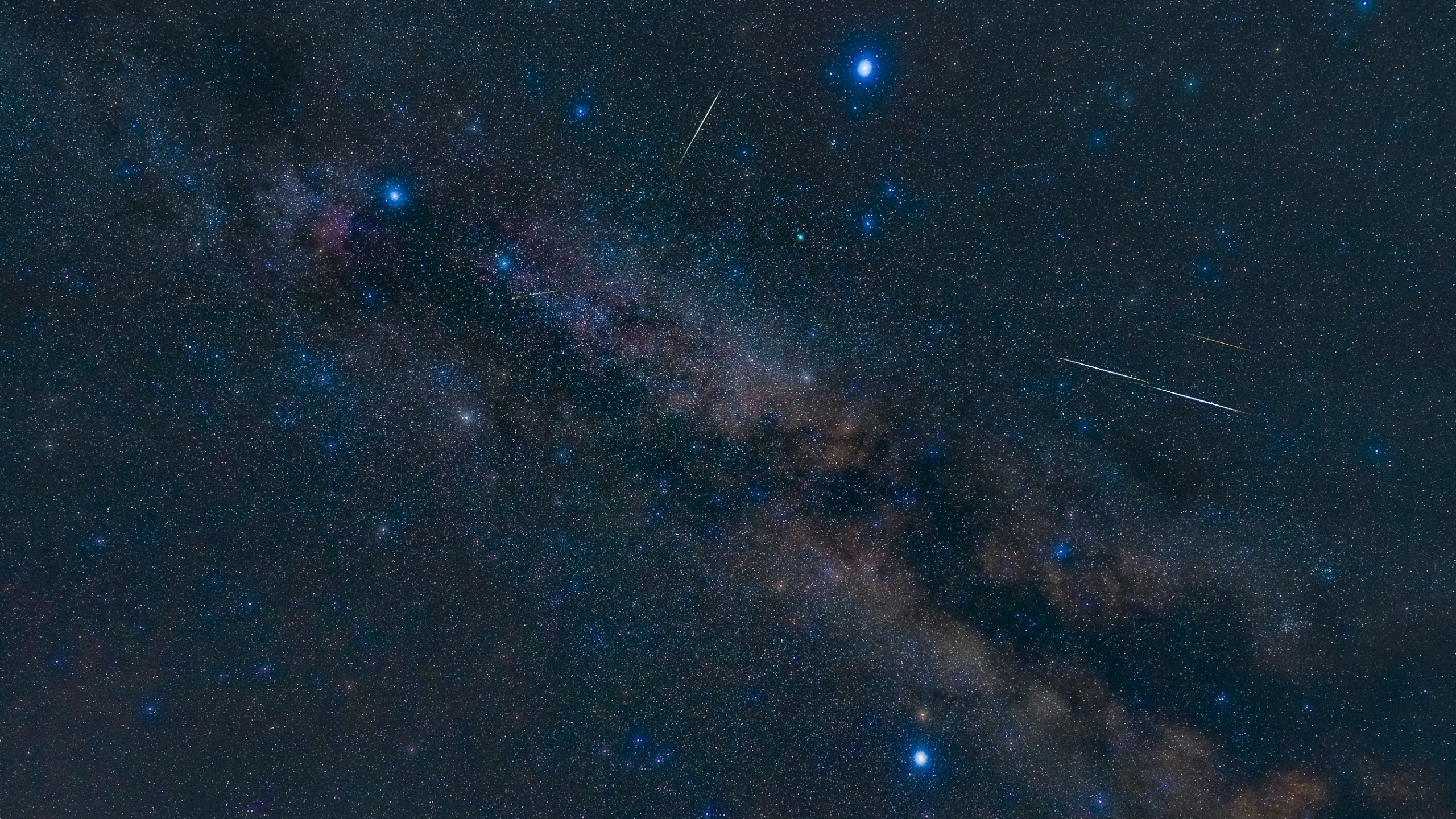
However, historical records complicate Moore’s claim. Several years earlier, in his influential 1952 sky guide titled The Stars: A New Way to See Them, author and illustrator H.A. Rey referred to the three brilliant stars as a "right triangle." By 1954, in his classic children’s astronomy book Find the Constellations, Rey explicitly utilized the moniker "Summer Triangle," predating Moore’s broadcast by at least four years.
Further archival investigation points to military and continental roots. Some aviation and navigation historians suggest the term gained widespread currency through United States military navigator training manuals utilized during World War II, where easily identifiable overhead formations were critical for celestial navigation.
Even earlier evidence places the concept in Central Europe. Austrian astronomer Oswald Thomas, who lived from 1882 to 1963, described Vega, Altair, and Deneb as the "Grosses Dreieck" ("Great Triangle") in the late 1920s. By 1934, Thomas refined the description in German publications, referring to the formation as the "Sommerliches Dreieck," or "Summerly Triangle." This progression demonstrates that while the concept of grouping these three luminaries is intuitive to anyone observing the night sky, the English translation and global popularization evolved through a gradual convergence of educators, illustrators, and military strategists over the mid-twentieth century.
Implications for Modern Stargazing and Education
The enduring appeal of the Summer Triangle highlights a broader reality in public science education: informal asterisms often outlast formal constellation boundaries in the public consciousness. While constellations like Lyra (the Harp), Aquila (the Eagle), and Cygnus (the Swan) carry rich mythological histories spanning millennia, modern urban and suburban stargazers frequently rely on simple geometric patterns like the Summer Triangle, the Big Dipper, or the Winter Triangle to navigate the vast expanse of the night sky.
As light pollution increasingly obscures fainter celestial details for urban populations, bright marker stars like Vega, Altair, and Deneb serve as vital gateway points for amateur astronomy. They provide immediate, accessible entry points for individuals learning to orient themselves beneath the cosmos, bridging the gap between historical mythology and contemporary astrophysical science.
Whether viewed through the lens of seasonal transitions, stellar evolution, or twentieth-century media history, the Summer Triangle remains a testament to the dynamic nature of our night sky. Even as autumn deepens and the calendar marches toward winter, these three stellar beacons continue to anchor the overhead dark, reminding observers of the vast distances and deep histories written in light across the Milky Way.