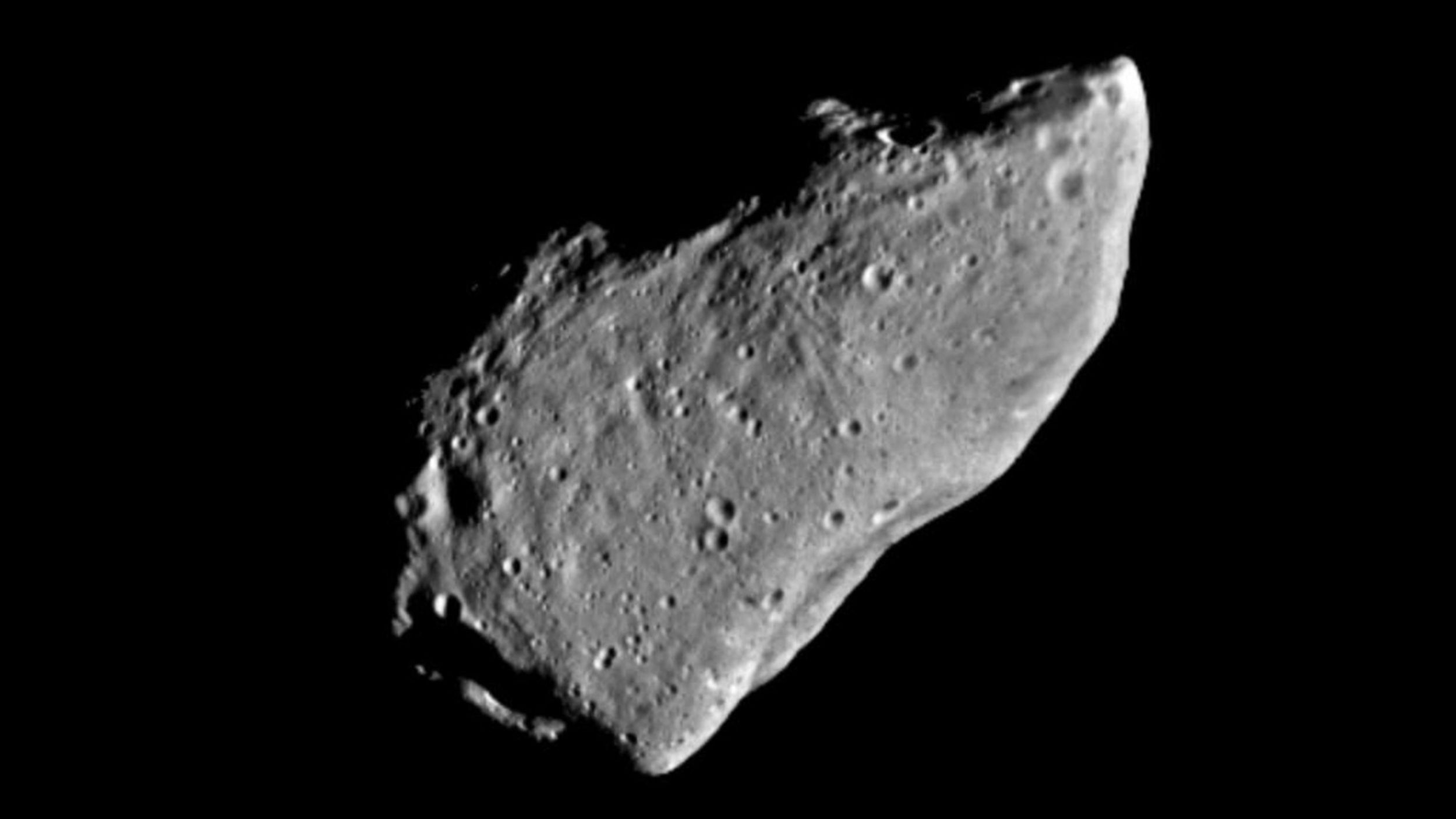
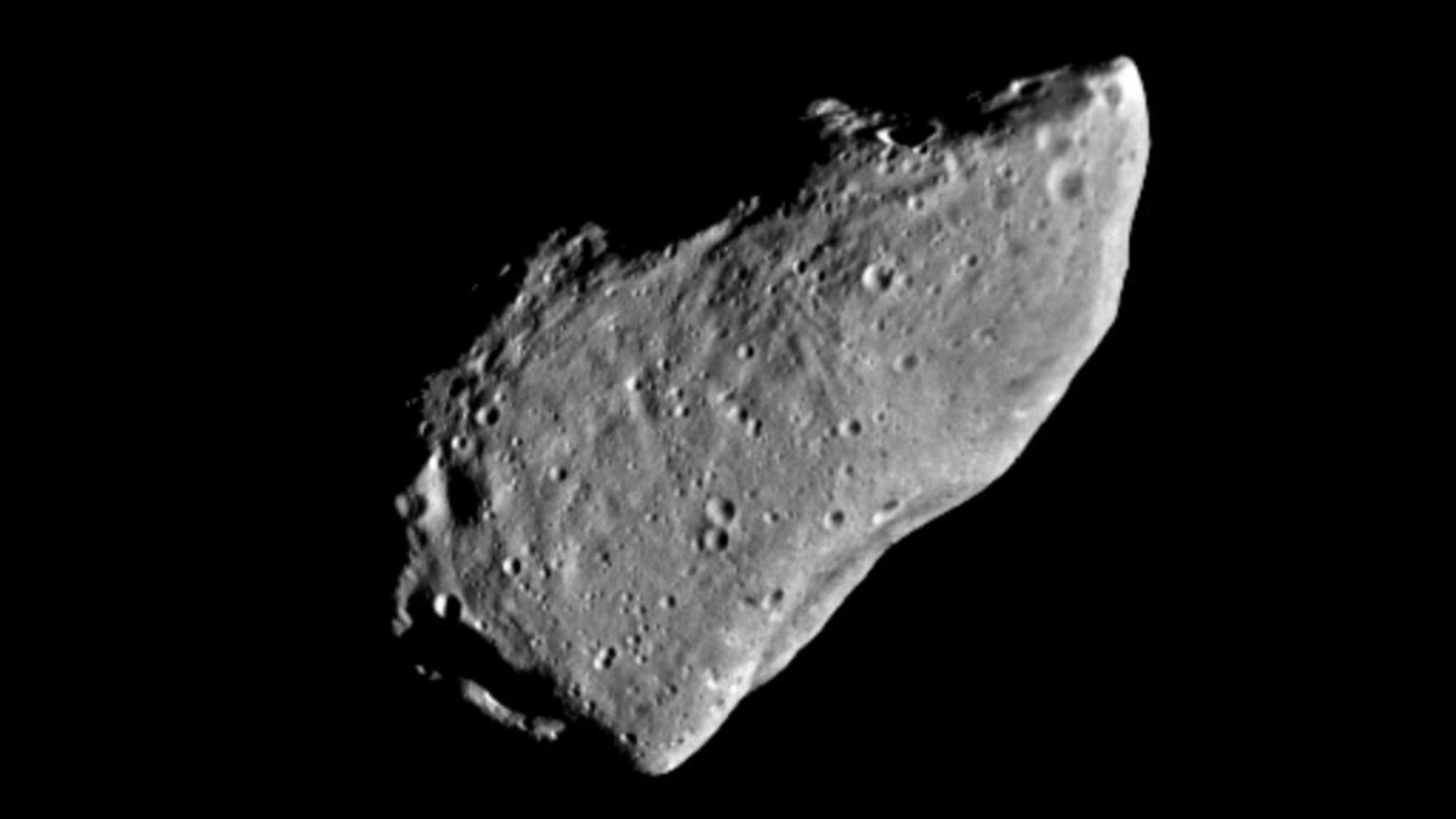
On October 29, 1991, the National Aeronautics and Space Administration (NASA) achieved a monumental milestone in planetary exploration when the Galileo spacecraft executed a high-speed flyby of the asteroid 951 Gaspra. This historic encounter marked the very first time in human history that a spacecraft had traveled to and closely observed an asteroid, transforming these mysterious celestial bodies from mere points of light in telescopes into tangible, geological worlds.
The encounter served as a crucial scientific pitstop near the midpoint of Galileo’s ambitious six-year odyssey to Jupiter, the largest planet in our solar system. Cruising through the inner edges of the main asteroid belt at a relative velocity of approximately 5 miles per second (8 kilometers per second, or roughly 18,000 miles per hour), Galileo passed within 990 miles (1,593 kilometers) of Gaspra. Although the spacecraft was too distant for Gaspra’s weak gravitational pull to measurably alter the probe’s trajectory—preventing scientists from directly calculating the asteroid’s mass during the flyby—the encounter yielded a treasure trove of high-resolution images and spectral data that fundamentally reshaped our understanding of the solar system’s minor bodies.
The Journey to the Asteroid Belt
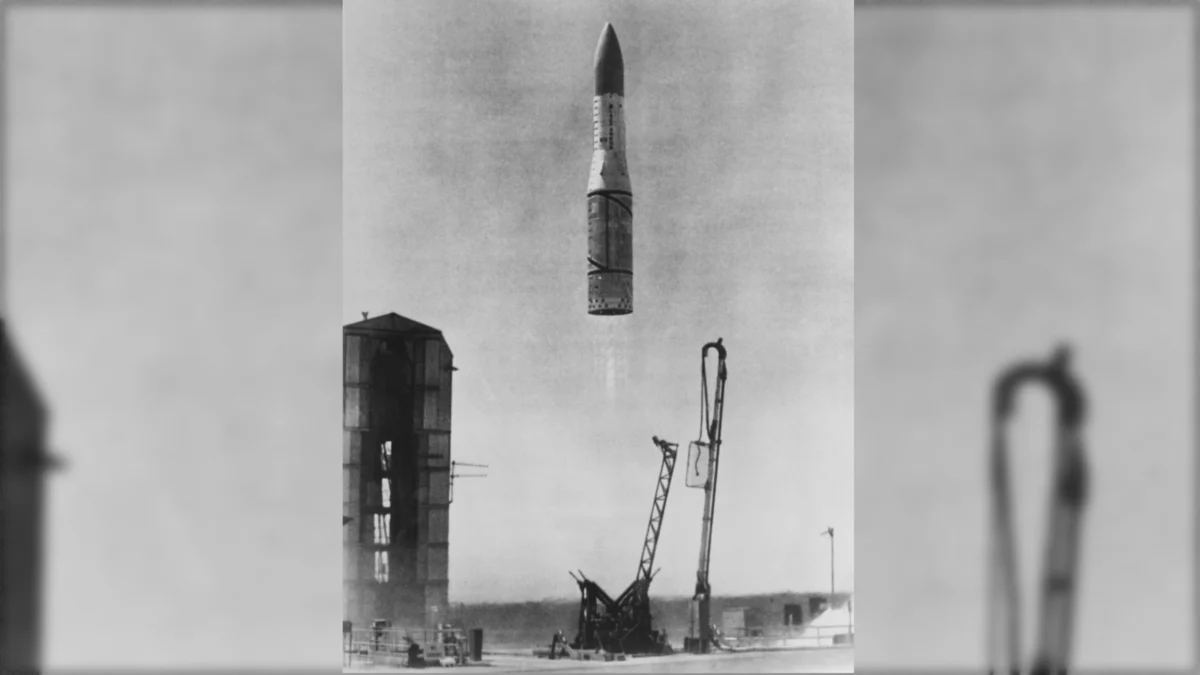
The monumental flyby of Gaspra was the culmination of years of meticulous mission design and interplanetary navigation. NASA officially launched the Galileo spacecraft on October 15, 1989, aboard the Space Shuttle Atlantis during the STS-34 mission. Named after the famed 17th-century Italian astronomer and physicist Galileo Galilei, the spacecraft was designed to conduct the first-ever orbital tour of the Jovian system.
However, launching a heavy spacecraft directly to Jupiter required an immense amount of energy—far more than the rockets of the era could provide in a direct trajectory. To overcome this engineering hurdle, mission planners designed an innovative, albeit complex, multi-gravity assist trajectory known as the "Venus-Earth-Earth Gravity Assist" (VEEGA) path.
Under this flight plan, Galileo utilized the gravitational fields of inner planets to gain the momentum required to reach the outer solar system. The spacecraft swung past Venus in February 1990, followed by its first Earth flyby in December 1990. These planetary gravitational slingshots successfully accelerated the probe, setting it on a course that would carry it directly through the main asteroid belt—a vast, doughnut-shaped region situated roughly between the orbits of Mars and Jupiter.
Having traveled through the asteroid belt for approximately two months, Galileo approached Gaspra in the autumn of 1991, providing scientists with their first close-up glimpse of a space rock drifting in the interplanetary void.
Unveiling Gaspra: Morphology and Composition
As Galileo zipped past Gaspra, its onboard camera systems and scientific instruments went to work. The spacecraft captured a series of detailed photographs and utilized an instrument called the Near-Infrared Mapping Spectrometer (NIMS) to study the asteroid’s chemical composition, mineralogy, and physical properties.
The data revealed that Gaspra is an irregular, highly elongated body measuring approximately 12 miles long, 7 miles wide, and 6.8 miles thick (roughly 20 by 12 by 11 kilometers). Its surface is heavily battered and saturated with impact craters, pointing to a violent and dynamic geological history. Scientists observed a thin, superficial layer of regolith—a blanket of fine dust and rubble—covering the rugged bedrock beneath.
Imaging team members immediately recognized the profound implications of Gaspra’s battered appearance. Speaking at a press briefing following the public unveiling of the initial images, Joseph Veverka, a prominent member of the Galileo imaging team, noted the violent history etched into the asteroid’s surface.
"The picture we get of Gaspra is one of something that has suffered a lot during its history," Veverka remarked, according to historical accounts from the UPI press service. "We suspect that this is the survivor of a series of catastrophic collisions in the past."
Spectral analysis from the NIMS instrument further indicated that Gaspra is an S-type asteroid, meaning it is composed primarily of silicate materials and nickel-iron metals. This categorization provided planetary scientists with vital clues regarding the formation processes of rocky bodies in the early solar system, bridging the gap between meteorites found on Earth and the parent bodies residing in the asteroid belt.
The Broader Galileo Mission Chronology
While the Gaspra encounter was a watershed moment for planetary science, it represented only one chapter in Galileo’s protracted and eventful journey. Following the 1991 asteroid flyby, the spacecraft continued its intricate dance through the inner solar system.
In December 1992, Galileo executed its second and final Earth gravity assist, picking up the last bit of momentum needed to propel it across the asteroid belt toward the outer planets. Along the way, the spacecraft managed a second historic asteroid encounter on August 28, 1993, when it flew by the larger asteroid 243 Ida. During this second flyby, Galileo made an astonishing discovery: it found that Ida possessed its own tiny natural satellite, a moonlet subsequently named Dactyl. This marked the first confirmed discovery of an asteroid moon in history.
In July 1994, while still cruising toward its ultimate destination, Galileo found itself in an extraordinarily fortuitous position. The spacecraft had a direct, unobstructed line of sight to witness the historic disintegration and subsequent impact of Comet Shoemaker-Levy 9 as its fragments violently collided with Jupiter’s southern hemisphere. Galileo was the only human-made observatory capable of directly viewing the impact flashes on the planet’s night side, capturing invaluable scientific data that ground-based telescopes missed.
Finally, on December 7, 1995, Galileo arrived at Jupiter. It executed a flawless orbital insertion burn, becoming the first spacecraft to orbit the gas giant. Over the next eight years, Galileo revolutionized our understanding of the Jovian system, dropping an atmospheric probe into Jupiter’s clouds and conducting dozens of close flybys of its major Galilean moons—Io, Europa, Ganymede, and Callisto—revealing evidence of subsurface liquid water oceans on Europa and Ganymede.
Legacy and the Evolution of Asteroid Exploration
The success of the Gaspra flyby fundamentally altered the trajectory of planetary science. Before 1991, asteroids were poorly understood objects known only through telescopic observations, radar echoes, and the occasional meteorite that survived atmospheric entry. Galileo proved that spacecraft could safely navigate the asteroid belt and capture high-resolution imagery of these elusive bodies, opening the floodgates for a new era of dedicated asteroid exploration missions.

In the decades following Galileo’s pioneering flyby, space agencies around the globe transitioned from mere observation to active engagement with asteroids. In February 2000, NASA’s Near Earth Asteroid Rendezvous (NEAR Shoemaker) spacecraft achieved orbit around the near-Earth asteroid 433 Eros, eventually executing a historic touchdown on its surface in February 2001.
The ambitions of asteroid science escalated further in the 21st century with the advent of sample-return missions. Japan’s Aerospace Exploration Agency (JAXA) successfully launched the Hayabusa mission in 2003, which traveled to asteroid Itokawa, gathered surface grains, and returned them to Earth in 2010. JAXA followed this success with the Hayabusa2 mission, which visited asteroid Ryugu and returned pristine subsurface samples in December 2020. Similarly, NASA launched the Origins, Spectral Interpretation, Resource Identification, Security-Regolith Explorer (OSIRIS-REx) mission in 2016. OSIRIS-REx rendezvoused with asteroid Bennu, successfully scooped up a sample of regolith, and delivered it to Earth in September 2023, before embarking on an extended mission to study asteroid Apophis.
Beyond scientific curiosity, modern asteroid exploration has also embraced planetary defense. In September 2022, NASA successfully executed the Double Asteroid Redirection Test (DART) mission, intentionally crashing a spacecraft into the small asteroid moonlet Dimorphos to test whether kinetic impactors could successfully alter the trajectory of a potentially hazardous near-Earth object.
Implications and Future Outlook
The implications of Galileo’s October 1991 flyby of Gaspra resonate deeply within modern astrophysics and planetary defense initiatives. By proving that spacecraft could successfully navigate through the asteroid belt and capture detailed morphological data of irregular bodies, Galileo laid the technical and operational groundwork for every subsequent asteroid mission.
As the international space community continues to map, characterize, and potentially mitigate the risks posed by near-Earth objects, the legacy of that chilly autumn day in 1991 remains foundational. Gaspra may have been a small, battered rock in a vast sea of debris, but humanity’s first close encounter with it transformed our cosmic perspective, permanently binding our technological reach to the geologic history of the solar system.