Alphabet, the parent company of Google, has decisively addressed long-standing investor anxieties regarding its substantial Artificial Intelligence (AI) expenditures, reporting a quarter of extraordinary growth driven primarily by its booming Google Cloud business. For months, market watchers and shareholders alike had voiced public concerns that the tech giant’s multi-billion dollar commitment to AI development and infrastructure might not yield proportionate returns, fearing a potential "AI bubble" or inefficient capital allocation. However, the company’s latest earnings report offers a compelling narrative of validation, showcasing how strategic AI investments are now translating into tangible financial success.
The standout performance came from Google Cloud, which experienced an astonishing 82% year-over-year revenue spike, reaching $24.8 billion. This figure not only significantly surpassed the previous quarter’s robust 63% growth to $20 billion but also comfortably beat Wall Street analysts’ consensus expectation of $22.46 billion for the quarter. The robust acceleration in Google Cloud’s performance underscores a critical shift, indicating that enterprise AI adoption is no longer a nascent trend but a powerful catalyst for growth within the cloud computing sector. This surge in cloud revenue is a direct testament to Alphabet’s aggressive push into providing advanced AI solutions and infrastructure to businesses globally.
The Strategic Ascent of Google Cloud and Enterprise AI Adoption
Google Cloud Platform (GCP), while a significant player, has historically trailed market leaders Amazon Web Services (AWS) and Microsoft Azure in terms of overall market share. However, its strategic focus on AI and machine learning capabilities has long been touted as a key differentiator. The recent earnings report suggests this strategy is now paying dividends, attracting a growing roster of enterprise clients eager to leverage AI for innovation, efficiency, and competitive advantage. The company explicitly attributed these substantial cloud gains to widespread enterprise AI solutions and infrastructure adoption. Businesses are increasingly integrating AI into their operations, from optimizing supply chains and enhancing customer service with intelligent chatbots to developing sophisticated data analytics and predictive models, all powered by cloud-based AI services.
This surge in demand for AI-driven cloud services has also led to a significant increase in Google Cloud’s backlog of contracting work, which represents future revenue from signed agreements. This backlog climbed to an impressive $514 billion, indicating a sustained pipeline of demand and a strong outlook for continued growth. Such a substantial backlog provides a clear signal of long-term commitment from enterprise clients and reinforces the strategic importance of Google Cloud within Alphabet’s diverse portfolio. It suggests that companies are not just experimenting with AI but are making long-term commitments to integrate it deeply into their core operations, relying on Google’s infrastructure and expertise.
Record-Breaking Profitability and Overall Revenue Growth
Beyond the cloud division, Alphabet’s overall financial health demonstrated remarkable vigor. The company reported a staggering profit of $112.1 billion for the quarter, a massive leap from the $28.1 billion reported in the same period last year. This quadruple increase in profitability highlights not only revenue expansion but also improved operational efficiency and the leverage inherent in its AI investments. Total revenue for Alphabet grew 24% year-over-year to reach $119.8 billion. Furthermore, Google Services, which encompasses Search, YouTube, Android, and other core businesses, saw its revenue jump 15% to $94.5 billion, indicating healthy performance across its established revenue streams.
This consistent growth is not entirely unprecedented for Google, which has maintained a remarkable streak of double-digit revenue growth for 12 consecutive quarters. However, the scale and acceleration witnessed in this particular quarter position it as a particularly bountiful period, suggesting a new phase of growth potentially driven by the maturation of its AI strategy. The synergy between AI advancements and its traditional services is becoming increasingly apparent, with AI enhancing search relevance, powering YouTube recommendations, and enabling new features across its Android ecosystem.
Sundar Pichai’s Vision: AI Redefining Possibilities
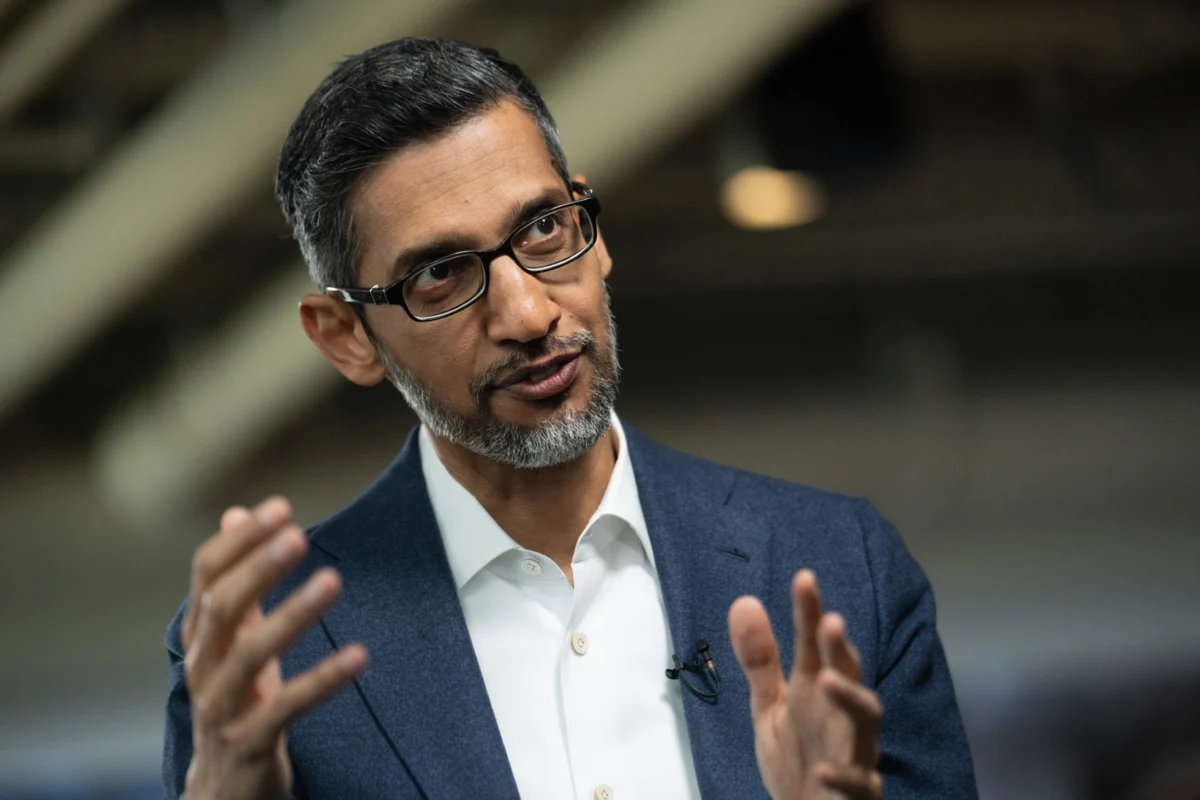
Google CEO Sundar Pichai articulated the company’s perspective during the Wednesday earnings call, emphasizing the transformative power of AI across its entire ecosystem. "Our AI investments are redefining what’s possible across every part of our business," Pichai stated, adding, "We have exciting momentum across the board." His remarks underscore the company’s belief that AI is not merely an add-on but a fundamental shift in how Google operates and innovates. This strategic pivot, initially termed "AI-first" years ago, now appears to be deeply ingrained, permeating product development, service offerings, and infrastructure decisions.
A prime example of this pervasive AI integration is the burgeoning adoption of Gemini, Google’s advanced AI chatbot. The company reported that Gemini now boasts 950 million monthly active users, a significant increase from the 750 million users reported in Q4 of 2025. This rapid user growth demonstrates strong consumer interest and engagement with Google’s generative AI capabilities, extending its reach beyond enterprise solutions to a massive global audience. Gemini’s continuous evolution, including multimodal capabilities and integration across Google’s suite of products, positions it as a key component of the company’s long-term AI strategy, competing directly with offerings from OpenAI, Microsoft, and Meta.
Navigating Massive Capital Expenditures and Future Returns
Despite the impressive financial results, Alphabet’s commitment to massive capital expenditures remains a focal point for analysts and investors. The company’s capital expenditures – the funds allocated for building data centers, acquiring advanced AI chips, and expanding its global infrastructure – are estimated to be between $180 billion and $190 billion for the current year. This staggering figure reflects the intense arms race in AI development, where computational power and data processing capabilities are paramount.
During the earnings call, analysts pressed Pichai for clarity on the timeline and magnitude of returns from these colossal investments. Pichai responded with confidence, pointing to "strong demand indicators, including long-term deals." He specifically mentioned that the company anticipates significant returns from its compute capacity investments by 2027. "I think, if anything, the dynamics look healthier than where we were about a year ago, so that’s what gives us the confidence to undertake those investments," he asserted. This perspective suggests that while the upfront costs are substantial, the company sees a clear path to profitability and believes the long-term strategic advantages outweigh the immediate financial outlay. These investments are critical not only for scaling Google Cloud but also for powering the AI models that underpin its search engine, advertising platforms, and emerging technologies.
Background Context: The Genesis of Investor Concerns and the AI Race
The skepticism surrounding Alphabet’s AI spending did not emerge in a vacuum. The broader technology sector has witnessed an unprecedented surge in AI investment, leading to concerns about an "AI bubble" reminiscent of the dot-com era. Companies across the spectrum, from established giants to nimble startups, are pouring billions into developing foundational models, specialized AI applications, and the necessary computational infrastructure. For Alphabet, a company that has historically balanced innovation with fiscal prudence, the scale of its AI capital expenditures raised questions about immediate profitability and the efficiency of its resource allocation.
Google has been a pioneer in AI research for decades, developing foundational technologies like the Transformer architecture, which underpins much of today’s generative AI. However, its public deployment of generative AI tools, particularly its Bard chatbot (later rebranded as Gemini), initially faced a mixed reception compared to rivals like OpenAI’s ChatGPT. This perception, coupled with the sheer magnitude of its spending, fueled investor apprehension. The current earnings report, therefore, serves as a crucial inflection point, demonstrating that Google’s deep-seated expertise and significant financial commitment are now translating into market-leading products and services, particularly within the enterprise segment.
The competitive landscape in cloud computing and AI is also incredibly intense. Google Cloud competes fiercely with AWS and Azure, all vying for enterprise clients seeking to modernize their operations with cloud-native and AI-powered solutions. Each provider is investing heavily in AI chips, specialized hardware, and a vast array of AI services, from machine learning platforms to pre-trained models and developer tools. Google’s success in this highly competitive environment, particularly its ability to differentiate through advanced AI offerings, is a testament to its technological prowess and strategic execution.
Broader Impact and Implications for the Tech Industry
Alphabet’s latest earnings report carries significant implications beyond its own balance sheet. It offers a powerful validation for the strategic imperative of aggressive AI investment across the tech industry. For companies grappling with the cost of developing and deploying advanced AI, Google’s success provides a compelling case study that substantial capital expenditures, when directed strategically, can yield exponential returns. It reinforces the idea that AI is not just a cost center but a revenue driver, capable of transforming core business segments and opening new markets.
Furthermore, the strong performance of Google Cloud, driven by enterprise AI adoption, signals a broader trend in the business world. Companies of all sizes are recognizing the transformative potential of AI to enhance productivity, foster innovation, and create competitive advantages. This will likely spur even greater investment in cloud-based AI solutions, benefiting not only Google but also its competitors and the ecosystem of AI software and service providers. The rapid growth of Gemini also highlights the burgeoning consumer demand for intelligent conversational AI, suggesting a future where AI assistants become increasingly integrated into daily digital interactions.
In conclusion, Alphabet’s latest financial results mark a pivotal moment, silencing critics and affirming its strategic direction. The explosive growth of Google Cloud, fueled by enterprise AI adoption, combined with record profits and the widespread embrace of Gemini, demonstrates that the company’s massive AI investments are indeed paying off. As Sundar Pichai articulated, these investments are "redefining what’s possible," positioning Alphabet not just as a participant but as a leader in the ongoing AI revolution, with a clear path to sustained growth and innovation in the years to come. The era of AI-driven profitability has seemingly arrived for the tech giant, setting a new benchmark for the industry.