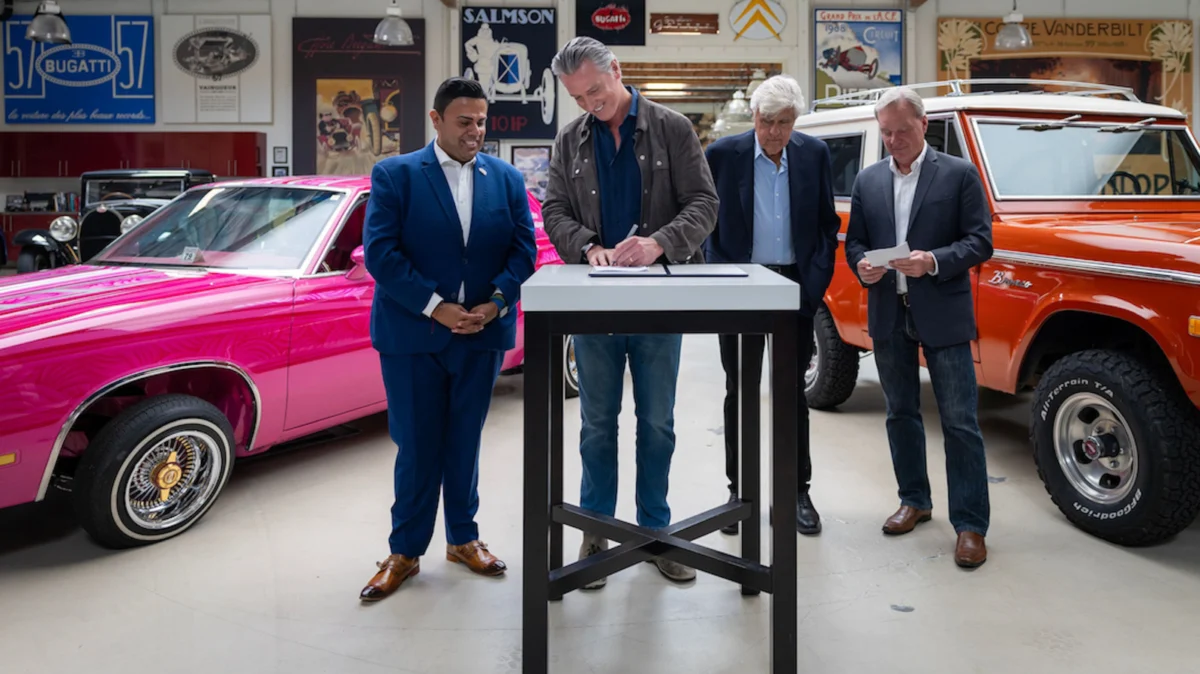
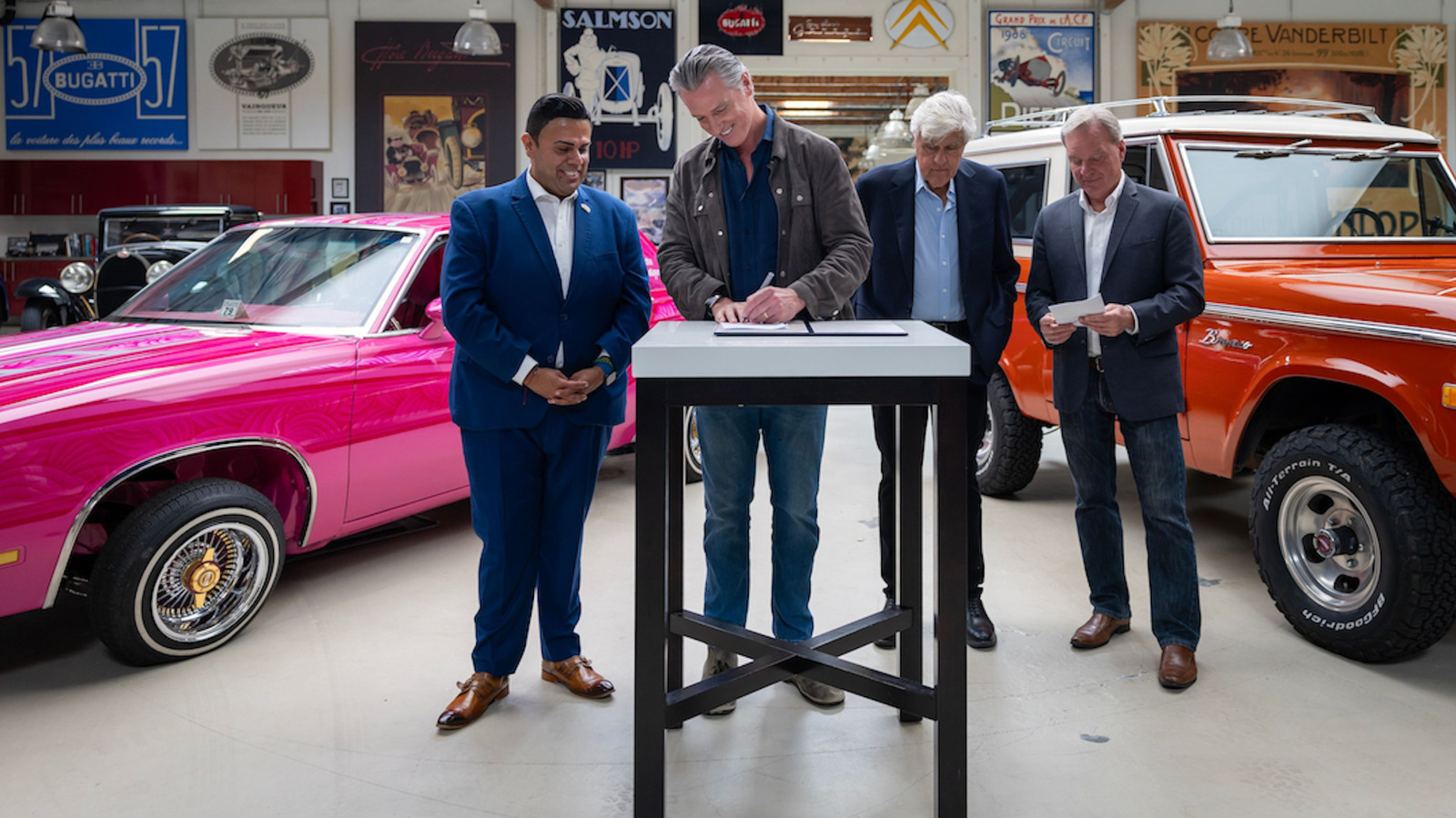
California Governor Gavin Newsom signed a trio of significant automotive bills into law, marking a pivotal legislative moment for the state’s storied and diverse car culture. The newly enacted measures—Senate Bill 1392 (commonly known as Jay Leno’s Law), Assembly Bill 2541, and Senate Bill 1069—collectively seek to balance California’s aggressive environmental standards with the preservation of automotive heritage. Together, these laws provide targeted regulatory relief for collector car owners, celebrate Chicano lowrider culture through specialized state recognition, and streamline the approval process for aftermarket automotive parts.
The legislative package arrives against the backdrop of California’s unique relationship with the automobile. As the birthplace of modern American car culture, home to the nation’s earliest freeway networks, and the economic powerhouse driving national automotive trends, the state has long balanced a deep cultural affinity for motor vehicles with some of the strictest air quality regulations in the world. Governed largely by the California Air Resources Board (CARB), the state’s stringent emissions standards have successfully curbed the heavy smog that plagued metropolitan areas like Los Angeles for decades, but they have also created substantial hurdles for the maintenance and operation of non-exempt classic vehicles. The new laws attempt to harmonize this duality, offering regulatory pathways that protect historical and cultural traditions without compromising the state’s long-term environmental goals.
The Evolution and Enactment of Jay Leno’s Law
At the center of the legislative package is Senate Bill 1392, a modified and stricter version of the proposed legislation colloquially known as Jay Leno’s Law. The concept has been a topic of discussion and legislative maneuvering for several years, initially emerging as Senate Bill 712. That early iteration suffered a definitive defeat when it was voted down in legislative committee in August 2025.
Lawmakers and industry advocates subsequently revised the measure to address environmental concerns, ultimately reintroducing it as SB 1392. While the original bill sought to exempt any motor vehicle aged 35 years or older—provided it was registered and insured as a collector car—from California’s mandatory biennial smog inspections, the newly passed law introduces much tighter parameters. Under SB 1392, the smog check exemption applies exclusively to qualifying collector vehicles from the 1976 through 1985 model years that are either insured specifically as collector cars or driven fewer than 1,000 miles per year.
To contextualize the scope of this exemption, California law has historically maintained clear cutoffs for emissions compliance. Gasoline-powered vehicles manufactured in 1975 or earlier have long enjoyed a complete exemption from biennial smog checks. Similarly, diesel-powered vehicles registered in California from the 1997 model year or earlier are entirely exempt from these testing requirements. SB 1392 bridges a specific gap for vehicles produced during the late 1970s and mid-1980s, an era when early catalytic converters and primitive emissions equipment often present maintenance challenges for restorers and collectors.
In an official statement released following a visit to the garage of automotive icon Jay Leno, Governor Newsom’s office emphasized the targeted nature of the compromise. "By limiting Jay Leno’s Law to a small class of qualifying collector vehicles that are driven only sparingly, California can keep its foot on the accelerator toward a clean transportation future while maintaining our status as the cultural epicenter for America’s classic car heritage," the statement read. This calculated limitation ensures that the vast majority of daily-driven vehicles remain subject to rigorous environmental standards, preserving air quality gains while granting relief to low-mileage automotive preservationists.
Codifying Lowrider Heritage and the Lowrider License Plate Bill
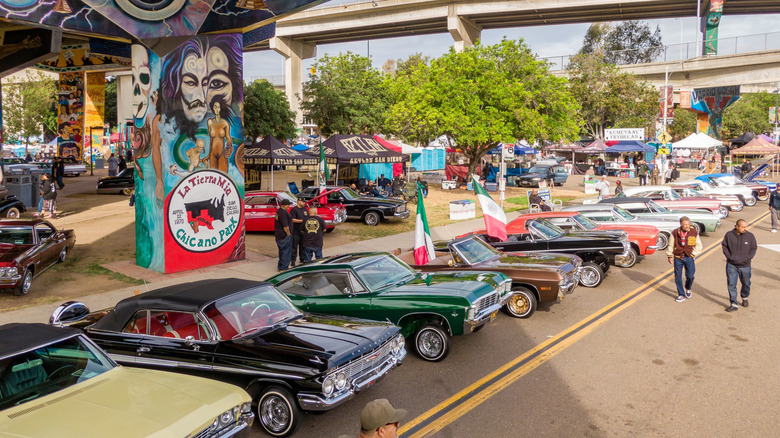
Beyond traditional classic cars, the legislative package addresses a vital, historically marginalized pillar of California’s automotive landscape: Chicano lowrider culture. For decades, lowriders have served as rolling canvases of artistic expression, mechanical ingenuity, and community pride, particularly within Mexican-American communities throughout the state. However, this cultural expression has frequently faced systemic regulatory hurdles.
In the early 1980s, numerous California municipalities enacted local bans on "cruising"—the traditional practice of driving modified vehicles slowly along designated main streets to socialize and display custom cars. These bans were widely viewed by cultural historians and community advocates as discriminatory measures specifically designed to suppress Chicano social spaces. A major milestone occurred in late 2023 when Governor Newsom signed AB 436, a bipartisan bill that formally legalized cruising statewide, overturning decades-old municipal bans and restoring a cherished cultural tradition.
Building upon the legalization of cruising, Assembly Bill 2541—authored by Assemblymember Mark González, who represents California’s 54th District encompassing parts of Los Angeles, Commerce, Montebello, and Vernon—takes the next step in state recognition. Known as the Lowrider License Plate Bill, AB 2541 mandates that the California Department of Motor Vehicles (DMV) design a specialized license plate celebrating lowrider culture and heritage, developed in consultation with the California Arts Council.
The legislation establishes the Lowrider License Plate Program, which will officially go into production once the DMV receives a minimum of 7,500 paid applications by January 1, 2032. Financial proceeds generated from the sale of these specialized plates will be channeled directly into a newly established Lowrider Arts and Culture Fund. This dedicated fund will provide vital financial support for statewide arts programs, cultural preservation initiatives, and youth engagement projects designed to carry the legacy of lowrider craftsmanship forward to future generations.
"AB 2541 says that Chicano history is California history, that our cultura belongs on California’s roads, and that we should invest in the artists, organizations, and youth programs carrying this legacy forward for the next generation," Assemblymember González stated during the bill’s advancement. The Newsom administration echoed these sentiments, noting that past restrictions on lowered vehicles and cruising effectively "criminalized cultural expression and attempted to suppress a movement rooted in identity, creativity, and community pride."
Streamlining Aftermarket Compliance Through Senate Bill 1069
Rounding out the automotive legislative package is Senate Bill 1069, a measure backed by the Specialty Equipment Market Association (SEMA) that addresses the economic and logistical realities of the state’s robust automotive aftermarket industry.
Historically, any emissions-related automotive aftermarket product—ranging from specialized intake systems to exhaust components—required a formal Executive Order (EO) from CARB before it could be legally advertised, sold, or installed on a vehicle in California. While this requirement ensures that aftermarket modifications do not circumvent emissions controls, the administrative backlog and review process often resulted in substantial delays, hindering small businesses and parts manufacturers attempting to bring compliant products to market.
SB 1069 introduces a new conditional approval framework. The legislation establishes a pathway allowing qualifying emissions-related aftermarket products to be sold under the SEMA Certified Emissions Program while CARB completes its final administrative review. Crucially, the bill does not weaken environmental oversight: CARB retains full authority to ultimately approve or deny the executive order for any product, and California’s underlying emissions standards remain entirely unchanged.
Industry leaders praised the passage of SB 1069 for providing much-needed regulatory certainty. SEMA CEO Mike Spagnola highlighted the economic implications of the new law in a public statement. "SB 1069 will give manufacturers that have invested in emissions testing and compliance a meaningful pathway to get qualifying products to market faster in California, and enable new products to reach consumers, provide small businesses with certainty to invest, and keep American companies competitive," Spagnola noted.
Broader Implications and Future Outlook
The simultaneous enactment of SB 1392, AB 2541, and SB 1069 represents a sophisticated legislative attempt to reconcile two seemingly opposing forces in modern California: the state’s aggressive transition toward zero-emission transportation and the preservation of its rich, combustion-centric automotive history.
From an economic perspective, the laws provide stability to California’s massive automotive aftermarket sector, which supports thousands of small businesses, specialty fabricators, and restoration shops. By clearing bureaucratic bottlenecks for compliant parts through SB 1069, the state supports commercial innovation without compromising air quality. Simultaneously, the establishment of the Lowrider Arts and Culture Fund via AB 2541 institutionalizes state support for a historically underfunded artistic community, ensuring that the economic benefits of heritage tourism and cultural expression are reinvested locally.
Environmental advocates have largely accepted the compromise struck in Jay Leno’s Law. Because SB 1392 strictly limits relief to low-mileage collector vehicles and models restricted to a narrow ten-year window (1976–1985), the overall emissions impact on the state’s massive vehicle fleet remains negligible. At the same time, it offers a pragmatic concession to enthusiasts who maintain vehicles of historical significance, preventing the complete cultural alienation of classic car hobbyists in a state that aggressively promotes electric vehicle adoption.
Ultimately, these legislative actions codify the reality that California’s automotive identity extends far beyond the future of electrification. By officially recognizing the legitimacy of lowrider heritage, accommodating the needs of classic car preservationists, and modernizing the regulatory framework for aftermarket equipment manufacturers, California has established a comprehensive policy template for how modern states can honor automotive history while maintaining a forward-looking environmental agenda.