The landscape of the British automotive market is currently undergoing its most significant transformation since the post-war era. As of September 2026, the influx of Chinese automotive manufacturers into the United Kingdom has reached a pivotal inflection point, with major marques capturing approximately 15 percent of total market share. This surge, characterized by the rapid deployment of high-specification, competitively priced electric vehicles (EVs), represents both an economic opportunity and a formidable structural challenge for legacy Western automotive giants.
A Rapid Market Ascent: The 2026 Landscape
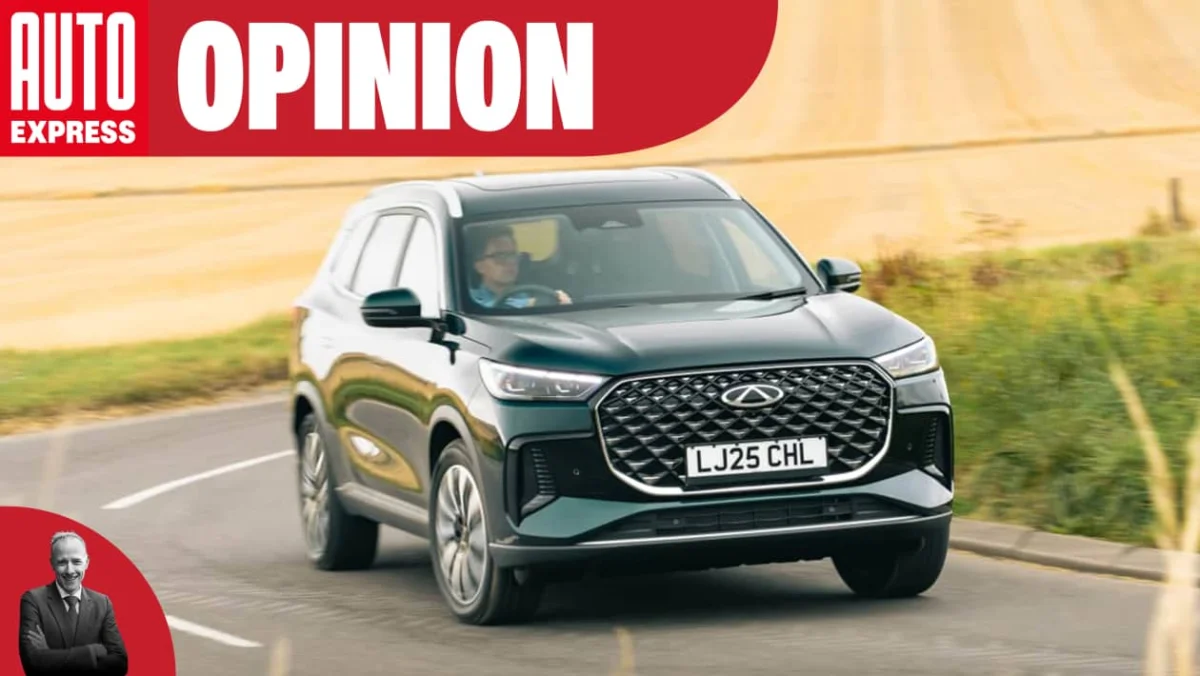
The pace of Chinese market penetration in the UK has been unprecedented. Industry data for the first three quarters of 2026 confirms that the seven leading Chinese automotive brands have successfully registered more than 219,000 vehicles. Among these, Chery has emerged as a dominant force, moving over 29,000 units in a single 12-month window. This velocity of adoption is rarely seen in the automotive sector, where brand loyalty and infrastructure typically serve as significant barriers to entry for new players.
Several factors have coalesced to make the UK an attractive territory for these manufacturers. Unlike the European Union, which has implemented rigorous tariff regimes to protect domestic manufacturers from perceived state-subsidized competition, the UK market remains relatively open. Furthermore, the absence of a singular "national champion" brand—unlike the institutional dominance of Volkswagen in Germany or the Stellantis-Renault duopoly in France—has left the UK consumer base more receptive to new, value-driven alternatives.
Chronology of Expansion and Industrial Realignment
The rise of Chinese brands in Britain is not merely a retail phenomenon; it is becoming deeply intertwined with the nation’s manufacturing infrastructure. The timeline of this integration reveals a strategic shift from simple vehicle importation to potential localized production:
- Early 2025: Chinese brands accelerate marketing budgets in the UK, focusing on digital-first sales channels and aggressive pricing models.
- Late 2025: Reports emerge of widespread dealer network expansion, with over 300 new points of sale opening across the UK for brands including BYD and Chery.
- Early 2026: Legacy manufacturers begin acknowledging the competitive pressure. Volkswagen initiates internal discussions regarding cost-cutting measures, including potential factory closures to combat declining margins.
- Mid-2026: Nissan enters formal discussions regarding a potential partnership with Chery, exploring the possibility of utilizing existing UK manufacturing capacity for Chinese-badged vehicle assembly.
- September 2026: Market share for Chinese brands hits the 15 percent threshold, triggering intense debate among industry analysts regarding the long-term viability of traditional Western manufacturing models.
Supporting Data and Economic Implications
The economic footprint of this expansion is multifaceted. Critics of the current trend often cite concerns regarding the displacement of traditional jobs; however, the reality is more nuanced. Manufacturers like Chery have established significant administrative hubs, with the company’s London headquarters employing approximately 200 staff, the majority of whom are recruited from the local British labor market.

Furthermore, as Ford and Vauxhall have faced the necessity of retrenchment—scaling back legacy operations to focus on narrower, high-margin segments—the surge in Chinese retail activity has provided a lifeline for the UK dealer network. These dealerships, often left vacant by retreating Western firms, are being rapidly backfilled by new entrants.
However, the macroeconomic challenge remains: while the UK benefits from inward investment, tax receipts, and job creation, the profits and the intellectual property associated with these vehicles remain firmly anchored in China. This creates a reliance on a foreign industrial base that could theoretically shift its strategic priorities based on geopolitical developments or shifting regulatory environments in the EU.
Official Responses and Industry Sentiment
The perspective of industry leaders is divided between apprehension and pragmatic adaptation. Farrell Hsu, the UK Country Manager for Chery, has framed the brand’s positioning as a "people’s car maker," explicitly benchmarking its products against the established quality and accessibility standards of Volkswagen. While Hsu has remained cautious regarding the specifics of the Nissan partnership talks, industry insiders suggest that such a collaboration could be the blueprint for the future of the British automotive sector.

The proposed "local content" regulations, currently being discussed within EU trade circles, are expected to exert pressure on these manufacturers to source a higher percentage of components from within the UK and Europe. Should these regulations be adopted, it would necessitate a transition from "export-only" models to genuine domestic integration, potentially shielding British automotive jobs from the volatility of global supply chains.
The Challenge to Western Brands
The threat posed to Western manufacturers is existential. For companies like Nissan, which has invested billions in the Sunderland plant—a facility synonymous with British automotive manufacturing—the prospect of sharing production capacity with a Chinese competitor is a pragmatic recognition of the current economic reality. In Spain, similar models are being adopted by Ford and Stellantis, signaling that the "fortress Europe" approach is being replaced by a strategy of co-opetition.
The primary hurdle for Western brands is the speed at which they must modernize their cost structures. High energy prices and, in some cases, inflexible labor agreements have hampered the ability of European manufacturers to match the price points offered by Chinese competitors. As the market pivots toward mass-market electrification, the "price-to-value" ratio of vehicles from brands like BYD, MG, and Chery is consistently challenging the mid-market dominance previously held by Ford, Vauxhall, and VW.

Broader Impact and Future Outlook
The broader implications of this shift are profound. If the UK continues to act as a bridgehead for Chinese manufacturers, the nation may see a stabilization of its manufacturing employment, albeit under foreign ownership. Conversely, if the gap between Chinese efficiency and Western legacy costs continues to widen, the UK could face a structural decline in its domestic automotive engineering capability.
The "buy British" sentiment, while historically significant in the UK, has proven to be a weak deterrent against the allure of technologically advanced, affordable electric vehicles. Modern consumers are increasingly prioritizing infotainment, connectivity, and battery range over national origin.
In conclusion, the Chinese automotive boom in the UK is a double-edged sword. It provides consumers with high-tech mobility at accessible prices and secures immediate investment in local retail and administrative sectors. However, it also demands an urgent, radical transformation of the Western automotive industry. The companies that survive the next decade will be those that can successfully navigate this new, highly competitive landscape through a combination of manufacturing efficiency, technological innovation, and strategic partnerships that transcend traditional national rivalries. The future of the UK car industry is not in closing its doors, but in effectively integrating into a global supply chain that is, for the first time in a century, being dictated by the rapid advancements emanating from the East.