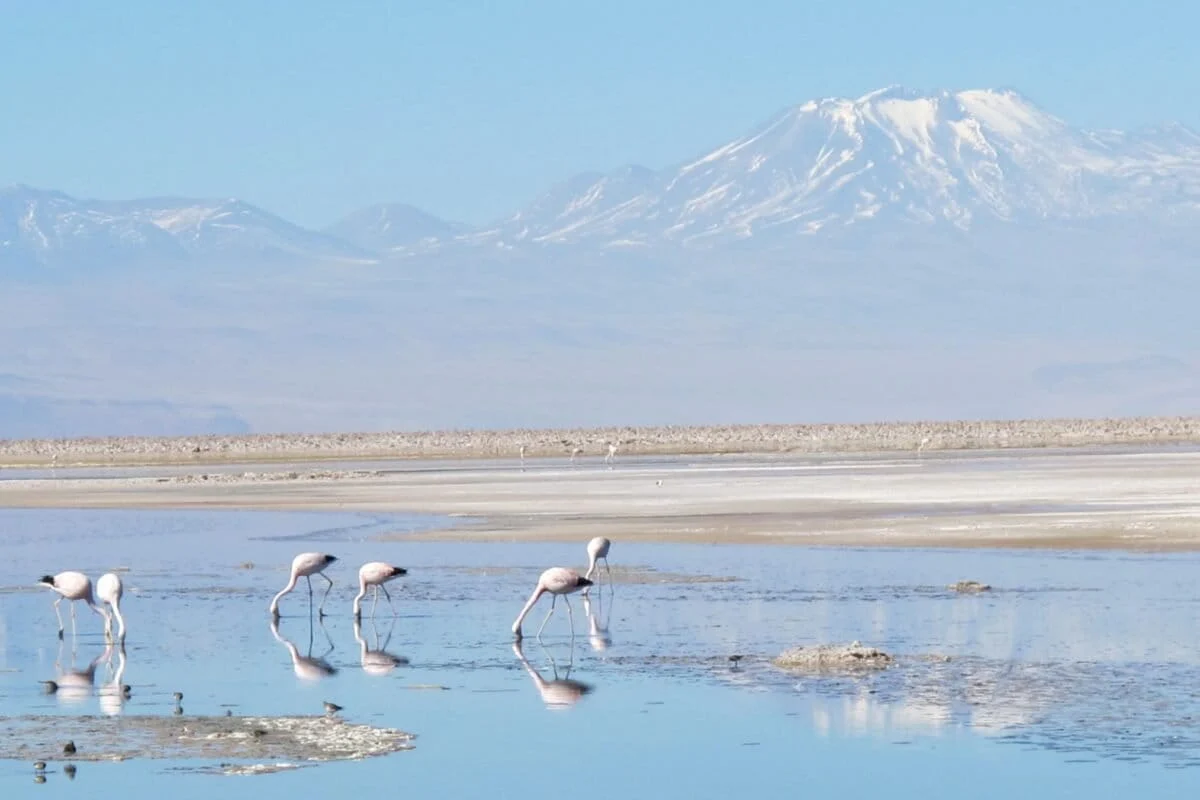
In the hyper-arid expanse of northern Chile lies the Atacama Desert, a region widely recognized as the driest non-polar place on Earth. In some pockets of this lunar landscape, rainfall has never been recorded in human history; in others, the arrival of a single storm is a once-in-a-century event. This extreme environment presents a grueling challenge for the rural communities and indigenous settlements that call the desert home. For decades, local governments have relied on a fragile and expensive logistical chain, trucking in water from distant basins or extracting it from rapidly depleting underground aquifers. However, as climate change accelerates and groundwater levels plummet, a group of innovative researchers and local residents are looking upward, turning to the thick, rolling mists known as the "Camanchaca" to provide a sustainable lifeline.
The concept, known as fog harvesting, involves capturing the moisture trapped in low-lying clouds that drift inland from the Pacific Ocean. While once dismissed as a fringe experiment by "crazy cloud people," the technology is now at the center of a growing movement to secure water sovereignty for some of the most isolated populations on the planet. Through a combination of traditional wisdom, grassroots organization, and rigorous scientific mapping, fog harvesting is emerging not just as a survival tactic, but as a potential cornerstone of Chile’s future water management strategy.
The Geography of Scarcity and the Camanchaca Phenomenon
To understand the potential of fog harvesting, one must first understand the unique meteorological conditions of the Chilean coast. The Atacama’s extreme aridity is caused by its location between two mountain ranges—the Andes to the east and the Chilean Coastal Range to the west—which create a "rain shadow" effect, blocking moisture from both the Amazon and the Pacific. Simultaneously, the cold Humboldt Current flowing along the coast prevents the formation of rain clouds, instead creating a persistent layer of marine stratocumulus clouds.

These clouds, driven by southwesterly winds, collide with the coastal cliffs and move inland as a dense, ground-level fog called the Camanchaca. While this fog rarely produces actual rainfall, it is saturated with liquid water. Camilo del Río, director of the Catholic University’s Atacama Desert Center, explains that these clouds are essentially "pre-condensed" water. When this moisture-laden air makes contact with a physical surface—whether it be the needles of a cactus or a man-made mesh—the droplets coalesce and can be collected as liquid freshwater.
In many parts of the Atacama, this fog represents the only consistent source of moisture. For the residents of settlements like Alto Hospicio and Paposo, where the cost of trucked-in water can consume a significant portion of a household’s income, the ability to "mine" the air for water offers a path toward economic and environmental resilience.
A Chronology of Innovation: From Fountain Trees to Plastic Mesh
The practice of capturing atmospheric moisture is not a modern invention, but rather a refinement of ancient ecological observations. For centuries, various cultures in arid regions have utilized natural "fog catchers." In the Canary Islands, the indigenous Guanche people collected water that dripped from the leaves of "fountain trees," such as junipers. In Oman, stone cisterns were historically placed under trees to catch the condensation from seasonal mists.
The transition to a systematic, engineered approach began in the early 20th century. In the 1900s, researchers in South Africa began modifying rain gauges to measure how much water vegetation could strip from the air. By the late 1960s, these experiments evolved into the first "fog screens"—frames fitted with plastic mesh designed to intercept wind-blown droplets.

However, it was in northern Chile during the mid-20th century that the technology truly matured. In the 1950s, researchers in the Antofagasta region began experimenting with different mesh materials to maximize water yield. A pivotal moment occurred in 1987 in the fishing village of Chungungo. With the help of international researchers, the community installed 100 large-scale fog collectors. At its peak, the project provided 300 residents with an average of 33 liters of clean water per person per day—a transformative amount for a community that had previously been entirely dependent on external deliveries.
The Grassroots Movement: Overcoming Skepticism
Despite the success in Chungungo, fog harvesting faced significant cultural and political hurdles. Orlando Rojas Figueroa, president of the Atacama Fog Catchers Group, recalls the early days of his involvement in the 1990s as a time of widespread ridicule. "They called them the crazy cloud people," Rojas said. To many, the idea of pulling thousands of liters of water out of thin air sounded like alchemy rather than engineering.
Rojas and his colleagues refused to be deterred. They spent years scouting the desert, hiking for hours into the hills to find the "sweet spots" where the Camanchaca was most consistent. Their persistence paid off. By 2004, the group had refined their techniques to harvest approximately 1,000 liters of water per day. Today, they have achieved yields as high as 12,000 liters during peak fog events.
This water has transformed the local landscape. In areas where nothing but sand once stood, the Atacama Fog Catchers Group now cultivates a variety of crops, including potatoes, lettuce, lemons, peaches, pomegranates, and figs. They have even begun bottling the water for sale, proving that fog water is not only potable but can be the basis for a local economy. "Success doesn’t depend so much on the physical phenomenon itself, but rather on investment and communities that are well-organized," del Río noted, highlighting the importance of social infrastructure in making technology work.

Scientific Validation and the Alto Hospicio Study
While grassroots efforts have proven the concept, scaling fog harvesting to a municipal level requires precise data. In 2023, a landmark study was launched to assess the collection potential in Alto Hospicio, an urban center that has historically struggled with groundwater depletion.
Researchers utilized the Standard Fog Collector (SFC)—a 1-square-meter mesh frame that serves as the international benchmark for measuring fog-water potential. By correlating collection rates with meteorological data such as wind speed, relative humidity, and solar radiation, the team identified optimal harvesting zones at elevations between 700 and 1,100 meters above sea level.
The findings were significant. The study determined that a well-placed collector could yield between 0.2 and 4.9 liters of water per square meter per day. For a community investing in 1,000 square meters of mesh—a relatively small footprint—this could translate to nearly 5,000 liters of freshwater daily. However, the study also cautioned that fog is a highly variable resource. Yields can fluctuate wildly based on the season and specific weather patterns, meaning that fog harvesting is most effective when used as a complementary resource rather than a sole supply.
Mapping the Future: The Role of Modern Research
Leading the charge for scientific integration is Virginia Carter, an assistant professor at Mayor University and a National Geographic Explorer. Carter’s work focuses on moving fog harvesting from isolated pilot projects into the realm of national water policy. With support from the National Geographic Society, she has established a fog-monitoring station in Paposo, a rural town of 250 people who currently rely entirely on water trucks.

Carter is developing a comprehensive "fog-water map" of the region, which will allow local governments to identify exactly where to place infrastructure for maximum efficiency. "My goal is to create awareness in order to put this water resource on the public agenda in Chile," Carter stated. By providing hard scientific data, she aims to overcome the "lack of confidence" that has historically prevented government officials from investing in the technology.
In addition to human use, recent initiatives have highlighted the ecological importance of fog. In 2022, the tourism and heritage office of Alto Hospicio conducted surveys of the Tillandsia plant, a species that survives entirely by absorbing atmospheric moisture. By mapping these plants, officials have been able to identify natural "fog corridors," using the desert’s own biology to guide human engineering.
Challenges to Implementation: Political Will and Infrastructure
Despite the clear benefits, the road to widespread adoption is paved with obstacles. The primary challenge is not technical, but economic and political. Nicolás Prado, an official in Alto Hospicio’s tourism and heritage office, notes that there is a persistent lack of political will to move away from traditional, centralized water models.
"There’s still a need to move beyond the idea of making money from these things," Prado said. Unlike large-scale desalination plants or massive pipeline projects, fog collectors are decentralized and relatively inexpensive to build. While this makes them ideal for rural communities, it often makes them less attractive to large-scale utility companies and government agencies looking for high-revenue infrastructure projects.

Furthermore, the "storage and distribution" problem remains. Capturing the water is only half the battle; it must then be filtered, stored in tanks, and piped to homes or fields. In the rugged terrain of the Atacama, building this infrastructure is a significant capital expense for small municipalities. Researchers argue that instead of building massive systems immediately, officials should support long-term pilot projects to develop best practices for storage and cost management.
Broader Impact and Global Implications
The lessons learned in the Atacama Desert have global implications. As the world faces a deepening climate crisis, arid regions from Morocco to California are looking for alternative water sources. Chile’s pioneering work in fog harvesting provides a blueprint for how technology can be adapted to local ecological realities.
Beyond the immediate need for drinking water, fog harvesting offers a way to combat desertification and preserve unique biodiversity. The fog-fed ecosystems of the Atacama, known as "lomas," are home to hundreds of species that exist nowhere else on Earth. By integrating fog harvesting into environmental conservation strategies, Chile can protect these fragile habitats while simultaneously providing for its human population.
As researchers like Virginia Carter and community leaders like Orlando Rojas Figueroa continue their work, the perception of the Camanchaca is shifting. No longer seen merely as a coastal nuisance that obscures the sun, the fog is now recognized as a vital, renewable reservoir. The "crazy cloud people" of the 20th century may well be the architects of the 21st century’s most sustainable water solution. In the driest place on Earth, the answer to water scarcity was not hidden deep underground, but was floating just out of reach in the morning mist.