The U.S. Government: Structure, Functions, and Citizen Engagement
The United States government is a complex, multi-layered entity designed to govern a vast and diverse nation. Its foundational principles are enshrined in the U.S. Constitution, which establishes a federal system of government, dividing powers between the national (federal) government and individual state governments. This division of power, known as federalism, is a cornerstone of American governance. The Constitution also outlines the separation of powers within the federal government, creating three distinct branches: the Legislative, the Executive, and the Judicial. Each branch possesses its own unique responsibilities and a system of checks and balances, ensuring no single branch becomes too dominant. Understanding this intricate framework is crucial for comprehending how laws are made, enforced, and interpreted in the United States, and how citizens interact with their governing bodies.
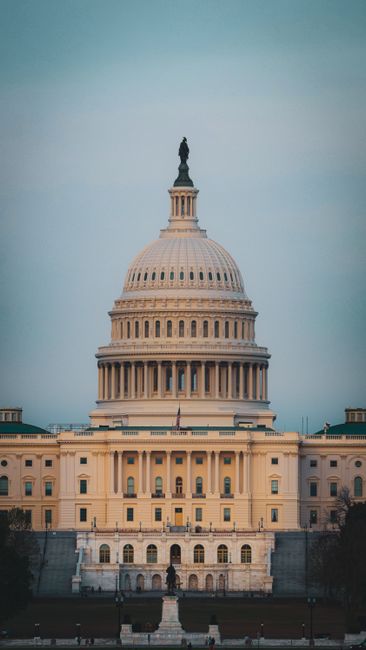
The Legislative Branch, primarily embodied by the U.S. Congress, is responsible for creating laws. Congress is bicameral, meaning it consists of two chambers: the Senate and the House of Representatives. The House of Representatives has 435 members, with representation based on each state’s population. Representatives serve two-year terms and are elected from congressional districts within their respective states. The Senate, on the other hand, has 100 members, with each state having two senators, regardless of population. Senators serve six-year terms, with elections staggered so that approximately one-third of the Senate is up for election every two years. This bicameral structure ensures that both the will of the people (as reflected in the more numerous House) and the interests of the states (as represented by the Senate) are considered in the legislative process. Key functions of Congress include introducing and debating bills, holding committee hearings to gather information and refine legislation, and voting on proposed laws. Beyond lawmaking, Congress also holds the power of the purse, controlling federal spending through appropriations bills, and has oversight responsibilities, monitoring the activities of the Executive Branch. Impeachment proceedings, the power to declare war, and the ratification of treaties are further significant legislative powers.
The Executive Branch is responsible for enforcing the laws passed by Congress. This branch is headed by the President of the United States, who serves a four-year term and is elected indirectly through the Electoral College. The President is the head of state and head of government, commander-in-chief of the armed forces, and the nation’s chief diplomat. The President is supported by a vast bureaucracy of executive departments, independent agencies, and other federal organizations. The President appoints the heads of these departments, known as cabinet secretaries, who advise the President on policy matters and oversee their respective areas. Major executive departments include State, Treasury, Defense, Justice, Interior, Agriculture, Commerce, Labor, Health and Human Services, Housing and Urban Development, Transportation, Energy, Education, Veterans Affairs, and Homeland Security. Beyond these departments, numerous independent agencies, such as the Environmental Protection Agency (EPA), the National Aeronautics and Space Administration (NASA), and the Securities and Exchange Commission (SEC), operate with a degree of autonomy in specific policy areas. The Executive Branch’s functions are broad, encompassing the implementation of laws, the development of foreign policy, the management of national resources, and the provision of essential government services. Executive orders, issued by the President, have the force of law and allow the President to direct federal agencies and influence policy without direct congressional approval.
The Judicial Branch is responsible for interpreting the laws and the Constitution. This branch is headed by the U.S. Supreme Court, the highest court in the land, followed by a system of federal appellate courts (circuit courts) and trial courts (district courts). The Supreme Court consists of nine justices, appointed by the President and confirmed by the Senate, who serve lifetime appointments. The Supreme Court has original jurisdiction in a limited number of cases and appellate jurisdiction in most others, meaning it can hear cases appealed from lower federal courts and state supreme courts. The power of judicial review, established in the landmark case Marbury v. Madison, allows the Supreme Court and lower federal courts to review the constitutionality of laws and actions taken by the Legislative and Executive branches. This power is a critical check on the other branches, ensuring that all government actions adhere to the principles of the Constitution. Lower federal courts handle cases involving federal law, disputes between states, and cases involving the U.S. government. The judicial system plays a vital role in upholding the rule of law, protecting individual rights, and resolving disputes that arise within the nation.
Federalism, the division of power between the federal and state governments, is a defining characteristic of the U.S. system. The Constitution enumerates certain powers for the federal government (enumerated powers), such as the power to coin money, regulate interstate commerce, and declare war. Powers not delegated to the federal government, nor prohibited to the states, are reserved to the states respectively, or to the people (reserved powers), as outlined in the Tenth Amendment. This creates a dynamic relationship where both levels of government have distinct responsibilities, and often cooperate on shared issues like education, transportation, and law enforcement. State governments, like the federal government, typically have their own legislative, executive, and judicial branches, adapted to their specific needs and populations. This decentralization allows for policy innovation and caters to the diverse needs and preferences of different regions and states. However, it also can lead to variations in laws and services across the country, creating a complex legal landscape.
Citizen engagement is a fundamental aspect of the U.S. government. The principle of popular sovereignty, that governmental power derives from the consent of the governed, is central to American democracy. Citizens participate in the political process through various avenues: voting in federal, state, and local elections; contacting their elected officials to express their views; participating in protests and demonstrations; joining political parties and advocacy groups; and running for office themselves. The First Amendment to the Constitution guarantees freedoms of speech, press, assembly, and petition, all of which are essential for active citizen participation. Understanding the processes of government, the roles of elected officials, and the avenues for participation empowers citizens to influence policy and hold their government accountable. Issues such as campaign finance, lobbying, and voter access are ongoing areas of debate and reform aimed at enhancing or preserving citizen influence in the U.S. governmental system.
The U.S. government’s structure and functions are constantly evolving, influenced by societal changes, technological advancements, and ongoing political discourse. Understanding the roles of the Legislative, Executive, and Judicial branches, the principles of federalism, and the importance of citizen engagement provides a foundational understanding of how the United States is governed. This knowledge is not merely academic; it is essential for informed citizenship and for participating effectively in the democratic process. The ongoing interplay between these branches and the populace shapes the direction of the nation and its policies, making the study of the U.S. government a perpetual and vital endeavor.
