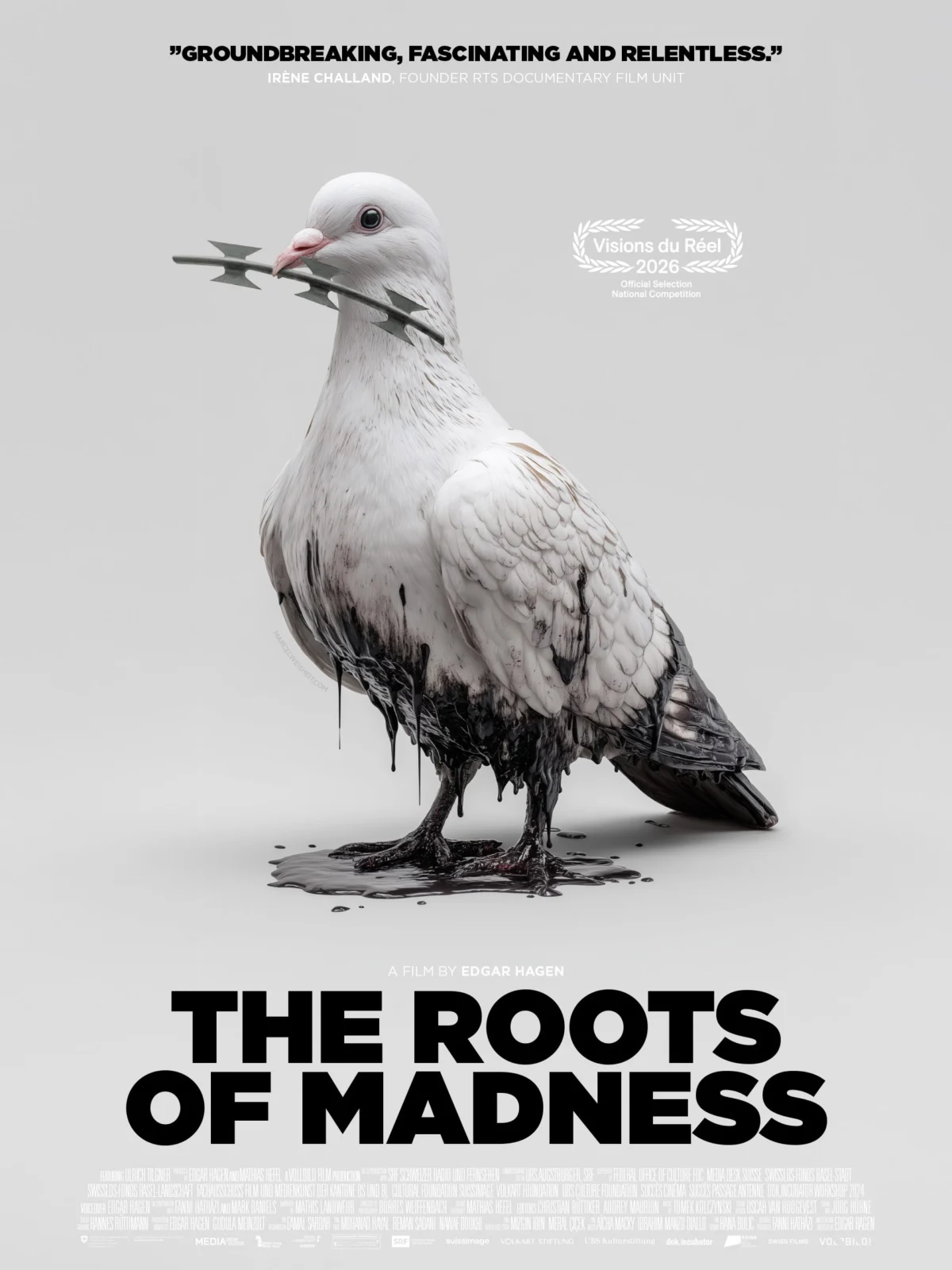
Swiss filmmaker Edgar Hagen’s provocative new documentary, "The Roots of Madness," embarks on an ambitious quest to unravel the complex origins of the global refugee crisis, posing a fundamental question: why have millions been forced to flee their homes? In an era marked by escalating political tensions surrounding migration and a disturbing rise in xenophobia across Europe and beyond, Hagen’s film seeks to offer a profound understanding of the forces driving displacement. The documentary, set to premiere at the prestigious 57th edition of the Visions du Réel festival in Nyon, Switzerland, on Sunday, April 19, challenges viewers to look beyond immediate headlines and confront the deep-seated historical and political factors at play.
A Journey into the Aftermath of Intervention
At the heart of "The Roots of Madness" lies an exploration of "the long-term consequences of Western intervention in the Middle East," as described in the film’s synopsis. To achieve this, Hagen joins forces with veteran German journalist Ulrich Tilgner, a seasoned war correspondent with decades of experience reporting from conflict zones for German and Swiss broadcasters. The documentary chronicles Tilgner’s poignant farewell journey, retracing his steps through Afghanistan, Iraq, and Syria. This expedition is not merely a nostalgic tour but a critical investigation, as Tilgner reconnects with ordinary individuals, former contacts, old friends, and past interview subjects. Their shared testimonies aim to illuminate the trajectories of these nations since Tilgner’s previous visits, revealing the enduring impact of past events on the present reality.
The film’s narrative is woven from archival footage and deeply personal, often harrowing, accounts. According to a summary on the VdR website, the documentary combines these elements to construct "an unflinching yet sensitive indictment that occupies the space between outrage and melancholy." This powerful synthesis underscores the profound human cost of prolonged conflict and political upheaval.
Deconstructing Western Promises and Their Fallout
"The Roots of Madness" meticulously dissects the promises of Western interventions, often framed in the language of "liberation" and "democracy." The film scrutinizes the rhetoric versus the reality, examining how these interventions have, in many instances, contributed to instability and protracted suffering rather than achieving their stated objectives. The scope of Hagen’s inquiry extends beyond the Middle East, taking audiences to Niger, Greece, and Serbia, highlighting the interconnectedness of global displacement and the multifaceted nature of its causes and consequences.
The film’s world premiere at Visions du Réel places it on a significant platform within the documentary filmmaking community. The festival, known for showcasing cutting-edge and socially relevant cinema, provides an ideal setting for a film that tackles such a critical and timely issue. The context of its premiere is particularly resonant, given that in 2015, millions of refugees, predominantly from the Middle East, sought refuge in Europe, a movement that inadvertently fueled the rise of xenophobic sentiment and extremist ideologies across the continent.
A Personal Statement on Contemporary Discontent
Director Edgar Hagen expresses a deep personal connection to the film’s release, stating, "For me, releasing this film at a time when disturbing developments threaten to undermine the value system of Western democracies is a deeply personal statement." He observes a pervasive misconception in the Western world, where migrants and refugees are often perceived as the architects of societal division. Hagen firmly believes that the true causes are far more complex and rooted in historical actions. He posits that overcoming the escalating racism and political extremism within Western nations necessitates a genuine effort to understand the backgrounds and experiences of those seeking refuge.

This conviction drove Hagen’s cinematic endeavor: "I set out to gain a clear understanding of the ongoing humanitarian disaster migrants and refugees face at Europe’s fortified borders by capturing authentic images and voices from the areas of conflict they flee from, and by juxtaposing those voices with our Western values and the West’s political decisions." This approach aims to foster a more empathetic and informed perspective, bridging the perceived gap between Western societies and the realities of those displaced by conflict.
The Genesis of an Urgent Collaboration
The collaboration between Edgar Hagen and Ulrich Tilgner was not a calculated decision but an intuitive impulse. Hagen recounts, "When Hagen met Tilgner, he felt very strongly that they had to make a film together. ‘I just had this impulse,’ he recalled. ‘And that was the first impulse to start this film.’" Hagen was particularly drawn to Tilgner’s journalistic ethos, which prioritized understanding the human element over focusing solely on political power brokers.
"He didn’t really focus just on the politicians," Hagen elaborated. "He went to the people to understand the atmosphere, the feelings, and what was really going on behind the closed doors. And so, he knew about the suffering of the people connected to these wars that [have led and] lead people to become refugees." This people-centric approach provided the foundational insight for the film’s title, "The Roots of Madness."
Hagen explained the etymology of the "This idea that we have to go where this conflict comes from, go to the heart of the conflict, means going to the roots of this madness that millions of people have to leave. And as you see in the film, they don’t want to leave, they have to leave, and this is what we have to understand from our Western perspective. We have to see and accept that." This highlights a critical disconnect between the agency of those displaced and the perception of their situation in the West.
Confronting the Human Cost of Geopolitical Decisions
Hagen’s directorial intent was to immerse himself, and by extension his audience, in the pain and suffering often distant from comfortable Western lives. He aimed to share these experiences with those who do not directly encounter war zones. "This urge to understand also [plays into] the dramaturgy of the film," he stated. "And I think that’s also where the empathy and emotion in this film comes from on the way to understanding the same pattern of Western interventions in different places." This underscores a desire to foster emotional resonance and intellectual engagement, encouraging a deeper contemplation of the recurring patterns of international involvement.
A significant focus of "The Roots of Madness" is the West’s role in the rise of extremist groups, such as the Taliban in Afghanistan. Hagen clarified his intention to "primarily on the West’s role in their rise and ‘how we are helping to produce this radicalism.’" This critical examination challenges the simplistic narratives that often frame such groups as solely indigenous phenomena, pointing to external influences and historical interventions as contributing factors.

Shifting Perceptions of Western Engagement
Hagen draws parallels and contrasts between past and present geopolitical actions, offering a pointed critique of contemporary foreign policy. He reflects on the war in Iran, observing, "With this Iran war, the perception has changed because Donald Trump doesn’t even make the effort to give a justification." He contrasts this with previous conflicts, such as the Iraq War under George W. Bush, where "the U.S. said we do it for peace and for democracy."
Hagen argues that the current lack of justification for military actions signifies a departure from previous norms, even if those justifications were often contested. "Trump doesn’t really make the effort anymore to defend our values," he contends. "And that, I think, is making people wake up and understand what we are losing." He expresses concern over the erosion of ethical considerations in international affairs, questioning how a global leader can engage in such actions and why societies acquiesce or fail to resist them. The director notes that while Trump may offer brief justifications, they are often followed by rhetoric that undermines any pretense of principled action, leading to a potential societal awakening to the loss of established values.
Towards Dialogue and a Reimagined Future
With these observations in mind, Edgar Hagen expresses a profound hope that "The Roots of Madness" will not only illuminate the origins of migration but also prompt critical reflection on the future trajectory of Western societies. "‘Why is it going this way’ is the big question of the film," he stated. "But we should also think about where we want to head in terms of our values." This forward-looking perspective emphasizes the film’s dual purpose: to understand the past and to shape a more ethical and sustainable future.
Hagen remains optimistic about the film’s potential to stimulate meaningful dialogue. "This film is trying to open a dialogue about these things," he told THR. "That’s my commitment with this film. I think we also really have to maintain established approaches and find new ways to talk and deal with the ‘bad guys,’ for example, by bringing them to court. It’s no solution to kill them, because that way we just produce the radicalism we are fighting and end up in an endless spiral of violence and killing. I think it is in our own interest to attack, discuss and solve these issues." This concluding thought underscores a belief in the power of justice, diplomacy, and open discourse as alternatives to perpetual conflict, advocating for a more constructive approach to global challenges.
Production and Creative Team
"The Roots of Madness" is produced by Edgar Hagen and Mathias Hefel for Vollbild Film GmbH. Hagen also penned the screenplay and directed the film. The cinematography is by Bärres Weiffenbach, with editing contributions from Christian Bütziker and Audrey Maurion. The film’s technical and creative team has been instrumental in bringing Hagen’s vision to life, ensuring a visually compelling and narratively coherent exploration of complex global issues. The accompanying trailer offers a glimpse into the film’s powerful imagery and emotional resonance, setting the stage for its premiere and subsequent impact.
The film’s thematic depth and critical inquiry are supported by a robust production framework, ensuring that Hagen’s message reaches a global audience with clarity and impact. The dedication of the production team to confronting such a sensitive and multifaceted subject matter speaks to the enduring importance of documentary cinema in fostering understanding and promoting social change.