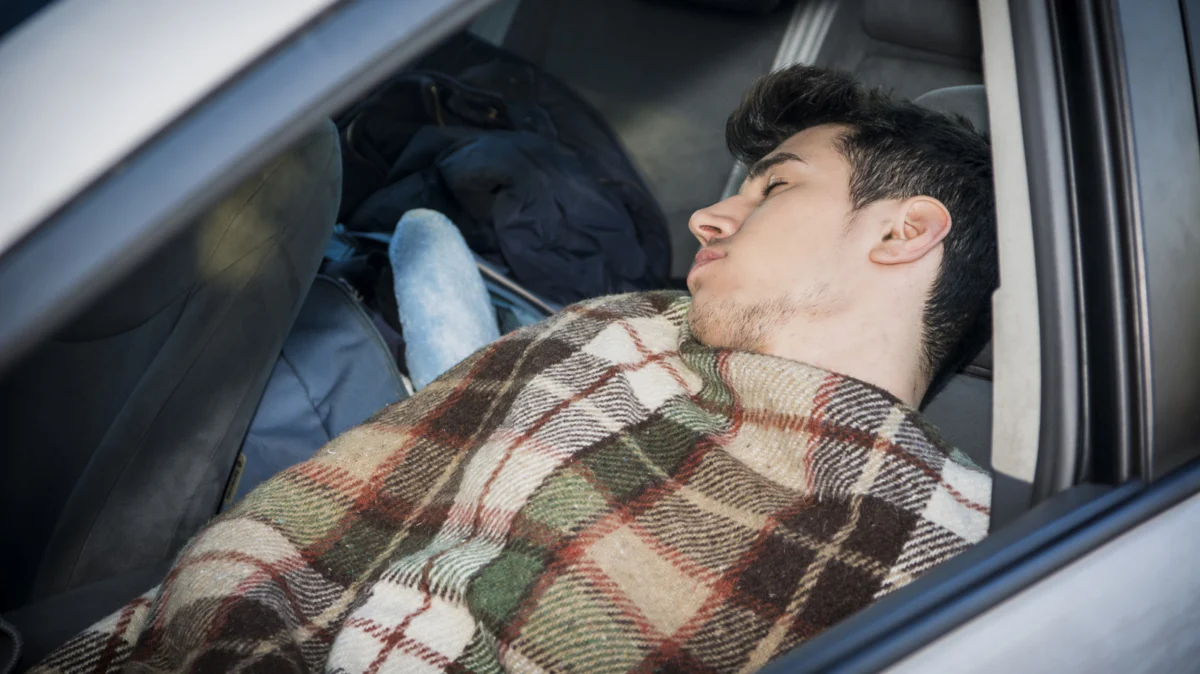
Across the United States, a growing number of municipalities and state legislatures are enacting strict ordinances that criminalize sleeping in vehicles, a trend that advocates warn targets both the working poor and those experiencing chronic homelessness. While vehicle habitation has historically been a grey area of the law—often used by long-haul travelers or "van life" enthusiasts—the recent wave of legislation specifically targets the use of cars, vans, and RVs as primary residences. This shift comes at a time when housing affordability has reached a crisis point, forcing an estimated 770,000 Americans into various states of homelessness, with a significant portion utilizing their vehicles as their last remaining form of shelter.
The surge in these bans is not merely a localized phenomenon but a coordinated legal and political shift. From the Rocky Mountains to the Atlantic coast, cities are expanding "camping bans" to include private automobiles parked on public streets. These laws often carry penalties that include heavy fines, jail time, and the impounding of the vehicle—the very asset the individual relies on for safety and mobility.
The Legal Catalyst: Grants Pass v. Johnson
To understand the sudden acceleration of these bans, one must look at the judicial landscape. In June 2024, the United States Supreme Court issued a landmark ruling in Grants Pass v. Johnson. The Court decided that city ordinances banning public camping do not constitute "cruel and unusual punishment" under the Eighth Amendment, even if the individuals being cited have no access to alternative shelter.
Prior to this ruling, many cities in the western United States were restricted by lower court decisions that prevented the enforcement of camping bans unless there were enough shelter beds available for the displaced population. The Supreme Court’s decision effectively removed this barrier, giving local governments the green light to clear encampments and cite individuals sleeping in vehicles regardless of the local housing or shelter inventory. Consequently, cities that had previously hesitated to enforce vehicle habitation laws have moved swiftly to codify and implement them.
Case Study: The Colorado Springs Expansion
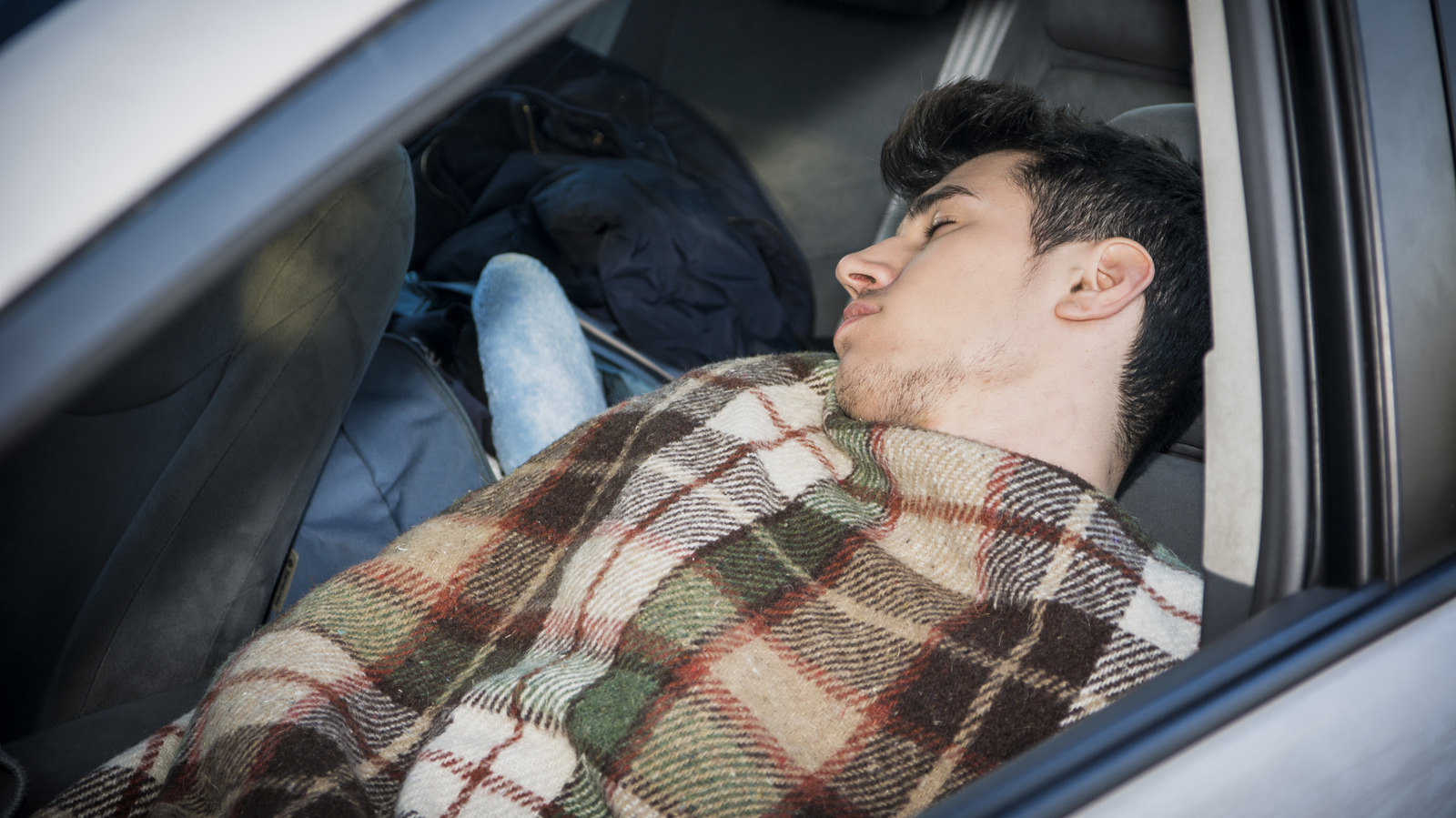
In Colorado Springs, Colorado, the City Council recently voted 7-2 to expand its existing public camping ban to specifically include car camping. The move is ostensibly aimed at "curbing homelessness" and maintaining public order, but it introduces severe consequences for those caught in violation. Under the new ordinance, individuals convicted of sleeping in their cars face fines, up to 10 days in jail, and the impounding of their vehicles.
Critics of the ordinance argue that it creates a "poverty trap." For an individual who has been evicted and is living in their car while maintaining a job, a 10-day jail sentence almost guarantees the loss of employment. Furthermore, the cost of retrieving an impounded vehicle often exceeds several hundred dollars in towing and storage fees—money that a person living in their car is unlikely to have. This results in the permanent loss of their only shelter and their primary means of transportation to work, exacerbating the very homelessness the city claims to be addressing.
A Regional Breakdown of Restrictive Statutes
The landscape of vehicle habitation laws varies significantly by state, with some regions adopting more draconian measures than others.
The Southeast and Florida’s Blanket Ban
Florida has emerged as one of the most restrictive states in the nation regarding public sleeping. In 2024, the state enacted a law that explicitly prohibits sleeping in a vehicle anywhere in the state unless the vehicle is parked in a designated camping spot or on private property with the owner’s explicit consent. Furthermore, the vehicle must be registered and insured, a requirement that often eludes those in deep financial distress.
In Alabama, while there is no statewide ban, highway rest areas prohibit overnight parking. Coastal cities like Gulf Shores and Fairhope have implemented specific time-based bans, making it illegal to sleep in a vehicle between 10 p.m. and 6 a.m. Similarly, Georgia allows for "temporary" use of rest areas but permits cities like Acworth to ban "prolonged" stays, a term that remains vaguely defined and subject to police discretion.
The Felony Escalation in Tennessee
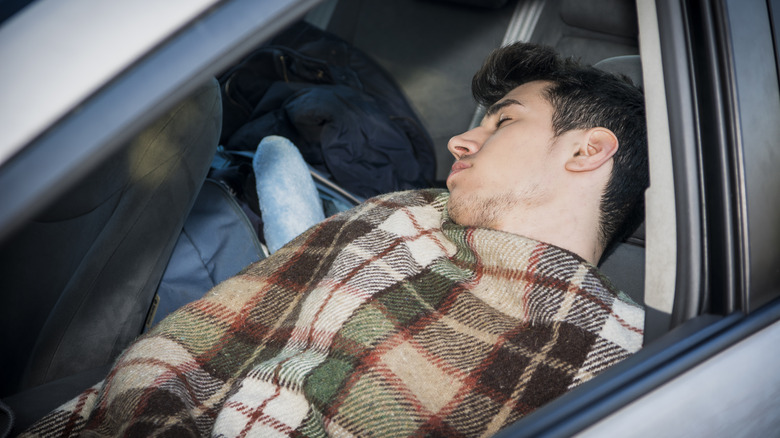
Tennessee represents the extreme end of the enforcement spectrum. It is currently the only state to classify camping on public and state property as a felony. The penalties are severe, including up to six years in prison and $3,000 in fines. The state also specifically outlawed sleeping in a vehicle for more than three hours, a move that critics say targets not just the homeless but also tired travelers attempting to avoid drowsy driving.
Western States and the Public Land Conflict
In states like Colorado, Idaho, and Oregon, the legal battle often centers on public lands. While "dispersed camping" remains legal on certain federal lands managed by the Bureau of Land Management (BLM), urban centers like Denver, Boulder, and Boise have moved to ban public camping within city limits. Idaho has a statewide ban on unauthorized "lodging" in temporary habitations, which includes sitting in a car for a prolonged period. Oregon allows 12 hours of rest in a 24-hour period at rest stops, but many of its cities have moved to ban camping in all residential zones.
The Economic Context of Vehicle Habitation
The rise in vehicle habitation is directly correlated with the widening gap between wages and housing costs. According to data from the Department of Housing and Urban Development (HUD), the United States saw a 12% increase in homelessness between 2022 and 2023, the highest jump since the government began tracking the data.
The average American worker now faces a housing market where the cost of a one-bedroom apartment often exceeds 30% to 50% of their take-home pay. For those in the "gig economy" or low-wage service sectors, a single medical emergency or car repair can lead to eviction. For these individuals, their vehicle is not a "lifestyle choice" but a survival tool.
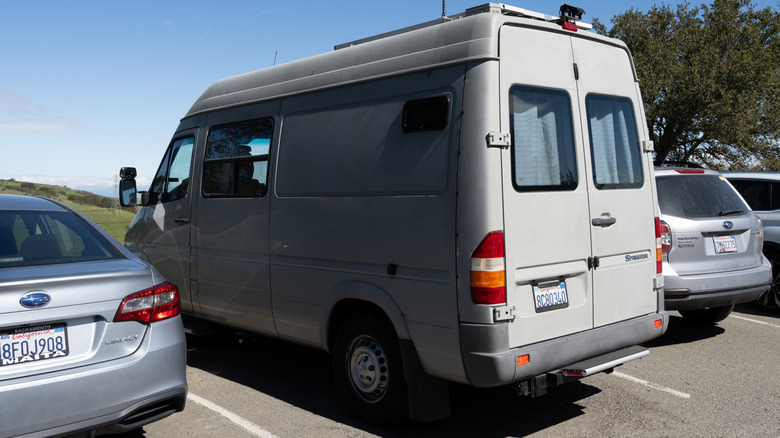
The "van life" movement has further complicated the public perception of vehicle habitation. While social media often portrays living in a vehicle as a glamorous, six-figure "adventure rig" lifestyle, the reality for the majority of vehicle dwellers is far different. The laws being passed rarely target high-end Mercedes Sprinter vans parked in tourist areas; instead, they are disproportionately enforced against aging hatchbacks and dilapidated RVs parked in industrial or residential side streets.
Political and Executive Responses
The political pressure to address visible homelessness has reached the federal level. In July 2025, President Donald Trump issued an executive order calling on state and local municipalities to strictly enforce prohibitions on urban camping and loitering. The order framed the issue as a matter of "ending crime and disorder," suggesting that the presence of individuals living in vehicles contributes to urban decay. This federal signal has encouraged many conservative-leaning legislatures to double down on punitive measures.
However, there is a counter-movement emerging in some states. In North Carolina, Governor Josh Stein recently vetoed a bill that would have mandated a statewide ban on unauthorized public camping. Stein argued that the bill failed to provide resources for the unhoused and would merely shuffle people from one municipality to another without solving the root cause. Similarly, in Washington State, lawmakers have proposed legislation that would override local bans, prohibiting cities from clearing encampments or citing vehicle dwellers unless "adequate" alternative housing is provided.
Analysis of Implications: The Downward Spiral
The logic behind these bans often rests on the theory of "deterrence"—that by making it illegal and uncomfortable to live in a car, people will be incentivized to find traditional housing. However, social scientists and housing experts argue that this logic is flawed because it ignores the lack of available, affordable housing.
When a city impounds a person’s car for a "camping" violation, they are removing the individual’s ability to:
- Maintain Employment: Without a vehicle, commuting to jobs—especially those in areas without robust public transit—becomes impossible.
- Access Hygiene: Many vehicle dwellers rely on their cars to travel to gyms or community centers for showers.
- Ensure Safety: A locked car provides a level of protection from the elements and from physical assault that a sidewalk or a park bench does not.
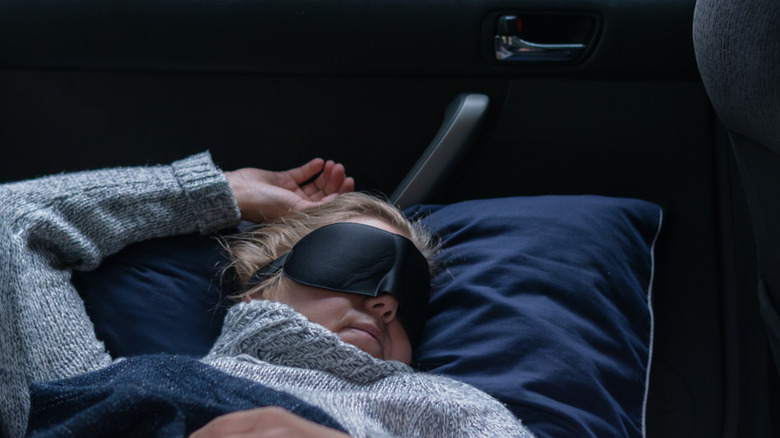
By criminalizing the "last resort," municipalities are effectively pushing individuals into the "unsheltered" category, where they are more likely to require emergency services, enter the criminal justice system, and experience deteriorating health—all of which cost taxpayers significantly more than the provision of supportive housing or designated "safe parking" lots.
Conclusion and Future Outlook
The trend of increasing bans on car camping reflects a nation struggling to reconcile its housing crisis with the public’s desire for "orderly" streets. As more states like Oklahoma and Texas implement fines and jail time for vehicle habitation, the legal system is becoming a primary tool for managing poverty.
While the Grants Pass ruling has empowered cities to act, the lack of a corresponding increase in housing supply suggests that these bans will not reduce the number of people living in vehicles; they will merely change where those people hide. Until the underlying economic drivers—stagnant wages, high interest rates, and a shortage of affordable units—are addressed, the car will remain the final safety net for thousands of Americans, regardless of its legality. The coming years will likely see a continued legal tug-of-war between states attempting to "clean up" their streets and advocates fighting for the basic right to sleep without the threat of a felony conviction.