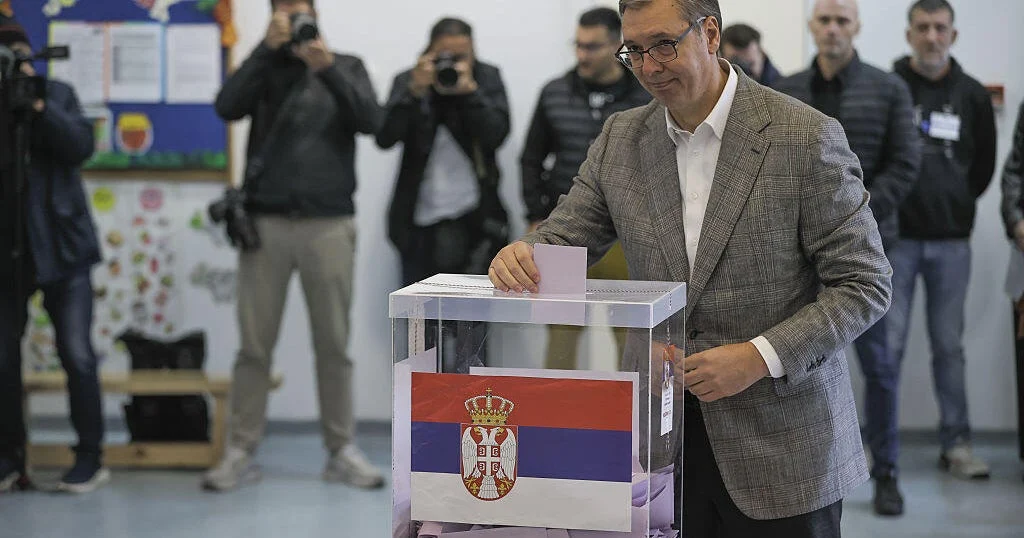
In a stunning political earthquake that has reverberated across the Balkans and the broader European continent, long-serving Serbian leader Aleksandar Vucic conceded defeat on Sunday in a high-stakes parliamentary election. The vote marked the culmination of a two-year, student-led mobilization that systematically dismantled the absolute grip on power held by Vucic and his right-wing Serbian Progressive Party (SNS) for nearly a decade and a half.
The concession, delivered roughly an hour and a half after polling stations closed across the nation of 6.4 million people, signals a historic turning point for Serbia. Vucic, who had positioned himself as a central pillar of regional politics and maintained close ties with Moscow—including endorsements from Russian President Vladimir Putin—announced that election projections heavily favored the opposition. According to preliminary data provided by the outgoing administration, the youth-backed coalition known as the Students’ List is projected to secure between 135 and 140 seats in the 250-member National Assembly. Meanwhile, Vucic’s SNS party is expected to capture approximately 105 seats.
The electoral defeat follows a grueling campaign characterized by exceptional voter engagement, severe institutional friction, and a charged atmosphere across urban and rural districts alike. Vucic told supporters at his party’s headquarters that his faction secured roughly 1.7 million votes, while the Students’ List amassed an estimated 2.2 million ballots.
Main Facts of the Electoral Shift
The parliamentary showdown was triggered by an environment of mounting public fury and structural fatigue. Serbia’s 250-member parliament represents the core legislative body, and Sunday’s vote was widely viewed as a referendum on the future of the nation’s democratic institutions, rule of law, and geopolitical orientation.
Vucic, who stepped down from the presidency last month specifically to spearhead his party’s legislative campaign and position himself to run for prime minister, faced an unprecedented coalition of civil society actors. Rather than presenting a traditional, highly visible political figurehead, the Students’ List adopted a decentralized strategy. The candidate roster intentionally omitted university students, opting instead to field a diverse array of lesser-known professionals, agricultural workers, artists, athletes, and independent experts.
This deliberate structural choice was designed to counter accusations of political opportunism and to offer voters a clean break from entrenched patronage networks. Throughout the campaign, the movement’s messaging concentrated on anti-corruption reforms, economic revitalization, and the restoration of public trust in democratic checks and balances.
Chronology of the Crisis: From Tragedy to Transformation
The roots of this historic electoral outcome stretch back several years, crystallizing into a definitive timeline of political upheaval:
- November 2024: A catastrophic infrastructure failure occurs in the northern city of Novi Sad when a massive concrete canopy collapses at the local railway station, instantly claiming the lives of 16 people.
- Late 2024 to 2025: Public outrage erupts over the tragedy. Investigators and citizens link the structural failure to systemic corruption, cronyism, and inadequate oversight during recent, state-sanctioned renovation projects. Spontaneous youth-led demonstrations rapidly escalate into a nationwide civil disobedience movement.
- Throughout 2025: Despite aggressive counter-tactics by pro-government media and instances of police intervention, university students spearhead a persistent mobilization. Utilizing unconventional tactics—such as cycling and walking across rural provinces historically loyal to Vucic—they bridge the urban-rural divide and cultivate grassroots support.
- September 2026: Aleksandar Vucic resigns from the presidency ahead of schedule to orchestrate the snap parliamentary elections, attempting to recalibrate his executive influence into the office of the prime minister.
- October 25, 2026: Serbia holds early parliamentary elections under intense domestic and international observation. Turnout surges to an estimated 70%, matching levels not seen since the democratic revolutions of 2000.
- Evening of October 25, 2026: Roughly 90 minutes after polls close, Vucic publicly concedes defeat, acknowledging that the Students’ List has secured a commanding legislative majority.
Supporting Data and Turnout Metrics
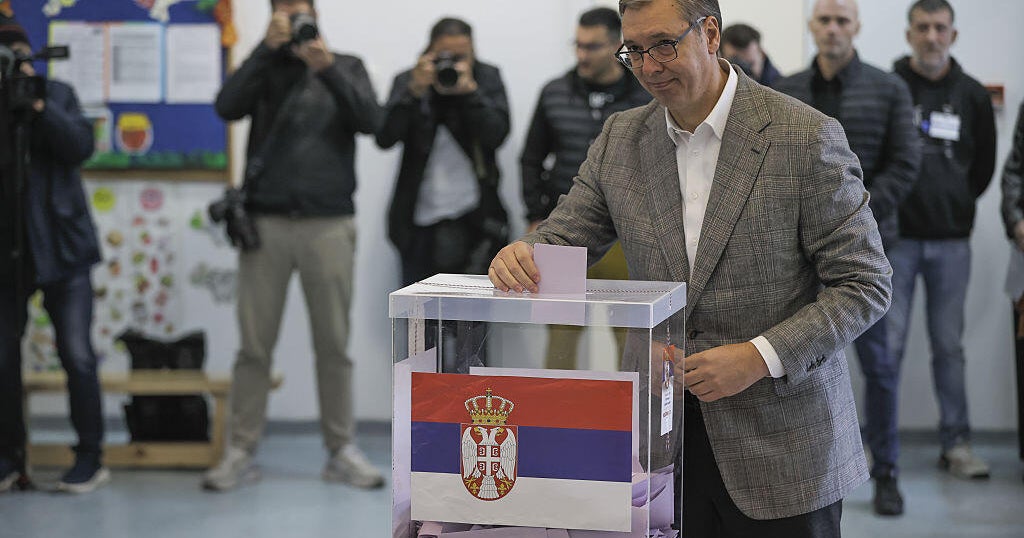
Sunday’s vote shattered historical participation records, with independent monitors and election officials projecting overall turnout to approach 70 percent. Long queues materialized outside polling stations not only domestically across Belgrade, Novi Sad, and regional towns, but also internationally as the Serbian diaspora mobilized to cast ballots under stringent scheduling constraints.
Independent electoral observation missions, however, documented numerous irregularities during the polling process. Observers flagged instances of ballot-paper photography—often utilized as a mechanism to verify coerced voting—as well as isolated incidents of attempted vote-buying. These observations echoed broader pre-electoral concerns raised by international watchdogs regarding media saturation by state-aligned outlets, alleged cyberattacks against civil society groups, and targeted harassment of independent journalists.
Official Responses and Finger-Pointing
In his concession address, Vucic attributed the defeat not to domestic policy failures, but to an array of external pressures and hostile information environments. He explicitly blamed independent domestic media outlets, unnamed European governments, and an unspecified "American deep state" for orchestrating a coordinated campaign to undermine his administration. Throughout his 14-year tenure, Vucic frequently leveraged geopolitical balancing acts between Moscow, Beijing, and Brussels, painting himself as the sole guarantor of national stability amidst global turbulence.
Conversely, the atmosphere in downtown Belgrade and across other major Serbian cities following the announcement was jubilant. Thousands of citizens flooded public squares, sounding vehicle horns, waving national flags, and chanting slogans signaling the end of Vucic’s era. Representatives of the Students’ List emphasized that the victory belonged to the collective citizenry rather than any single political personality, framing the result as a mandate to purge corruption and rebuild state institutions on the principles of transparency and accountability.
Broader Impact and Geopolitical Implications
The seismic shift in Belgrade carries profound implications for the Western Balkans and the broader European architecture. Serbia has long held candidate status for membership in the European Union, a process that had stalled in recent years amid growing international concerns regarding democratic backsliding, media freedom, and the rule of law under the SNS administration.
Analysts note that the Serbian outcome bears striking similarities to recent political developments in neighboring regions, most notably in Hungary. There, prolonged anti-establishment sentiment and high youth mobilization recently challenged long-standing autocratic governance structures, signaling a potential regional trend where younger generations are actively reclaiming political space from entrenched nationalist strongmen.
For the European Union and Western capitals, a pro-reform, youth-backed government in Belgrade could fundamentally alter the diplomatic calculus in the Balkans. It may inject fresh momentum into regional normalization talks, accelerate anti-corruption benchmarks required for EU accession, and pivot Serbia’s strategic alignment more firmly toward European integration.
As the dust settles on an election night that fundamentally rewrites modern Serbian political history, the newly empowered legislative majority faces the monumental task of translating street-level enthusiasm into sustainable governance, institutional repair, and economic renewal.