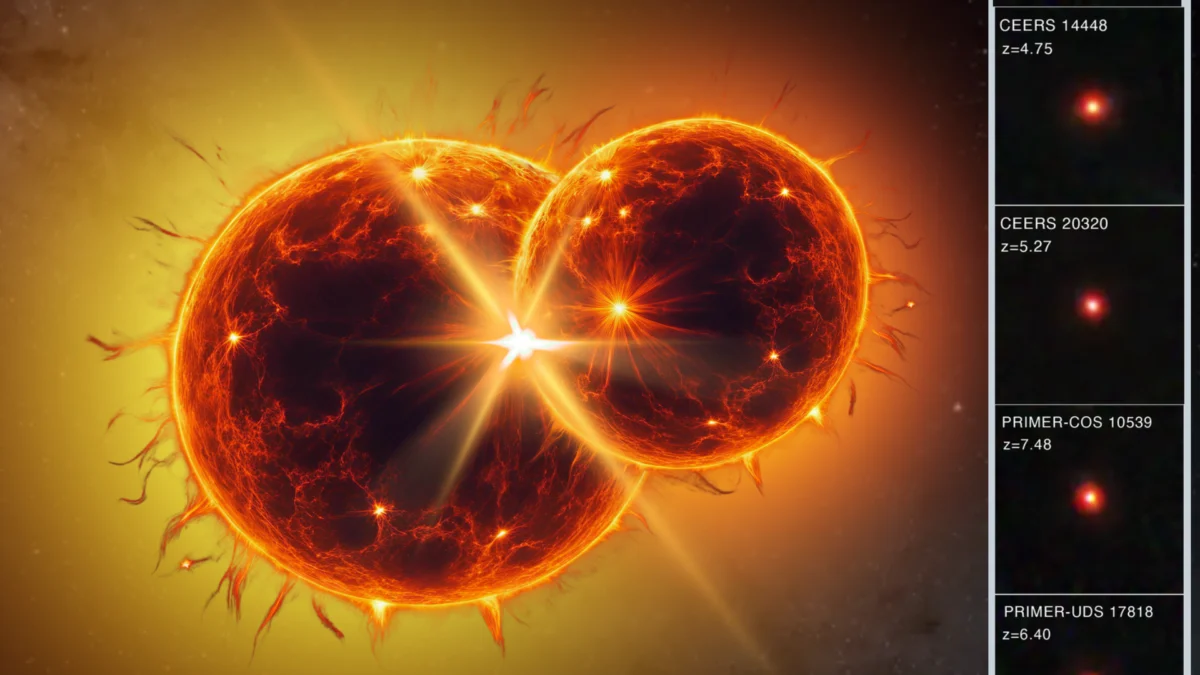
New astrophysical research indicates that frequent collisions between stars were commonplace in the dawn of the cosmos, offering a compelling explanation for two of modern astronomy’s most persistent enigmas: the rapid emergence of supermassive black holes and the baffling presence of "Little Red Dots" observed by the James Webb Space Telescope (JWST).
A team of researchers simulated conditions within the primordial universe and discovered that stellar systems were tightly packed, leading to frequent stellar impacts. While high-speed collisions typically obliterate the bodies involved, slower-speed collisions promote repeated mergers. This process yields single, hyper-massive stars that ultimately collapse under their own gravity to form unusually heavy black holes. These objects could serve as the long-sought-after "seeds" of the universe’s first supermassive black holes.
The findings, published in the Astrophysical Journal on October 26, bridge crucial gaps in our understanding of galactic evolution, shedding light on epochs of cosmic history that have baffled scientists since the JWST began peering deep into space.
The Chronology of an Impossibly Fast Cosmic Growth
To understand the significance of these simulations, one must examine the timeline of the early universe. According to standard cosmological models, the universe began with the Big Bang approximately 13.8 billion years ago. For the first few hundred million years, the cosmos was a dark, cooling expanse of hydrogen and helium until gravity coaxed the first stars and galaxies into existence.
When the JWST commenced science operations in 2022, it immediately challenged established timelines by spotting supermassive black holes—entities with masses ranging from millions to billions of times that of our sun—existing less than 1 billion years after the Big Bang.
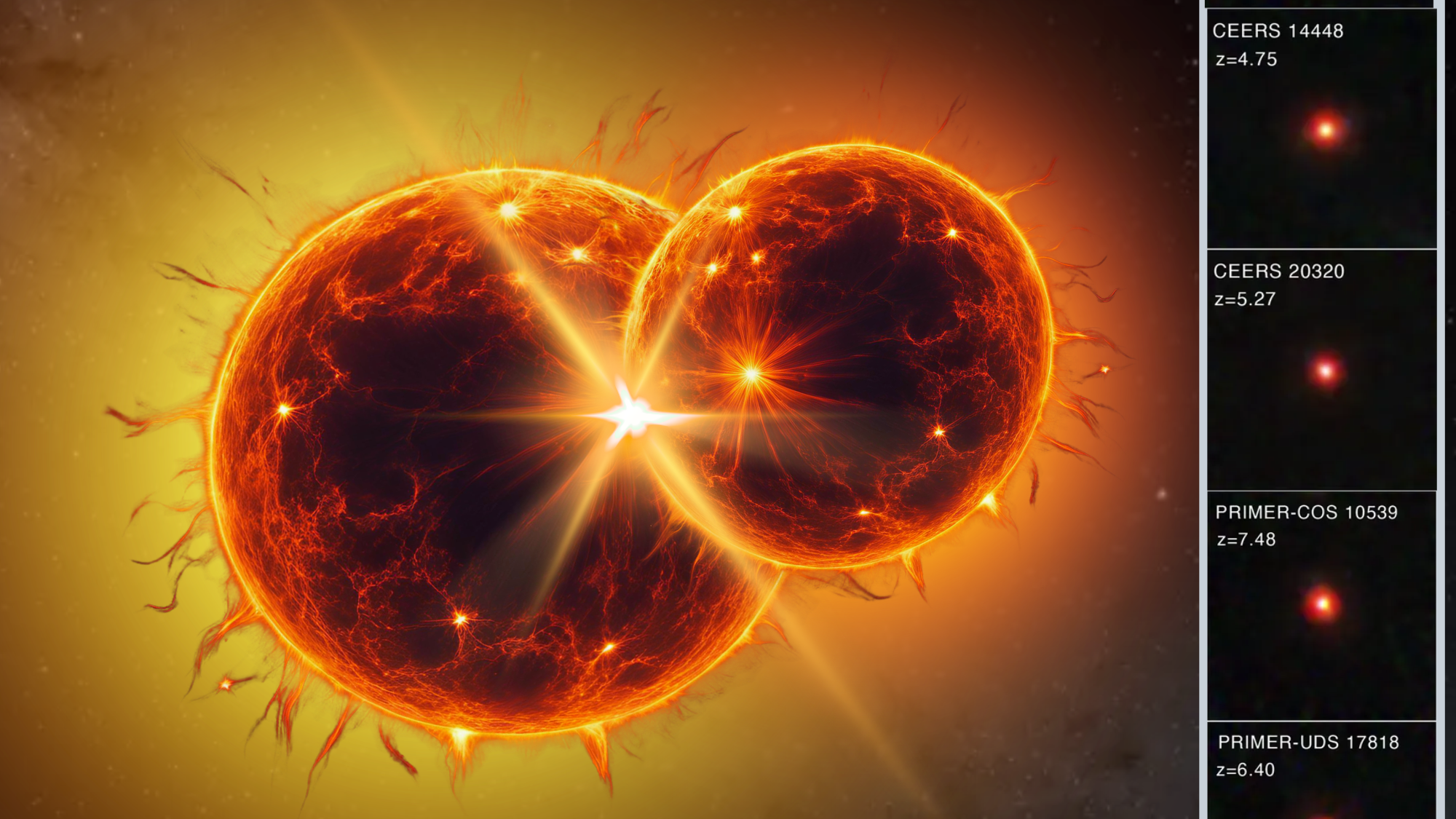
Under conventional astrophysical frameworks, this timeline is deeply problematic. A typical black hole born from the core collapse of a single massive star (a stellar-mass black hole) possesses a mass roughly 10 to 100 times that of the sun. Growing such an object into a supermassive black hole through standard accretion (feeding on surrounding gas) and occasional mergers requires at least one billion years of continuous consumption. Finding fully formed giants in the universe’s infancy implies that nature possesses a mechanism to fast-track black hole formation.
Intermediate-Mass Black Holes as the Missing Link
Astrophysicists have long theorized that the answer lies in intermediate-mass black holes (IMBHs), which possess masses between 100 and 100,000 solar masses. These objects would act as heavy seeds, bypassing the lengthy developmental stages required by standard stellar-mass black holes. However, no single star in the local, modern universe has enough mass to collapse directly into an IMBH.
The new simulations demonstrate that the extreme environment of the early universe changed the rules entirely. Claire Williams, a researcher at the University of California, Los Angeles (UCLA) and a member of the research team, highlighted the dramatic implications of these models.
"Perhaps the strangest outcome of our simulations is that stars can merge repeatedly within the cluster until they form one gigantic star with a mass equal to that of an entire cluster," Williams stated. "When a star this huge reaches the end of its life, models suggest that it may have no option but to collapse into itself and form a massive black hole."
In the modern universe, such dense stellar clusters do exist—often at the hearts of galaxies. However, these environments are no longer conducive to over-massive star formation. Modern galactic cores already harbor mature supermassive black holes. The immense gravitational pull of these central titans accelerates orbiting stars to extreme speeds. Consequently, any stellar collisions that occur today are violent, high-speed impacts that destroy the stars rather than merging them into a single, hyper-massive progenitor.
Shedding Light on the Mysterious Little Red Dots
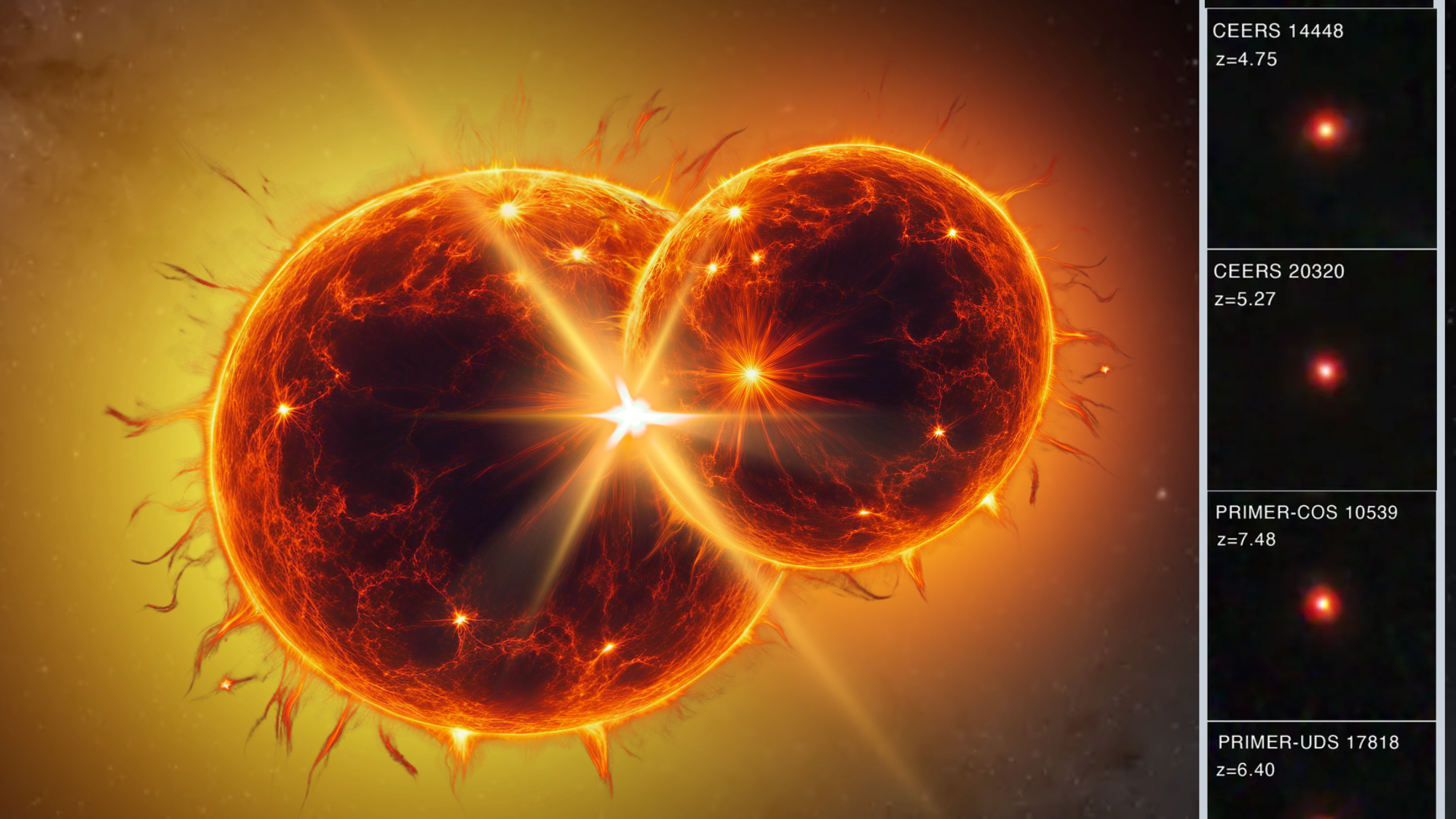
The simulations also offer a potential solution to another cosmic mystery uncovered by the JWST: the sudden appearance and subsequent disappearance of "Little Red Dots."
Discovered in high-redshift surveys, Little Red Dots are extremely compact, highly luminous objects found in the early universe that appear blood-red through infrared optics. They have sparked intense debate among astronomers, who have struggled to classify them uniformly.
Smadar Naoz, a UCLA researcher and co-author of the study, compared the scientific discourse surrounding these objects to a famous parable.
"Little Red Dots are a hot topic in astronomy. You can compare studies of people trying to understand Little Red Dots to the tale of blind people who are trying to describe an elephant by touching it, and each person describes it differently based on what part they’re touching," Naoz explained. "Our research connects several of those perspectives together and may help us see more of the elephant."
The team’s modeling suggests that Little Red Dots may represent dense, chaotic star clusters undergoing continuous stellar collisions. These tumultuous regions form massive stars that rapidly collapse into intermediate-mass black holes, surrounded by dense gas clouds that give the objects their characteristic red appearance.
The Vanishing Act: Why Little Red Dots Disappeared
A major question surrounding Little Red Dots is why they seem to have entirely vanished by the time the universe reached 2 billion years of age.

The new research indicates that their disappearance is tied to the large-scale evolution of the cosmos. Less than a billion years after the Big Bang, the universe lacked the well-ordered spiral galaxies seen today. Instead, it was dominated by turbulent, compact nurseries of intense star formation.
As the universe expanded and cooled over the next billion years, these chaotic environments stabilized. The dense star clusters either merged into larger galactic structures or settled into gravitational equilibrium. Because the cosmos outgrew the extreme, hyper-dense conditions required to sustain Little Red Dots and continuous stellar collisions, the phenomena naturally faded from the cosmic landscape.
Implications for Modern Astrophysics
The publication of these findings in the Astrophysical Journal marks a significant step forward in reconciling theoretical models with unprecedented observational data from the James Webb Space Telescope. By demonstrating that stellar collisions can act as a natural accelerator for black hole growth, the research relieves pressure on standard accretion theories, which struggled to explain how supermassive black holes could mature so rapidly.
As astronomers continue to analyze deeper fields captured by the JWST, testing these collision simulations against broader observational datasets will be crucial. If confirmed, this stellar-merger paradigm will rewrite our understanding of the universe’s first billion years, proving that the most serene galaxies of the modern era were forged in the chaotic, high-energy collisions of the cosmic dawn.