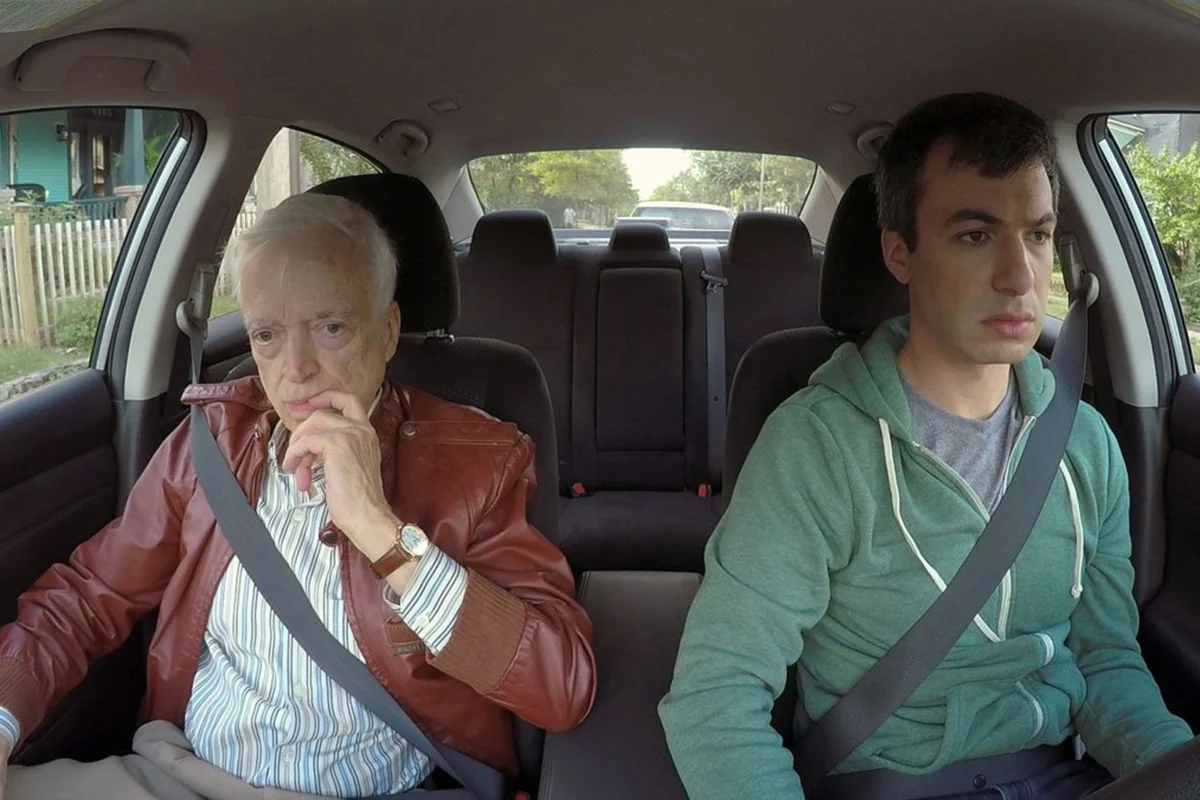
The landscape of modern documentary filmmaking and alternative comedy has shifted significantly following the release of the meta-documentary You Can See Everything. Co-directed by Nathan Fielder and Lance Oppenheim, the film has become a cultural touchstone, generating over $65 million at the global box office against a production budget of approximately $7 million. This commercial performance, paired with mounting critical acclaim and significant awards-season momentum, has prompted a widespread cultural reappraisal of Fielder’s earlier work, specifically his influential Comedy Central series Nathan for You. As audiences flock to explore the origins of Fielder’s distinct brand of social experimentation, the four-season run of his 2013–2017 series is being recognized as the foundational blueprint for his current cinematic success.

A Career Defined by Social Experimentation
To understand the current resonance of Fielder’s work, one must examine the trajectory that began in the early 2010s. Nathan for You operated under a premise that sat at the intersection of business consulting and absurdist performance art. In each episode, Fielder presented himself as a business school graduate with a knack for helping struggling small businesses. His proposed solutions—often involving convoluted logistical nightmares or socially awkward confrontations—frequently defied conventional logic.
While the show was categorized as a spoof of reality television staples like CNBC’s The Profit or Spike TV’s Bar Rescue, it functioned as an observational study of human behavior. Fielder’s ability to remain stoic while guiding participants into increasingly uncomfortable scenarios highlighted the absurdity inherent in contemporary commerce. This style of "cringe-inducing" engagement became his hallmark, a technique that has since been refined and elevated in his recent directorial efforts.

Chronology of an Evolving Career
The progression of Fielder’s creative output demonstrates a clear evolution from half-hour cable television segments to expansive, feature-length narratives.
- 2013: The debut of Nathan for You on Comedy Central introduced the "Nathan" persona, a character defined by a lack of social grace and an unwavering commitment to the bit.
- 2013–2017: Over the course of four seasons, the show gained a cult following, with segments like "The Man Zone" and the "Dumb Starbucks" pop-up becoming viral sensations that tested the boundaries of legal and social norms.
- 2017: The series finale, a two-hour special titled Finding Frances, marked a turning point. It pivoted away from pure comedy toward a poignant, multi-layered investigation of regret and human connection, foreshadowing the emotional depth of his future work.
- 2022: Fielder returned to television with The Rehearsal, an HBO series that expanded upon the themes of simulation and control, further cementing his reputation as a master of high-concept reality television.
- 2026: The release of You Can See Everything marked his successful transition into the mainstream documentary film market, securing both financial success and critical recognition.
Financial and Critical Impact
The success of You Can See Everything is not merely a testament to Fielder’s name recognition; it represents a shift in how audiences consume documentaries. With a 9:1 return on investment, the film has outpaced many high-budget studio releases in its category. Industry analysts suggest that the "Fielder Effect"—a combination of intense social media discourse and the viral nature of his previous segments—has created a unique market segment where audiences are drawn to the uncertainty of the outcome.

In terms of critical reception, the film has garnered consistent praise for its meticulous structure and the ethical questions it poses regarding the filmmaker’s role in shaping reality. Unlike traditional documentaries that aim for objectivity, Fielder’s work acknowledges the presence of the camera, turning the process of filmmaking itself into the primary subject. This meta-narrative approach has allowed him to transcend the limitations of the "reality show" label and enter the realm of serious, award-contending cinema.
The Evolution of the "Nathan" Persona
A central point of analysis for film critics and sociologists alike is the evolution of Fielder’s on-screen persona. In the early days of Nathan for You, the comedy was largely derived from the clash between Fielder’s deadpan, bureaucratic suggestions and the reactions of the business owners he "assisted." The humor was transactional, rooted in the failure of his logic to translate into real-world success.

As his career progressed, the focus shifted from the external business failures to the internal, psychological state of the participants—and, by extension, the audience. In his more recent work, the "Nathan" persona has become more vulnerable, occasionally exposing the toll that his own manufactured realities take on him. This evolution has made his work more relatable, moving beyond the "prank" subgenre into a deeper exploration of how people perform for the camera.
Industry Reactions and Future Prospects
The industry reaction to Fielder’s current status has been one of cautious admiration. While some traditionalists remain wary of his blurred lines between fiction and non-fiction, major studios and streaming platforms are reportedly eager to capitalize on his ability to drive engagement.

"Nathan Fielder has successfully bridged the gap between niche internet comedy and mainstream prestige film," says media analyst Sarah Jenkins. "By treating the ‘reality’ of his subjects with the same level of care as he treats the ‘fiction’ of his premises, he has created a new, highly profitable sub-genre of documentary film."
Internally, sources close to production teams note that Fielder’s meticulous attention to detail—often spending months on single segments or scenes—is what separates him from peers in the field. His insistence on genuine reactions, even when they occur within a controlled environment, ensures that his work retains an element of unpredictability that is rare in modern, highly polished entertainment.

Broader Implications for Reality Television
The influence of Nathan for You extends beyond Fielder’s own filmography; it has fundamentally altered the expectations of the reality television genre. Modern viewers, particularly those in the younger demographics, are increasingly sophisticated regarding the "manufactured" nature of reality content. Fielder’s success demonstrates that audiences are no longer satisfied with standard, scripted-reality tropes. Instead, there is a growing demand for transparency—not necessarily about the truth, but about the process of creation itself.
The implications for this are significant. As production companies look for the next "viral" success, they are likely to move away from the traditional, high-conflict reality formats that dominated the 2000s and early 2010s. Instead, they are turning toward "meta-reality," where the creator’s presence is acknowledged, and the artificiality of the situation is treated as an asset rather than a liability.

Conclusion: A Legacy Re-evaluated
As the awards season approaches, the focus remains on whether You Can See Everything will secure a nomination, a development that would have seemed implausible during the early years of the Nathan for You production. However, regardless of the outcome of any specific ceremony, the legacy of Fielder’s work is already secured. By consistently challenging the boundaries of what is considered "real" on camera, he has provided a roadmap for a new generation of filmmakers.
For those just discovering his work through the lens of his recent documentary, the four seasons of Nathan for You offer a essential study of a creative mind in the making. It is a body of work that captures the essence of the mid-2010s, a time when the internet was beginning to reshape our understanding of public and private life. Fielder did not just participate in that shift; he documented it, critiqued it, and ultimately, redefined it. As the industry looks forward, it is clear that the influence of his early, "preposterous" ideas will continue to be felt in the halls of Hollywood and beyond.