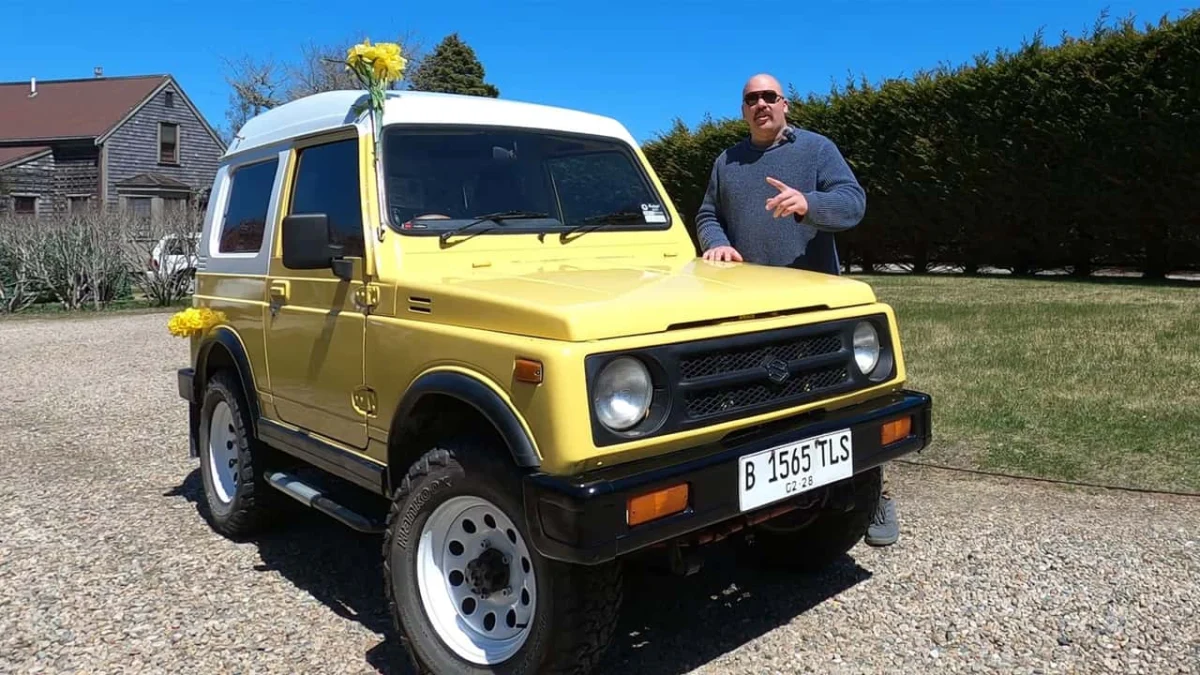
The landscape of automotive restoration is undergoing a fundamental shift as the barriers to electric vehicle (EV) conversion continue to diminish. While the automotive industry often focuses on high-performance, six-figure luxury EV retrofits, a burgeoning community of DIY enthusiasts is demonstrating that electrification can be achieved on a modest budget with off-the-shelf components. A recent project by YouTuber "Life of Troy" has highlighted this trend, documenting the successful conversion of a 1996 Suzuki Jimny into a functional electric urban commuter for less than $5,000 in total parts and only five days of labor. This achievement underscores a growing movement toward sustainable "upcycling" of older internal combustion engine (ICE) vehicles that might otherwise be destined for the scrap heap due to mechanical failure.
The Catalyst for Conversion: From Mechanical Failure to Innovation
The subject of the conversion, a 1996 Suzuki Jimny—known in the North American market as the Suzuki Samurai—was imported to the United States from Indonesia. The vehicle, powered by a diminutive 1.0-liter four-cylinder engine, represented a class of lightweight, rugged off-roaders prized for their simplicity. However, the inherent reliability issues of aging small-displacement engines became apparent when the vehicle suffered its second blown head gasket within a year of ownership.
Faced with the prospect of another costly and ultimately temporary repair to an aging ICE powerplant, the owner opted for a radical departure from traditional maintenance. The decision to pursue an EV conversion was driven by a desire for a low-maintenance, reliable "around-town" vehicle. By leveraging the modular nature of modern electric propulsion components, the project aimed to prove that an electric drivetrain could be integrated into a classic chassis without the need for professional engineering firms or specialized fabrication.
Technical Specifications and Component Integration
The conversion process was defined by its simplicity and adherence to a strict budget. The removal of the original 1.0-liter engine, which produced approximately 45 horsepower, cleared the way for a simplified electric powertrain. The chosen motor was a 72-volt direct current (DC) unit manufactured by D&D Motor Systems. Despite a modest rating of just nine horsepower, the electric motor provides a significant torque advantage, delivering 65 pound-feet of torque instantaneously. This torque profile is particularly suited for the Jimny’s lightweight frame and urban driving requirements.
A critical aspect of this "budget" conversion was the retention of the vehicle’s original drivetrain components. Rather than replacing the entire transmission with a direct-drive system—a common practice in high-end conversions—the electric motor was mated directly to the factory five-speed manual transmission using a custom adapter plate. Interestingly, the build omits the use of a clutch; because electric motors can provide full torque from zero RPM and do not require idling, the driver can select a gear while stationary and accelerate without the need for a traditional clutch engagement.
The electronic nerve center of the vehicle consists of a 500-amp motor controller, which manages power delivery from the battery to the motor, and an eBay-sourced DC-to-DC converter to power the vehicle’s 12-volt auxiliary systems, such as lights and wipers. The braking system, which lacked vacuum assistance in its original factory configuration, simplified the conversion significantly by eliminating the need for an electric vacuum pump to maintain brake booster functionality.
Energy Storage and Charging Logistics
The most significant investment in any EV conversion is the battery system. To keep costs low, the project utilized a 105-amp-hour lithium-iron-phosphate (LiFePO4) battery pack. This specific unit was originally designed for use in heavy-duty golf carts, representing a cost-effective alternative to automotive-grade lithium-ion modules.
The battery is positioned at the rear of the vehicle in the space formerly occupied by the gasoline tank. This placement helps maintain a favorable weight distribution. The current configuration provides a realistic driving range of 20 to 30 miles per charge. While this range is insufficient for long-distance travel, it aligns with the owner’s goal of creating a specialized urban runabout. Charging is handled via a standard 120-volt household outlet, requiring approximately five hours to reach a full state of charge. The owner has noted that the modular nature of the battery compartment allows for the future addition of more cells to increase range if necessary.
| Component | Cost (Estimated) | Notes |
|---|---|---|
| D&D 72V DC Motor | $929 | 9 HP / 65 lb-ft torque |
| 500-Amp Controller | $815 | Manages power delivery |
| LiFePO4 Battery Pack | $1,900 | 105 Ah, Golf cart spec |
| Adapter Plate/Misc Parts | ~$1,350 | Includes DC-DC converter and wiring |
| Total Project Cost | <$5,000 | Excluding donor vehicle |
The Economic and Environmental Context of DIY Retrofitting
The success of the $5,000 Jimny conversion highlights a stark contrast in the EV conversion market. On one end of the spectrum, companies like Everrati and Lunaz offer "restomod" conversions of classic Porsches, Range Rovers, and Rolls-Royces that can exceed $300,000. These builds involve ground-up restorations, high-density battery packs, and sophisticated thermal management systems.
On the other end, the "Life of Troy" project represents the democratization of the technology. By focusing on utility over performance, DIYers are finding ways to extend the life of existing vehicle fleets. From an environmental perspective, retrofitting an existing vehicle is often more sustainable than manufacturing a new electric car. The "embodied carbon"—the emissions generated during the mining, manufacturing, and shipping of a new vehicle—is significantly reduced when the chassis, interior, and suspension of an old vehicle are reused.
Furthermore, the simplicity of the Suzuki Jimny makes it an ideal candidate for such projects. Its ladder-frame chassis and lack of complex electronic control modules (ECMs) or CAN bus systems mean that the electric drivetrain does not have to "trick" the car’s original computers into functioning.
Broader Implications for the Secondary Automotive Market
The emergence of low-cost conversion kits and successful DIY templates could have significant implications for the secondary car market. As internal combustion engines in older vehicles reach the end of their service lives, owners are increasingly faced with the "repair or replace" dilemma. If conversion costs continue to hover around the $5,000 to $7,000 mark, electrification may become a competitive alternative to engine replacements or transmission overhauls.
This trend is also being mirrored in other sectors. Enthusiasts are increasingly converting old All-Terrain Vehicles (ATVs), riding lawnmowers, and golf carts to lithium power. The common sentiment among these owners is that the vehicles become more usable, quieter, and more reliable than their gasoline-powered predecessors.
However, challenges remain regarding the scaling of this movement. Safety standards for DIY high-voltage systems vary by jurisdiction, and insuring a modified electric vehicle can be difficult in some regions. Additionally, while the Jimny’s 50 mph top speed is adequate for local streets, it limits the vehicle’s utility on modern highways, highlighting the trade-offs inherent in budget-focused builds.
Analysis of Future Trends in Homegrown Electrification
As battery prices continue to fall—lithium-ion battery pack prices have dropped by nearly 90% over the last decade—the feasibility of DIY conversions will only increase. We are likely to see the following developments in the near future:
- Standardized Conversion Kits: More companies are beginning to offer "bolt-in" kits for popular models like the original Mini, Volkswagen Beetle, and Jeep Wrangler, reducing the need for custom fabrication.
- Second-Life Batteries: As the first generation of mass-market EVs (like the Nissan Leaf and Tesla Model S) reach the end of their lives, a steady supply of used, high-density battery modules will enter the hobbyist market, offering better range than golf cart batteries at a lower cost.
- Regulatory Support: Some countries, notably France, have introduced subsidies for citizens who choose to retrofit their older ICE cars into EVs rather than buying new ones. Similar policy shifts in other regions could accelerate the adoption of DIY and small-shop conversions.
The "Life of Troy" Suzuki Jimny serves as a proof of concept for the "minimalist EV." It demonstrates that electrification does not always require cutting-edge performance or massive range. For a specific subset of drivers—those with short commutes, a mechanical inclination, and a desire to keep a beloved classic on the road—the era of the affordable, home-built electric car has officially arrived. By prioritizing functionality and cost-effectiveness, this project provides a blueprint for a more accessible and sustainable path toward a zero-emission automotive future.