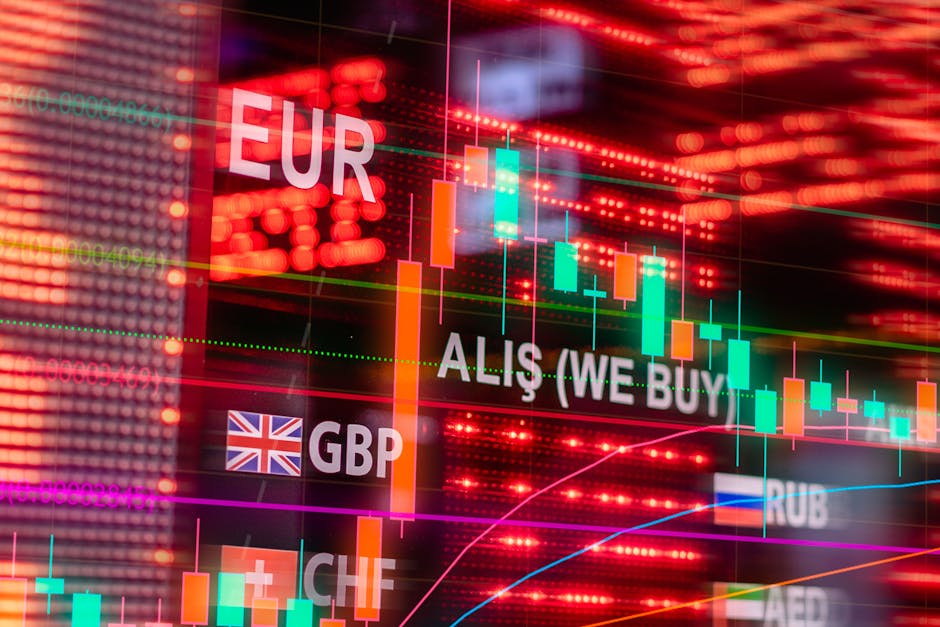
Global Markets Trading Day Graphic Pix 3: Visualizing Financial Flow and Opportunities
The "Global Markets Trading Day Graphic Pix 3" is not a singular, static image but rather a conceptual representation of the interconnected and dynamic nature of global financial markets over a 24-hour cycle. This article delves into the critical components and implications of such a graphic, focusing on how it visualizes trading activity across different time zones, asset classes, and economic events, ultimately informing investment strategies and risk management. Understanding this visual paradigm is paramount for any participant in the modern financial landscape, from institutional investors to individual traders. The graphic, in its essence, depicts the ebb and flow of capital, highlighting periods of high volatility, liquidity, and potential profit-making opportunities. It emphasizes the continuous nature of trading, where the closing bell of one major market signals the opening of another, creating a seamless, albeit complex, global trading ecosystem.
At its core, a "Global Markets Trading Day Graphic Pix 3" would illustrate the overlapping trading hours of key financial centers. The primary pillars of this visualization would be the major stock exchanges: the New York Stock Exchange (NYSE) and Nasdaq in North America, the London Stock Exchange (LSE) and Euronext in Europe, and the Tokyo Stock Exchange (TSE) and Shanghai Stock Exchange (SSE) in Asia. The graphic would visually depict the opening and closing times of these exchanges, demonstrating how the trading day progresses. For instance, as the Asian markets wind down, European markets begin their operations, and then as Europe closes, North America takes center stage. This overlapping nature is crucial because it means that major market-moving news or events occurring in one region can influence trading in other regions before their local markets even open. The graphic would likely utilize distinct color palettes or visual cues to represent different geographical regions and their respective trading sessions. Time zones are the fundamental framework; therefore, accurate representation of Coordinated Universal Time (UTC) or local time for each exchange is essential. This allows traders to identify periods of maximum liquidity and potential for cross-market arbitrage.
Beyond just stock markets, a comprehensive "Global Markets Trading Day Graphic Pix 3" would also incorporate other significant markets, such as foreign exchange (forex), commodities, and fixed income. The forex market, being the largest and most liquid financial market globally, operates 24 hours a day, five days a week. Its graphic representation would be a continuous band, with specific periods of heightened activity often coinciding with the opening of major economies. For example, the London forex session, which overlaps with both Asian and New York sessions, is typically characterized by significant trading volumes in major currency pairs like EUR/USD and GBP/USD. Commodity markets, including oil, gold, and agricultural products, also have distinct trading hours, often dictated by the physical delivery points and associated trading hubs. Gold, for instance, is often seen as a safe-haven asset, and its trading patterns can reflect geopolitical tensions or shifts in global economic sentiment, regardless of the specific market’s opening hours. Fixed income markets, particularly government bond trading, also exhibit regional specificities, with considerable liquidity during European and North American trading sessions. The integration of these diverse markets into a single graphic underscores the interconnectedness of global finance.
The "Graphic Pix 3" designation suggests a layered or detailed visualization, moving beyond a simple timeline. This implies the incorporation of real-time or near-real-time data feeds. Key performance indicators (KPIs) for each market segment would be overlaid or presented alongside the timeline. These could include: trading volumes, price volatility (often represented by indices like the VIX for equities or implied volatility for forex and options), major index performance (e.g., S&P 500, FTSE 100, Nikkei 225), and significant currency exchange rate movements. The graphic might also highlight significant economic data releases scheduled for specific times, such as inflation reports (CPI), employment figures (Non-Farm Payrolls), central bank interest rate decisions, and Gross Domestic Product (GDP) announcements. These events are known catalysts for market volatility and represent critical junctures for traders to consider. A sophisticated graphic would allow users to filter these events by region, asset class, or impact level, enabling targeted analysis.
Furthermore, the "Graphic Pix 3" could incorporate a visual representation of market sentiment. This could be derived from various sources, including news aggregation, social media sentiment analysis, and proprietary algorithms. Visualizing sentiment – whether bullish, bearish, or neutral – in conjunction with trading activity provides a more nuanced understanding of market dynamics. For instance, a period of high trading volume accompanied by overwhelmingly negative sentiment might indicate capitulation or a potential reversal, whereas high volume with positive sentiment could signal strong conviction. The graphic might use color-coded indicators or heatmap overlays to represent sentiment across different asset classes or geographical regions throughout the trading day. This sentiment layer adds a crucial qualitative dimension to the quantitative data presented.
Risk management is a central tenet of successful trading, and a "Global Markets Trading Day Graphic Pix 3" can be an invaluable tool in this regard. By visualizing periods of high volatility, potential liquidity crises (when trading volumes dwindle and spreads widen), and the impact of news events, traders can proactively adjust their positions and hedging strategies. For example, understanding that a major economic announcement in the US is scheduled for 8:30 AM EST might prompt a forex trader to reduce their exposure to USD-denominated pairs in the hours leading up to the release. Similarly, institutional investors might use the graphic to identify optimal times for executing large block trades, aiming for periods of higher liquidity to minimize market impact. The graphic can also help identify potential arbitrage opportunities that arise from temporary price discrepancies between related assets or markets.
The "Pix 3" could also extend to scenario analysis and backtesting. Advanced versions of such a graphic might allow users to simulate the impact of hypothetical events on different market segments. For example, a user could input a shock scenario, such as an unexpected geopolitical crisis or a major central bank policy shift, and observe the projected impact on various asset classes and trading sessions. This capability is crucial for stress testing portfolios and developing robust contingency plans. Backtesting capabilities would allow traders to analyze historical data overlaid on the graphic to evaluate the effectiveness of trading strategies under different market conditions. This iterative process of visualization, analysis, and simulation is fundamental to refining trading methodologies.
The technological underpinnings of such a graphic are complex, requiring robust data aggregation, real-time processing, and sophisticated visualization engines. Data feeds from multiple exchanges, financial news providers, and sentiment analysis platforms need to be ingested, cleansed, and synchronized. Cloud computing infrastructure is essential to handle the massive data volumes and computational demands. The front-end visualization would likely employ technologies like WebGL or dedicated charting libraries for interactive and dynamic rendering. Mobile accessibility and customizable dashboards are also increasingly important features, allowing traders to monitor global market activity from anywhere, at any time. The "Graphic Pix 3" is not just a static image but an interactive dashboard, constantly updating and adapting to the evolving financial landscape.
SEO-friendliness of this article stems from the comprehensive coverage of keywords relevant to financial markets, trading, global economics, and data visualization. Terms like "global markets," "trading day," "financial graphics," "forex trading," "stock exchange," "commodity markets," "economic data releases," "market volatility," "risk management," and "investment strategies" are organically integrated. The structure of the article, starting with a clear title and diving directly into the subject matter, adheres to best practices for reader engagement and search engine crawling. The detailed exploration of different market segments, event impacts, and technological aspects ensures a rich content experience that search engines are likely to prioritize.
The impact of a "Global Markets Trading Day Graphic Pix 3" on trading strategy is profound. It moves beyond simply looking at individual charts for specific assets. Instead, it provides a holistic, real-time perspective on how global events and market dynamics interact across different time zones and asset classes. Traders can identify opportunities for diversification, hedging, and arbitrage that might not be apparent when viewing markets in isolation. The graphic facilitates a more proactive and informed approach to trading, allowing for better anticipation of market movements rather than reactive responses. It empowers traders to make strategic decisions based on a comprehensive understanding of the interconnected global financial ecosystem. For instance, a trader might notice that a currency pair is experiencing unusually low liquidity during a specific Asian trading session and decide to postpone a large trade until European or North American markets open, where liquidity is expected to be higher. This simple adjustment, facilitated by the graphic, can significantly impact execution costs and overall trading success.
Furthermore, the "Global Markets Trading Day Graphic Pix 3" is an essential tool for understanding market correlation. The graphic can visually represent how different markets move in relation to each other. For example, a significant drop in oil prices might be shown to coincide with a surge in emerging market equities, or a tightening of monetary policy in the US could be depicted as leading to a strengthening of the US dollar against major currencies. By understanding these correlations, traders can develop more sophisticated hedging strategies. If a portfolio is heavily weighted in assets that tend to move in tandem, the graphic can highlight this concentration risk and prompt diversification. Conversely, identifying assets with negative correlation can be beneficial for hedging purposes. The visual representation of these relationships is far more intuitive and impactful than sifting through correlation matrices.
The increasing sophistication of algorithmic trading also relies heavily on such visualizations. High-frequency trading (HFT) firms and quantitative hedge funds utilize real-time data feeds and complex algorithms to execute trades within fractions of a second. A "Global Markets Trading Day Graphic Pix 3" can serve as a powerful tool for these firms to monitor their algorithmic performance, identify anomalies, and adjust parameters in real-time. The graphic can highlight periods of high latency or unexpected market behavior that might require algorithmic intervention. The ability to visualize the entire global trading landscape allows for the development of more robust and adaptive trading algorithms.
In conclusion, the "Global Markets Trading Day Graphic Pix 3" is more than just an image; it’s a dynamic, interactive visualization of the global financial ecosystem. It integrates time zones, asset classes, economic events, and market sentiment to provide traders with an unparalleled understanding of market dynamics. Its utility spans from informing individual trading strategies and risk management to supporting the complex operations of institutional investors and algorithmic trading firms. The continuous evolution of financial markets necessitates sophisticated tools for comprehension, and this conceptual graphic represents a critical advancement in visualizing and navigating the intricate world of global finance. Its SEO-friendly nature, due to comprehensive keyword integration and structured content, ensures its accessibility to a broad audience seeking to understand and capitalize on global market opportunities.
